Railroads & Skylights: CNC Plastic Machining in Texas (2026 Guide)
A 2026 buying guide for CNC plastic machining equipment in Texas, covering UHMW for railroads and polycarbonate for architectural skylights.
The Dual-Demand Market: Heavy Rail and Architectural Glazing
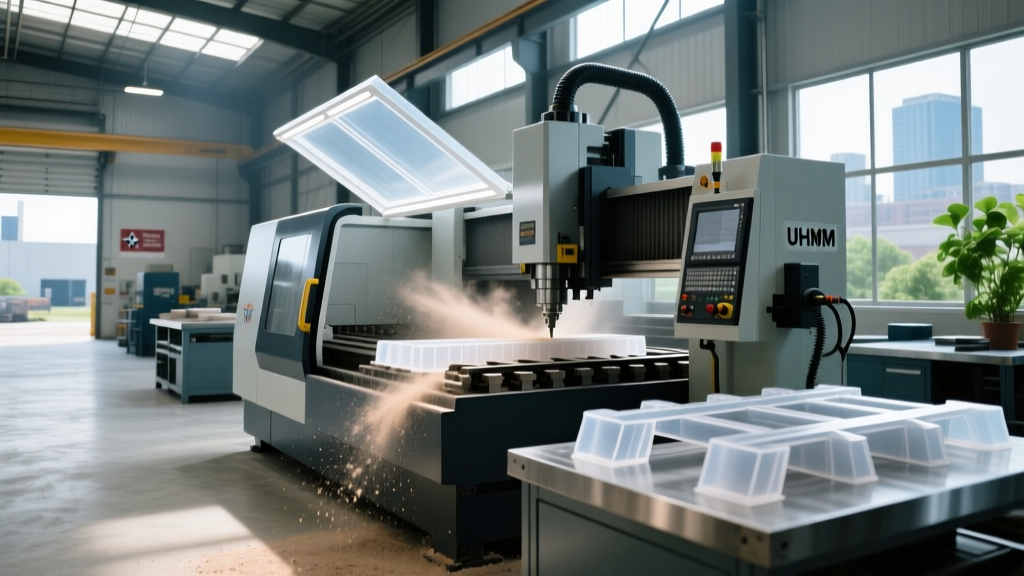
Texas represents a unique intersection of heavy industrial infrastructure and booming commercial real estate. For CNC fabrication shops in the DFW and Houston corridors, this creates a dual-demand market for advanced plastic machining. On one side, the state's extensive freight and transit networks require high-performance polymers like UHMW-PE (Ultra-High Molecular Weight Polyethylene) for railroad crossing gates, guide rollers, and switch components. On the other, the surge in commercial architecture demands precision-machined polycarbonate and acrylic for structural skylights and atrium domes.
Selecting the right CNC routing equipment to handle both extremes—from the high-friction, stringy chips of UHMW to the brittle, heat-sensitive nature of thick polycarbonate—requires a highly specific equipment buying strategy. This guide outlines the exact machine specifications, tooling requirements, and capital expenditure frameworks needed to capture these niche Texas markets in 2026.
Market Insight: According to the Texas Department of Transportation, the state maintains over 10,000 miles of freight rail track, necessitating continuous replacement of polymer-based crossing pads and insulating components. Simultaneously, Texas commercial building codes increasingly mandate impact-resistant glazing, driving demand for CNC-milled polycarbonate skylight framing.Material Profiles and Machining Parameters
UHMW-PE and Polycarbonate (PC) sit on opposite ends of the machinability spectrum. UHMW is notorious for its low coefficient of friction, making vacuum hold-down nearly impossible without mechanical clamping, and it produces long, stringy chips that can wrap around spindles. Polycarbonate, conversely, is prone to thermal melting, edge crazing, and stress cracking if tooling geometry and feed rates are not perfectly calibrated.
| Parameter | UHMW-PE (Railroad Components) | Polycarbonate (Architectural Skylights) |
|---|---|---|
| Primary Tooling | 2-Flute O-Flute Solid Carbide (Onsrud 63-700 Series) | Single O-Flute High Rake (Onsrud 63-600 Series) |
| Spindle Speed (RPM) | 16,000 - 20,000 RPM | 12,000 - 16,000 RPM (Lower to prevent heat buildup) |
| Feed Rate (IPM) | 250 - 350 IPM (Aggressive to prevent re-welding) | 100 - 180 IPM (Controlled to avoid chipping) |
| Chip Load | 0.008" - 0.012" per tooth | 0.006" - 0.009" per tooth |
| Hold-Down Method | Mechanical Clamping / T-Slot (Vacuum fails due to porosity) | Universal Vacuum Grid (Minimum 80mmHg suction) |
| Cooling Strategy | High-volume air blast (Chip evacuation is critical) | Air mist / Cold air gun (No liquid coolants to avoid crazing) |
Equipment Selection: Sizing the CNC Router for Texas Fab Shops
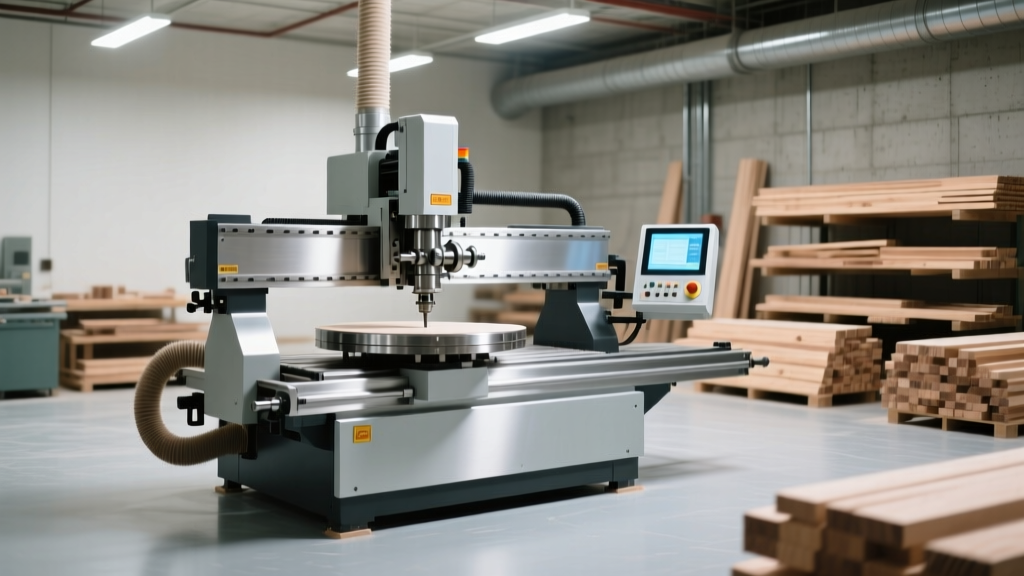
When sourcing CNC routers in Texas, proximity to OEM service hubs is a critical operational advantage. Multicam, headquartered in Coppell, TX, offers a distinct logistical edge for DFW and Central Texas shops regarding spindle repairs and gantry calibration. For shops targeting these specific plastic applications, a standard 3-axis wood router will fail under the axial loads required for thick UHMW blocks or 5-axis contouring for skylight domes.
Non-Negotiable Machine Specifications
- Z-Axis Clearance: Minimum 12-inch Z-axis travel. Railroad crossing blocks and heavy-duty switch insulators often require machining from 4-inch to 6-inch thick UHMW billets. Standard 8-inch Z-clearance routers will bottom out.
- Spindle Power: 15HP to 20HP HSD or Colombo spindle. Routing deep pockets in dense polycarbonate or high-density UHMW requires high torque at lower RPMs to prevent stalling.
- Gantry Rigidity: Welded steel stress-relieved gantry. Aluminum extrusion gantries will deflect by up to 0.015" under the lateral cutting forces of 1/2" solid carbide O-flute bits, ruining the tight tolerances (+/- 0.005") required for skylight glazing seals.
- Table Configuration: Dual-zone system. A T-slot aluminum plenum for mechanical clamping (UHMW) overlaid with a removable phenolic vacuum grid (Polycarbonate).
Tooling Strategy: Preventing Melt and Crazing
The most common failure mode in plastic CNC machining is thermal re-welding, where the melted plastic cools and fuses back to the cut edge, creating burrs that compromise weather-seals in skylights or cause mechanical binding in railroad rollers. According to Onsrud Cutter's engineering guidelines, tool geometry must be matched to the specific polymer's melting point and chip evacuation requirements.
For Texas shops dealing with high ambient summer temperatures (which can raise the baseline temperature of raw plastic sheets stored in non-climate-controlled warehouses), adjusting the chip load is vital. A larger chip load carries more heat away from the cutting zone. If your feed rate is constrained by machine acceleration limits, you must reduce RPM proportionally to maintain the target chip thickness.
Recommended Tooling Inventory
- 1/2" Single O-Flute (Up-cut): For roughing thick polycarbonate sheets (1"+). The single flute provides a massive gullet for chip evacuation.
- 1/4" 2-Flute O-Flute (Down-cut): For finishing acrylic and polycarbonate skylight edges. The down-cut geometry pushes chips downward, preventing top-edge splintering and ensuring a glass-clear finish.
- 3/8" Compression Bit: Essential for cutting UHMW sheets where both top and bottom edge tear-out must be eliminated for sliding applications.
Capital Expenditure vs. Outsourcing: A Decision Framework
Should your Texas manufacturing facility bring this capability in-house, or partner with specialized plastic machining bureaus in Houston or San Antonio? Use the following financial and operational framework to decide.
When to Buy In-House (CapEx: $110,000 - $180,000)
- Volume: You are producing more than 2,000 linear feet of machined plastic components annually.
- Tolerance Requirements: Your railroad clients require FRA (Federal Railroad Administration) compliant insulating parts with +/- 0.005" tolerances that local generalist job shops cannot consistently hold.
- Material Handling: You have the warehouse space to store 4x8 or 5x10 sheets of UHMW and Polycarbonate, and the forklift infrastructure to load 300 lb sheets onto the router bed.
- Turnaround: You need 24-hour turnaround for emergency rail-switch component replacements, which outsourced vendors cannot guarantee.
When to Outsource (OpEx Model)
- Volume: Production is limited to custom, one-off architectural skylight frames or prototype rail components.
- Certifications: The project requires specific Association of American Railroads (AAR) material traceability certifications that your shop's quality management system is not currently audited for.
- 5-Axis Needs: You only require 5-axis contouring for a few complex skylight domes per year, making the $60,000 5-axis upgrade mathematically unjustifiable.
Regulatory Compliance and Edge Finishing
Machining the plastic is only half the battle; post-processing dictates the lifespan of the part. For architectural skylights, any micro-fracture left by a dull CNC bit will propagate under UV exposure and wind load (ASTM E1886 standards). Texas fabricators must invest in automated edge-flame polishing or diamond polishing setups for acrylics, and specialized vapor polishing for polycarbonate.
For railroad applications, UHMW components must be thoroughly deburred. A CNC-machined UHMW roller with a 0.010" burr will act as a rasp against steel rails, accelerating wear. Implementing a secondary tumbling process or utilizing specialized cryogenic deburring equipment is highly recommended for shops securing long-term transit authority contracts.
Pro-Tip for Texas Shops: Polycarbonate is highly hygroscopic. If you are machining thick PC blocks for skylight structural nodes, ensure the material is stored in a climate-controlled environment (below 50% humidity) prior to cutting. Moisture trapped in the polymer matrix will vaporize under the heat of the end mill, causing internal micro-voids and catastrophic optical distortion.Summary: Building a Specialized Plastic Cell
Capturing the Texas market for railroad polymers and architectural glazing requires moving beyond generic woodworking routers. By investing in a high-clearance, high-torque CNC platform supported by local OEM networks, utilizing specialized O-flute tooling, and strictly managing thermal dynamics through chip-load calculations, fabrication shops can dominate these high-margin, high-barrier niches. Evaluate your annual volume against the CapEx thresholds outlined above, and prioritize machine rigidity and Z-axis clearance over redundant software features when negotiating your 2026 equipment purchases.