2026 Cost Guide: Budgeting for a CNC Wood Working Machine
Plan your 2026 shop budget with our true cost analysis for a CNC wood working machine. Compare CapEx, OpEx, hidden fees, and ROI for top models.
The True Cost of CNC Woodworking: Beyond the Sticker Price
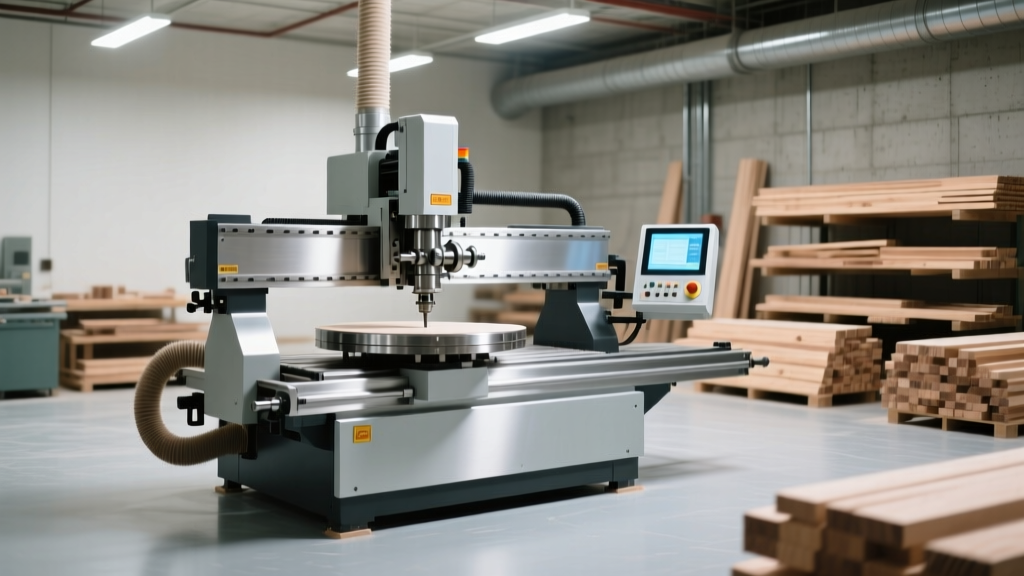
When evaluating a cnc wood working machine, most shop owners make the critical mistake of budgeting only for the base unit. In reality, the sticker price of the gantry, spindle, and controller represents roughly 60% to 70% of your actual first-year capital expenditure (CapEx). The remaining 30% is consumed by the ecosystem required to run the machine safely, accurately, and profitably.
This 2026 cost analysis breaks down the exact financial requirements for integrating a CNC router into a woodworking environment, moving past generic estimates to provide specific model pricing, tooling costs, and infrastructure requirements.
⚠️ The 30% Hidden Cost Rule: For every $10,000 spent on a CNC wood working machine base unit, allocate an immediate $3,000 to $4,500 for dust collection, electrical upgrades, workholding, and initial software licensing. Failing to budget for this will result in a machine that cannot legally or safely operate in a commercial shop.Tiered Machine Cost Matrix (2026 Market Pricing)
The market for woodworking CNCs is strictly segmented by duty cycle, bed size, and automation capabilities. Below is a comparative matrix of current market leaders across four distinct production tiers.
| Tier | Model Example | Base Price (USD) | Spindle / Power | Ideal Application |
|---|---|---|---|---|
| Entry / Maker | Shapeoko 5 XXL | $2,200 - $2,800 | Carbide Compact Router (Makita RT0702) | Signage, light prototyping, hobbyist |
| Prosumer | Axiom Precision AR8+ | $9,500 - $11,000 | 2.2kW Water-Cooled Spindle | Custom furniture, small-batch cabinet doors |
| Small Shop Pro | ShopBot Desktop MAX | $8,500 - $10,500 | HSD 1.5kW - 3kW Spindle | Education, bespoke millwork, nested parts |
| Industrial ATC | SCM Tech Z / Homag | $45,000 - $90,000+ | 9kW+ HSD with 12-16 Tool ATC | High-volume cabinetry, nested-based manufacturing |
For shops evaluating the prosumer and small-shop tiers, reviewing the specifications of the ShopBot Desktop MAX provides a benchmark for industrial-grade ball screws and rigid gantry construction, while the Carbide 3D Shapeoko lineup remains the standard for belt-driven, low-cost entry points.
Capital Expenditures (CapEx): The Infrastructure Tax
A CNC wood working machine is essentially a localized dust bomb. Woodworking generates significantly more particulate than machining aluminum or plastics. Your facility must be prepared to handle this.
1. Dust Collection and Air Filtration
Do not attempt to run a 4x8 CNC router on a standard 2HP single-stage bag collector. The static pressure required to pull dust through a CNC dust shoe requires a cyclone system.
- Cyclone Collector (3HP - 5HP): $1,800 - $3,500 (e.g., Clear Vue CV-1850 or Oneida Super Dust Deputy XL).
- Ductwork & Blast Gates: $400 - $800 for 6-inch PVC or metal spiral pipe routing.
- Ambient Air Filtration: $600 - $1,200 for ceiling-hung units (e.g., JDS Air-Tech 2000) to capture fine 1-micron particles that escape the cyclone.
2. Electrical and Pneumatic Requirements
Most industrial spindles (HSD, Colombo) and vacuum pumps require 220V single-phase or 208/230V 3-phase power.
- Electrical Drops: Hiring an electrician to install dedicated 20A or 30A 220V circuits typically costs $800 to $1,500 per drop.
- Phase Converters: If your shop lacks 3-phase power and you are buying an industrial ATC machine with a Becker rotary vane vacuum pump, budget $2,500 - $4,000 for a rotary phase converter or frequency drive (VFD) setup.
- Air Compressors: ATC (Automatic Tool Changer) machines require clean, dry air. A 60-gallon two-stage compressor with a refrigerated air dryer will cost roughly $2,200.
Workholding: Vacuum vs. Mechanical Clamping
How you hold the wood to the bed dictates your cutting speed, material yield, and edge finish. This is a major budgetary fork in the road.
Mechanical (T-Track & Clamps)
Cost: $200 - $500
Pros: Low initial investment; no vacuum pump required; excellent for thick, warped hardwoods.
Cons: Clamps interfere with toolpaths; requires cutting 'tabs' to prevent parts from flying off; limits usable bed area.
Universal Vacuum Table
Cost: $3,500 - $8,000 (Pump + Pod + Plumbing)
Pros: Zero toolpath obstructions; no tabs required; allows for nested-based manufacturing (NBM) of sheet goods.
Cons: High CapEx; requires regular maintenance of seals and pumps; struggles with highly porous or warped solid wood.
Operational Expenditures (OpEx): Tooling and Software
Once the machine is powered on, your margins are dictated by consumable tooling and software licensing. According to industry analyses tracked by Woodworking Network, shops that fail to optimize tooling paths and bit selection lose up to 15% of their revenue to wasted material and premature bit failure.
The Essential Woodworking Bit Arsenal
Standard endmills used in metalworking will tear out wood grain and melt melamine. You must budget for specialized carbide router bits:
- Compression Bits (e.g., Onsrud 60-100 Series): $45 - $85 each. Essential for double-sided laminates and melamine. The up-cut/down-cut geometry prevents top and bottom tear-out. Expect 10-15 sheets of melamine per bit before replacement.
- Spoilboard Surfacing Fly Cutter: $120 - $180. A 3-inch diameter cutter with indexable carbide inserts used to flatten the MDF spoilboard.
- V-Bits for Signage: $30 - $60 each (60° and 90° solid carbide).
- Initial Tooling Budget: Plan for $600 - $1,200 to stock a functional starter library.
Software Ecosystem
The machine is only as smart as the G-code it receives. Software costs scale with your production complexity:
- 2.5D / 3D Carving: Vectric VCarve Pro ($349 one-time) or Aspire ($499 one-time).
- Cabinet Manufacturing: Mozaik ($100/month) or Cabinet Vision ($5,000+ enterprise license). These integrate directly with CNC nesting algorithms to optimize sheet yield.
- Controller Software: Mach4 ($200) or proprietary controllers (e.g., ShopBot's ShopBot Console, WinCNC) which are often included in the base price.
ROI Calculation: Cabinet Doors vs. Manual Routing
To justify the CapEx of a mid-tier cnc wood working machine, consider the production of 50 raised-panel cabinet doors (MDF core, veneered).
Manual Production (Table Router + Templates):
Setup & Template Creation: 4 hours
Machining 50 doors: 12.5 hours (15 mins/door)
Sanding & Cleanup: 8 hours
Total Labor: 24.5 hours @ $25/hr = $612.50
CNC Production (Axiom AR8+ or ShopBot):
CAD/CAM Toolpath Setup: 1 hour
Machining 50 doors (Nested): 3.5 hours (4.2 mins/door)
Sanding (CNC leaves cleaner edges): 3 hours
Total Labor: 7.5 hours @ $25/hr = $187.50
The Information Gain: The CNC saves $425 in direct labor on a single batch of 50 doors. If your shop runs four similar batches a month, the machine pays for its $10,000 base price in roughly 5.8 months, excluding the added revenue generated by the freed-up manual labor hours.
Strategic Decision Framework: Which Tier Fits Your Margin?
Do not overbuy capacity you cannot feed, and do not underbuy a machine that will bottleneck your growth.
- Custom Furniture & Artistic Millwork: Target the Prosumer / Small Shop Pro tier. You need Z-axis clearance (6+ inches) for thick legs, and 3D carving capabilities. Mechanical clamping is sufficient here as batch sizes are small and materials are thick.
- High-Volume Cabinetry & Closet Systems: Target the Industrial ATC tier. You absolutely require a vacuum table, an Automatic Tool Changer (to swap between drill banks, compression bits, and groovers without manual intervention), and nesting software. The ROI relies on processing 100+ sheets of plywood per week.
- Signage, Cutting Boards, & Makerspaces: Target the Entry tier. Belt-driven machines like the Shapeoko are perfectly adequate for shallow engraving, V-carving, and cutting 3/4-inch hardwoods, provided you manage dust collection aggressively.
Final Budgeting Advice
When securing financing or allocating shop capital for a cnc wood working machine in 2026, build your spreadsheet using the 1.4x Multiplier. Multiply the advertised base price of the machine by 1.4 to account for the mandatory dust collection, electrical, workholding, and initial tooling requirements. This prevents the dangerous scenario of taking delivery of a $15,000 machine, only to realize you lack the $4,000 required to turn it on safely.