Railroads Custom O-Rings & CNC Plastic Machining Houston: Safety Standards
Navigate FRA safety standards for railroads. Expert guide on custom O-rings and CNC plastic machining compliance for Houston's freight hubs.
The Regulatory Matrix: FRA, AAR, and ASTM Compliance in Rail Transit
Houston serves as one of North America's most critical rail interchanges, connecting the Port of Houston's petrochemical terminals with BNSF and Union Pacific mainlines. In this high-stakes environment, the failure of a single sealing component on a tank car valve or locomotive braking system can trigger catastrophic environmental and safety incidents. Procurement and engineering teams sourcing railroads custom o-rings cnc plastic machining houston components must navigate a dense regulatory framework governed by the Federal Railroad Administration (FRA) and the Association of American Railroads (AAR).
Under 49 CFR Chapter II, the FRA mandates strict safety standards for all rolling stock components. While the FRA focuses on operational safety and structural integrity, material-level compliance for plastics and elastomers defaults to ASTM International and the AAR Manual of Standards and Recommended Practices (MSRP). For CNC machined plastics and custom O-rings used in rail applications, compliance is not optional; it is a heavily audited prerequisite for vendor approval.
⚠️ Critical Compliance Warning: Flame Retardancy
Any CNC machined plastic component or elastomeric O-ring installed in the interior of a passenger railcar or a locomotive cab must meet the UL 94 Flammability Standard. Specifically, materials must achieve a V-0 rating, meaning they extinguish within 10 seconds and do not produce flaming drips. Standard POM (Delrin) often fails this requirement unless specifically formulated with halogen-free flame retardants.
Material Selection Matrix for Railroad CNC Plastics & O-Rings
Selecting the right polymer for Houston's unique rail environment—which combines high humidity, extreme summer heat, and exposure to aggressive petrochemical vapors—requires precise material specification. Below is the engineering matrix for the most common CNC machined plastics and O-ring elastomers used in heavy freight and transit applications.
| Material | Trade Name / Grade | ASTM Standard | Temp Range | Primary Rail Application |
|---|---|---|---|---|
| PTFE | Teflon / Glass-Filled | ASTM D4895 | -300°F to 500°F | Tank car hatch seals, chemical valve seats |
| PEEK | Victrex 450G | ASTM D4066 | -60°F to 480°F | Locomotive HVAC bearings, brake actuators |
| FFKM | Kalrez / Chemraz | ASTM D1418 | -10°F to 600°F | Petrochemical loading arm O-rings |
| UHMWPE | Tivar 88 | ASTM D4020 | -150°F to 180°F | Coupler wear plates, hopper car linings |
CNC Machining Tolerances & Thermal Edge Cases in O-Ring Production
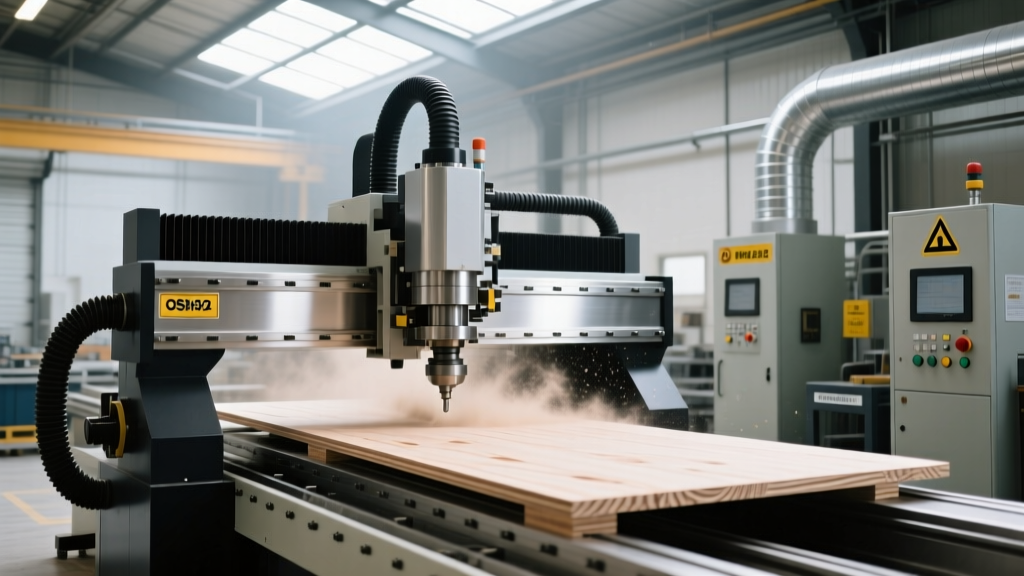
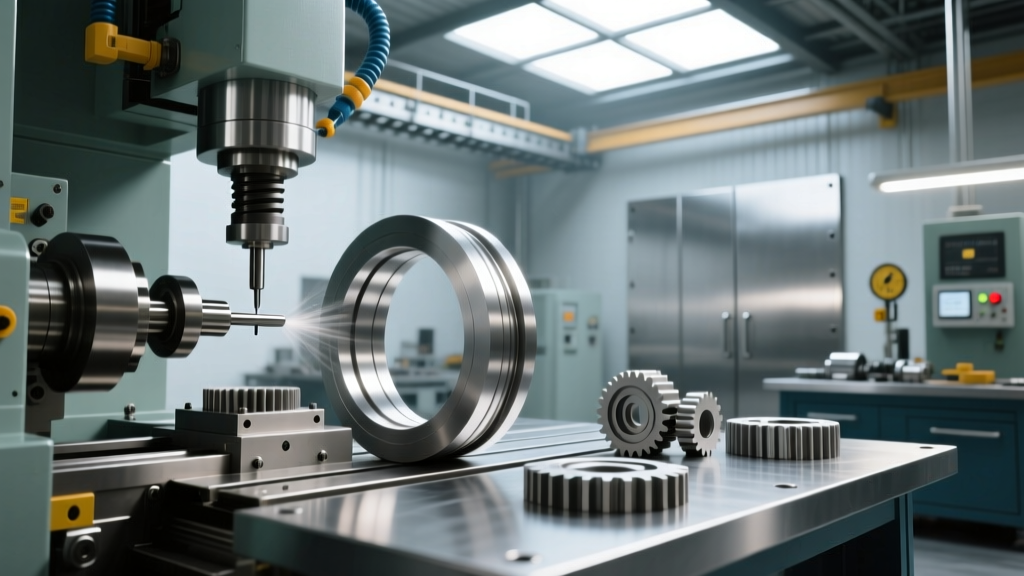
While high-volume O-rings are typically injection molded or extruded, custom low-volume O-rings and complex sealing glands for specialized railcars are frequently CNC machined from solid billets. This introduces severe engineering challenges, particularly when machining PTFE and PEEK for AS568A standard O-ring glands.
The PTFE 'Memory' Effect and Thermal Expansion
PTFE (Teflon) has a thermal expansion coefficient roughly 13 times greater than steel. During CNC turning, the friction heat generated by the cutting tool causes the polymer to expand. Once the part cools to ambient temperature in the Houston summer heat (often exceeding 95°F in unclimate-controlled machine shops), the O-ring shrinks, frequently falling below the required ±0.002-inch tolerance for static face seals.
💡 Engineering Solution: Stress-Relief Annealing
To achieve audit-ready tolerances for CNC machined PTFE O-rings, machine shops must employ a two-step process. First, the PTFE billet is rough-machined to within 0.010 inches of the final dimension. The part is then annealed in a convection oven at 350°F for two hours to relieve internal molding stresses and stabilize the crystalline structure. After cooling to 70°F, the finish pass is executed using single-crystal diamond (SCD) tooling with a high-pressure mist coolant to prevent localized thermal distortion.
Houston Petrochemical Rail Interchanges: The Chemical Resistance Imperative
The Houston Ship Channel and Bayport Industrial District handle millions of tons of corrosive chemicals annually. Standard EPDM or Nitrile (Buna-N) O-rings rapidly degrade when exposed to vinyl chloride, sulfuric acid, or aggressive aromatic solvents transported in DOT-117 tank cars.
When sourcing custom O-rings for these specific rail applications, procurement teams must specify either Perfluoroelastomer (FFKM) or PTFE-encapsulated FKM (Viton). While FFKM offers superior chemical resistance, it is cost-prohibitive for large-scale deployments. PTFE-encapsulated O-rings—featuring a CNC-machined or molded PTFE outer jacket over an FKM core—provide the chemical inertness of Teflon with the elastic memory of rubber, ensuring the seal maintains compression set resistance over the 10-year service life of a tank car hatch.
Cost & Lead Time Analysis: Machined vs. Molded (2026 Data)
Understanding the economic trade-offs between CNC machining and molding is critical for rail supply chain managers. The table below reflects 2026 market pricing for custom, low-to-medium volume sealing components in the Houston market.
- CNC Machined PEEK O-Rings (Low Volume, 50-100 pcs): $65.00 - $110.00 per unit. Lead time: 3-4 weeks. Ideal for prototype braking systems or legacy locomotive retrofits where molds do not exist.
- CNC Machined PTFE Seals (Medium Volume, 500 pcs): $18.00 - $32.00 per unit. Lead time: 2-3 weeks. Required for complex non-standard AS568 gland geometries.
- Molded FFKM O-Rings (High Volume, 5,000+ pcs): $12.00 - $25.00 per unit. Lead time: 8-12 weeks (due to $15k+ mold tooling costs and extended cure times).
"In the Houston rail sector, the true cost of a sealing component is not its purchase price, but the cost of a hazmat derailment or a tank car rejection at the interchange. Paying a 400% premium for CNC machined, chemically inert PTFE over standard nitrile is standard risk-mitigation protocol for Class I railroads."
Audit-Ready Documentation: What Procurement Teams Must Demand
Supplying the Railway Supply Institute (RSI) network and Class I railroads requires rigorous documentation. A physical part that meets dimensional tolerances will still be rejected at the BNSF or UP receiving dock if the paperwork is incomplete. When issuing RFQs for CNC plastic machining in Houston, mandate the following deliverables:
- First Article Inspection (FAI) per AS9102: Even though AS9102 is an aerospace standard, Class I railroads increasingly demand it for critical safety components. It requires a ballooned drawing and a full dimensional report verifying every feature against the CAD model.
- Material Certifications & Traceability: The machine shop must provide the original resin manufacturer's Certificate of Analysis (CoA) proving the PEEK or PTFE billet meets the specified ASTM D4066 or D4895 lot requirements.
- CMM Reports for O-Ring Glands: Coordinate Measuring Machine reports verifying the groove width, depth, and surface finish (Ra 32 µin or better) of the CNC machined mating hardware to ensure proper O-ring compression.
- RoHS and REACH Compliance Declarations: Mandatory for any rail components that may be integrated into rolling stock destined for international or cross-border (Mexico/Canada) transit.
FAQ: Quick Compliance Answers for Rail Procurement
Can standard Delrin (POM) be used for interior rail applications?
Standard homopolymer POM is highly flammable and fails the UL 94 V-0 requirement for interior transit applications. You must specify a specialized flame-retardant grade like DuPont Delrin® FR530, which achieves a V-0 rating at 1.5mm thickness, to pass FRA and FTA safety audits for passenger or locomotive cab interiors.
Why do CNC machined PTFE O-rings require special installation tools?
Unlike elastomeric O-rings, PTFE has virtually no elastic stretch limit before permanent deformation or tearing occurs. Maintenance crews at Houston rail yards must use specialized step-shaft installation cones and PTFE-compatible lubricants (like Krytox) to seat CNC machined PTFE O-rings into AS568 glands without nicking the sealing surface.
What is the shelf life of CNC machined PEEK and PTFE components?
Unlike elastomers (which degrade via ozone cracking and have a strict 5-to-10-year shelf life per ASTM D395), properly stored CNC machined PEEK and PTFE components have an indefinite shelf life. They do not absorb moisture or degrade under UV exposure, making them ideal for strategic spare parts inventory in rail maintenance depots.