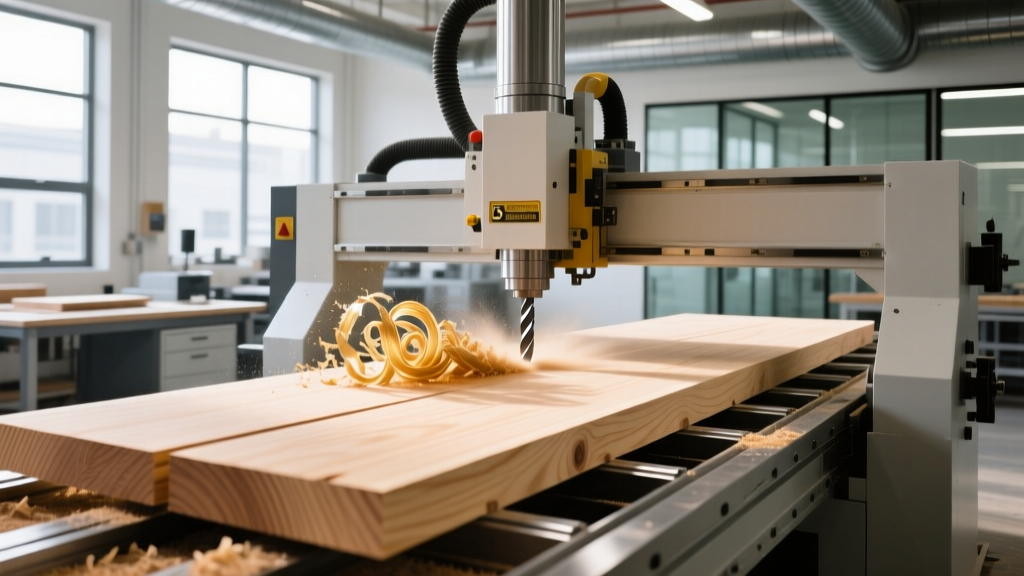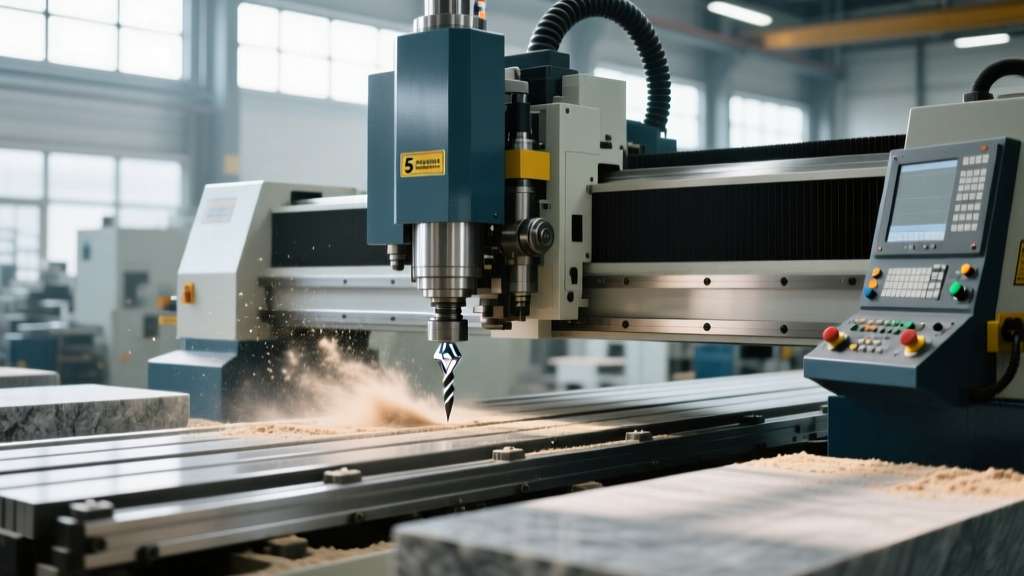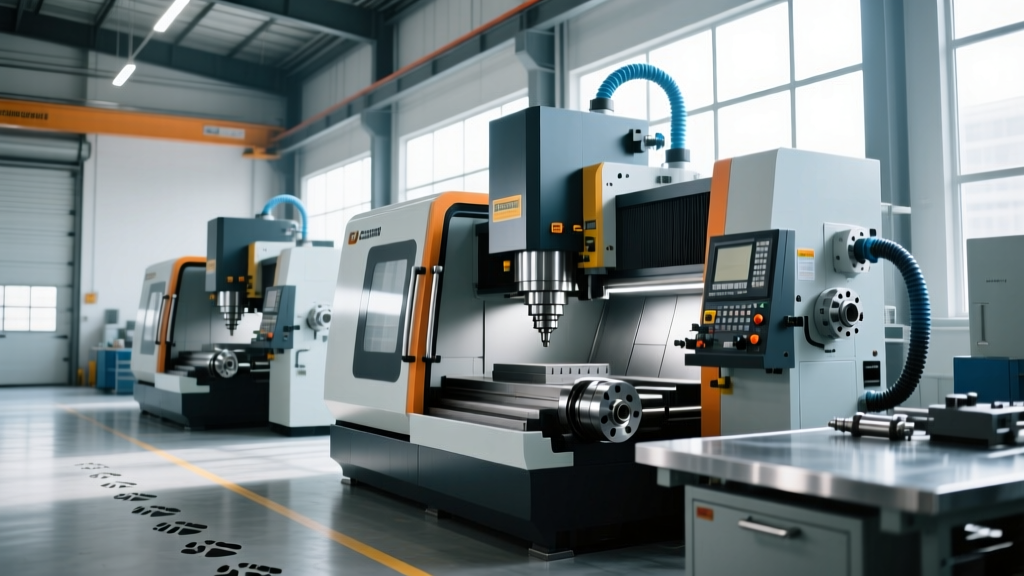
Selecting CNC Mills for CNC-Machined Aluminum in 2026
Compare top CNC mills, spindles, and tooling for CNC-machined aluminum in 2026. Expert specs on rigidity, RPM, and coolant for 6061 and 7075 alloys.
The Kinematic Reality of Aluminum Milling
Buying a CNC mill for aluminum requires unlearning the 'heavy iron' dogma that dominates steel and titanium machining. While mass and damping are critical for hard metals, CNC-machined aluminum demands an entirely different machine architecture: extreme kinematic agility, high-frequency spindles, and advanced chip evacuation systems. In 2026, the primary bottleneck in aluminum production is rarely spindle torque; it is axis acceleration, jerk control, and the machine's ability to maintain programmed feed rates through complex 3D contours without dwelling and melting the workpiece.
The RPM Trap: Do not buy a machine based solely on peak RPM. A 15,000 RPM spindle that loses torque above 10,000 RPM will stall when running 1/2-inch end mills at high surface footage. Always request the spindle's continuous torque curve (S1 duty), not just the peak power rating.2026 Equipment Matrix: Top Mills for Aluminum Production
The market has bifurcated into high-speed production cells and high-torque vertical machining centers (VMCs). Below is a comparison of three dominant platforms for CNC-machined aluminum, reflecting current 2026 pricing and specifications.
| Machine Model | Spindle Spec (RPM / Power) | Axis Acceleration | Est. Base Price (2026) | Best Application |
|---|---|---|---|---|
| Datron NEO | 24,000 RPM / 8.5 kW | 1.8g (High Jerk Limit) | $115,000 - $125,000 | Thin-wall enclosures, consumer electronics, MQL milling |
| Haas VF-2SS | 12,000 RPM (20k opt) / 30 HP | 0.5g (Standard VMC) | $92,000 - $108,000 | Aerospace 7075-T6, high-volume block roughing, deep pockets |
| Tormach 1500MX | 10,000 RPM / 11.5 HP | 0.3g (BT30 Class) | $28,500 - $34,000 | Prototyping, low-volume 6061-T6, job shop secondary ops |
Spindle & Toolholder Synergy: The HSK Advantage
When machining aluminum at speeds exceeding 18,000 RPM, standard CAT40 or BT40 toolholders become a liability. The centrifugal force causes the spindle nose to expand (bell-mouthing), which pulls the toolholder inward and alters the Z-axis datum. Furthermore, the retention knob pull-stud can fail catastrophically at high RPMs.
For dedicated aluminum production, specify an HSK-A63 or HSK-E50 interface. The HSK (Hollow Shank Taper) system utilizes a 1:10 taper with a dual-contact face-and-taper clamping mechanism. As centrifugal force increases, the hollow shank expands slightly, actually tightening the grip. According to the Haas Super Speed series documentation, machines equipped with inline direct-drive spindles and HSK interfaces maintain Z-axis repeatability within 0.0002 inches even during 20,000 RPM rapid decelerations.
Coolant Delivery Architectures
Aluminum's high thermal conductivity and tendency to form a built-up edge (BUE) make coolant delivery as important as the cutting tool itself. Choose your machine's coolant system based on your specific alloy and part geometry.
- Flood Coolant (Standard 200-300 PSI): Adequate for general 6061-T6 face milling and shallow pocketing. However, flood coolant often fails to penetrate the cutting zone at high RPMs, instead deflecting off the air vortex generated by the spinning tool.
- Through-Spindle Coolant (TSC) at 1000+ PSI: Mandatory for deep cavity milling in 7075-T6. High-pressure TSC breaks the chip at the root and forces fluid directly into the shear zone, preventing chip welding to the flute.
- Minimum Quantity Lubrication (MQL): Systems like those integrated into the Datron NEO atomize a biodegradable oil into a fine mist. MQL is superior for thin-wall profiling and engraving, eliminating the thermal shock that causes thin aluminum webs to warp. It also removes the need for expensive aqueous coolant filtration and disposal.
Tooling Geometry: The 3-Flute Standard and Polished Flutes
The tooling ecosystem for CNC-machined aluminum has evolved significantly. While 2-flute end mills were historically the standard for chip clearance, modern CNC kinematics favor 3-flute carbide end mills with variable helix angles (35° to 45°). The third flute allows for a 50% increase in feed rate at the same chip load, drastically reducing cycle times.
According to material removal strategies outlined by Sandvik Coromant's material guidelines, the rake angle and flute polish are more critical than the coating itself. For gummy alloys like 2024-T3, specify uncoated micro-grain carbide with a mirror-polished flute surface (Ra < 0.2 µm). If a coating is required to prevent abrasive wear in silicon-heavy cast alloys (like A380), use Zirconium Nitride (ZrN) or Titanium Diboride (TiB2). Avoid TiAlN or AlTiN coatings entirely; the aluminum in the coating creates a chemical affinity with the workpiece, accelerating BUE formation.
Decision Framework: Matching Machine to Alloy
Not all aluminum is created equal. The specific cutting force and chip morphology dictate the required machine architecture. Use this framework to align your capital expenditure with your primary material stream.
Scenario A: High-Volume 6061-T6 (Consumer Goods, Automotive Brackets)
Material Trait: Low specific cutting force (~800 N/mm² as noted by Machining Doctor), produces long, stringy chips.
Machine Requirement: Prioritize high rapid traverse rates (1,000+ IPM), high acceleration, and MQL or high-volume flood coolant to flush stringy chips from the work envelope. Tool changers with sub-1.5 second chip-to-chip times are critical for minimizing non-cut time in high-feature-count parts.
Scenario B: Aerospace 7075-T6 (Structural Ribs, Bulkheads)
Material Trait: Higher cutting forces (~1400 N/mm²), often machined from thick billets requiring deep axial depth of cut (DOC). Prone to residual stress warping.
Machine Requirement: Prioritize static rigidity, high-torque spindles at mid-range RPMs (8,000 - 12,000 RPM), and 1000+ PSI TSC. A heavier VMC like the Haas VF-2SS or a Makino horizontal machining center (HMC) is required to dampen the vibrations caused by aggressive roughing passes in deep pockets.
Scenario C: 2024-T3 & 5052-H32 (Thin Walls, Sheet Metal Routing)
Material Trait: Highly gummy, low yield strength, prone to burring and deflection.
Machine Requirement: High-speed spindles (20,000+ RPM) to maintain high surface speeds with small diameter tools (1/8" to 1/4"). The machine must have excellent jerk control to prevent dwell marks on thin walls during contouring. Vacuum workholding integration via the machine table is highly recommended.
Capital Allocation: Where to Spend Your Budget
When configuring a new mill for aluminum, reallocate funds from traditional heavy-cutting options to high-speed optimization:
- Skip the 4th-Axis Brake (Unless Mill-Turning): Standard aluminum parts rarely require heavy braking torque on the rotary table. Save $4,000 and invest in a higher RPM spindle option.
- Upgrade the Control Look-Ahead: Ensure the CNC control (e.g., Fanuc 31i, Siemens 840D, or Haas NGC) supports at least 200 blocks of look-ahead. This is non-negotiable for 3D surfacing and high-speed contouring to prevent feed-rate starvation.
- Invest in Chip Conveyors: Aluminum generates 3x the volume of chips compared to steel for the same weight removal. A high-capacity hinge-belt conveyor with a steep incline is mandatory to prevent chip jamming in the sump.
- Thermal Stability Packages: Aluminum expands at roughly 13 µm/m/°C. If holding tolerances below 0.0005 inches, invest in the machine's thermal compensation package and spindle chiller unit to maintain Z-axis datum stability over 12-hour production shifts.