CNC Machining Centers for Plastics (2026)
Compare top CNC machining centers for plastics in 2026. Specs on spindles, vacuum workholding, and pricing for PEEK and PTFE.
Why Standard VMCs Fail as CNC Machining Centers for Plastics
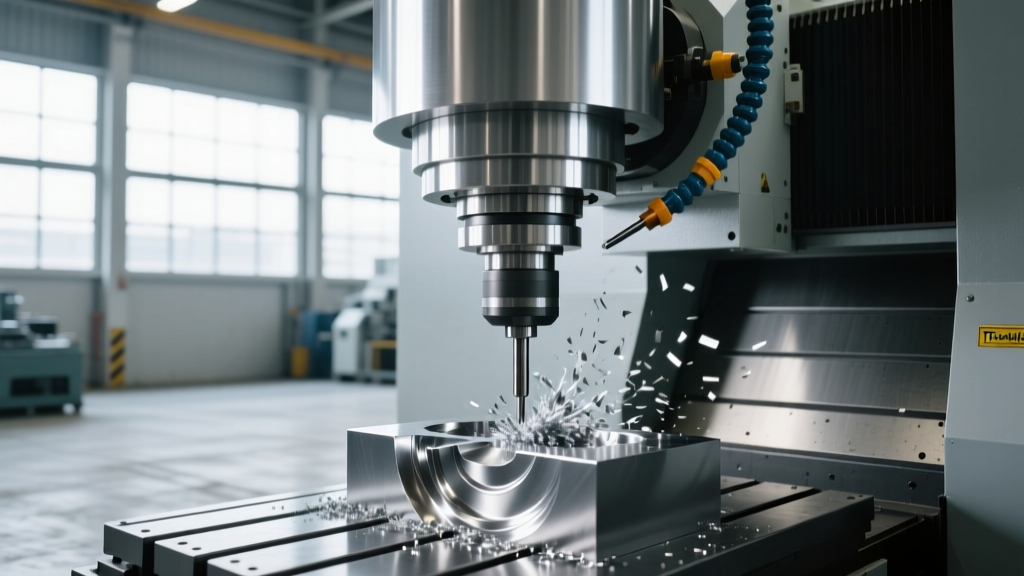
Transitioning from metal to advanced polymers requires a fundamental shift in equipment selection. Standard vertical machining centers (VMCs) designed for steel or aluminum typically max out at 8,000 to 10,000 RPM and rely on high-torque motors. When applied to engineering plastics like PEEK, PTFE (Teflon), or Polycarbonate, these low-RPM, high-torque spindles generate excessive friction. The result is localized melting, stringing, and severe thermal expansion that ruins tight-tolerance medical and aerospace components.
Thermal Deformation Warning: Plastics possess a coefficient of thermal expansion (CTE) up to 10 times greater than aluminum. A 1°C temperature rise in a PEEK workpiece can cause dimensional shifts of 0.0005 inches per inch of material. Flood coolant, standard on metal VMCs, will cause hygroscopic plastics (like Nylon and PEEK) to absorb moisture and warp post-machining.Dedicated CNC machining centers for plastics prioritize ultra-high spindle speeds (18,000–24,000+ RPM), low-mass tool holders, and specialized chip evacuation systems to keep heat in the chip rather than the workpiece.
Spindle and RPM Requirements for Polymer Milling
To achieve a glass-like edge finish on acrylic (PMMA) or prevent burring on UHMW-PE, the cutting tool must maintain a high surface speed (SFM) while keeping the chip load high enough to shear the material cleanly. If the spindle cannot reach the required RPM, the tool rubs instead of cuts.
- Acrylic (PMMA): Requires 1,000–1,500 SFM. A standard 0.25-inch endmill demands 15,000 to 22,000 RPM to prevent edge crazing and micro-fractures.
- PEEK & PPS: Demands 18,000+ RPM with aggressive air-blast chip evacuation to prevent chip re-welding in deep pockets.
- PTFE (Teflon): Extremely soft; requires ultra-high RPM (20,000+) with specialized O-flute geometries to prevent the material from smearing under cutting pressure.
2026 Machine Models Optimized for Plastics
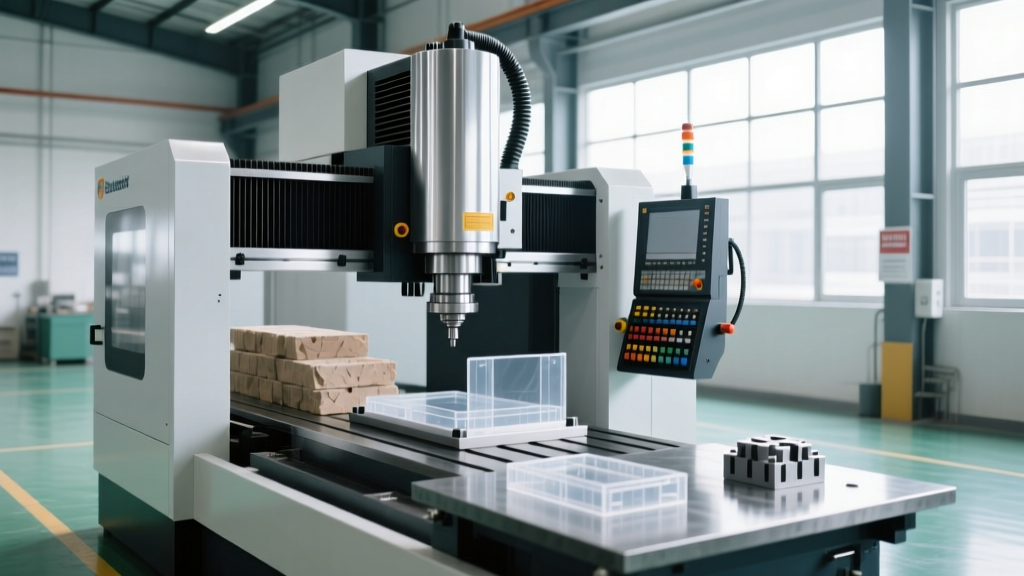
The 2026 market for polymer-specific machining centers is split between high-precision medical mills and large-format industrial routers. Below is a comparison matrix of the leading platforms currently available.
| Machine Model | Max Spindle RPM | Work Envelope | 2026 Base Price (Est.) | Best Application |
|---|---|---|---|---|
| Datron neo | 24,000 RPM | 20' x 16' x 10' | $125,000 - $140,000 | Medical PEEK, micro-milling, tight-tolerance inserts |
| Haas DT-1 (15k Option) | 15,000 RPM | 20' x 16' x 16' | $82,000 - $95,000 | Mid-volume Polycarbonate, Acrylic enclosures |
| Axyz Infinite Series | 18,000 RPM (Router) | 5' x 10' (4x8 zone) | $55,000 - $75,000 | Large-format UHMW, Nylon sheets, vacuum hold |
| Syil X7 (HS Spindle) | 24,000 RPM | 17' x 11' x 11' | $28,000 - $35,000 | Prototyping, low-volume PTFE and Delrin |
For job shops focusing on medical implants or aerospace connectors, the Datron neo remains the industry benchmark due to its integrated automation and mist-cooling calibration. For high-mix, large-sheet processing (such as cutting UHMW wear pads), a 3-axis gantry router like the Axyz Infinite paired with a dedicated vacuum matrix is vastly more cost-effective.
Tooling Geometries: The Hidden Variable in Equipment ROI
Buying a 24,000 RPM machine is only half the equation. Tooling experts at Harvey Tool consistently highlight that standard 2-flute or 3-flute carbide endmills designed for aluminum will fail in plastics due to inadequate chip clearance. When selecting tooling for your new machining center, enforce these specifications:
1. The O-Flute (Single Flute) Mandate
Single-flute 'O-flute' endmills feature a massive gullet that allows thick, stringy plastic chips to evacuate instantly. In PTFE and HDPE, a 2-flute tool will pack chips into the flutes within seconds, causing the tool to act like a friction welder and melt the workpiece.
2. Rake and Relief Angles
Plastics require high positive rake angles (typically 15° to 20°) to shear the material cleanly with minimal cutting force. Furthermore, primary and secondary clearance angles must be increased to prevent the heel of the tool from rubbing against the elastic recovery (spring-back) of the machined plastic wall.
3. Up-Cut vs. Down-Cut Routing
- Down-Cut: Pushes chips downward. Essential for vacuum-held thin sheets to prevent top-edge fraying and lifting.
- Up-Cut: Pulls chips upward. Mandatory for deep pocketing in Delrin (POM) to prevent chip recutting and subsequent dimensional inaccuracy.
Workholding: Vacuum vs. Mechanical Clamping
Standard vise clamping induces stress deformation in low-durometer plastics. When the vise releases, the plastic springs back, leaving you with a warped part that fails CMM inspection.
'For any polymer sheet under 0.5 inches thick, mechanical clamping is a liability. A properly zoned vacuum chuck with a porous aluminum top plate and a 60+ CFM dry vacuum pump is non-negotiable for holding flatness tolerances under 0.002 inches across a 24-inch span.' — Manufacturing Engineering Lead, Tier 2 Aerospace Supplier
When configuring your CNC machining center for plastics, allocate $8,000 to $15,000 of your capital budget for a specialized vacuum workholding system. Ensure the machine controller supports M-code macros to automatically zone the vacuum pods based on the specific footprint of the part being machined, maximizing holding force while minimizing air leakage.
Coolant Strategies: Air Blast and MQL
Flood coolant is strictly prohibited for most engineering plastics. Instead, 2026 polymer machining centers utilize Minimum Quantity Lubrication (MQL) or high-pressure air blasts.
Pro-Tip for Acrylic Milling: Do not use any liquid coolant or MQL when machining optical-grade acrylic. The chemical interaction can cause micro-crazing. Use a localized, high-volume compressed air blast (minimum 80 PSI at the nozzle) combined with a spindle chiller to maintain tool temperature.Frequently Asked Questions (FAQ)
Can I machine PEEK on a standard 8,000 RPM VMC?
Technically yes, but economically no. At 8,000 RPM, you must use very small chip loads to avoid tool breakage, which causes the tool to rub. This generates massive heat, melting the PEEK and ruining the surface finish. You will spend more money in scrapped $150/lb PEEK billets than the cost of upgrading to a high-speed spindle.
What is the best way to remove static buildup during plastic routing?
Static electricity attracts plastic chips back to the cutting zone, causing secondary cuts and surface scratching. Install an ionized air gun or an anti-static bar mounted directly to the Z-axis head of your machining center to neutralize the workpiece in real-time.
How do I prevent delamination when CNC machining carbon-fiber-reinforced PEEK?
Use diamond-coated (CVD) compression routers. The compression geometry pushes the top layers down and the bottom layers up simultaneously, shearing the fibers cleanly without pulling the laminate apart. Run the spindle at 20,000+ RPM and use high-pressure air to clear the abrasive carbon dust, which will rapidly degrade standard carbide tools.
For deeper insights into polymer-specific toolpaths and speeds/feeds calculations, consult the material processing guidelines published by Modern Machine Shop and your specific resin manufacturer's technical data sheets.
Related reading

OSHA Compliance for Service-Based CNC Operations: Practical Requirements, Common Violations, and Real-World Mitigation Strategies
CNC Machine Cutting Metal: Milling vs. Laser vs. Plasma vs. Waterjet