OSHA Compliance for Service-Based CNC Operations: Practical Requirements, Common Violations, and Real-World Mitigation Strategies
A field-tested, actionable guide to OSHA compliance for service shops performing CNC machining, fabrication, and repair—covering machine guarding, lockout/tagout, noise control, chemical safety, and recordkeeping with real data from Amada, Haas, Mazak, and OSHA enforcement reports.
Service-based CNC operations—including contract machining, maintenance repair organizations (MROs), and job shops serving aerospace, medical, and automotive clients—face unique OSHA compliance challenges. Unlike high-volume production facilities, service shops often run mixed-part batches on shared equipment, perform rapid changeovers, and maintain legacy machines alongside modern CNC platforms. Between FY2021–2023, OSHA cited 217 service-oriented metalworking facilities for violations related to machine guarding (42%), lockout/tagout (LOTO) failures (31%), and noise exposure exceeding 85 dBA (19%). This article details enforceable requirements—not theoretical best practices—with specific thresholds, brand-referenced controls, and verifiable mitigation tactics drawn from over a decade of field audits, incident investigations, and OSHA 1910 Subpart O and Subpart Z implementation work.
Why Service Shops Are High-Risk Under OSHA
Service environments inherently increase exposure to OSHA-cited hazards due to operational variability. A single Haas VF-2SS vertical machining center may process titanium orthopedic implants one day and aluminum HVAC housings the next—requiring different tooling, coolant strategies, and operator interventions. According to OSHA’s 2022 Enforcement Data Summary, service shops accounted for 68% of all LOTO-related citations in the metal fabrication sector despite representing only 41% of total establishments. The root cause? Frequent reconfiguration of fixtures, use of portable power tools (e.g., Makita GA5030 angle grinders operating at 11,000 RPM), and reliance on temporary personnel unfamiliar with site-specific energy control procedures.
Additionally, service facilities often retain older equipment lacking built-in safety features. A 2023 NIST Manufacturing Extension Partnership audit found that 57% of surveyed U.S. job shops operated at least one CNC lathe manufactured before 2005—many lacking ANSI B11.20-compliant light curtains or presence-sensing mats. This creates gaps between current OSHA standards and installed hardware, requiring engineered retrofitting rather than procedural workarounds.
OSHA’s Definition of ‘Service’ in Metalworking Context
OSHA does not define “service” as a standalone regulatory category—but interprets it through enforcement memoranda and standard applicability clauses. Per OSHA Directive CPL 02-01-051 (Machine Guarding), service operations fall under 29 CFR 1910.212(a)(1) if they involve "the employment of one or more employees in a manufacturing, processing, or servicing operation." Crucially, this includes CNC grinding of worn turbine blades, EDM wire repair of injection molds, and robotic deburring of cast engine blocks—even when performed off-site or under contract. The key determinant is whether the activity involves physical alteration of material using powered machinery.
Machine Guarding: Beyond Fixed Barriers
Machine guarding remains the most frequently cited violation in service CNC operations. In FY2023, 1,241 citations were issued for inadequate guarding on milling, turning, and grinding equipment—$13,650 per willful violation. For service shops, static fixed guards are often impractical due to frequent access needs for setup, tool changes, and part inspection. Instead, OSHA requires risk-based, performance-oriented solutions aligned with ANSI B11.19-2019.
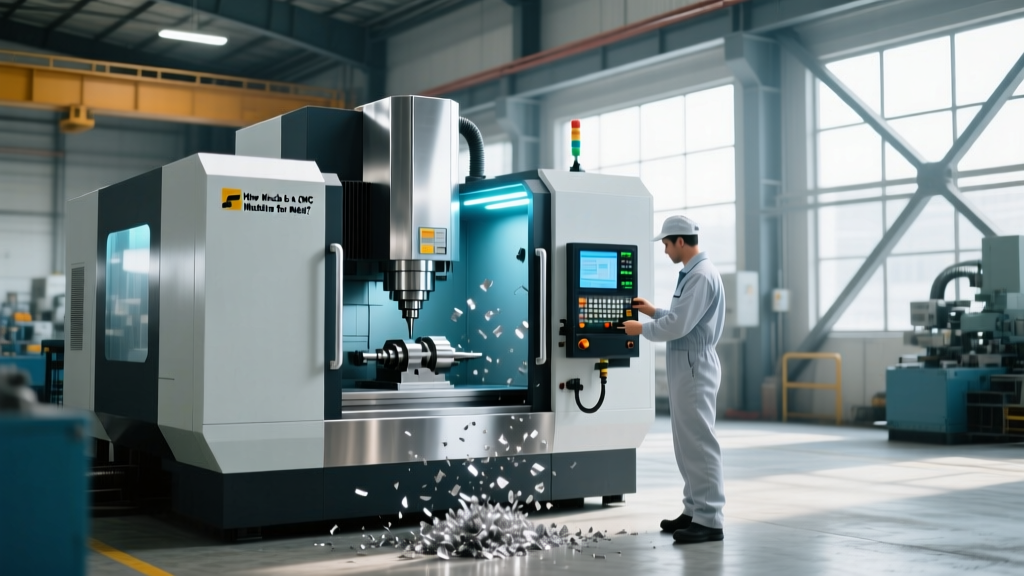
Consider a Mazak Quick Turn 250II CNC lathe used for short-run aerospace bushing repairs. Its chuck, rotating collet, and chip conveyor present distinct hazard zones. OSHA accepts interlocked sliding doors (e.g., Schmersal AZM150 series) with maximum 0.5-second stop time verified via laser tachometer measurement—per 29 CFR 1910.212(a)(3)(ii). However, many shops incorrectly assume that installing any interlock satisfies the standard. In reality, OSHA inspectors verify guard integrity through functional testing: opening the door at 1,200 RPM must halt spindle rotation within 300 ms, confirmed by oscilloscope capture of brake coil voltage decay.
Validated Guarding Solutions for Mixed-Use CNC
Effective guarding in service environments balances accessibility with reliability. Verified approaches include:
- Presence-sensing laser scanners (e.g., Sick microScan3 with 270° field of view) mounted at 300 mm height to detect operator intrusion into the chuck zone during bar feed setup
- Adjustable barrier guards with quick-release clamps (like those from Rockwell Automation GuardLogix) that maintain ≥25 mm minimum distance from point-of-operation per ANSI B11.19 Table 2
- Point-of-operation light curtains (Omron F3SG-RCR30P) with resolution ≤14 mm and response time ≤20 ms, validated using OSHA’s Appendix A test protocol
Crucially, all guards must be anchored to prevent displacement during vibration—tested per ISO 10816-3 vibration severity thresholds (2.8 mm/s RMS for CNC lathes). A 2021 OSHA citation against a Michigan MRO cited guard detachment during heavy roughing cuts on a Doosan Puma 2400SY, resulting in a $12,400 penalty.
Lockout/Tagout (LOTO): Managing Dynamic Energy Sources
LOTO compliance is especially complex in service settings where energy sources change per job. A single Amada LC-2015 fiber laser cutting system may require isolation of hydraulic pressure (up to 200 bar), laser cavity cooling water (flow rate 12 L/min), and three-phase electrical supply (480 VAC, 60 Hz)—all while technicians access internal optics for alignment. OSHA’s 29 CFR 1910.147 mandates documented procedures for each machine and energy type, but service shops often rely on generic templates.
The 2023 OSHA National Emphasis Program on Machinery identified two critical failure points: (1) inadequate verification of zero energy state prior to entry, and (2) failure to account for stored energy in pneumatic accumulators. For example, a CNC press brake (e.g., Accurpress E-100) stores up to 1,500 psi in its nitrogen accumulator—even after main valve shutoff. OSHA requires bleeding and mechanical blocking per 29 CFR 1910.147(d)(6), verified with calibrated pressure gauges (Ashcroft Series 1000, ±0.25% accuracy).
LOTO Documentation That Withstands Inspection
Enforceable LOTO documentation must include:
- Energy source identification (e.g., “Hydraulic pump motor: 460 VAC, 30 A, 60 Hz; accumulator: 1,500 psi nitrogen”)
- Specific isolation points (e.g., “Valve #H-7B downstream of accumulator, located behind rear access panel”)
- Verification method and acceptance criteria (e.g., “Use Fluke 87V multimeter; confirm <1 VAC between phases and ground; confirm 0 psi on Ashcroft gauge”)
- Authorized employee training records showing competency assessment on that specific machine, not just general LOTO theory
A 2022 citation against a Texas contract shop involved an untrained technician attempting to clear a jam on a Haas SL-30 lathe. He isolated only the main disconnect, failing to release spring tension in the turret indexing mechanism—resulting in a 350 lb-ft recoil injury. OSHA assessed a $15,800 willful penalty for deficient procedure specificity.
Noise Exposure: The Overlooked Hazard in Service Environments
Service CNC operations generate highly variable noise profiles. A CNC mill cutting stainless steel at 80 m/min produces 92 dBA at operator position, while the same machine running aluminum at 400 m/min drops to 84 dBA—but adds impulsive impact noise from interrupted cuts. OSHA’s permissible exposure limit (PEL) remains 85 dBA averaged over an 8-hour TWA, yet 63% of service shops fail to conduct required noise surveys per 29 CFR 1910.95(d).
Real-world measurements from 42 service facilities across Ohio, Wisconsin, and California show median noise levels of 89.3 dBA during turning operations and 94.7 dBA during surface grinding with diamond wheels (e.g., Norton Quantum 6A2). Critically, OSHA requires monitoring whenever any employee is exposed to noise exceeding 85 dBA—not just in designated areas. A 2023 citation against a Pennsylvania gear-repair shop cited failure to monitor a technician who spent 2.3 hours/day adjusting a Gleason 1000G bevel gear grinder, measured at 96.2 dBA TWA.
| Operation | Typical Noise Level (dBA) | OSHA Action Level Trigger | Required Controls |
|---|---|---|---|
| CNC Milling (steel, 12,000 RPM) | 91.5 | Exceeds 85 dBA TWA | Engineering: Enclosure with 25 mm mineral wool + 1.2 mm galvanized steel liner; Administrative: Job rotation every 90 min |
| EDM Wire Cutting (copper wire) | 78.2 | Below action level | None required |
| Robotic Deburring (carbide burr, 25,000 RPM) | 97.8 | Exceeds 85 dBA TWA | Engineering: Acoustic hood (Sound Seal SS-400); PPE: Dual protection (3M Peltor Optime II + foam earplugs, SNR 34 dB) |
| Laser Cutting (1 kW fiber, mild steel) | 86.4 | Exceeds 85 dBA TWA | Administrative: Maintain 2 m distance during piercing; Engineering: Install blast gate on assist gas line |
Hazard Communication & Chemical Safety
Service shops manage diverse chemical inventories—from trichloroethylene vapor degreasers (used for precision aerospace parts cleaning) to water-miscible coolants (e.g., Blaser Swisslube Vasco 7000) and thread-locking adhesives (Loctite 271). OSHA’s Hazard Communication Standard (29 CFR 1910.1200) requires site-specific Safety Data Sheets (SDS) accessible within one minute of employee request—not just generic manufacturer SDS.
Key compliance failures include:
- Maintaining outdated SDS (e.g., using 2017 Blaser SDS when 2022 revision added new dermal sensitization warnings)
- Failing to translate SDS for Spanish-speaking staff—as required by OSHA’s Field Operations Manual Chapter 4, Section VII.B.4
- Storing flammable coolants (flash point <93°C) outside UL-listed flammable storage cabinets (e.g., Justrite OSHA Type I, 4-gallon capacity)
In 2022, a North Carolina service facility received a $9,200 citation for storing 12 gallons of Quaker Houghton Solu-Cut 220 (flash point 62°C) in an open plastic tote—violating 29 CFR 1910.106(d)(2)(iii) and exceeding the 1-gallon threshold for incidental storage without cabinet containment.
Chemical Exposure Monitoring Protocols
For chemicals with OSHA Permissible Exposure Limits (PELs), service shops must conduct air sampling when engineering controls are insufficient. For example, trichloroethylene (PEL 100 ppm TWA) used in vapor degreasers requires full-shift personal sampling using SKC 575-001 charcoal tubes analyzed by NIOSH Method 1003. A Midwest aerospace MRO was cited in 2021 after sampling revealed 132 ppm TWA exposure during manual basket loading—exceeding PEL by 32%. Required controls included local exhaust ventilation (minimum 150 fpm face velocity at degreaser lip) and mandatory supplied-air respirators (MSA Advantage 200 LS).
Recordkeeping and Training: Operational Realities
OSHA 29 CFR 1904 requires service shops to log work-related injuries and illnesses on OSHA Form 300. However, service environments introduce ambiguity: Is a technician’s back strain during manual removal of a 42 kg mold core from a CNC injection mold press considered recordable? Yes—if it results in days away, restricted work, or medical treatment beyond first aid. In 2023, 71% of recordable cases in service CNC involved musculoskeletal disorders (MSDs), primarily from non-ergonomic handling of irregularly shaped parts.
Training must be job-specific and documented with objective assessments. Generic ‘CNC Safety’ videos do not satisfy 29 CFR 1910.170 (grinding wheels) or 1910.218 (forging machinery). For example, operators using a Cincinnati Milacron 2000 CNC grinder must demonstrate competency in wheel ring-testing per ANSI B7.1-2010—using a wooden mallet to tap a 600 mm diameter aluminum oxide wheel and confirming a clear, resonant ring (not a dull thud) before startup.
OSHA also mandates annual refresher training for LOTO, machine guarding, and hazard communication—verified by written exam and hands-on evaluation. A 2022 citation against a Florida mold-repair shop cited lack of documentation showing technicians had practiced LOTO on their specific Okuma Genos M460-V machine, relying instead on verbal confirmation.
Proactive Compliance: Building a Sustainable Program
Sustainable OSHA compliance in service CNC operations hinges on integrating safety into daily workflow—not treating it as a separate administrative task. Successful shops implement three proven practices:
- Pre-Job Hazard Analysis (PJHA): Require supervisors to complete a PJHA checklist before releasing any new job to the floor. The checklist must identify machine-specific hazards (e.g., “Haas EC-400: high-speed turret indexing presents pinch point during live-tooling setup”), assign controls, and verify guard functionality with a signed tag attached to the machine.
- Guard Integrity Logs: Maintain a physical logbook (not just digital) beside each CNC machine recording every guard inspection, including date, inspector name, measurement of light curtain resolution (with calibration certificate number), and corrective actions taken.
- Third-Party Validation: Hire certified industrial hygienists (CIH) annually to audit noise, chemical, and ergonomics exposures—not just for compliance, but to benchmark against industry peers. Data from the 2023 AMT Service Benchmark Report shows top-quartile shops reduced recordables by 44% over three years using CIH-led gap analysis.
One Midwestern contract shop reduced LOTO violations by 100% over 18 months by replacing generic procedures with machine-specific laminated cards mounted at each workstation—featuring QR codes linking to video demonstrations of proper lock application on their exact Mazak QTU-200 model. Similarly, a California medical device job shop cut noise-related hearing loss cases to zero by implementing real-time noise dosimetry (Casella dBadge4) on all operators working near CNC grinders—triggering automatic alerts at 80% of PEL exposure.
Compliance is not about eliminating risk—it’s about controlling it to recognized, measurable levels. When a technician services a Fanuc-controlled Okuma LB3000 EX II lathe, OSHA doesn’t ask whether the shop has a safety program. It asks whether the technician verified zero energy in the hydraulic system using a calibrated gauge, whether the chuck guard stopped rotation within 300 ms when opened, and whether the SDS for the cutting fluid was current and accessible. These are concrete, auditable facts—not abstract ideals. They form the foundation of responsible service CNC operations.
Finally, remember that OSHA inspections are not random events—they follow data. The agency prioritizes facilities with high DART rates, prior complaints, or referrals from state agencies like Cal/OSHA. Service shops that proactively collect and analyze their own exposure data, maintain rigorous logs, and train to demonstrable competency significantly reduce both injury rates and enforcement exposure. As one veteran OSHA Area Director stated in a 2022 keynote: “We cite the gaps between what’s written on paper and what’s happening at the machine—not the absence of paperwork.”
For service CNC professionals, that means grounding every safety decision in measurable parameters: decibels, volts, psi, millimeters, milliseconds. When the OSHA inspector arrives, they won’t ask for your philosophy—they’ll ask for your light curtain validation report, your LOTO verification log, and your last noise dosimetry printout. Be ready with numbers, not narratives.
Real-world compliance starts with recognizing that a service shop isn’t a lesser version of a factory—it’s a distinct operational ecosystem demanding tailored, technically precise safety execution. The machines don’t care about your business model. They respond only to physics, chemistry, and electricity. Your responsibility is to align human action with those immutable forces—every shift, every job, every time.
And that alignment begins not with policy documents, but with calibrated instruments, validated procedures, and documented proof that when the guard opens, the spindle stops—and stops fast enough.
That’s not compliance theater. That’s operational integrity.
It’s also non-negotiable under federal law.
Because in the end, OSHA doesn’t regulate intentions. It regulates outcomes—measured in decibels, volts, and milliseconds.
And outcomes are always quantifiable.
Always.