Case Study: 5-Axis CNC Machine for Metal Fabrication in Aerospace
Discover how a mid-sized aerospace supplier used a 5-axis CNC machine for metal fabrication to cut Ti-6Al-4V cycle times by 82% and slash scrap.
The Shift from 3-Axis to 5-Axis in Tier-2 Aerospace
Tier-2 aerospace suppliers in 2026 face strict margin constraints and OEM demands for aggressive annual cost-downs on structural airframe components. For mid-sized machine shops, relying on legacy 3-axis vertical machining centers (VMCs) to produce complex, multi-sided titanium and Inconel parts is no longer economically viable. The cumulative tolerance stack-up from multiple fixturing setups inevitably drives scrap rates upward, while extended cycle times destroy profitability.
This case study examines how AeroFab Solutions, a representative 40,000-square-foot precision manufacturing facility in Ohio, overcame severe production bottlenecks by integrating a specialized 5-axis cnc machine for metal fabrication of Ti-6Al-4V landing gear trunnion brackets. By transitioning from a multi-setup 3-axis workflow to a single-setup 5-axis dynamic milling strategy, the facility achieved an 82% reduction in cycle time and a 90% drop in scrap rates.
Executive Summary: Project Metrics
- Material: Ti-6Al-4V (Grade 5 Titanium)
- Component: Landing Gear Trunnion Bracket (14 x 8 x 5 inches)
- Previous Workflow: 3-Axis VMC, 3 separate setups, 4.5 hours total cycle time
- New Workflow: 5-Axis Simultaneous Machining, single setup, 48 minutes total cycle time
- Capital Investment: $238,500 (Machine, Tooling, Workholding)
- ROI Payback Period: 11.5 Months
Facility Profile & The Fabrication Bottleneck
AeroFab Solutions primarily services tier-1 aerospace integrators, producing structural brackets, bulkheads, and actuator housings. The specific component causing the bottleneck was a landing gear trunnion bracket machined from a 120-pound solid billet of Ti-6Al-4V. Titanium is notoriously difficult to machine due to its low thermal conductivity and high chemical reactivity at elevated temperatures, which accelerates tool wear and promotes built-up edge (BUE).
The Problem: Tolerance Stack-Up and Scrap
On their legacy 3-axis VMCs, machinists had to manually flip and re-fixture the part three times to access all critical geometric features. The true position tolerances on the intersecting bore holes were held to ±0.0005 inches. Every time the part was moved to a new vise setup, microscopic debris or clamping distortion introduced a new variable. This tolerance stack-up resulted in a 12% scrap rate. At $450 per raw billet, scrap costs alone were bleeding the shop's margins on this specific contract.
Selecting the Right CNC Machine for Metal Fabrication
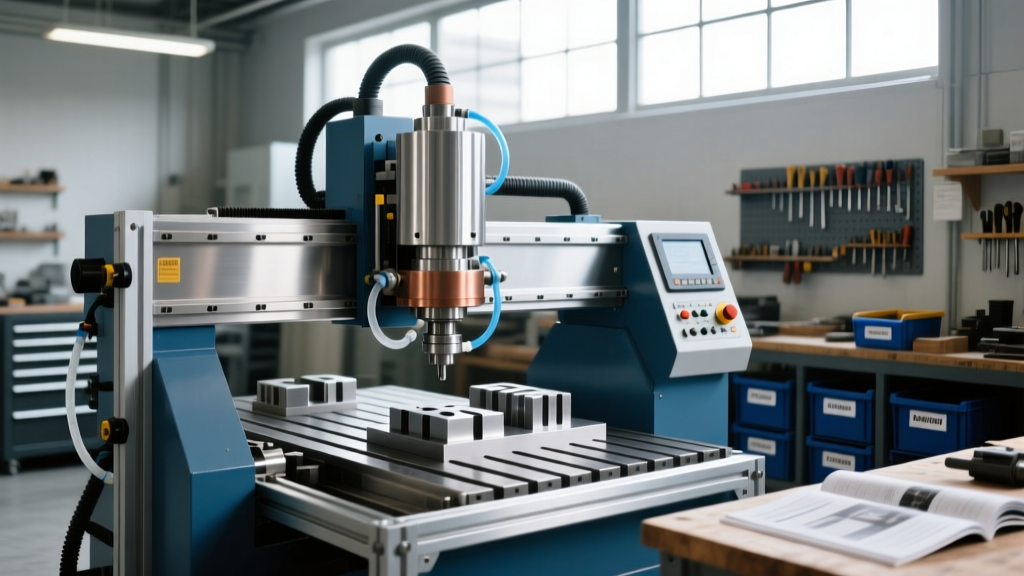
When evaluating a CNC machine for metal fabrication tasks involving exotic aerospace alloys, spindle torque at low RPMs, rapid traverse rates, and high-pressure coolant capabilities are non-negotiable. AeroFab's engineering team benchmarked three leading 5-axis platforms in the $200,000 to $400,000 range.
| Machine Model | Base Price (Est.) | Spindle Spec | Work Envelope | Verdict for Titanium |
|---|---|---|---|---|
| Haas UMC-750SS | $225,000 | 12,000 RPM, 50-Taper, Inline Direct Drive | 30 x 20 x 18 in | Excellent torque at low RPM; best value for heavy roughing. |
| Mazak VARIAXIS i-700 | $395,000 | 15,000 RPM, HSK-63A | 33 x 27 x 23 in | Superior thermal stability and Mazatrol CNC, but high capital cost. |
| DMG MORI DMU 50 3rd Gen | $310,000 | 15,000 RPM, SK40/HSK-A63 | 25 x 20 x 18 in | Exceptional surface finishes, but work envelope slightly restrictive. |
AeroFab ultimately selected the Haas Automation UMC Series, specifically configuring the UMC-750SS with a 12,000 RPM inline direct-drive spindle and a 1,000 PSI through-spindle coolant (TSC) system. The 50-taper spindle provided the necessary rigidity and low-end torque required for aggressive roughing in titanium, while the integrated trunnion table easily accommodated the 14-inch bracket.
Implementation: Tooling, Fixturing, and CAM Programming
Acquiring the hardware was only 40% of the solution. Machining Ti-6Al-4V efficiently on a 5-axis platform requires a complete overhaul of toolpath strategies and workholding.
Overcoming Chatter in Deep Pocket Milling
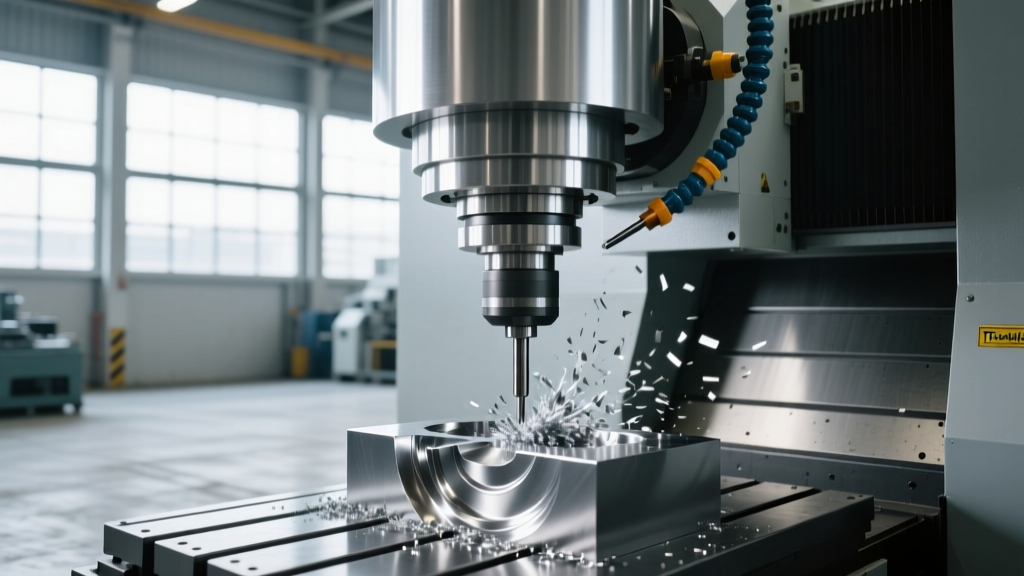
The trunnion bracket featured a 4.5-inch deep pocket with 0.25-inch corner radii. On a 3-axis machine, this required extended-length end mills that deflected heavily, causing severe chatter and premature tool failure. By leveraging 5-axis simultaneous tool tilt (lead and tilt angle manipulation), the CAM programmers could maintain optimal cutting engagement while using shorter, more rigid tooling.
Using Mastercam 2026, the team implemented dynamic motion toolpaths. According to Sandvik Coromant's titanium milling guidelines, maintaining a constant radial engagement is critical to prevent heat concentration. The shop utilized Sandvik CoroMill 316 indexable end mills with PVD-coated carbide inserts for roughing, and Harvey Tool miniature reach end mills for finishing the tight floor radii.
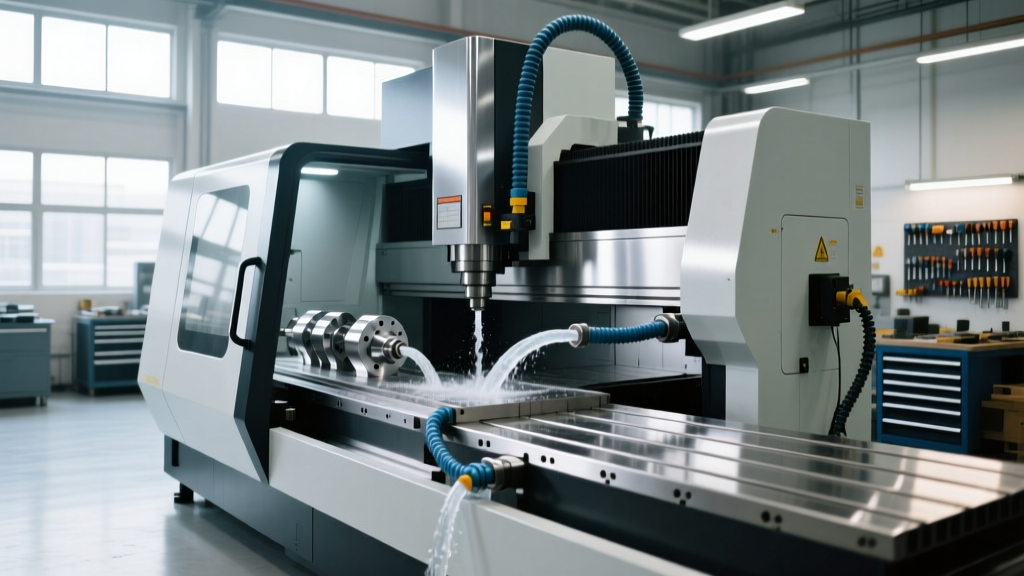
Critical Titanium Machining Parameter: When roughing Ti-6Al-4V, never use dry cutting or flood coolant alone. AeroFab mandated 1,000 PSI through-spindle coolant to effectively evacuate chips from the deep pockets and cool the cutting edge directly. Without high-pressure TSC, chip re-welding to the cutting edge will destroy a $150 end mill in under 4 minutes.Fixturing and Zero-Point Clamping
To eliminate the 45-minute manual setup times associated with dialing in vises, AeroFab installed a Schunk zero-point clamping system directly onto the UMC-750SS trunnion table. Custom tombstone fixtures were built with Mitee-Bite pitbull clamps. This allowed operators to load and secure the raw billet off-machine, dropping the physical setup and probing time from 45 minutes down to exactly 4 minutes.
"The moment we tilted the B-axis by 15 degrees during the dynamic roughing pass, the spindle load dropped from 85% to 40%, and the harmonic chatter completely vanished. We were finally letting the machine's kinematics do the work instead of forcing the tool."
— Lead Manufacturing Engineer, AeroFab Solutions
ROI and Cycle Time Reduction Data
The transition to a 5-axis workflow fundamentally altered the unit economics of the trunnion bracket contract. Below is the direct comparison of the production metrics before and after the implementation.
- Roughing Cycle Time: Reduced from 145 minutes to 22 minutes (84% improvement via dynamic milling and optimized chip thinning).
- Finishing Cycle Time: Reduced from 85 minutes to 18 minutes (simultaneous 5-axis swarf machining eliminated multiple Z-level passes).
- Setup & Inspection Time: Reduced from 45 minutes to 4 minutes per part using zero-point fixturing and Renishaw OMP60 on-machine probing.
- Total Cycle Time (Part-to-Part): Dropped from 270 minutes (4.5 hours) to 48 minutes.
- Scrap Rate: Plummeted from 12% to 1.5%, saving approximately $54,000 annually in raw material waste on this single part number.
With a production volume of 1,200 brackets annually, the time savings translated to over 4,400 reclaimed spindle hours per year. This freed up capacity allowed AeroFab to absorb two additional tier-2 contracts without purchasing a second machine, effectively paying off the $238,500 capital investment in just under a year.
Lessons Learned for Fabrication Shops
For job shops and dedicated fabricators looking to upgrade their capabilities, this case study highlights three non-obvious realities of 5-axis metal fabrication:
- Spindle Taper Matters More Than RPM for Titanium: While 15,000+ RPM HSK-63 spindles are excellent for aluminum aerospace structures, heavy titanium milling demands the rigidity and torque of a 50-taper or HSK-A100 interface to prevent tool deflection.
- CAM Software is the Bottleneck: A 5-axis CNC machine for metal fabrication is entirely useless if your CAM programmers do not understand tool axis control, collision avoidance, and dynamic motion toolpaths. Budget at least $15,000 for advanced CAM seats and specialized 5-axis training.
- High-Pressure Coolant is Mandatory: Standard 300 PSI washdown coolant is insufficient for exotic alloys. Upgrading to a 1,000 PSI variable-displacement pump is a prerequisite for extending tool life and maintaining dimensional accuracy in deep-cavity milling.
By aligning machine kinematics, advanced toolpaths, and rigid workholding, fabrication shops can transform unprofitable, high-scrap aerospace contracts into highly efficient, high-margin production streams.