Safety Compliance Guide: CNC Machine for Aluminum Extrusions
Ensure OSHA and NFPA 484 compliance when operating a CNC machine for aluminum extrusions. Learn guarding, swarf extraction, and interlock specs.
When selecting or operating a cnc machine for aluminum extrusions, facility managers typically prioritize spindle torque, axis travel, and clamping configurations. However, machining long-span, hollow aluminum profiles (such as 6063-T5 or 6061-T6 alloys) introduces severe, unique safety hazards that standard vertical machining centers do not present. The combination of high-speed profile 'whip,' continuous stringy swarf, acoustic resonance, and combustible dust requires strict adherence to specialized safety frameworks.
This guide details the exact engineering controls, regulatory standards, and compliance costs required to safely operate long-bed extrusion machining centers like the Elumatec SBZ 122, Emmegi Satellite XT, or Fom Industrie TAIGA in a modern manufacturing environment.
Core Regulatory Framework
Compliance for extrusion CNCs is not governed by a single standard. It requires synthesizing OSHA 1910.212 (General Machine Guarding), NFPA 484 (Standard for Combustible Metals), and ISO 16090-1 (Machine Tools Safety - Milling). Failure to integrate these can result in catastrophic deflagration or severe impact injuries.
Containing the 'Whip' Effect: Guarding Long Extrusions
The most immediate physical danger when using a cnc machine for aluminum extrusions is the 'whip' effect. When a 6-meter (20-foot) hollow extrusion is clamped only at the ends and subjected to a 15,000 RPM side-milling operation, the unsupported center span can vibrate violently. If a clamp loses pneumatic pressure or a tool catches a burr, the kinetic energy stored in the flexing profile can cause it to snap out of the machine envelope.
Material Specifications for Physical Barriers
Standard acrylic or thin PETG shields will shatter upon impact from a whipping aluminum profile. Safety directors must specify mar-resistant, high-impact polycarbonate.
- Material: Lexan Margard (MR-10) or Makrolon AR polycarbonate.
- Thickness: Minimum 10mm (0.39 inches) for primary impact zones directly adjacent to the spindle; 6mm acceptable for upper and rear enclosures.
- Mounting: Never bolt polycarbonate directly through the sheet, as this creates stress concentrations that lead to cracking. Use captive aluminum U-channels with neoprene gaskets to allow for thermal expansion and vibration dampening.
Combustible Swarf and NFPA 484 Compliance
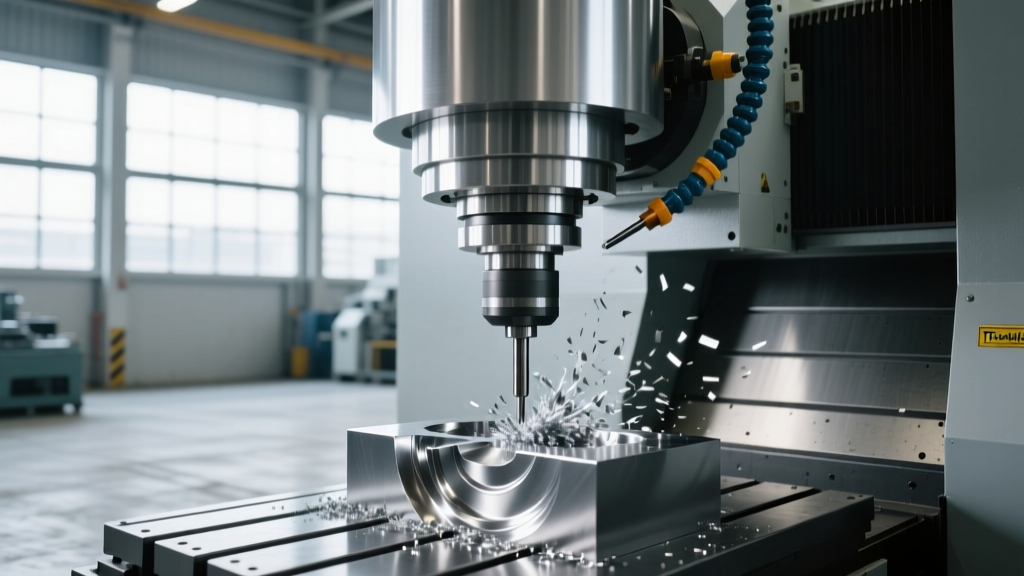
Aluminum swarf generated from dry or Minimum Quantity Lubrication (MQL) machining of extrusions is highly combustible. Unlike cast iron or steel, aluminum chips have a high surface-area-to-mass ratio. If a standard industrial vacuum with a paper filter is used to extract this swarf, a single spark from the spindle or a static discharge can trigger a thermite-like deflagration inside the collection bin.
Under NFPA 484, aluminum dust and chips must be managed with specialized extraction systems. Standard shop vacuums are strictly prohibited in production environments.
| Extraction System Type | NFPA 484 Compliance | Estimated Cost (2026) | Operational Notes |
|---|---|---|---|
| Standard Dry Cyclone | Non-Compliant | $4,000 - $8,000 | High risk of static ignition; banned for aluminum. |
| ATEX Zone 22 Certified Dry Vacuum | Compliant (with conditions) | $12,000 - $18,000 | Requires strict grounding, anti-static hoses, and explosion venting. |
| Wet Scrubber / Immersion System | Fully Compliant | $28,000 - $45,000 | Safest method. Swarf is submerged in water or oil, eliminating ignition risk. |
Pro-Tip for MQL Systems: If your extrusion CNC uses Minimum Quantity Lubrication, ensure the extraction vacuum is rated for wet/dry separation. Aluminum chips coated in MQL oil can clump and block standard dry filters, leading to motor burnout and potential ignition.
Acoustic Resonance and Operator Exposure Limits
Hollow aluminum extrusions act as natural acoustic resonators. When a carbide end mill engages the thin walls of a 6063-T5 curtain wall profile at 18,000 RPM, the hollow cavity amplifies the cutting noise. Unshielded long-bed extrusion machines routinely generate 98 to 108 dBA at the operator's station.
OSHA mandates an action level of 85 dBA for an 8-hour time-weighted average (TWA), and a hard ceiling limit of 115 dBA. Prolonged exposure to the high-frequency squeal of aluminum extrusion machining causes rapid sensorineural hearing loss.
Engineering Controls for Noise
- Acoustic Enclosures: Fully enclosing the machining zone with 10mm polycarbonate lined with 2-inch thick melamine foam (e.g., Basotect) can reduce emitted noise by 12-18 dBA.
- Profile Dampening: Inserting specialized polyurethane mandrels or acoustic foam into the hollow chambers of the extrusion before clamping can break the resonance frequency, reducing cutting noise by up to 8 dBA at the source.
- Spindle Tuning: Utilizing CNC controllers with adaptive spindle speed variation (SSV) disrupts the regenerative chatter effect that causes peak acoustic spikes.
Safety Interlocks and Control Reliability
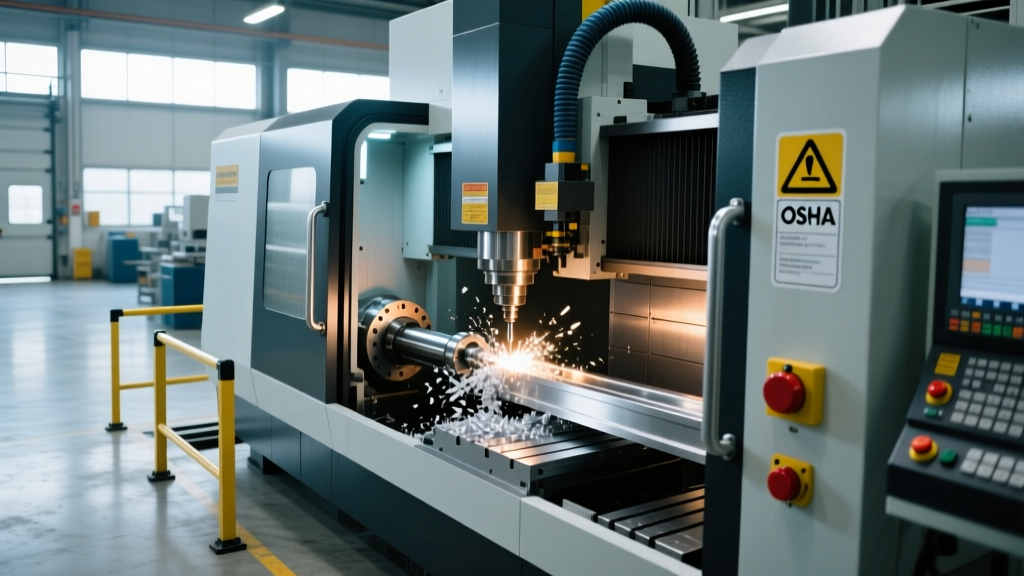
The access doors on a cnc machine for aluminum extrusions are often exceptionally wide (up to 3 meters) to allow overhead cranes to load heavy profile bundles. Securing these massive doors requires redundant safety interlocks that meet ISO 13849-1 Performance Level (PL) d or PL e, Category 3 or 4.
Mechanical limit switches with keyed tongues are obsolete for this application; the heavy vibration of long-bed machines causes mechanical switches to fail or misalign within months. Modern compliance requires RFID non-contact safety sensors.
- Recommended Hardware: Sick TR10 or Schmersal BNS 40s RFID safety switches.
- Wiring Topology: Dual-channel wiring is mandatory. If the door opens, Channel 1 drops the spindle enable signal (Safe Torque Off - STO), while Channel 2 triggers the mechanical spindle brake.
- Guard Locking: Because extrusion spindles can take 15+ seconds to spin down from 20,000 RPM, doors must be equipped with solenoid guard locks (e.g., Schmersal AZM400) that physically prevent door opening until the spindle encoder confirms 0 RPM.
Pneumatic Clamping Safety and Slip Prevention
Extrusion CNCs rely on pneumatic horizontal and vertical clamps to hold the profiles. A drop in shop air pressure can cause clamps to release mid-cycle. To comply with safety standards, the machine's pneumatic circuit must include a pressure switch tied directly to the safety PLC.
If shop air drops below the safe clamping threshold (typically 6 bar / 87 psi for heavy milling), the safety PLC must immediately halt the feed axes. Furthermore, clamp jaws must be fitted with high-friction polyurethane pads (Shore A hardness 85-90) to prevent the extrusion from slipping longitudinally under heavy axial cutting forces, which can cause tool breakage and projectile hazards.
2026 Retrofit Cost Estimates for Legacy Machines
Many fabrication shops operate legacy extrusion machining centers (10-15 years old) that lack modern NFPA 484 extraction and ISO 13849-1 interlocks. Below is a realistic budget for upgrading a standard 7-meter 3-axis extrusion CNC to current safety compliance standards:
| Upgrade Component | Specification | Estimated Cost |
|---|---|---|
| RFID Interlocks (3 doors) | Sick TR10 + Solenoid Locks + Safety Relay | $4,200 |
| Polycarbonate Shielding | 12 sq meters of 10mm Lexan Margard | $3,800 |
| Pneumatic Safety Valve | SMC dump valve with pressure monitoring | $1,100 |
| ATEX Wet Scrubber Vacuum | Nilfisk or Ruwafa aluminum-rated wet system | $34,000 |
| Total Estimated Compliance Retrofit | $43,100 | |
Operating a cnc machine for aluminum extrusions safely requires moving beyond basic PPE and addressing the unique physics of long, hollow metal profiles. By implementing NFPA-compliant wet extraction, specifying mar-resistant polycarbonate guarding, and upgrading to RFID-based dual-channel interlocks, facility managers can eliminate the primary hazards of extrusion machining while maintaining high throughput in architectural and aerospace fabrication environments.