Troubleshoot Coolant & Enclosures on the Most Expensive CNC Machine
Learn to troubleshoot enclosure seals and high-pressure coolant systems on the most expensive CNC machine in your shop to prevent catastrophic failures.
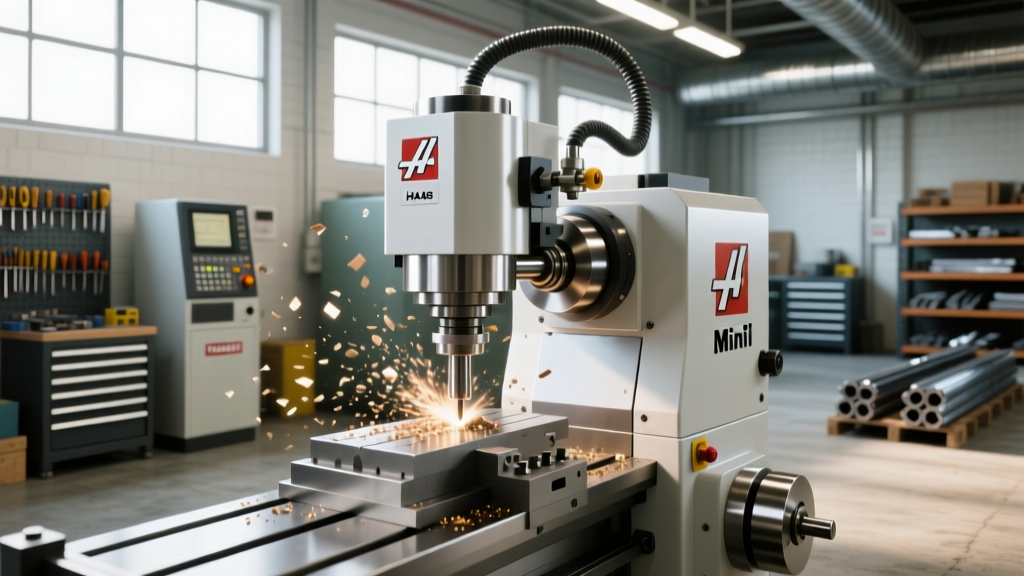
When a precision manufacturing facility invests $1.2 million to $2.5 million in a 5-axis machining center like the Hermle C 400 or the DMG Mori DMU 50 3rd Generation, that asset instantly becomes the most expensive CNC machine on the shop floor. Protecting this capital investment requires looking beyond the spindle and control. The machine's enclosure and high-pressure coolant systems are the primary defensive barriers against catastrophic failure. A compromised way cover or a leaking through-spindle coolant (TSC) rotary union can introduce abrasive swarf or moisture directly into the spindle bearings or linear guideways, resulting in $60,000+ repair bills and weeks of downtime.
⚠️ HIGH-PRESSURE HAZARD WARNING: Modern 5-axis centers utilize TSC systems operating between 70 bar (1,000 psi) and 150 bar (2,175 psi). Never inspect coolant lines, rotary unions, or enclosure feed-throughs while the pump is pressurized. Hydraulic injection injuries at these pressures are severe and require immediate surgical intervention.Diagnosing Through-Spindle Coolant (TSC) Rotary Union Leaks
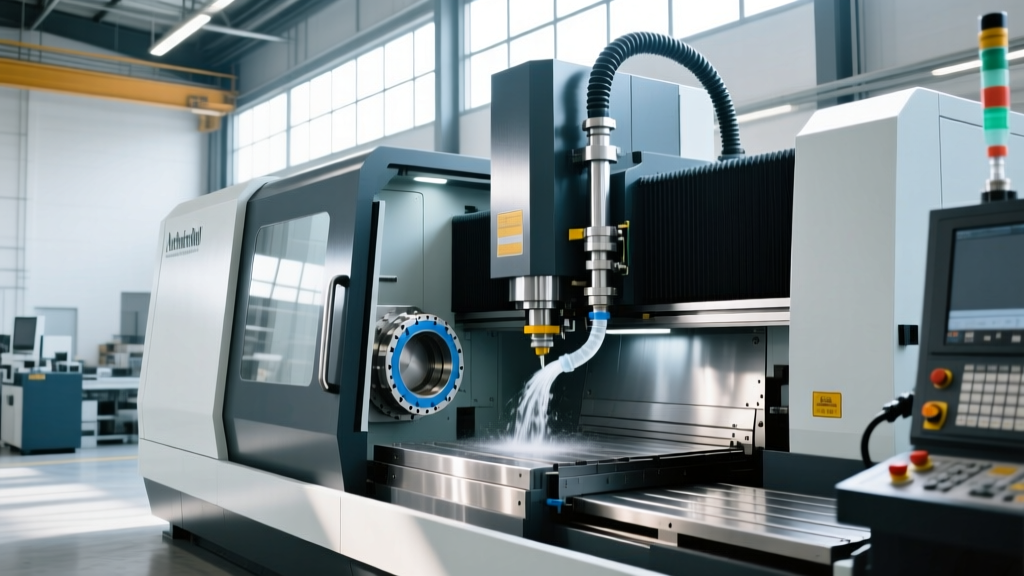
The TSC rotary union is the critical junction where stationary high-pressure coolant lines meet the rotating spindle. On the most expensive CNC machine in your lineup, this component endures extreme rotational speeds (up to 20,000 RPM) while sealing 100+ bar of fluid pressure. When the internal mechanical seals degrade, coolant bypasses the labyrinth seal and migrates into the spindle bearing housing.
Symptoms of Impending Rotary Union Failure
- Spindle Temperature Spikes: Coolant mixing with spindle grease creates a viscous emulsion, increasing drag and raising the spindle housing temperature by 10°C to 15°C above baseline.
- Pressure Drops at the Nozzle: If your 70 bar pump is only registering 55 bar at the tool tip (measured via a inline flow meter), internal bypassing is occurring at the union.
- Visible Weeping at the Labyrinth: A fine mist or droplets forming at the spindle nose cap during high-pressure cycles.
Step-by-Step Rotary Union Troubleshooting Protocol
- Isolate and Depressurize: Lock out the TSC pump and bleed the accumulator pressure. Wait 15 minutes for residual pressure to drop to zero.
- Disconnect the Feed Lines: Remove the high-pressure hoses from the union housing. Inspect the O-rings on the quick-disconnect fittings; replace any that show flat-spotting or extrusion.
- Perform a Static Pressure Test: Attach a manual hydrostatic test pump to the union inlet. Pressurize to 1.2x the machine's maximum operating pressure (e.g., 84 bar for a 70 bar system). Hold for 5 minutes. A pressure drop of more than 2 bar indicates worn internal carbon-graphite seal faces.
- Inspect the Labyrinth Purge: Verify that the air purge line (which creates an air curtain to stop coolant migration) is delivering a minimum of 0.5 bar of clean, dry shop air. A clogged purge filter is the leading cause of premature seal failure.
Enclosure Way Cover Failures: Swarf Ingression and Tension Loss
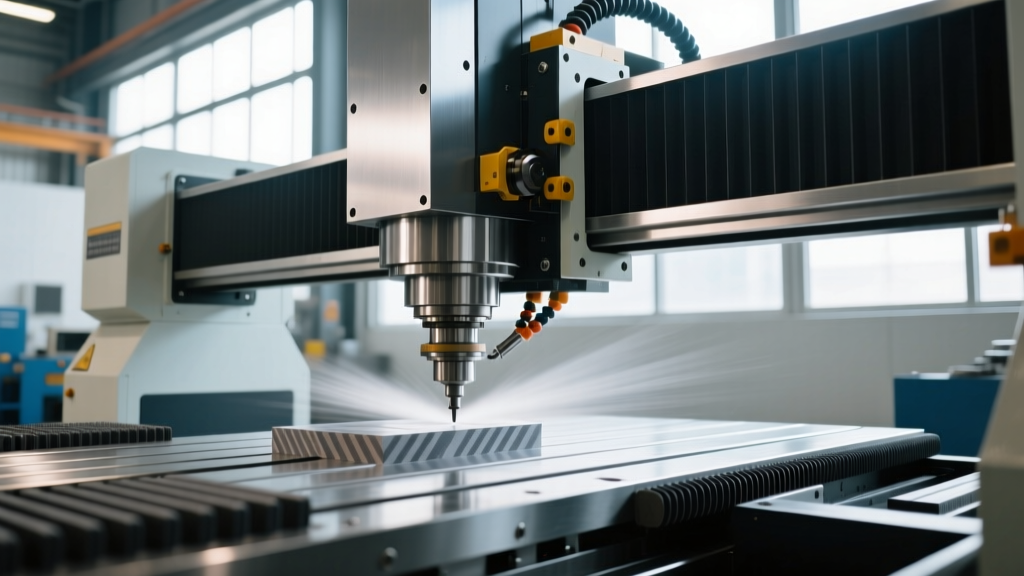
High-end machining centers utilize complex telescopic steel way covers or multi-axis polyurethane bellows to protect the X, Y, and Z linear guideways. On a high-speed 5-axis machine, the Z-axis and Y-axis covers are subjected to rapid acceleration forces exceeding 1G. The most common failure mode is not the cover material itself, but the wiper seals that scrape swarf off the cover surfaces.
Material Selection: NBR vs. FKM (Viton) Wipers
Using the wrong wiper material on the most expensive CNC machine in your shop is a critical error. Standard Nitrile Butadiene Rubber (NBR) wipers degrade rapidly when exposed to modern semi-synthetic and synthetic metalworking fluids, especially at the elevated temperatures generated by aerospace titanium milling.
| Wiper Material | Durometer (Shore A) | Coolant Compatibility | Max Temp | 2026 Avg. Cost per Axis |
|---|---|---|---|---|
| NBR (Nitrile) | 75A - 85A | Straight oils, light emulsions | 80°C (176°F) | $120 - $180 |
| FKM (Viton) | 85A - 92A | Synthetics, high-alkaline fluids | 150°C (302°F) | $350 - $550 |
| Polyurethane (PU) | 90A - 95A | Excellent abrasion resistance | 90°C (194°F) | $250 - $400 |
Troubleshooting Tip: If you notice way covers 'bunching' or failing to retract smoothly, check the scissor mechanism tension. Over-tensioning the brass glide shoes to compensate for worn wipers will burn out the axis servo motors. Always replace wipers with 92A FKM when machining abrasive composites or hardened steels, as the higher durometer resists micro-chipping from sharp swarf.
Enclosure Pressurization and Mist Containment
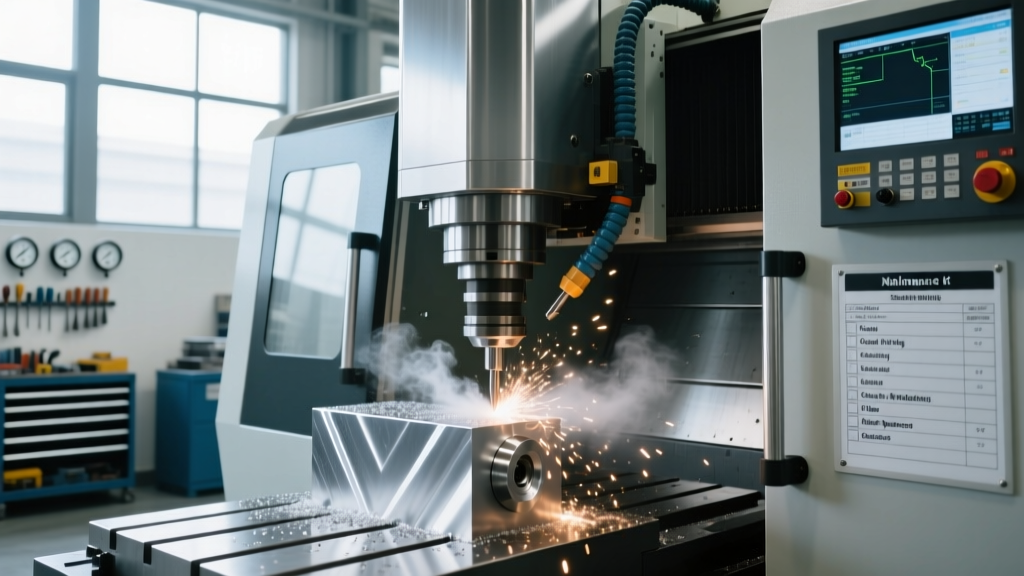
The enclosure on a premium 5-axis machine is not just a splash guard; it is a pressurized environmental chamber. High-pressure coolant generates massive volumes of aerosolized mist. To protect the shop environment and comply with OSHA regulations regarding metalworking fluid exposure, high-end enclosures utilize negative pressure systems tied to centralized mist collectors.
Calibrating Enclosure Negative Pressure
If the enclosure loses its seal, toxic mist escapes into the facility, and coolant condenses on the machine's external electronics, leading to PCB corrosion. Conversely, if the mist collector pulls too much CFM (Cubic Feet per Minute), it creates excessive vacuum, pulling fine graphite or aluminum dust into the spindle taper.
- Measure the Differential Pressure: Use a digital manometer. Place one probe inside the machining envelope and one outside. The target differential pressure for a sealed 5-axis enclosure is -0.05 to -0.10 inches of water column (in. w.c.).
- Inspect the Door Seals: The primary failure point is the extruded EPDM rubber bulb seal on the main operator doors. Over time, the constant slamming compresses the bulb, causing it to lose its memory. If the seal does not rebound to its original 12mm diameter within 3 seconds of the door opening, replace the entire seal run.
- Check the Roof Labyrinth: High-speed spindles generate heat that rises. Ensure the roof exhaust baffles are not clogged with dried coolant residue, which restricts airflow and causes internal fogging that blinds the machine vision and tool monitoring cameras.
"According to guidelines published by the CDC and NIOSH, maintaining proper enclosure integrity and ventilation is critical not just for machine health, but for preventing operator respiratory illnesses linked to aerosolized metalworking fluids. A $2,000 mist collector upgrade is negligible compared to the health liabilities of a failing enclosure."
Preventative Maintenance Matrix for High-Capital Assets
Troubleshooting is reactive; maintaining the most expensive CNC machine in your portfolio requires a rigid, data-driven preventative schedule. The following matrix aligns with ISO 16090-1 safety standards for machining centres, ensuring that enclosure and coolant subsystems do not become the weak link in your production line.
| Component | Interval | Action Required | Estimated 2026 Cost |
|---|---|---|---|
| TSC Rotary Union Purge Filter | Every 500 Hours | Replace 5-micron coalescing filter element to ensure dry air to labyrinth. | $45 - $85 |
| Coolant Pump Accumulator Bladder | Every 2,000 Hours | Check nitrogen pre-charge pressure. Recharge to 60% of max system pressure. | $150 (Service) |
| Way Cover Wiper Blades | Every 4,000 Hours | Inspect for micro-tears. Replace all X/Y/Z wipers with FKM equivalents. | $800 - $1,500 |
| Enclosure Door EPDM Seals | Annually | Perform compression-set test. Replace if rebound is slower than 3 seconds. | $300 - $600 |
By treating the enclosure and coolant delivery systems as precision components rather than mere accessories, you safeguard the geometric accuracy and longevity of your highest-value machining assets. Ignoring a $50 wiper seal or a $45 air filter on a million-dollar machine is a false economy that inevitably ends in catastrophic spindle or guideway failure.