How Smart Power Setups Drive CNC Machine Technician Salary Trends
Discover how advanced CNC electrical requirements, IoT power monitoring, and regenerative drives are reshaping the CNC machine technician salary in 2026.
The Convergence of CNC Power Architecture and Technician Compensation
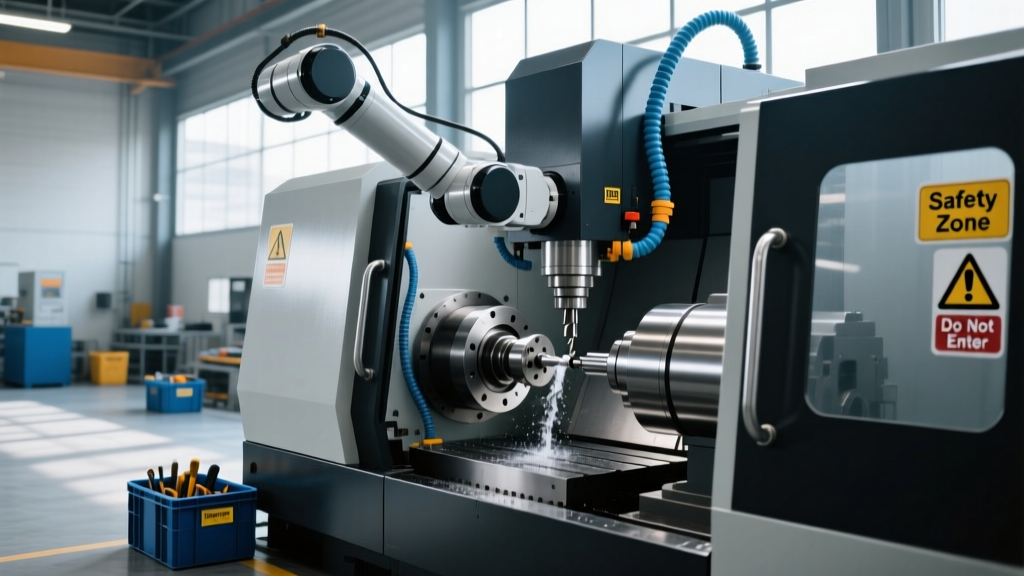
Manufacturing facilities are no longer simply plugging CNC mills into standard 240V drops and hoping for the best. The integration of Active Front End (AFE) drives, IoT edge power monitoring, and strict Total Harmonic Distortion (THD) limits has radically transformed CNC electrical requirements. This technological leap has created a severe skills gap on the shop floor, directly inflating the CNC machine technician salary for professionals who can navigate high-voltage, smart-grid-connected machinery.
As 5-axis machining centers and multi-tasking lathes demand cleaner, more stable power to protect sensitive nano-finish surface tolerances, the electrical infrastructure supporting them has become exponentially more complex. Facilities that fail to upgrade their power setups face catastrophic controller failures, while technicians who master these advanced electrical architectures are commanding unprecedented wages in 2026.
2026 Salary Snapshot: The Electrical Premium
Standard Mechanical CNC Tech: $58,000 - $65,000 / year
Advanced Electrical/PLC CNC Tech: $85,000 - $98,000 / year
Power Quality & Automation Specialist: $105,000+ / year
Data reflects national averages for Tier 1 and Tier 2 aerospace and medical device manufacturing sectors.
The Shift from Legacy Drops to Smart Power Architectures
Historically, CNC power setup involved a basic disconnect switch, a set of fuses, and a direct connection to the facility's 480V 3-phase bus. Today, modern CNC electrical requirements mandate isolated, conditioned, and monitored power delivery. The proliferation of regenerative braking modules—which feed kinetic energy back into the facility grid during rapid spindle deceleration—requires bidirectional power flow management that legacy systems simply cannot handle.
| Feature | Legacy Power Setup (Pre-2018) | Smart Power Setup (2026 Standard) |
|---|---|---|
| Voltage Delivery | Direct 480V/240V 3-Phase | Isolated 480V via K-Factor Transformers |
| Harmonic Mitigation | None (Passive Line Reactors at best) | Active Harmonic Filters (e.g., Schaffner AHF) |
| Spindle Drive Tech | Standard VFDs with dynamic braking resistors | Active Front End (AFE) Regenerative Drives |
| Monitoring | Visual indicator lights, basic ammeters | IoT Edge Meters (Modbus TCP/IP to SCADA) |
Specific Electrical Complexities Commanding Premium Pay
The modern CNC machine technician salary is heavily weighted toward those who can troubleshoot the intersection of high-voltage power electronics and low-voltage logic controls. Three specific electrical domains are driving this compensation gap:
1. Harmonic Mitigation and IEEE 519 Compliance
Advanced 5-axis machines like the DMG MORI DMU 50 or Mazak INTEGREX draw highly non-linear loads. When multiple CNCs operate on the same bus, they generate harmonic distortion. If the Total Harmonic Distortion (THD) exceeds the 5% limit recommended by IEEE standards, it causes severe overheating in facility transformers and can fry the sensitive logic boards of Fanuc or Siemens CNC controllers. Technicians who can properly deploy and tune arc flash and power quality safety protocols while utilizing tools like the Fluke 435-II power quality logger to map harmonic frequencies are invaluable. Specifying and installing active harmonic filters requires a deep understanding of phase angles and reactive power (kVAR), a skillset that pushes technician salaries into the upper $90k range.
2. Active Front End (AFE) and DC Bus Troubleshooting
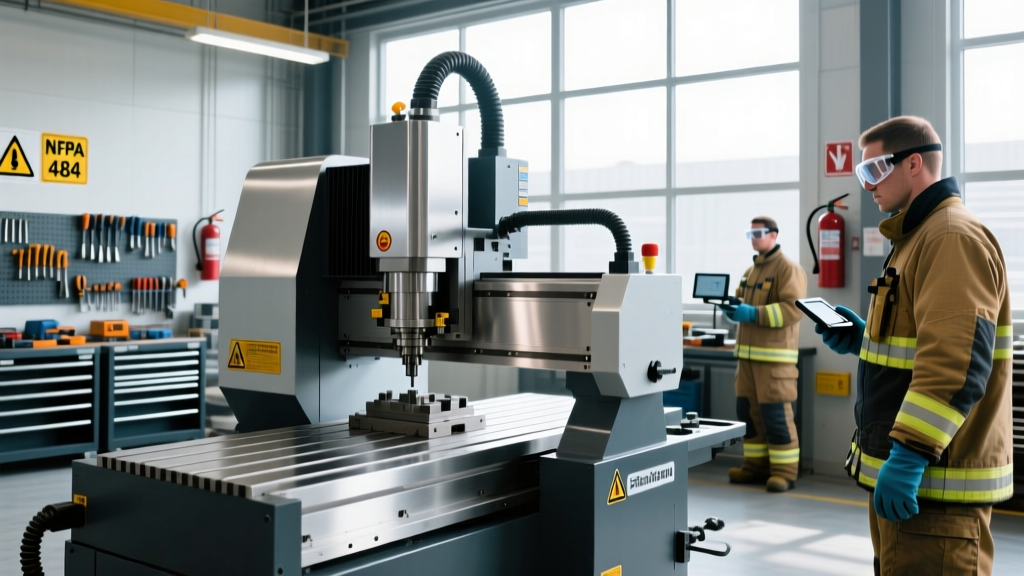
Regenerative drive systems, such as the Siemens SINAMICS S120, utilize an Active Front End to convert AC to DC and back again with near-unity power factor. The DC bus voltages on these systems routinely sit between 600V and 800V DC. Troubleshooting a blown Insulated-Gate Bipolar Transistor (IGBT) on a regen module is highly dangerous and requires strict adherence to NFPA 70E arc flash safety standards. Technicians certified in high-voltage DC bus diagnostics and safe lockout/tagout (LOTO) procedures for capacitive energy storage are in critically short supply.
3. IoT Edge Power Monitoring Integration
Facilities are now installing Phoenix Contact EMpro energy meters directly inside the CNC electrical cabinet. These meters track real-time power consumption, voltage sags, and phase imbalances, transmitting data via Modbus TCP/IP or OPC-UA to the plant's SCADA system. A technician who can map PLC registers to integrate power data into the machine's HMI (Human-Machine Interface) bridges the gap between electrician and automation engineer, justifying a massive premium in their compensation package.
2026 CNC Machine Technician Salary Matrix by Electrical Skillset
According to data tracking industrial machinery mechanics and electromechanical technicians, base compensation is no longer sufficient to attract talent capable of handling smart-grid CNC setups. Below is a breakdown of how specific electrical competencies impact earning potential in the current market.
| Electrical Competency Level | Specific Skills & Tools | Estimated 2026 Salary Range |
|---|---|---|
| Tier 1: Basic | 3-phase motor replacement, contactor swapping, basic multimeter use, fuse testing. | $55,000 - $65,000 |
| Tier 2: Intermediate | VFD parameter tuning, isolation transformer sizing, shielded cable termination, servo drive fault tracing. | $68,000 - $82,000 |
| Tier 3: Advanced | AFE drive commissioning, THD analysis (Fluke 435-II), NFPA 70E compliance, PLC power logic integration. | $85,000 - $98,000 |
| Tier 4: Specialist | IoT SCADA power mapping, facility-wide harmonic filter design, high-voltage DC bus engineering. | $105,000 - $120,000+ |
Source context: Compensation trends align with the Bureau of Labor Statistics data for industrial machinery mechanics, adjusted for advanced electrical specialization premiums in high-tech manufacturing hubs.
The Hidden ROI of Advanced Electrical Troubleshooting
Facility managers often balk at the higher CNC machine technician salary required for Tier 3 and Tier 4 talent. However, the ROI becomes immediately apparent when evaluating the hidden costs of under-qualified electrical troubleshooting.
Warning: The Ground Loop Trap
Consider a Haas UMC-750 experiencing intermittent 'Following Error' alarms on the X-axis. A basic mechanic might assume the servo motor is failing and order a $4,500 replacement, resulting in 48 hours of downtime. An advanced electrical technician will recognize that high-voltage 480V AC cables running parallel to low-voltage 24V DC shielded encoder cables can induce electromagnetic interference (EMI). By using an oscilloscope to identify a 2-ohm ground loop and installing a $50 braided copper star-grounding strap, the advanced tech fixes the issue in two hours. The salary premium pays for itself in a single shift.
Proper CNC electrical setup mandates strict cable segregation. The industry standard requires a minimum 12-inch physical separation between high-voltage power cables and low-voltage signal/encoder cables within cable trays. When crossover is unavoidable, it must occur at a strict 90-degree angle to minimize capacitive coupling. Technicians who enforce these layout standards prevent millions of dollars in scrapped aerospace titanium parts caused by micro-stutters in spindle speed.
Transformer Sizing and Inrush Currents
Another area where advanced techs justify their salary is in isolation transformer specification. A standard 30HP spindle motor requires roughly 25kVA to run. However, if the machine utilizes direct-on-line (DOL) starting for high-pressure coolant pumps, the inrush current can cause a momentary voltage sag of 15% or more. If the transformer is not oversized to a 45kVA or 60kVA K-factor rating, this sag will trip the CNC controller's undervoltage protection, crashing the machine mid-cycle. Basic techs replace fuses; advanced techs calculate inrush kVA and spec the correct magnetic components.
Strategic Certifications to Maximize Earning Potential
For technicians looking to break into the upper echelons of the CNC machine technician salary brackets, relying on basic mechanical aptitude is no longer sufficient. The following certifications and training modules are currently yielding the highest ROI in the manufacturing sector:
- NFPA 70E Certification: Mandatory for any technician working inside CNC cabinets containing 480V AC or high-voltage DC buses. Facilities face massive OSHA fines for non-compliance, making certified techs highly sought after.
- Siemens SITRAIN (SINUMIC Power Systems):strong> Specialized training on configuring Siemens SINAMICS drives, managing DC bus sharing across multi-axis gantry systems, and tuning active infeed modules.
- Fluke Power Quality Troubleshooting: Hands-on mastery of the Fluke 435-II or 438-II for logging transients, measuring voltage unbalance, and calculating THD on non-linear CNC loads.
- Industrial Ethernet & Modbus TCP/IP: Understanding how to integrate power meters and smart breakers (like the Eaton DS7 series) into the machine tool's native network topology.
As CNC machines continue to evolve into highly connected, power-regenerative nodes on the smart factory grid, the electrical requirements supporting them will only grow more stringent. The facilities that invest in top-tier electrical talent, and the technicians who aggressively upskill in power electronics and IoT integration, will dictate the future of precision manufacturing.