CNC Machine ATC Safety: ISO & OSHA Compliance Guide
Master CNC machine ATC safety standards. Explore ISO 16090 and OSHA compliance for automatic tool changers to prevent crashes and operator injuries.
The Hidden Hazards of CNC Machine ATC Systems
Automatic Tool Changers (ATCs) represent one of the most complex electromechanical subsystems in modern manufacturing. While they drastically reduce cycle times by swapping cutting tools in under 1.5 seconds, the intersection of high-speed pneumatics, heavy rotating masses, and automated motion creates severe pinch-point and strike hazards. A standard CAT40 tool holder weighs between 1.5 and 4.0 lbs, and when swung by an ATC arm at velocities exceeding 30 inches per minute, it carries enough kinetic energy to cause catastrophic operator injury or severe spindle damage if a crash occurs.
For facility managers and safety engineers, ensuring that a CNC machine ATC operates within legal and engineering safety tolerances requires moving beyond basic e-stop button checks. It demands a rigorous understanding of control system reliability, pneumatic fail-safes, and mechanical guarding standards.
Core Regulatory Frameworks: ISO 16090 and OSHA Mandates
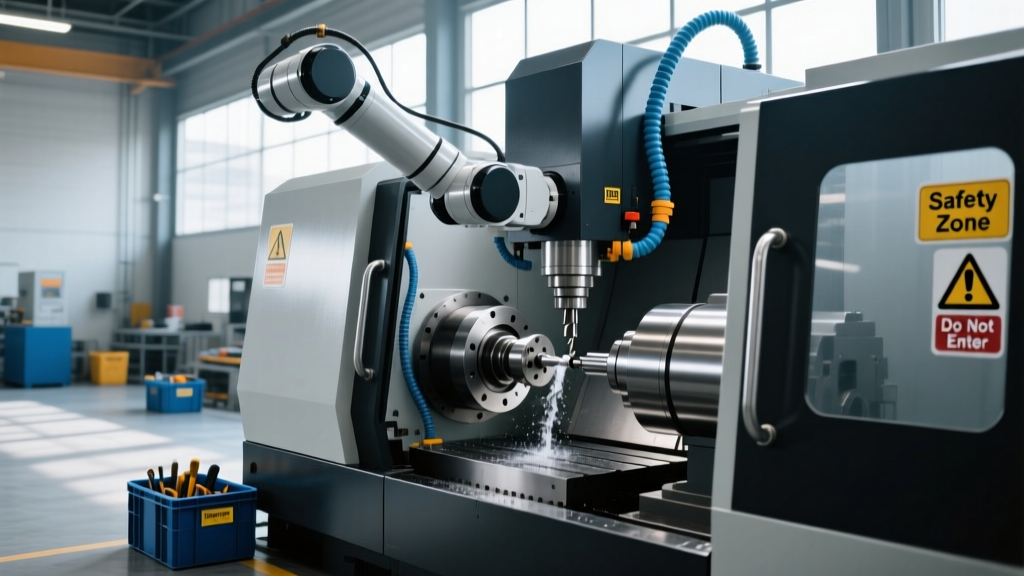
Compliance for milling and machining centers is primarily governed by two overlapping frameworks in North America and Europe. Under ISO 16090:2017 (Machine tool safety — Milling machines, transfer and special-purpose machines), ATC mechanisms must be fully enclosed to prevent operator access during the tool exchange sequence. The standard explicitly dictates that movable guards interlocked with the machine's safety circuit must halt the ATC arm if opened mid-cycle.
In the United States, the Occupational Safety and Health Administration enforces guarding requirements under OSHA 1910.212(a)(1). This regulation mandates that one or more methods of machine guarding shall be provided to protect the operator from hazards created by point of operation, ingoing nip points, and rotating parts. For CNC machines, the ATC carousel and swing arm constitute a definitive nip-point hazard. Furthermore, OSHA's general machine guarding guidelines emphasize that guards must be secure, durable, and not easily bypassed by the operator—a common violation in job shops where technicians zip-tie safety doors open to clear chip jams.
Control System Reliability: ISO 13849-1 and Interlock Architecture
Modern CNC machine safety relies on functional safety standards, specifically ISO 13849-1. The ATC swing arm motor and tool clamp/unclamp solenoids must be monitored by safety-rated controllers. As of 2026, industry best practices require ATC drive systems to achieve a minimum of Performance Level d (PLd), Category 3.
- Dual-Channel Monitoring: The system must utilize two independent channels (e.g., dual PNP inductive proximity sensors) to verify 'Tool-in-Spindle' and 'Tool-in-Gripper' states. If the sensors disagree, the Safe Torque Off (STO) function must instantly cut power to the ATC arm motor.
- Door Interlocks: Machining center enclosure doors must feature RFID-coded safety switches (such as the Schmersal AZM40 series) rather than simple mechanical limit switches, which are prone to defeat via tape or zip-ties.
- Light Curtain Muting: When operators load raw material, light curtains (e.g., SICK C4000 series) protect the perimeter. However, the CNC machine controller must execute a 'muting' function during the automatic tool change cycle to prevent the ATC arm from triggering a false e-stop when it swings into the light curtain's detection zone.
Pneumatic Drawbar Specifications and Drop-Pressure Safeguards
The tool retention mechanism inside the CNC machine spindle is a critical safety component. A standard 40-taper pneumatic drawbar utilizes a Belleville spring stack to generate approximately 2,500 to 3,500 lbs of retention force. Compressed air (typically 90-100 PSI) is introduced to overcome this spring force and release the retention knob.
If the facility's air supply fluctuates or drops below 65 PSI, the drawbar may fail to fully seat the tool holder into the spindle taper. This results in a 'tool pullout' during heavy roughing passes, launching the cutting tool into the enclosure. To comply with safety standards, CNC machines must be equipped with a pressure transducer interlocked to the machine's PLC. If air pressure drops below the manufacturer's threshold (usually 80 PSI), the PLC must inhibit spindle rotation and halt the ATC sequence.
Comparative Risk Matrix: ATC Mechanism Types
Different CNC machine architectures utilize distinct ATC designs, each presenting unique safety and maintenance hazards. Understanding these differences is vital for drafting accurate Job Safety Analyses (JSAs).
| ATC Type | Common Machine Models | Primary Hazard Profile | Guarding Requirement |
|---|---|---|---|
| Carousel (Umbrella) | Haas VF-2, Tormach 15L | Pinch points at the Z-axis column; tools can dislodge if retention clips fail during rapid Z-traverse. | Polycarbonate shield with interlocked access door; tool pocket retention springs must be audited monthly. |
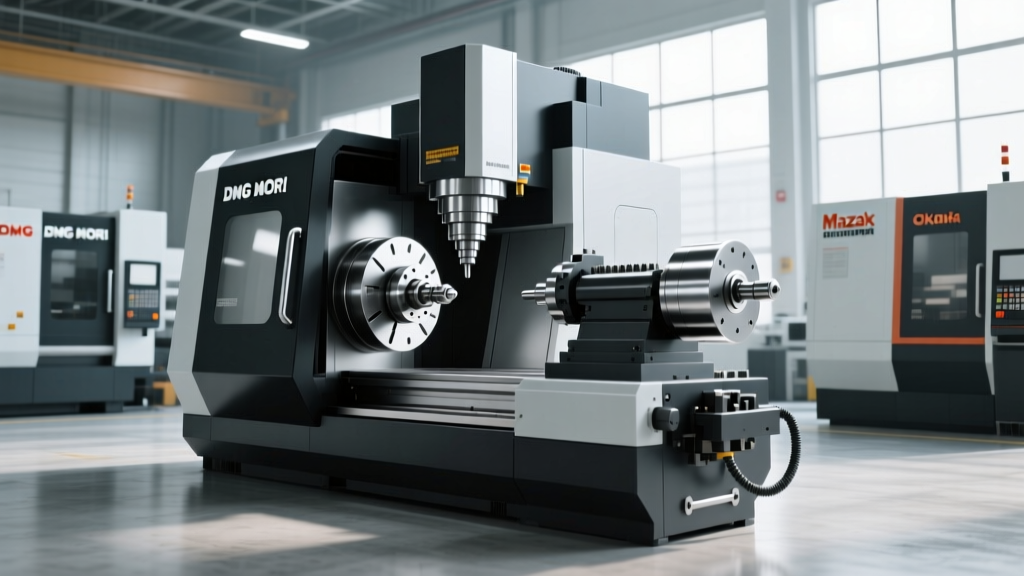
| Swing Arm (Side-Mount) | Haas UMC-750, DMG MORI CMX V | High-velocity rotational strike zone; severe nip points between the arm cam-box and the spindle nose. | Full sheet-metal enclosure around the arm mechanism; RFID-coded maintenance access panels. |
| Chain-Type Matrix | Mazak VARIAXIS, Okuma MU-8000V | Entanglement hazards from the continuous drive chain; heavy tool loads (up to 40 lbs per pocket) cause high inertia crashes. | Heavy-duty steel guarding; torque-limiting clutches on the chain drive motor to prevent motor burnout during jams. |
Retention Knob Mismatches: A Silent ATC Safety Threat
One of the most insidious safety risks in CNC machining involves the retention knob (pull stud). While a CAT40 tool holder may physically fit into any CAT40 CNC machine spindle, the retention knob thread and seating angle vary wildly between manufacturers. For example, a Haas retention knob features a specific flange thickness and seating angle compared to a Mazak or Kitamura pull stud.
Installing the incorrect retention knob alters the depth at which the drawbar grabs the tool. If the knob sits too high, the Belleville springs do not fully compress, resulting in inadequate retention force. During an ATC swing, or under the lateral forces of a 2-inch face mill, the tool will eject from the spindle. Safety managers must implement strict color-coding or laser-etching protocols on all retention knobs to match them to specific machine brands, eliminating cross-contamination in high-mix job shops.
The Comprehensive ATC Safety Audit Checklist
To maintain compliance and operational safety, maintenance teams should execute the following audit protocol on all CNC machine ATC systems bi-annually:
- Verify Sensor Alignment: Measure the air gap on all ATC proximity sensors. Inductive sensors typically require a 1.0mm to 1.5mm gap; deviations cause intermittent misreads and mid-cycle e-stops.
- Test Drop-Pressure Interlocks: Manually bleed the pneumatic line while the spindle is commanded to run. The CNC machine controller must fault and inhibit the spindle start command if pressure falls below 80 PSI.
- Inspect Cam-Box Lubrication: Swing arm ATCs utilize a cam-box for simultaneous 180-degree rotation and Z-axis insertion. Check for molybdenum disulfide grease degradation; dry cam-boxes cause jerky arm movements that shatter tool holders.
- Audit Polycarbonate Shields: Inspect all ATC viewing windows for micro-fractures and coolant degradation. Polycarbonate exposed to synthetic coolants becomes brittle over time and will shatter upon impact from a broken endmill.
- Measure Drawbar Retention Force: Utilize a specialized drawbar force gauge (e.g., the Pull Force Gauge from SPATCO) to verify the spindle generates a minimum of 2,500 lbs of clamping force. Belleville springs fatigue and lose tension after 100,000+ tool changes.
- Validate Muting Zones: Walk the perimeter light curtains while the CNC machine executes a dry-run tool change. Ensure the muting window is strictly limited to the physical dimensions of the ATC arm, leaving no unguarded gaps for operator access.
Strict adherence to these mechanical and electrical parameters ensures that the CNC machine ATC remains a productivity multiplier rather than a critical liability on the shop floor.