CNC Machine Kickstarter Trends: Maximizing Desktop Work Envelopes
Analyze how CNC machine Kickstarter projects maximize desktop work envelopes. Compare bed sizes, kinematics, and volumetric efficiency for prosumer shops.
The Crowdfunding Shift in Desktop Machining
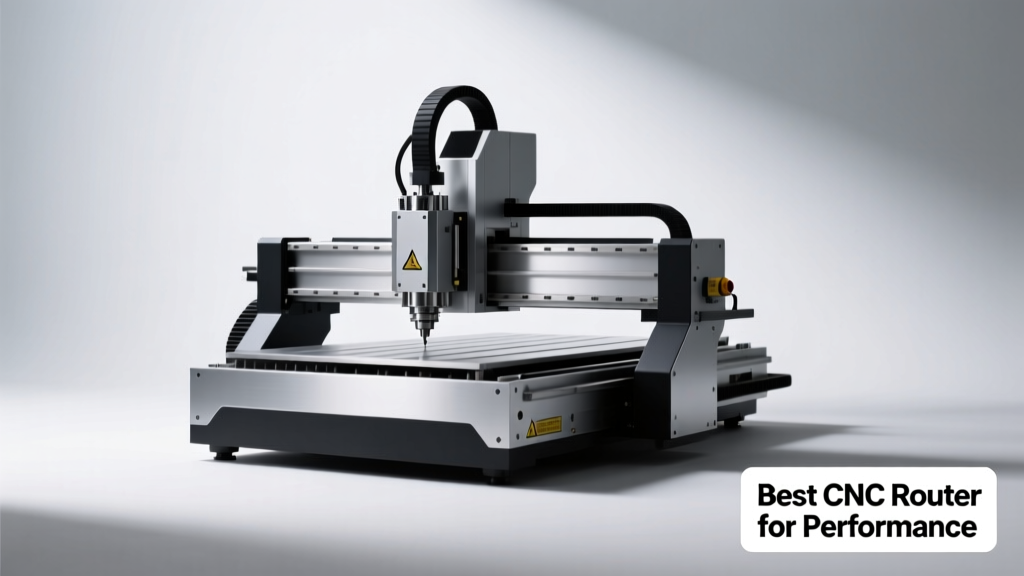
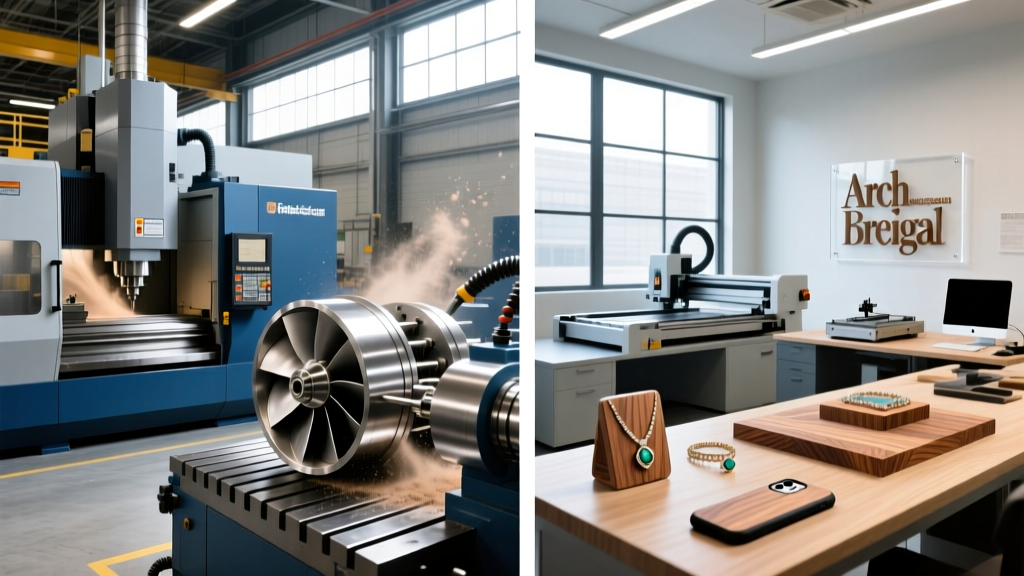
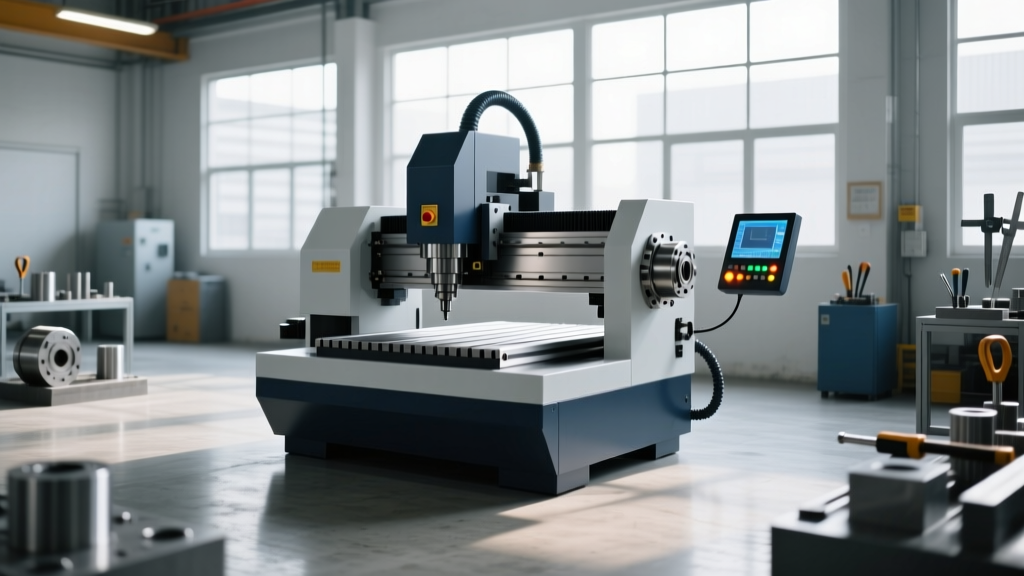
The landscape of desktop and prosumer manufacturing has fundamentally shifted. Historically, machinists had to choose between massive, floor-standing industrial mills or flimsy hobbyist routers with severe Z-axis limitations. Today, a well-engineered CNC machine Kickstarter campaign can bridge this gap, delivering industrial-grade kinematics in a footprint that fits on a standard workbench. However, as crowdfunded hardware pushes the boundaries of compact design, understanding the true usable work envelope—versus the advertised bed size—has become critical for shop integration.
When evaluating new crowdfunded hardware, the primary metric of innovation is no longer just spindle RPM or controller type; it is volumetric efficiency. Designers are leveraging advanced motion profiles and modular fixturing to extract maximum machining volume from minimal physical dimensions. This analysis deconstructs how modern crowdfunded CNC architectures manipulate bed sizes and work envelopes to outperform traditional entry-level machines.
Data Highlight: The Footprint-to-Envelope Ratio (FER)Volumetric efficiency is measured by the Footprint-to-Envelope Ratio (FER). A traditional moving-bed CNC (like the legacy X-Carve) requires a physical footprint up to 3x larger than its actual cutting area because the bed translates outside the machine's static frame. Modern fixed-bridge, moving-gantry designs championed in recent crowdfunding campaigns achieve an FER of nearly 1:1.1, meaning the machine occupies only 10% more floorspace than its maximum X/Y travel limits.
Kinematics and the Footprint-to-Envelope Ratio
The physical architecture of a CNC dictates how much of your shop floor is consumed relative to the part size you can machine. Traditional belt-driven, V-wheel gantry systems suffer from dimensional creep and require massive overhead clearance. The latest wave of crowdfunded CNCs utilizes rigidity-focused kinematics and linear rail systems to shrink the machine's outer shell while preserving internal travel.
CoreXY vs. Moving Gantry vs. Moving Bed
- Moving Bed (Legacy/Entry-Level): The spindle remains fixed on a bridge while the entire T-slot bed moves forward and backward (Y-axis). Drawback: The bed protrudes out the front and back of the machine during operation, requiring massive clearance and limiting placement against walls.
- Moving Gantry (Standard Prosumer): The bed is fixed to the heavy base, and the bridge moves along the Y-axis. Advantage: The footprint is static. Heavy workpieces do not tax the Y-axis motors, allowing for denser material clamping.
- CoreXY (Crowdfunded Innovations): Utilizing a stationary bed and a lightweight gantry driven by a complex belt routing system, CoreXY kinematics allow for extreme acceleration without the inertia of moving heavy ball screws. This architecture is increasingly common in high-speed, compact desktop routers emerging from hardware incubators.
Work Envelope Comparison: Baseline vs. Crowdfunded Innovations
Advertised bed dimensions rarely reflect the true machinable volume. Fixturing, spindle diameter, and Z-axis homing offsets consume significant space. Below is a comparison of standard prosumer baselines against recent highly-funded CNC machine Kickstarter successes and their architectural equivalents.
| Machine Architecture | Physical Footprint (X/Y) | True Machinable Envelope | Z-Axis Clearance | Volumetric Efficiency |
|---|---|---|---|---|
| Shapeoko 5X (Baseline) | 33' x 33' | 16' x 16' x 4' | 4.0 inches | Moderate (Gantry Overhang) |
| Makera Carvera (Kickstarter) | 26' x 20' | 13' x 8.6' x 3.9' | 3.9 inches (w/ ATC) | High (Fully Enclosed Static) |
| Pocket NC V5-10 (5-Axis Maker) | 18' x 18' | 4.5' x 5' x 3.5' | Kinematic Dependent | Specialized (Rotational Loss) |
The 5-Axis Trunnion Penalty in Crowdfunded Designs
A major trend in recent hardware campaigns is the democratization of 5-axis simultaneous machining. However, adding 5-axis capability to a desktop envelope introduces severe geometric penalties. When a crowdfunded project advertises '5-Axis Capability' via a bolt-on trunnion table (A and C axes), the physical diameter of the trunnion and the rotational radius of the workpiece instantly cannibalize the X, Y, and Z travel limits.
For example, mounting a 120mm harmonic drive trunnion table on a standard 3-axis desktop mill will typically consume 45mm of Z-axis height and restrict X-axis travel by 30% due to collision avoidance parameters with the machine's uprights. Innovative campaigns are now bypassing this by designing tilting-spindle architectures or inverted kinematics where the tool head rotates around a stationary, clamped part, preserving the full Z-axis envelope for deep cavity milling.
'When evaluating a 5-axis desktop mill, never look at the raw X/Y/Z linear travel numbers in isolation. You must calculate the spherical work envelope. A machine with 10 inches of Z-travel might only offer 4 inches of usable Z-height once the trunnion, vise, and workpiece radius are accounted for.' — Desktop Machining Kinematics Report, 2025
Spindle Integration and Z-Axis Loss
Another envelope killer is the automatic tool changer (ATC). Crowdfunded machines that integrate pneumatic or stepper-driven ATCs (like the Makera Carvera or various Indiegogo spindle upgrades) often sacrifice 1.5 to 2.5 inches of Z-axis travel to accommodate the tool magazine and the spindle nose extension. If your primary workflow involves deep pocketing in aluminum or steel, a fixed-collet ER11/ER16 spindle without an ATC will yield a vastly superior Z-envelope, albeit at the cost of manual tool changes.
Practical Decision Framework for Shop Integration
Selecting the right crowdfunded or prosumer CNC requires matching the machine's kinematic reality to your specific material and part geometry. Use this framework to filter campaign claims:
Application-Based Envelope Selection:- For 2.5D Signage and Woodworking: Prioritize X/Y bed area over Z-axis. A moving-bed architecture is acceptable here if shop space permits, as Z-clearance requirements rarely exceed 1.5 inches.
- For Aluminum/Brass Prototyping: Demand a fixed-bed, moving-gantry design with 20mm or larger linear profile rails (e.g., Hiwin HGR20). Ensure the Z-axis utilizes a ground ball screw, not a belt, to prevent Z-lift during heavy radial engagements.
- For Aerospace/Complex 5-Axis Contouring: Ignore raw bed size. Focus entirely on the 'Distance from Spindle Nose to Table' metric and the rotational clearance of the B/C axes. Tilting-spindle designs are mandatory if your workpiece exceeds 4 inches in diameter.
Many CNC machine Kickstarter campaigns display rendered CAD images showing massive workpieces clamped to the bed. These renders frequently ignore the physical footprint of the spindle motor, the Z-axis carriage, and the homing switches. Always request the 'Tool Reach' and 'Spindle Nose to Table' maximums from the campaign creators before backing. If the Z-axis utilizes a standard NEMA 23 stepper with a leadscrew, verify if the Z-carriage experiences flex at maximum extension—a common failure mode in crowdfunded machines that severely limits the usable envelope under load.
Ultimately, the most successful crowdfunded CNC projects are those that are transparent about their volumetric trade-offs. By focusing on the Footprint-to-Envelope Ratio and understanding the geometric penalties of add-on rotary axes, manufacturing professionals can accurately integrate these innovative desktop machines into high-mix, low-volume production workflows without sacrificing critical machining capacity.