Engraving CNC Machine for Small Workshops: Case Studies & ROI
Discover how small workshops leverage desktop engraving CNC machines for metal and wood applications, featuring real ROI data, specs, and case studies.
The Micro-Manufacturing Shift: Desktop Engraving in 200-Square-Foot Shops
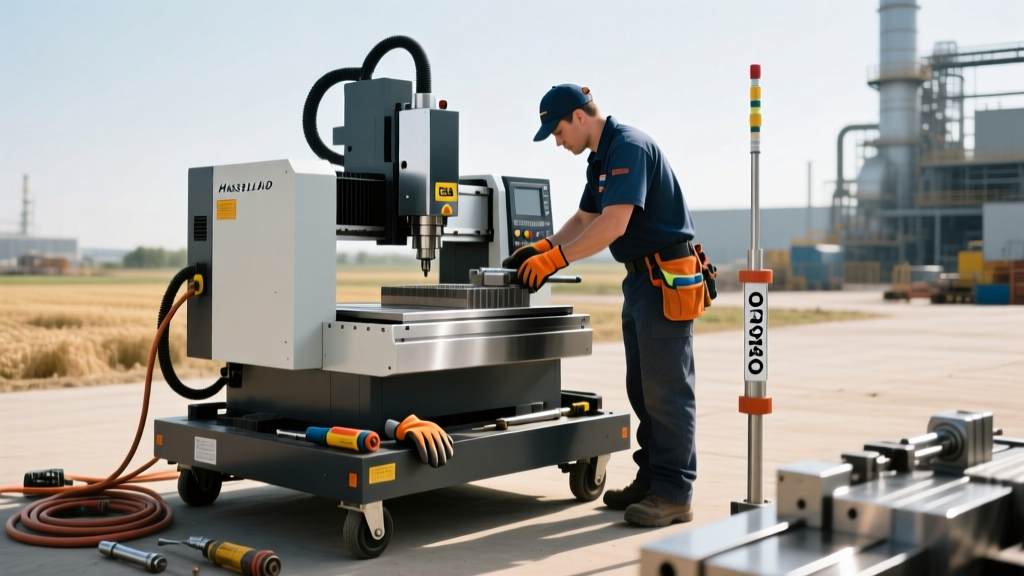
The barrier to entry for precision manufacturing has collapsed. Small workshops, custom makers, and boutique fabrication shops are no longer forced to outsource high-margin finishing work. By integrating a dedicated engraving CNC machine into environments as small as 200 square feet, micro-manufacturers are capturing 40% to 60% higher margins on customized parts. However, deploying desktop CNC equipment in constrained spaces introduces unique challenges regarding power draw, acoustic dampening, and chip extraction that industrial facilities simply do not face.
Small-Shop ROI Snapshot:- Average Equipment Payback Period: 4.2 months (based on 20 hours/week run time)
- Margin Increase on Customization: 45% average premium over blank parts
- Required Footprint: 12 to 18 square feet (including tooling and material staging)
Case Study 1: D2 Steel Knife Embellishment and Jimping
A custom knifemaking operation in Oregon transitioned from manual rotary engraving to a computerized workflow to handle complex jimping patterns and logo milling on hardened and annealed D2 tool steel. The shop selected the Bantam Tools PCNC 440, a rigid desktop mill capable of handling ferrous metals that typically destroy lighter hobbyist routers.
Process Parameters and Tooling
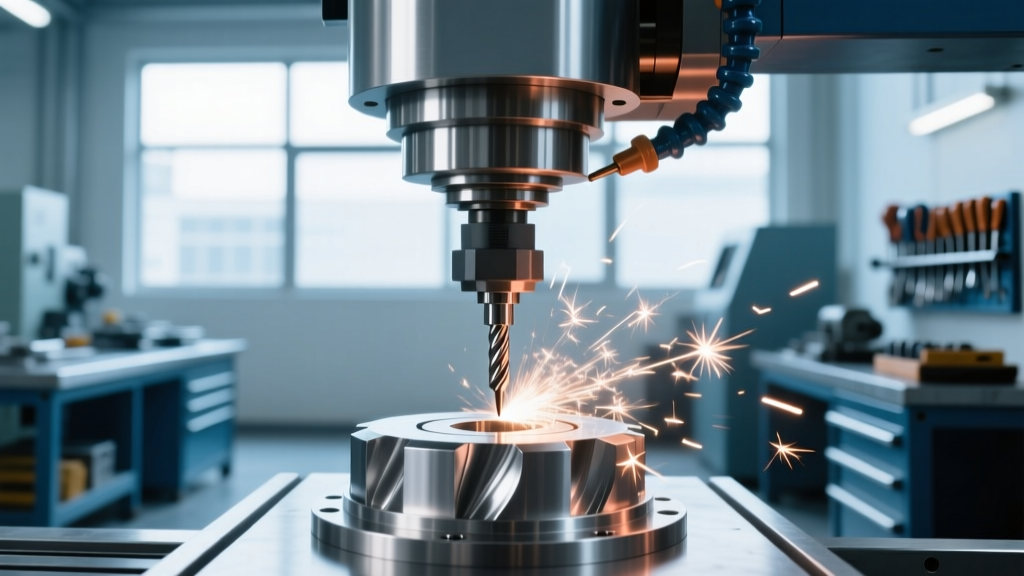
Engraving D2 steel before heat treatment (annealed state, ~21 HRC) requires specific feeds and speeds to prevent tool deflection on a small-footprint machine. The shop utilized a 1/8-inch diameter, 2-flute carbide stub end mill with an AlTiN coating.
- Spindle Speed: 12,500 RPM
- Feed Rate: 18 IPM (Inches Per Minute)
- Depth of Cut (DOC): 0.015 inches per pass
- Stepover: 40% (0.050 inches)
By utilizing a Kurt DX4 precision vise bolted directly to the T-slot bed, the shop eliminated the harmonic vibration common in lightweight desktop machines. The result was a 92% reduction in hand-finishing time post-milling, allowing the shop to increase monthly output from 40 to 110 custom blades without adding labor.
Case Study 2: Architectural Signage and Multi-Axis Wood Inlays
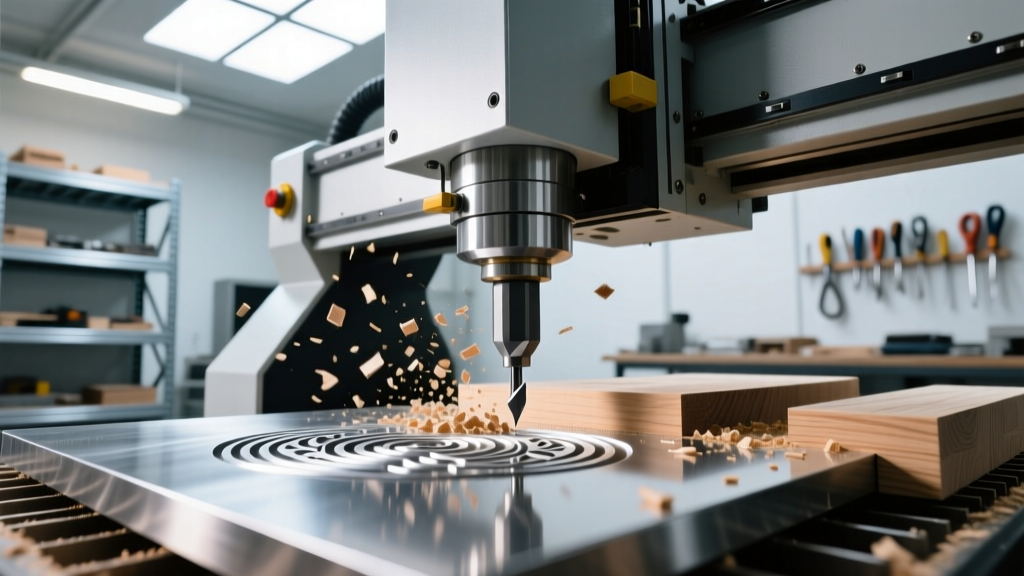
A two-person architectural signage studio required an engraving CNC machine capable of deep V-carving and 3D relief routing in hardwoods like Black Walnut and Hard Maple. Space constraints ruled out standard 4x8 industrial routers. They deployed a ShopBot Desktop MAX, which offers a 24x36-inch cutting area while maintaining a footprint that fits through a standard residential doorway.
Hold-Down Strategies for Small Beds
Unlike large-format CNCs that utilize 10-horsepower vacuum pods, desktop machines rely on mechanical clamping or adhesive methods. Vacuum tables on small machines often lack the CFM (Cubic Feet per Minute) required to hold down small, intricate cutouts. The studio implemented a hybrid sacrificial board method:
- A 1/2-inch MDF spoilboard is surfaced flat and permanently mounted to the aluminum T-slot bed.
- Workpieces are secured using 3M 468MP double-sided acrylic transfer tape, providing 180 degrees of thermal and mechanical stability.
- For deep V-carve operations using a 90-degree, 1/2-inch shank carbide bit, the studio added two low-profile toggle clamps on the Y-axis extremes to counteract the lateral forces generated at 18,000 RPM.
"The biggest mistake small shops make with desktop routers is treating the spoilboard as a permanent fixture. In a high-mix, low-volume signage shop, you must resurface or replace your MDF sacrificial layer every 30 hours of run time to maintain Z-axis zero accuracy across a warped stock surface."
Comparative Matrix: Top Small-Footprint Engraving Machines
Selecting the right machine requires matching the spindle torque and rigidity to your primary material. Below is a technical comparison of leading desktop options for small workshops.
| Machine Model | Spindle RPM / Power | Footprint (W x D) | Price Range (2026) | Optimal Application |
|---|---|---|---|---|
| Bantam Tools PCNC 440 | 24,000 RPM / 350W | 32" x 28" | $5,399 - $7,200 | Aluminum, Brass, Mild Steel |
| ShopBot Desktop MAX | 24,000 RPM / 1HP | 46" x 36" | $9,495 - $11,500 | Hardwoods, HDPE, Sign Foam |
| Roland EGX-350 | 30,000 RPM / 60W | 23" x 20" | $4,200 - $4,800 | Precious Metals, Acrylic, PLA |
Overcoming Small Workshop Constraints: Infrastructure Requirements
Industrial CNCs assume the presence of 3-phase power, centralized dust collection, and acoustic isolation. Small workshops must engineer workarounds for these missing utilities to maintain equipment longevity and comply with safety standards.
Power Draw and Circuit Limitations
Most desktop engraving CNC machines are designed to run on standard 110V/120V single-phase power. However, running a 1HP spindle, a 1.5HP dust collector, and an air compressor simultaneously on a single 15-amp residential circuit will trip the breaker and corrupt the machine's controller mid-cycle. Actionable Fix: Dedicate a 20-amp circuit exclusively to the CNC spindle and controller. Route dust collection and compressed air to separate 15-amp circuits. Use a pure sine wave UPS (Uninterruptible Power Supply) rated for at least 1500VA to protect the stepper motor drivers from voltage sags.
Acoustic Dampening and Dust Extraction
Routing MDF or milling aluminum generates high-frequency noise and fine particulate matter. According to OSHA occupational noise standards, prolonged exposure to noise levels above 85 decibels requires hearing protection and monitoring. A small enclosed shop can easily exceed 90 dB during heavy V-carving operations.
- Dust Collection: A standard shop vac is insufficient for continuous CNC operation due to static buildup and filter clogging. Invest in a 1.5 HP cyclone dust collector capable of 600+ CFM, grounded with copper wire to prevent static discharge that can interfere with stepper motor shielding.
- Acoustic Enclosures: If the shop shares a wall with a retail space or office, construct a localized enclosure using 5/8-inch MDF lined with 2-inch acoustic foam. This typically reduces ambient high-frequency router noise by 12 to 15 dB.
Edge Cases and Failure Modes in Desktop Engraving
Small-format machines are highly sensitive to operator error and environmental variables. Recognizing these specific failure modes prevents ruined workpieces and broken tooling.
Warning: Collet Slip on Micro-ToolingWhen using 1/32-inch or 0.5mm engraving bits for fine text, standard ER11 collets can slip under heavy lateral loads, pulling the bit out of the spindle and crashing into the workpiece. Always use precision ER11A collets rated for 0.0002-inch TIR (Total Indicator Runout), and strictly adhere to the manufacturer's torque specs (typically 12-15 Nm) using a calibrated torque wrench, not hand-tightening.
Z-Axis Zeroing on Warped Stock
Small workshops frequently purchase sheet goods that have warped during storage. If you zero the Z-axis only at the front-left corner of a 24x24-inch sheet of plywood, the back-right corner may be 0.040 inches higher. When the CNC attempts to engrave at a consistent 0.010-inch depth, it will plunge 0.050 inches into the material, snapping fragile V-bits. The Solution: Utilize an auto-Z touch-off probe to map the surface topology before cutting. Software like Carbide Create or Vectric VCarve supports 3D probing grids, allowing the machine to dynamically adjust the Z-height across the entire bed to compensate for material warp.
Strategic Integration for Micro-Manufacturers
Integrating an engraving CNC machine into a small workshop is not merely about buying a smaller version of an industrial tool; it requires a fundamental rethinking of fixturing, power management, and workflow. By matching the machine's rigidity to the specific material application—whether that is annealed tool steel or architectural hardwoods—and engineering the shop's infrastructure to support continuous operation, small businesses can achieve industrial-level precision and profitability. Resources like the NIST Manufacturing Extension Partnership frequently offer localized grants and technical assessments to help small manufacturers optimize these exact desktop automation workflows.