How to Operate CNC Machine Portables Safely in the Field
Master how to operate CNC machine portables safely in the field. Covers OSHA compliance, grounding protocols, and setup specs for track and handheld CNCs.
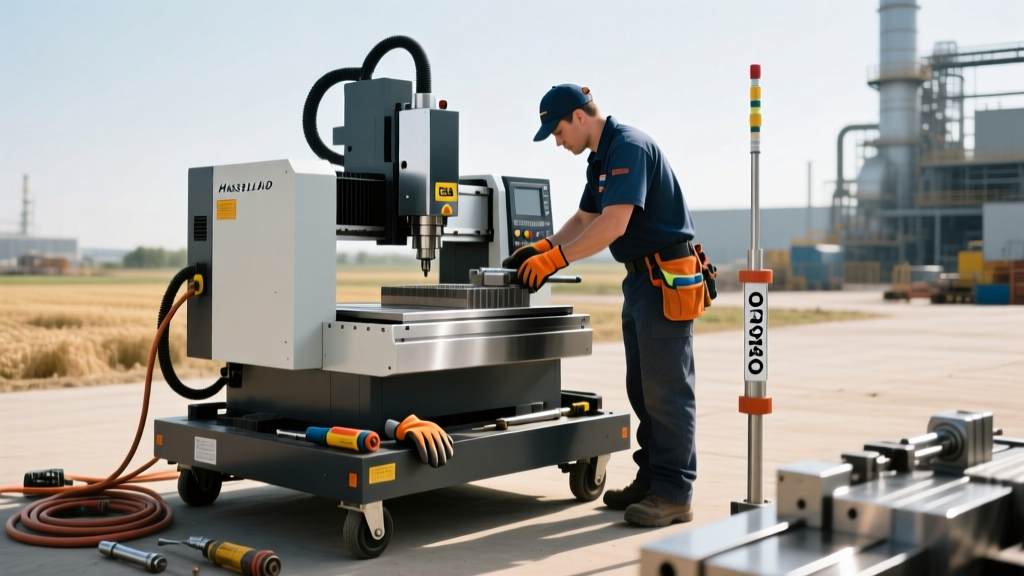
Field-deployed CNC equipment—ranging from track-mounted plasma cutters to handheld fiducial-tracked routers—eliminates the fixed safety enclosures, integrated chip conveyors, and grounded power grids of traditional manufacturing cells. Understanding how to operate CNC machine portables safely demands a radical departure from shop-floor habits and strict adherence to mobile hazard mitigation. When a machine leaves the factory, the operator assumes full responsibility for environmental variables: uneven terrain, ambient moisture, stray voltage, and uncontrolled pedestrian traffic.
⚠️ OSHA Field Citation Alert: Between 2024 and 2025, OSHA issued a 14% increase in citations for improper grounding of portable power equipment in construction and shipyard environments. Relying on temporary generator grounds without verifying soil resistivity is a primary trigger for these violations.Regulatory Framework for Mobile CNC Operations
Operating portable CNCs in unstructured environments bridges the gap between manufacturing standards and construction safety codes. You must comply with both OSHA's Machine Safeguarding guidelines (which heavily reference the ANSI B11.0 standard for machinery safety) and OSHA 1926 Subpart I for construction tools. Unlike fixed CNC mills where the enclosure acts as the primary guard, portable CNCs rely on administrative controls, localized physical barriers, and active operator intervention.
For track-mounted thermal cutters, OSHA 1926.302 dictates strict protocols for power-operated tools, specifically mandating that all electrically driven portable equipment be grounded or double-insulated. However, standard double-insulation is rarely sufficient for heavy-duty portable CNC plasma tables or track cutters that draw 50+ amps and generate massive electromagnetic interference (EMI).
Equipment Matrix: Field-Ready CNC Models & Safety Specs
The safety protocols you implement depend heavily on the specific class of portable CNC you are deploying. Below is a technical comparison of two dominant field-deployed CNC categories: the track-mounted thermal cutter and the handheld fiducial router.
| Feature / Spec | Koike Aronson PNC-12 (Track Cutter) | Shaper Origin (Handheld CNC Router) |
|---|---|---|
| Primary Application | Pipeline beveling, shipyard plate cutting | On-site cabinetry, composite trimming |
| Machine Weight | ~110 lbs (Carriage only) | 14.5 lbs |
| Workholding Method | Magnetic track or mechanical C-clamps | Adhesive fiducial WorkTape |
| Failsafe Mechanism | Torch collision breakaway switch | Auto-retracting spindle upon tape loss |
| IP Rating (Pendant) | IP65 (Dust tight, water jets) | IP5X (Dust protected, internal cooling) |
Step-by-Step Field Setup & Compliance Checklist
Proper setup is the most critical phase of field CNC operation. Skipping these technical benchmarks introduces catastrophic failure modes, including track derailment, stray voltage shocks, and dimensional inaccuracies.
- Establish a Dedicated Ground Grid: Do not rely on the ground pin of a temporary construction GFCI outlet. Drive an 8-foot copper-clad ground rod into the soil. Bond the CNC machine chassis and the workpiece to this rod using a minimum 6 AWG bare copper wire. Measure the resistance with a digital multimeter; it must read less than 5 ohms. If soil is highly resistive (dry or rocky), treat the area with a magnesium sulfate grounding compound.
- Verify Substrate Thickness for Magnetic Tracks: If using a magnetic track system like the Koike PNC-12, the ferrous substrate must be a minimum of 1/4-inch (6mm) thick to generate adequate magnetic flux. Thinner materials require mechanical clamping. Place heavy-duty C-clamps every 24 inches along the track to prevent lateral shift during high-speed traverse moves.
- Level the Track to Machinist Tolerances: Uneven tracks cause the carriage to bind, leading to stepper motor stall and loss of position. Use a 48-inch precision level and machinist shims to achieve a flatness tolerance of 1/16 inch over 10 feet. Never use wooden wedges, which compress under the dynamic load of the carriage.
- Map the Fiducial Environment (Handhelds): For handheld CNCs, apply overlapping strips of WorkTape. Ensure the workspace is illuminated to at least 500 lux. Direct sunlight causes glare that blinds the downward-facing fiducial cameras, triggering an emergency spindle retraction mid-cut.
Environmental Hazard Mitigation Matrix
Field environments introduce variables that shop floors do not. Use this decision matrix to select the correct PPE and machine safeguards based on site conditions.
| Environmental Hazard | Machine Impact | Required Safeguard / PPE |
|---|---|---|
| High Ambient Moisture / Rain | Short circuits in pendant; track slippage | IP67-rated pendant covers; silicone track sealant; Class E hard hats. |
| Galvanized / Coated Steel Cutting | Toxic zinc oxide / hexavalent chromium fumes | NIOSH-approved PAPR (APF 25); localized fume extraction arms. |
| High Wind (Thermal Cutting) | Plasma arc deflection; oxy-fuel flame blowout | Deploy heavy-duty windbreak tarps; reduce traverse speed by 15%. |
| Prolonged Handheld Routing | Hand-Arm Vibration Syndrome (HAVS) | ISO 10819 certified anti-vibration gloves; 45-min max continuous run time. |
Fume Extraction and Respiratory Compliance
When operating portable CNC thermal cutters in the field, standard shop ventilation is non-existent. According to NIOSH guidelines on welding and cutting fumes, operators cutting stainless steel, galvanized coatings, or painted structural beams must utilize engineering controls before relying on PPE.
For field work, this means deploying a mobile fume extractor with a minimum 800 CFM suction capacity and a HEPA pre-filter to catch heavy slag dust before it reaches the main MERV-15 filter cartridge. The extraction hood must be positioned within 18 inches of the plasma arc. If wind conditions prevent effective capture, the operator must upgrade from a standard N95 to a Powered Air Purifying Respirator (PAPR) with a loose-fitting hood, ensuring an Assigned Protection Factor (APF) of 25.
Emergency Stop (E-Stop) Protocols in Unstructured Environments
In a fixed CNC cell, the E-stop button is mounted on the enclosure door. In field work, the operator is often standing 10 feet away from the machine carriage, navigating around scaffolding or structural steel.
"Portable CNC systems must feature a hardwired, normally-closed E-stop circuit that is completely independent of the software controller. Wireless pendants used in field environments must utilize dual-channel RF protocols with a latency of less than 20 milliseconds to ensure immediate relay tripping upon signal loss or button actuation."
Always tether a secondary physical E-stop puck to your belt when operating track-mounted CNCs in confined spaces like ship hulls or pipeline trenches. Ensure all field E-stop buttons carry an IP67 rating to prevent ingress of conductive metal dust and moisture, which can cause the contacts to weld shut, rendering the safety circuit useless.
Frequently Asked Questions
Can I power a portable CNC directly from a standard job-site generator?
Yes, but only if the generator features a true sine wave output and a bonded neutral. Modified sine wave generators will cause severe EMI, leading to stepper motor stuttering and potential controller board failure. Additionally, ensure the generator's kVA rating exceeds the CNC's peak draw by at least 30% to handle the inrush current of the plasma power supply or router spindle.
How do I secure a handheld CNC router on a vertical surface?
Handheld CNCs like the Shaper Origin require a stable base plate. For vertical field applications (e.g., routing composite panels on a building facade), you must apply a high-tack, residue-free double-sided mounting tape to the WorkTape, and use a temporary vacuum-assist jig or mechanical edge guides to bear the weight of the tool. Never rely solely on operator arm strength to maintain Z-axis depth on vertical cuts.
What is the maximum allowable ground resistance for field CNC plasma cutting?
The absolute maximum allowable resistance between the machine chassis, the workpiece, and the earth ground is 5 ohms. Anything higher risks stray voltage arcing through the operator or damaging the sensitive height controller (THC) circuitry, which relies on a clean ground to accurately read arc voltage for Z-axis torch height adjustments.