CNC Machine Breakdown: 2026 Bed Size & Work Envelope Trends
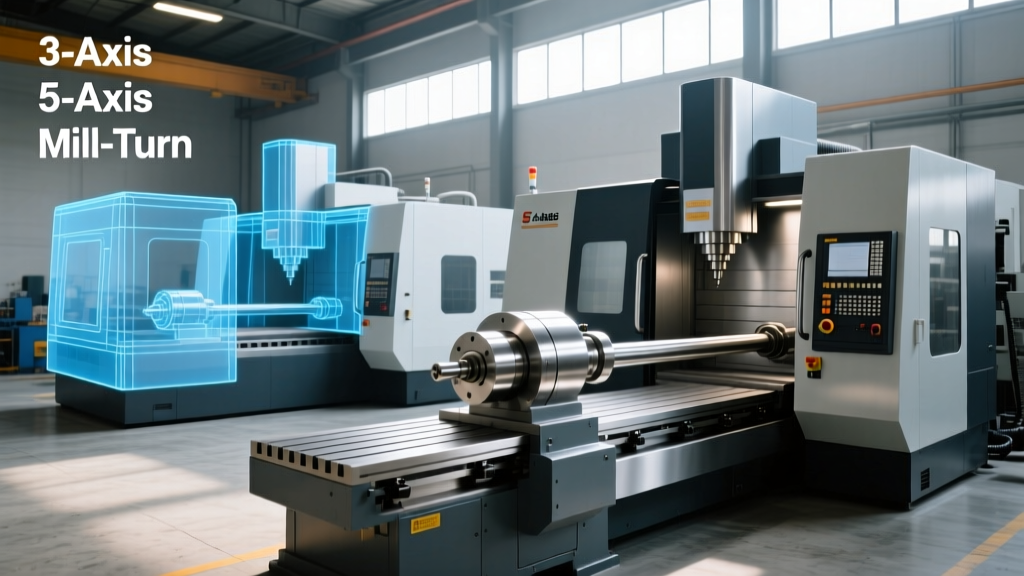
Compare CNC machine bed sizes and work envelopes. This 2026 breakdown analyzes 3-axis, 5-axis, and mill-turn volumetric efficiencies.
The 2026 CNC Machine Breakdown: Rethinking the Work Envelope
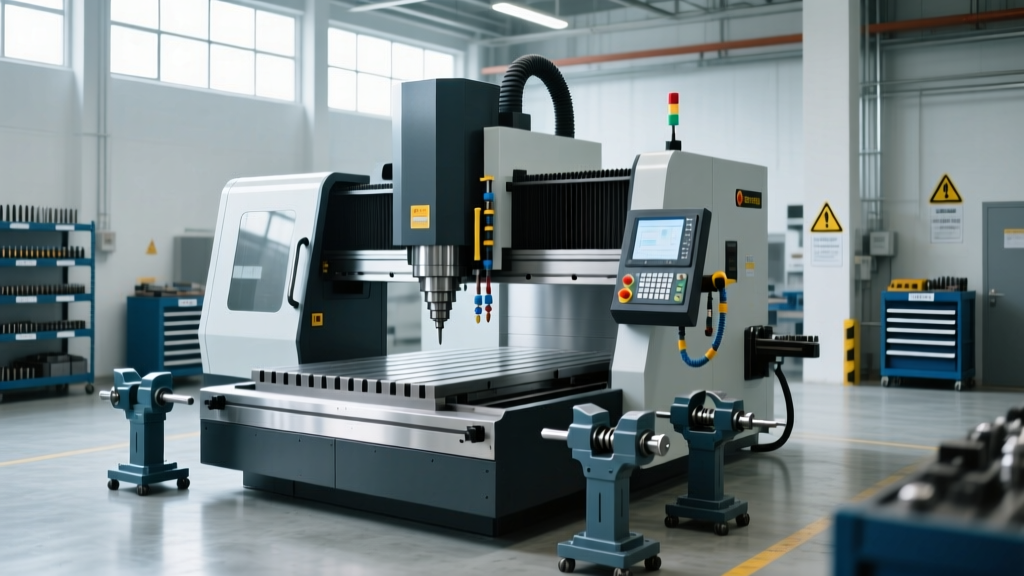
When performing a detailed cnc machine breakdown of modern manufacturing equipment, engineers quickly realize that nominal bed dimensions no longer tell the whole story. The historical metric of measuring a machine by its raw X, Y, and Z table travel is fundamentally flawed in an era dominated by multi-axis kinematics, integrated automation, and complex tooling. In 2026, the true measure of a machine's capability is its usable volumetric envelope—the actual collision-free space where the cutting tool can engage the workpiece after accounting for trunnion tables, vise heights, tool lengths, and spindle nose offsets.
This shift in perspective is driving capital equipment decisions across aerospace, medical, and general machining sectors. Manufacturers are moving away from massive, static cast-iron beds toward highly dynamic work zones that maximize the cost-per-cubic-inch of cutting space. Below, we deconstruct the geometries, thermal realities, and financial implications of modern CNC work envelopes.
Data Highlight: The Envelope Efficiency Gap
Nominal Envelope: The mathematical product of maximum X, Y, and Z axis travel (e.g., 50" x 20" x 25" = 25,000 cubic inches).
Usable Envelope: The actual collision-free working volume. On a standard 3-axis mill, this is typically 65-75% of the nominal envelope. On a 5-axis trunnion machine, usable volume often drops to 35-45% due to the physical footprint of the rotary table and required tool clearance.
Standard 3-Axis vs. 5-Axis Trunnion: The Z-Axis Tax
The most glaring revelation in any modern work envelope comparison is the 'Z-axis tax' inherent in 5-axis trunnion table designs. Consider the Haas VF-4SS (a high-speed 3-axis vertical mill) versus the Haas UMC-750SS (a simultaneous 5-axis universal machining center).
The VF-4SS features a 50" x 20" table with 25" of Z-axis travel. Because the workpiece sits directly on the table (or in a standard 6" vise), the spindle has nearly the full 25" of clearance to machine tall parts. The UMC-750SS, however, boasts a 30" x 20" X/Y travel but shares the same 25" Z-axis travel. The physical trunnion table itself consumes roughly 10 inches of Z-height from the machine floor. Add a standard 6" hydraulic vise, and you have consumed 16 inches of Z-axis travel before the spindle nose even touches the top of the workpiece. The remaining 9 inches must be split between tool length, spindle head clearance, and actual part height.
| Machine Model | Type | Nominal Travel (X/Y/Z) | Est. 2026 Base Price | Cost per Nominal Cu. In. |
|---|---|---|---|---|
| Haas VF-4SS | 3-Axis VMC | 50" x 20" x 25" | $105,000 | $4.20 |
| Haas UMC-750SS | 5-Axis Trunnion | 30" x 20" x 25" | $215,000 | $14.33 |
| Mazak INTEGREX i-200S | Mill-Turn | Cylindrical (26" Dia x 59" L) | $485,000+ | $15.40 (Effective) |
Kinematic Chain Limitations and Tool Clearance
In 5-axis machining, the kinematic chain—the series of mechanical joints connecting the spindle to the bed—dictates the true envelope. When tilting the B-axis to 110 degrees for undercutting, the spindle head requires massive lateral clearance. A machine with a narrow column profile will suffer from 'column interference,' effectively shrinking the usable X-axis envelope on tilted parts. Advanced 2026 machine designs mitigate this by utilizing tilted column geometries and offset spindle noses, but buyers must simulate their specific toolpaths using CAM software (like Mastercam or hyperMILL) to verify envelope clearance before purchase.
Large-Bed CNCs: Combating Thermal and Gravitational Deflection
When scaling up to large-format gantry mills and bed-type CNCs (such as the Zimmermann FZ30 or large Haas GR series), the physical size of the bed introduces severe metrological challenges. According to NIST advanced manufacturing research, thermal deformation and gravitational sag account for up to 70% of the total geometric error in large-format machine tools.
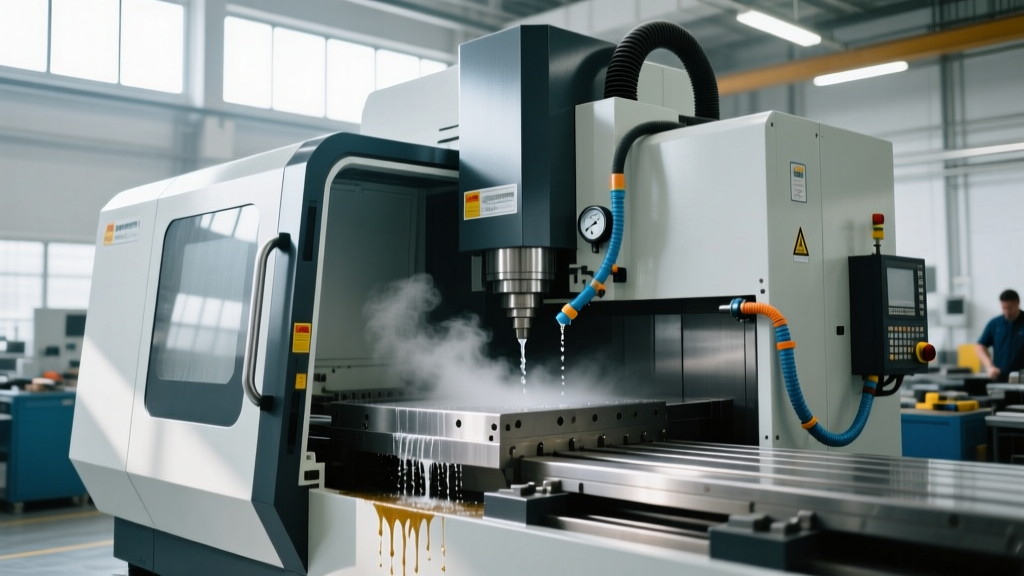
A 200-inch cast-iron bed will expand non-linearly when exposed to ambient shop temperature shifts or localized friction from linear guideways. In 2026, leading manufacturers are abandoning simple laser-calibrated static compensation in favor of real-time volumetric error compensation (VEC). Systems utilizing embedded temperature sensors and continuous linear scale feedback dynamically adjust the CNC controller's coordinates on the fly.
'The industry has moved past asking how big the bed is. The critical question is now: what is the volumetric accuracy at the extreme corners of the envelope when the spindle is under full cutting load at 15,000 RPM? A 10-foot bed is useless if the corner Z-axis deflects by 0.004 inches under side-load.'
— Dr. Elena Rostova, Metrology Lead, Advanced Manufacturing Institute
Mill-Turn Cylindrical Envelopes vs. Rectangular Prisms
The Association for Manufacturing Technology (AMT) has documented a massive shift toward multi-tasking mill-turn centers to maximize envelope utilization. Machines like the Mazak INTEGREX or DMG MORI NTX series do not operate in a rectangular X/Y/Z prism. Instead, their work envelope is a complex intersection of a cylindrical turning envelope and a rectangular milling envelope.
When evaluating a mill-turn bed size, engineers must calculate the 'Y-axis travel penalty.' To achieve a full Y-axis travel of ±10 inches, the milling spindle must be positioned far enough from the turning centerline to avoid colliding with the main chuck. This requirement drastically increases the overall footprint of the machine without necessarily increasing the usable part volume. Furthermore, the integration of lower turrets and tailstocks means the effective Z-axis turning length is often 15-20% shorter than the nominal bed length advertised on the spec sheet.
Automation and the 'Hidden' Envelope
In high-volume 2026 production environments, the machine's internal bed size is secondary to its automation interface envelope. Horizontal machining centers (HMCs) like the Makino a61nx utilize 500mm pallet pools. The physical cutting envelope remains fixed, but the 'hidden' envelope—the loading station clearance, tombstone height limits, and robot arm reach—dictates the machine's true throughput.
When integrating a robotic work cell (e.g., a FANCR M-710iC), the Z-axis height of the CNC door opening and the distance from the pallet center to the door threshold become the most critical dimensions. A machine with a massive internal bed but a restrictive door aperture will bottleneck the entire automated system, rendering the extra internal volume financially useless.
Decision Matrix: Sizing Your Next CNC Investment
To select the optimal work envelope for your manufacturing requirements, apply this decision framework rather than relying solely on catalog bed dimensions:
- For Prismatic Aluminum Parts (Aerospace/General): Prioritize standard 3-axis VMCs with oversized tables (e.g., 60" x 30"). The cost-per-cubic-inch is lowest ($4-$6), and you avoid the Z-axis tax of trunnion tables. Use tombstone fixtures on HMCs if batch sizes exceed 50 parts.
- For Complex Contours and Impellers (5-Axis): Accept the Z-axis penalty of trunnion tables, but demand machines with integrated linear scales and active thermal cooling. Ensure the CAM software's machine simulation model exactly matches the manufacturer's updated 2026 kinematic chain to avoid catastrophic envelope collisions.
- For Shafts and Valve Bodies (Mill-Turn): Ignore rectangular X/Y/Z metrics. Evaluate the maximum turning diameter over the cross-slide and the distance between centers. Factor in the clearance required for the Y-axis milling attachment, which often dictates the maximum tool length you can safely run.
- For Large-Format Mold & Die (Gantry/Bed Mills): Mandate real-time volumetric error compensation and direct-drive torque motors. Verify that the Z-axis ram is thermally isolated from the spindle heat generation to prevent localized expansion at the tool tip.
Ultimately, a comprehensive cnc machine breakdown reveals that the physical footprint of the cast iron is merely the starting point. The true value of a CNC investment in 2026 lies in the collision-free, thermally stable, and automation-ready volume where the cutting tool actually removes material.