CNC Micro Machine for Stainless Steel: 2026 Cost & Budget Guide
Analyze the true cost of running a CNC micro machine for stainless steel in 2026. Covers machine pricing, micro-tooling wear, and hidden budget traps.
The Paradox of Micro-Machining Stainless Steel
Merging micro-machining with stainless steel fabrication presents a fundamental physics conflict. Micro-milling requires high spindle speeds (30,000+ RPM), low cutting forces, and ultra-precise toolpaths. Conversely, austenitic and martensitic stainless steels (like 316L and 17-4PH) demand high torque, extreme machine rigidity, and aggressive heat evacuation due to their low thermal conductivity and high work-hardening rates. Attempting to machine stainless steel on a standard desktop or hobbyist micro-mill results in immediate tool deflection, catastrophic work-hardening, and snapped carbide shanks. Budgeting for a true industrial CNC micro machine capable of holding tolerances under 0.0002 inches in stainless requires a distinct CapEx and OpEx strategy for 2026.
Capital Expenditure: Industrial Micro Mills vs. Desktop Traps
The most common budgeting error in micro-manufacturing is underestimating the mass and damping required to cut stainless steel. Sub-$20,000 desktop CNC mills utilize lightweight aluminum castings and standard ball screws that transmit harmonic vibrations directly into micro-endmills. True micro-machining centers use polymer concrete bases, linear drive motors, and hydrostatic guideways to absorb cutting forces.
| Machine Tier | Example Models (2026) | Approx. CapEx Range | Spindle Runout (at nose) | Stainless Steel Viability |
|---|---|---|---|---|
| Desktop / Prototyping | Bantam Tools Desktop, PocketNC V5-50 | $4,000 - $18,000 | > 0.0005" | Unviable (High failure rate) |
| Mid-Tier Industrial Micro | Datron M8 Cube, Lang HSTM 1000 | $120,000 - $180,000 | < 0.0002" | Excellent for 300-series |
| Ultra-Precision Micro | Kern Micro HD, Willemin-Macodel W408S | $280,000 - $450,000+ | < 0.00004" (1µm) | Required for medical implants |
For a production environment machining 316L medical components or aerospace micro-fittings, the Datron M8 Cube or Kern Micro HD are the baseline requirements. The premium paid for these machines is directly tied to their thermal stability and vibration damping, which prevent the micro-chatter that destroys expensive cutting tools.
Operational Expenditure: Micro-Tooling Wear in Austenitic Grades
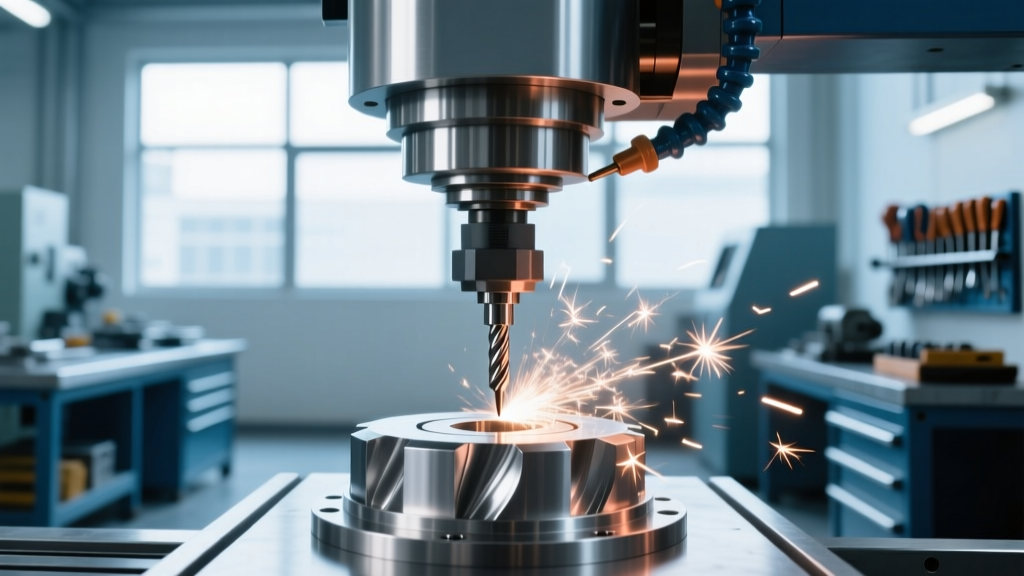
Stainless steel is notoriously hostile to cutting tools under 3mm (0.118") in diameter. Because austenitic grades like 316L have low thermal conductivity, the heat generated at the cutting edge does not dissipate into the chip or the workpiece; it concentrates directly in the micro-endmill.
EXPERT INSIGHT: The Work-Hardening Deflection LoopIf your CNC micro machine lacks the dynamic rigidity to maintain a true toolpath, the endmill deflects away from the cut. Instead of shearing the metal, the tool rubs against the surface of the 316L stainless. This friction instantly work-hardens the surface layer to over 40 HRC. On the next pass, the hardened surface snaps the 0.5mm carbide tool. You must budget for high-radial-engagement toolpaths (like trochoidal milling) to maintain constant tool engagement and avoid rubbing.
Tooling Cost Breakdown:
- Micro-Endmills (0.5mm / 0.020"): Specialized AlTiN-coated carbide endmills from manufacturers like Harvey Tool or SGS Tool Co. cost between $38 and $55 each.
- Tool Life Expectancy: In 316L stainless, a 0.5mm endmill running at 0.001" axial depth of cut (DOC) and 5% radial engagement will yield approximately 45 to 60 minutes of active cut time before flank wear degrades surface finish below 32 Ra.
- Amortization: Budget $0.85 to $1.20 in tooling costs per minute of active spindle time for complex 3D micro-contouring in stainless.
Hidden Budget Killers: Coolant Delivery and Workholding
Standard micro-machining setups often rely on air blast or minimal quantity lubrication (MQL) mist. This approach is financially disastrous when applied to stainless steel. Without high-pressure fluid to evacuate micro-chips from deep, narrow cavities, chip recutting occurs, leading to immediate tool breakage and scrapped parts.
Coolant Infrastructure Costs
To machine stainless steel at the micro-scale, you must budget for a high-pressure flood coolant system or through-spindle coolant (TSC) capable of 70 to 100 bar (1,000+ PSI). Furthermore, stainless steel requires a semi-synthetic coolant with high lubricity and a strict 8-10% concentration to prevent flash rusting and bacterial growth.
- High-Pressure Chiller & Pump Unit: $8,500 - $14,000
- Coolant Skimmer & Filtration (to remove micro-fines): $3,200 - $5,500
- Annual Coolant & Maintenance Consumables: $2,500 - $4,000
Micro-Workholding Limitations
Vacuum chucks and double-sided tape, commonly used in micro-machining aluminum or plastics, cannot withstand the cutting forces required to shear stainless steel. You must utilize mechanical micro-vises or custom tombstone fixtures. High-precision micro-vises (such as those from System 3R or Schunk) that guarantee zero lift and repeatability under heavy clamping loads cost between $2,800 and $4,500 per station.
WARNING: The 17-4PH Precipitation Hardening TrapIf your application requires 17-4PH martensitic stainless steel, be aware that machining it in the H1150 (over-aged) condition is mandatory for micro-milling. Attempting to micro-machine 17-4PH in the H900 or H1025 condition will result in catastrophic tool failure due to extreme material hardness and abrasiveness. Always specify the material condition on your purchasing orders to avoid wasting thousands in scrapped blanks and broken tools.
Unit Economics: Cost-Per-Part Calculation (316L Micro-Valve)
To contextualize these expenses, consider a production run of a 4mm x 4mm x 2mm micro-valve body machined from 316L stainless steel on a mid-tier industrial micro-mill. The raw material is pre-cut, ground micro-blanks to ensure flatness and parallelism.
| Cost Category | Calculation Basis | Cost Per Part (USD) |
|---|---|---|
| Material (316L Micro-Blank) | Pre-cut and ground 5mm x 5mm x 3mm blank | $4.50 |
| Tooling Amortization | 0.5mm & 1.0mm endmills, 14 mins cut time | $13.20 |
| Machine Depreciation & Spindle | $150k machine @ $45/hr burden rate | $16.80 |
| Coolant, Power & Overhead | Facility allocation and fluid consumption | $4.10 |
| Total Direct Manufacturing Cost | Excluding QA, programming, and packaging | $38.60 |
At a direct cost of $38.60 per unit, micro-machined stainless components are strictly reserved for high-margin industries where miniaturization is non-negotiable, such as surgical robotics, endoscopic tooling, and aerospace fluid control systems. Consumer electronics or low-margin automotive applications cannot absorb the tooling and machine burden rates required for micro-stainless fabrication.
Strategic Sourcing & Technical References
Accurate budgeting requires continuous reference to tooling manufacturer data and machining science. When planning your micro-stainless workflows, consult the Harvey Tool Technical Resources for specific feeds, speeds, and deflection calculations for sub-millimeter carbide tools. Additionally, the Sandvik Coromant Milling Knowledge Base provides essential metallurgical guidelines on managing heat generation and work-hardening in austenitic alloys. For ongoing industry benchmarks on machine rigidity and setup optimization, the Modern Machine Shop Micro-Machining Hub offers critical case studies from high-precision job shops.