What Do CNC Machines Do? A Guide to Controller Interfaces
Discover what CNC machines do at the controller level. Master Haas NGC, FANUC 31i, and Siemens 840D interfaces with our operator training guide.
The Brain Behind the Cut: What Do CNC Machines Do at the Controller Level?
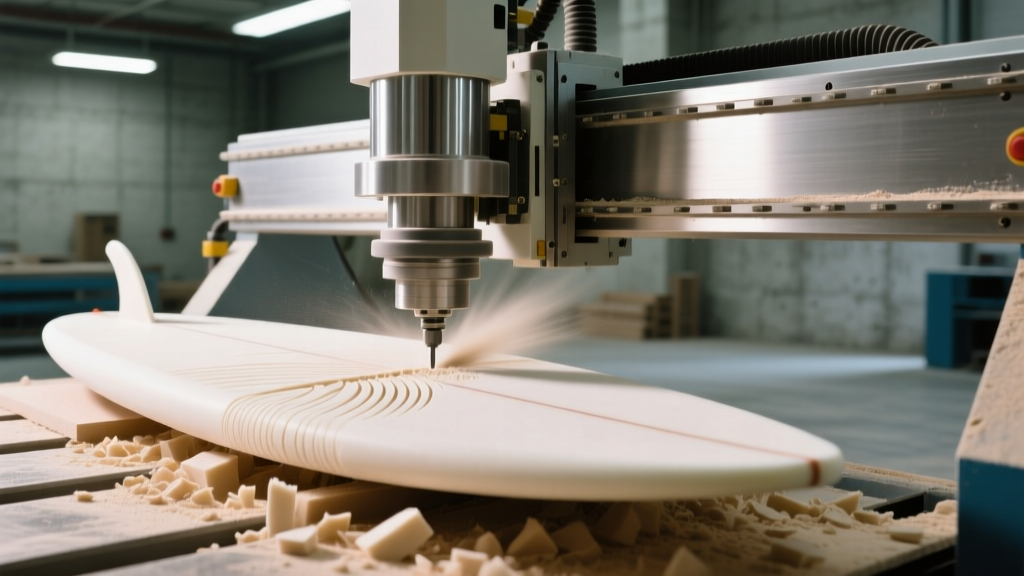
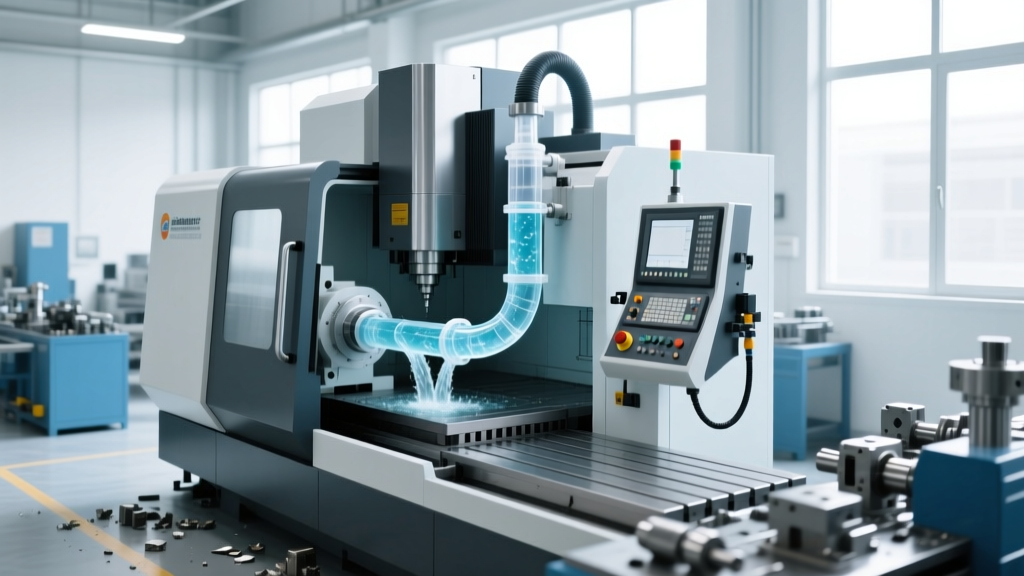
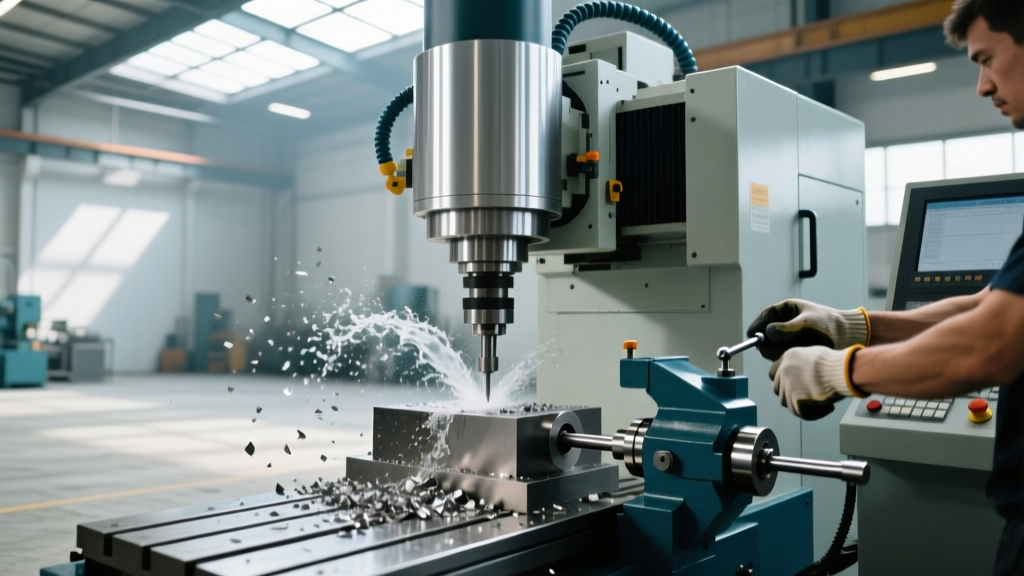
When trainees ask, 'what do cnc machines do?', the simplest answer is that they automate material removal. But from an operator training perspective, the real answer lies in the controller. The CNC controller is the central nervous system of the machine tool. It translates abstract geometric commands into precise electrical voltages that drive servo motors, managing spindle speeds, coolant flow, and axis interpolation simultaneously.
Modern manufacturing demands that operators do more than just load parts and press cycle start. True operational efficiency requires a deep understanding of the specific controller interface sitting in front of you. A master operator can shave seconds off a cycle time, diagnose a servo fault before it crashes the spindle, and manipulate macro variables on the fly. This guide breaks down the dominant controller ecosystems in 2026 and provides a concrete training framework for shop floors.
Core Concept: Block Processing and InterpolationBefore a machine moves, the controller must 'read ahead.' A high-end controller like the FANUC 31i-B5 can process up to 1,000 blocks of G-code in advance, calculating the exact deceleration and acceleration vectors required to maintain a constant tool tip speed around tight radii. Understanding look-ahead capacity is critical for operators machining complex 3D aerospace contours.
Controller Ecosystem Comparison Matrix
Not all interfaces are created equal. Shop floors typically standardize on one of four major ecosystems. Below is a technical comparison of the dominant controller types encountered in modern CNC machining environments.
| Controller Model | Primary Market | Interface Style | Look-Ahead Capacity | Approx. Upgrade Cost (2026) |
|---|---|---|---|---|
| Haas NGC | Standard VMC/HMC | ISO G-Code / Visual | 300 Blocks | $8,500 - $12,000 |
| FANUC 31i-MODEL B5 | High-End 5-Axis | ISO / Custom Macro B | 1,000 Blocks | $25,000 - $35,000 |
| Siemens SINUMERIK 840D sl | Advanced Mill/Turn | ShopMill / ISO Dialect | Advanced Spline | $30,000 - $45,000 |
| Mazak SmoothAi | Multi-Tasking / Integrex | Conversational / AI | AI Contour Control | Bundled with Machine |
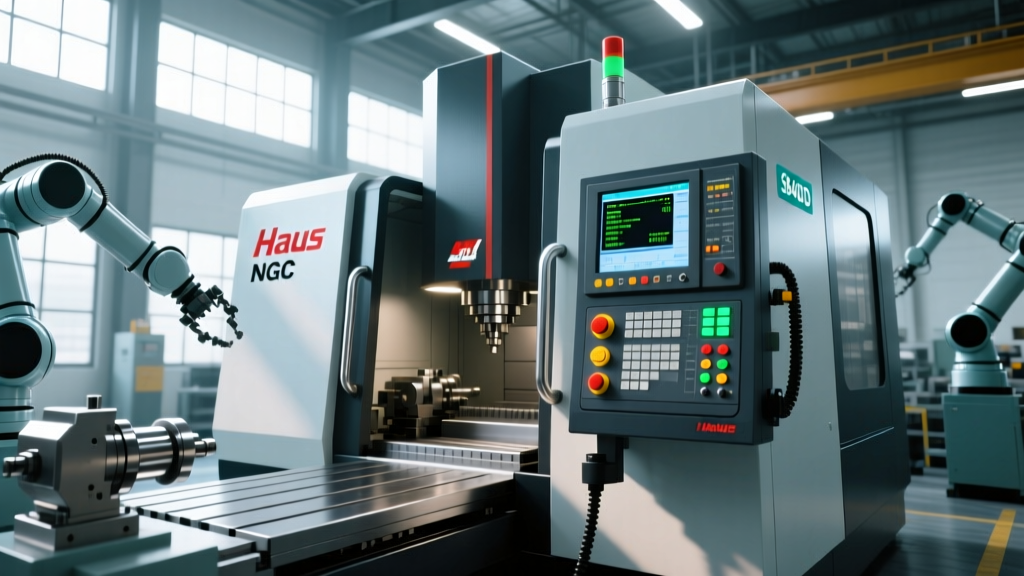
Mastering the Haas Next Generation Control (NGC)
The Haas Next Generation Control (NGC) remains the workhorse of North American job shops. Featuring a 15-inch 1080p multi-touch display and 1GB of program memory, the NGC is designed for high-speed USB and network file transfers. However, its accessibility often leads to complacency among junior operators.
Alarm Troubleshooting Framework: Beyond the Reset Button
When a Haas machine faults, inexperienced operators simply hit reset and restart. Master operators diagnose the root cause. Consider Alarm 114: X-Axis Servo Motor Overload.
- Immediate Action: Do not clear the alarm immediately. Note the exact machine coordinate where the fault occurred.
- Mechanical Check: Inspect the X-axis way covers for chip packing. A single packed ball of stringy aluminum chips can increase axis drag by 40%, triggering the overload.
- Verification: Mount a dial indicator on the spindle nose, indicate the vise, and command a 2.0-inch rapid move. If the indicator shows a deviation greater than 0.0005 inches after the move, the ball screw is binding or the servo coupler is failing.
- Parameter Check: Access Diagnostic Page 31 to view the real-time X-axis load percentage. If it idles above 15%, the way lube system is failing.
Navigating Advanced 5-Axis Interfaces: FANUC and Siemens
As shops move into 5-axis simultaneous machining, the interface complexity scales exponentially. The FANUC Series 31i-B5 is the gold standard for aerospace milling, while the Siemens SINUMERIK 840D sl dominates complex European mill-turn applications.
FANUC 31i and Custom Macro B Variables
Training operators on FANUC 5-axis machines requires deep immersion into Custom Macro B. Operators must understand how to manipulate system variables to automate in-process probing. For example, variable #100 through #149 are local variables used to store Renishaw probe data. If an operator does not know how to read the #5061 variable (which stores the exact machine coordinate where the probe stylus triggered), they cannot write logic to automatically update tool wear offsets based on real-time part measurement.
Siemens 840D sl: Safety Integrated (SI) Axes
The Siemens interface differs fundamentally from FANUC by integrating safety logic directly into the drive architecture. Operators must be trained on the 'Safety Integrated' (SI) interface. When performing maintenance or clearing a jam, operators must understand how to engage Safe Torque Off (STO) via the HMI rather than simply killing the main breaker. Improper handling of SI axes can result in a 'Safety Checksum Mismatch' alarm, which requires a multi-hour parameter reload by a certified technician, costing the shop thousands in downtime.
Warning: The Conversational vs. G-Code TrapOperators transitioning from Mazak's MAZATROL conversational interface to standard FANUC ISO G-code frequently crash machines due to modal state amnesia. Conversational controls automatically cancel cutter compensation at the end of a contour. ISO G-code does not. If an operator forgets to explicitly program
G40 (cancel cutter comp) and G80 (cancel canned cycle) at the end of a FANUC subprogram, the next tool call will inherit the previous tool's offset, resulting in a catastrophic gouge.30-60-90 Day Operator Onboarding Framework
To build genuine interface proficiency, shop managers should adopt this structured onboarding timeline, moving operators from basic button-pushers to interface analysts.
Days 1-30: Interface Survival and Safety
- Week 1: E-stop logic, door interlock overrides, and manual jog modes. Memorize the physical location of the reset and feed-hold buttons without looking.
- Week 2: Tool geometry vs. wear offsets. Understand the mathematical difference between typing '0.005' (absolute) and 'U0.005' (incremental) in the offset registry.
- Week 3-4: Single-block execution and dry-run verification. Operators must run 50 new programs in single-block with the rapid override dialed to 5% before being cleared for production.
Days 31-60: Diagnostics and Optimization
- Spindle Load Monitoring: Train operators to watch the spindle load meter. A sharp endmill cutting 6061 aluminum should peak at 35-45% load. If the baseline creeps up to 60%, the tool is worn, or the coolant concentration has dropped below 8%, causing built-up edge (BUE).
- Alarm Diagnosis: Require operators to maintain a physical logbook of every alarm code encountered, the root cause, and the fix. This builds a localized knowledge base.
- Feedrate Optimization: Teach operators to use the override switch to find the machine's harmonic sweet spot, adjusting programmed feedrates to eliminate chatter.
Days 61-90: Advanced Macro and 5-Axis TCP
- Tool Center Point (TCP):strong> For 5-axis operators, teach the
G43.4(FANUC) orTRAORI(Siemens) commands. Operators must learn how to manually jog the rotary axes while the TCP is active to verify the tool tip remains stationary in Cartesian space. - Macro Editing: Assign operators to edit the machine's built-in macro programs for automatic tool measurement, ensuring they understand the
G65call syntax and argument mapping.
Essential Resources for Continuous Training
Controller mastery is not a one-time event; it requires continuous education as firmware updates introduce new cycles and interface tweaks. Leverage authoritative resources to supplement shop-floor training. The Society of Manufacturing Engineers (SME) offers excellent standardized CNC machining curricula that align with NIMS (National Institute for Metalworking Skills) credentials. Additionally, always maintain offline simulator software, such as CNC Software's Mastercam or Vericut, allowing operators to test complex 5-axis interface logic and macro variables without risking a $250,000 spindle on the physical shop floor.