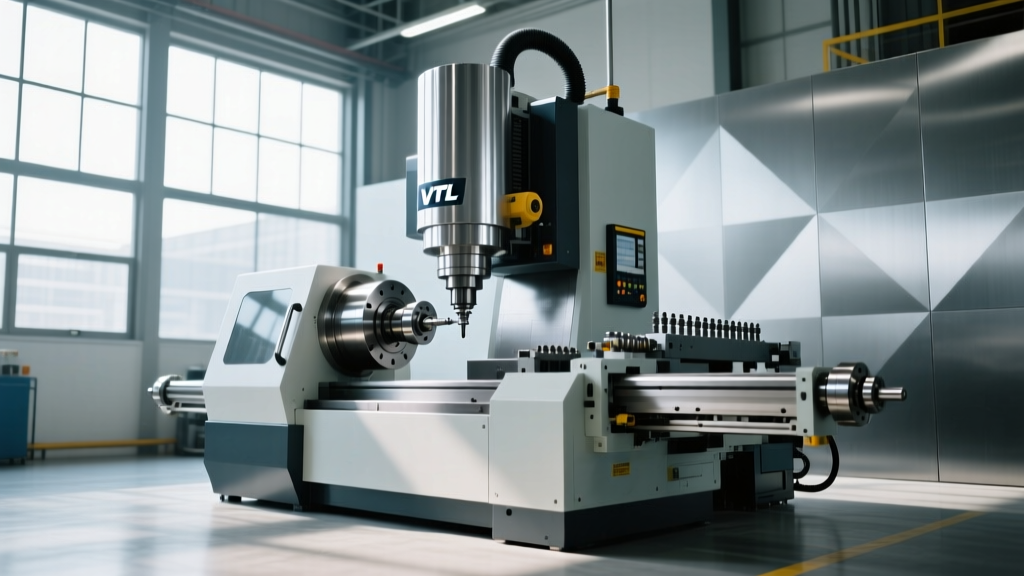
Choosing a Multi-Function CNC VTL Machine for Mill-Turn Operations
Evaluate multi-function CNC VTL machine options for mill-turn operations. Compare specs, pricing tiers, and C-axis capabilities for heavy part manufacturing.
Heavy-diameter, short-length components like aerospace turbine casings, large valve bodies, and wind energy hubs present unique fixturing challenges. Traditional horizontal turn-mill centers struggle with the sheer weight and gravitational sag of 2,000+ lb parts, often requiring complex custom fixturing that introduces runout errors. This is where the multi-function cnc vtl machine (Vertical Turning Lathe) excels. By leveraging gravity to seat the workpiece naturally against the chuck, and integrating live tooling, C-axis contouring, and Y-axis capabilities, modern mill-turn VTLs complete massive, complex geometries in a single setup.
Core Architecture: Ram-Type vs. Turret-Type Mill-Turn VTLs
When selecting a multi-function VTL, the primary architectural decision dictates your milling capabilities. The market is split between turret-based and ram-based configurations, each serving distinct production profiles.
Architectural Decision Framework
Turret-Type VTLs: Utilize a standard indexing turret with live tooling stations. Best for high-volume production of smaller flanges and rings (up to 800mm swing). Tool changes are rapid (1-3 seconds), but Z-axis reach is limited by the turret body, and heavy milling torque is restricted by the turret locking mechanism.
Ram-Type VTLs: Utilize a cross-rail and a vertically sliding ram that houses the milling spindle. Essential for deep-bore milling, heavy interrupted cuts in titanium, and parts exceeding 1,200mm in height. The ram provides massive Z-axis travel and isolates milling forces from the turning spindle bearings.
For true 5-axis simultaneous machining on large aerospace rings, a ram-type configuration with an integrated B-axis tilting head is mandatory. According to Mazak's multi-tasking technology guidelines, integrating a B-axis into the ram allows for contour milling of complex airfoil profiles on the inner diameters of turbine casings without requiring secondary operations on a horizontal machining center.
2026 Market Pricing & Capability Tiers
Capital expenditure for a mill-turn VTL varies drastically based on swing diameter, thermal compensation technology, and automation readiness. Below is the current market breakdown for new equipment.
| Tier | Max Swing | Live Tooling RPM | C-Axis Resolution | Price Range (USD) | Representative Models |
|---|---|---|---|---|---|
| Entry / Job Shop | 600 - 800mm | 3,000 - 4,000 | 0.01° | $250k - $450k | Hartford VTL-800, You Ji VTM-800 |
| Mid-Range Production | 1,000 - 1,600mm | 6,000 - 10,000 | 0.001° | $600k - $950k | DN Solutions DVT 1600, Doosan VTS series |
| High-End Aerospace | 2,000 - 3,500mm+ | 12,000 - 20,000+ | 0.0001° (Direct Drive) | $1.2M - $2.8M+ | Mazak INTEGREX VTL, Index VTM series |
Critical Specifications for Heavy Milling Operations
Spec sheets often obscure the mechanical realities required for successful mill-turn operations on large vertical platforms. When evaluating a cnc vtl machine for heavy milling, demand the following engineering features:
- C-Axis Locking Mechanism: Standard servo-brakes are insufficient for heavy interrupted milling cuts (e.g., machining bolt-hole patterns on titanium flanges). The machine must utilize a Curvic coupling or hydraulic clamping ring on the C-axis to physically lock the spindle, transferring cutting forces into the machine casting rather than destroying the spindle bearings.
- Z-Axis Thermal Compensation: In ram-type VTLs, the Z-axis ball screw can exceed 1,500mm in length. Continuous milling generates massive friction heat, causing the screw to expand and shift the Z-axis datum. Specify hollow-core ball screws with active chilled coolant circulation (maintained at 20°C ± 0.5°C) to eliminate thermal drift.
- Spindle Torque vs. RPM Curve: Turning large Inconel rings requires high torque at low RPMs (e.g., 4,000 Nm at 150 RPM), while milling requires high RPMs with lower torque. Look for a two-speed gearbox or a high-torque direct-drive motor capable of delivering both profiles without stalling during heavy roughing passes.
Decision Matrix: Mill-Turn VTL vs. Horizontal Turn-Mill
Shops frequently debate whether to purchase a large horizontal turn-mill center (like a Mazak INTEGREX i-800) or a vertical mill-turn VTL. Use this matrix to align the machine geometry with your part portfolio.
| Manufacturing Variable | Multi-Function CNC VTL Machine | Horizontal Turn-Mill Center |
|---|---|---|
| Part Geometry | Large diameter, short length (Discs, Rings, Hubs) | Long, shaft-like parts (Rotors, Drive shafts) |
| Fixturing / Loading | Gravity assisted; overhead crane drops part directly onto chuck. | Requires steady rests, tailstocks, or dual-spindle synchronization to prevent sag. |
| Chip Evacuation | Poor. Chips fall directly onto the chuck and part surface. | Excellent. Gravity pulls chips away from the part into the conveyor. |
| Footprint Efficiency | Compact. Vertical orientation minimizes floor space for large swings. | Expansive. Requires significant length for bed and chip conveyor. |
Hidden Costs and Edge-Case Failures
Beyond the base machine cost, integrating a cnc vtl machine into a production cell introduces specific operational edge cases that impact total cost of ownership. Industry data from the Society of Manufacturing Engineers (SME) highlights that secondary setup times and machine downtime often negate the benefits of multitasking if these physical limitations are ignored.
The Chip Evacuation Crisis
In a VTL, gravity works against chip management. During heavy milling operations, stringy chips from aluminum or tough chips from stainless steel fall directly back onto the chuck jaws and the workpiece. If a chip becomes trapped between the part and the chuck jaw during an automated pallet change or re-clamping sequence, it will induce severe runout, ruining a $50,000 aerospace forging. Solution: Specify a machine with integrated high-pressure air-blast nozzles in the cross-rail and custom angled telescopic way covers that prevent chip accumulation on the machine base.
Tool Clearance and Ram Interference
When utilizing long live-tooling holders for deep-bore milling, the physical bulk of the ram head can collide with the outer diameter of the workpiece. Standard VTL rams have a large cross-sectional footprint to resist cutting forces. Solution: Request a 3D interference envelope map from the builder during the quoting phase, and utilize stepped or reduced-neck toolholders (as recommended by Sandvik Coromant's tooling guidelines) to maximize clearance inside deep internal cavities.
Coolant Pressure for Deep Hole Drilling
Drilling deep radial holes via the live tooling spindle requires high-pressure coolant (HPC) to evacuate chips from the cutting zone. Standard VTL live tooling spindles are often limited to 70 bar (1,000 psi) through-tool coolant. For deep-hole gun drilling operations on the Y-axis, this is insufficient. Ensure the machine is pre-plumbed for a 150+ bar (2,200+ psi) HPC pump package routed directly through the ram's rotary union.
Vendor Evaluation Checklist
Before issuing a purchase order, verify the following with the machine tool builder:
- Spindle Runout Test: Demand a test cut demonstrating C-axis contouring accuracy. Mill a hexagonal pocket using the C-axis and Y-axis simultaneously. Measure the corner radii; any deviation indicates C-axis servo lag or mechanical backlash.
- Thermal Stability Guarantee: Require a 4-hour continuous milling cycle test with laser interferometer measurements on the Z-axis to prove the hollow ball-screw coolant system maintains thermal growth within ±5 microns.
- Automation Integration: If utilizing a gantry loader or robotic arm, verify that the machine's cross-rail can automatically elevate and lock out of the way to provide unobstructed vertical clearance for part loading.