Selling CNC Machines for Stainless Steel: 2026 Cost Guide
Analyze the costs of stainless steel CNC machining and learn strategies for selling CNC machines configured for 304 and 316 alloys in 2026.
The Financial Reality of Stainless Steel Machining
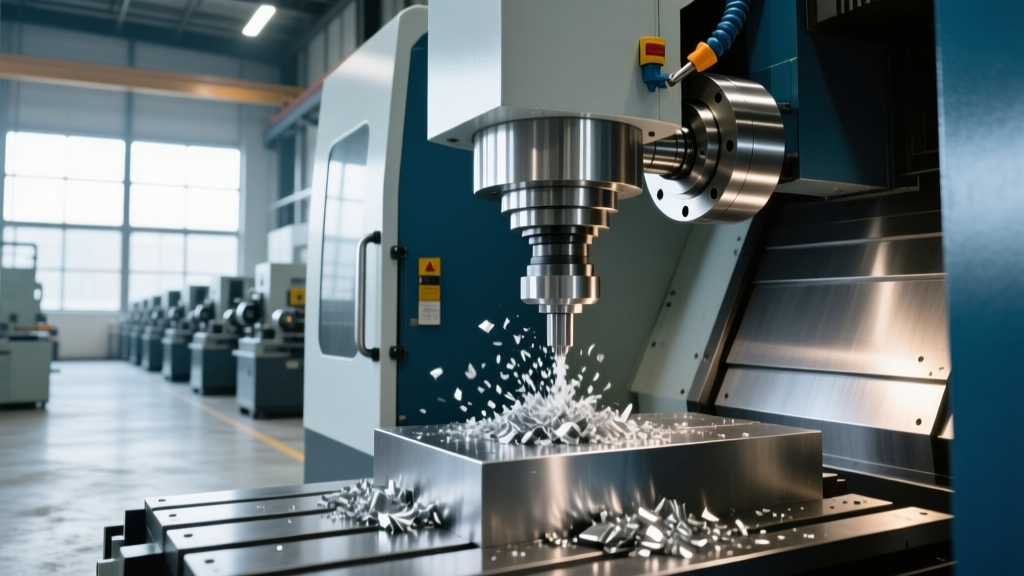
Machining austenitic stainless steels like 304 and 316, or precipitation-hardening grades like 17-4 PH, demands significantly more from a CNC milling center than standard aluminum or mild steel operations. The low thermal conductivity and high work-hardening rates of these alloys generate immense cutting forces and localized heat. For machine shop owners and equipment brokers, understanding these mechanical realities is critical—not only for budgeting daily operations but also for accurately valuing and selling CNC machines that have been subjected to the rigors of stainless steel production.
This 2026 cost analysis breaks down the capital expenditure (CapEx), tooling consumables, and secondary market resale strategies required to maintain profitability when processing high-value stainless alloys.
Key 2026 Market Metrics: Stainless CNC Operations
- Spindle Degradation Rate: Machines running 316SS without high-pressure coolant experience spindle bearing wear 2.4x faster than those running 6061-T6 aluminum.
- Tooling Cost per Part: Average carbide end mill consumption costs $0.42 per part in aluminum, versus $1.85 per part in 304 stainless steel.
- Resale Premium: Well-maintained CNC mills with documented 1000+ PSI coolant systems command a 12-15% premium on the secondary market.
Capital Expenditure (CapEx): Sourcing the Right Platform
When budgeting for a stainless steel workcell, standard 8,000 RPM spindles and 200 PSI flood coolants are insufficient. You must prioritize low-end torque (to push through work-hardened material) and high-pressure coolant (HPC) to break chips and prevent built-up edge (BUE). According to Sandvik Coromant's material overview on stainless steel, managing the heat generated in the shear zone is the primary factor in extending tool life and maintaining surface finish integrity.
| Machine Model (2026 Config) | Base Price (Est.) | Spindle Torque | Coolant Pressure | 3-Year Depreciation |
|---|---|---|---|---|
| Haas DS-2SS (Super Speed) | $138,500 | 130 ft-lb @ 3,200 RPM | 1,000 PSI (Option) | 28% |
| Mazak VCN-530C | $175,000 | 178 ft-lb @ 2,500 RPM | 1,000 PSI (Standard) | 22% |
| Okuma GENOS M460-VE | $152,000 | 155 ft-lb @ 2,800 RPM | 1,000 PSI (Option) | 24% |
The High-Pressure Coolant (HPC) Mandate
Never omit the HPC option when configuring a machine for stainless steel. A 1,000 PSI through-spindle coolant system costs roughly $14,000 to $18,000 upfront but reduces cycle times by up to 20% and extends tool life by 300% in 316L applications by effectively flushing the chip from the cutting zone before it can weld to the tool flute.
Tooling and Consumables: The True Cost of 304 and 316 Alloys
Budgeting for the machine is only the first step. The operational expenditure (OpEx) for stainless steel machining is heavily skewed toward cutting tools and coolant maintenance. Austenitic stainless steels contain nickel and chromium, which create a gummy, abrasive chip that rapidly degrades standard TiN or TiAlN coatings.
- End Mills: Standard 1/2" 4-flute carbide end mills ($45 each) will fail within 40 minutes of continuous cutting in 316SS. Budget for specialized variable-helix, AlTiN-coated tools designed for high-temperature alloys (e.g., Harvey Tool or Kennametal Harvi lines), which cost $85–$110 each but withstand the thermal shock of interrupted cuts.
- Inserts for Indexable Tooling: When face milling 17-4 PH, utilize PVD-coated grades with sharp cutting edges to shear the material rather than rubbing it. Expect to budget $18–$25 per edge for premium Sandvik or Walter inserts.
- Coolant Concentration: Stainless steel requires a higher concentration of semi-synthetic or fully synthetic coolant to provide adequate lubricity and prevent rust. Maintain a 9-11% concentration (verified daily with a refractometer), which increases annual coolant fluid costs by approximately $2,400 per 55-gallon drum compared to standard 5% aluminum mixes.
"The secondary market heavily penalizes machines with neglected coolant systems. When selling CNC machines that ran stainless, buyers will immediately test the tramp oil skimmers and check the way covers for abrasive chip intrusion. A machine with a compromised way cover will see its valuation drop by $8,000 to $12,000 due to the inevitable ball screw replacement."
Strategies for Selling CNC Machines Configured for Stainless
When it is time to upgrade your workcell, selling CNC machines that have a history of cutting stainless steel requires a strategic approach to maximize return on investment. The secondary market is highly sensitive to the specific wear patterns caused by hard, stringy chips.
Pre-Sale Preparation Framework
- Document Spindle Thermal History: Buyers fear thermal degradation from the high heat of stainless machining. Provide a spindle runout test report (must be under 0.0002" TIR) and a vibration analysis chart to prove bearing integrity.
- Detail the Coolant System: Flush the entire coolant tank, replace all filters, and provide maintenance logs proving the concentration was kept above 9%. This proves the internal plumbing and pump seals haven't degraded from acidic breakdown.
- Inspect and Replace Way Wipers: Stainless chips are sharp and abrasive. If they bypass the wipers, they embed in the linear guide bearings. Replace all way wipers ($300-$500 in parts) before listing the machine and advertise this preventative maintenance.
- Highlight HPC Upgrades: If the machine is equipped with a 1,000 PSI through-spindle pump and a programmable coolant nozzle, feature this prominently. According to current data tracked by the Association for Manufacturing Technology (AMT) USMCT reports, machines with advanced fluid management systems are experiencing higher liquidity and faster turnover in the used equipment market.
ROI and Break-Even Analysis Framework
To determine if a dedicated stainless steel CNC cell is financially viable for your shop, use the following break-even framework. This calculation isolates the premium pricing of stainless parts against the elevated OpEx.
The Stainless Margin Formula
Net Margin per Hour = (Shop Rate + Material Surcharge) - (Tooling Cost/Hr + Coolant Cost/Hr + Power Consumption/Hr)
Scenario Analysis:
Assume a shop rate of $115/hour. A standard aluminum medical bracket yields a net margin of $62/hour. The same geometry machined from 316L implant-grade stainless requires a 40% slower feed rate, increasing cycle time, but allows for a material surcharge and higher part price due to the complexity.
- Tooling Cost/Hr (Aluminum): $4.50
- Tooling Cost/Hr (316L): $18.00
- Power Consumption (316L): Spindle load averages 65% vs 25% for aluminum, adding roughly $2.80/hour in electrical costs.
Despite the 4x increase in tooling costs and higher power draw, the net margin per hour on the 316L part typically reaches $74/hour due to the higher barrier to entry and reduced local competition for certified stainless machining. The break-even point for the $18,000 HPC coolant upgrade is achieved in just 245 spindle hours of dedicated stainless production.
Final Budgetary Directives
Successfully navigating the economics of stainless steel machining requires viewing the machine, the tooling, and the coolant as a single, interdependent system. Skimping on low-end spindle torque or high-pressure coolant will exponentially inflate your tooling budget and destroy your cycle times. Furthermore, when eventually selling CNC machines from your stainless workcell, meticulous documentation of thermal and fluid maintenance will separate your equipment from the rest of the market, ensuring you recapture maximum capital for your next equipment investment.