How Can I Sell My CNC Machine? Maximize Value via Power Setup
Wondering how can I sell my CNC machine for top dollar? Learn how auditing your electrical power setup, VFDs, and phase converters maximizes resale value.
The Hidden Value Driver in Used CNC Sales
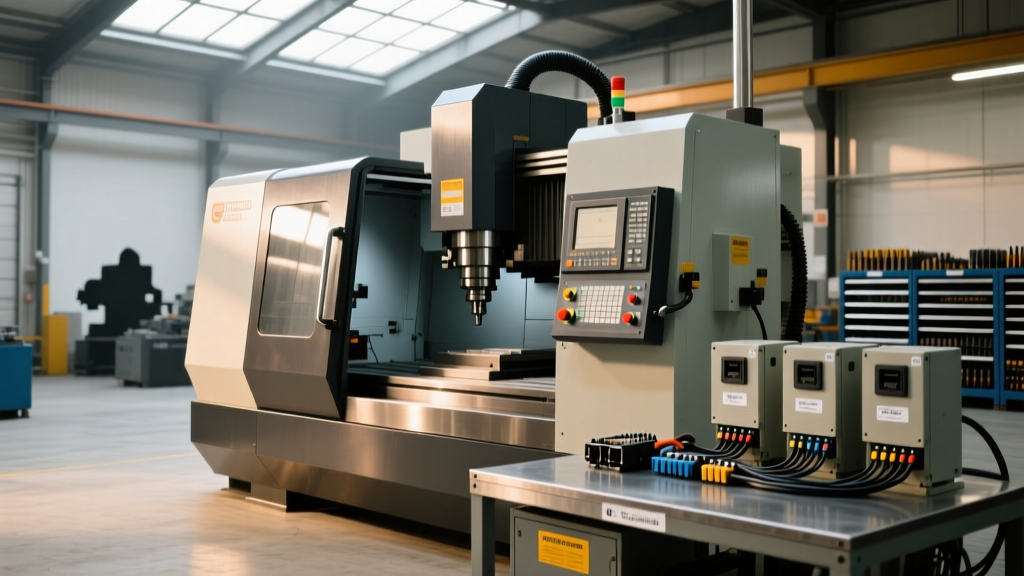
When machine shop owners ask, "how can I sell my CNC machine for a premium in a saturated market?" the conversation almost exclusively revolves around spindle hours, axis travel, and cosmetic condition. However, in 2026, sophisticated buyers and equipment brokers are conducting rigorous electrical audits before making an offer. The electrical cabinet and power infrastructure represent the highest-friction negotiation points in a used CNC transaction.
A machine with undocumented wiring, aging contactors, or an undersized phase converter will immediately trigger a 15% to 25% price reduction to account for the buyer's perceived retrofit risk. Conversely, a meticulously audited power setup with modern Variable Frequency Drives (VFDs) and IoT-ready power monitoring can justify a premium asking price. This guide details exactly how to audit, upgrade, and document your CNC machine's electrical requirements to maximize your resale value.
⚠️ Warning: The Cost of Undocumented Electrical ModsNever attempt to sell a CNC machine with "spaghetti wiring" or undocumented bypasses. According to OSHA 1910.303 standards, all electrical equipment must be free from recognized hazards. Buyers will walk away from a machine if the control cabinet violates basic clearance and wire-bending space requirements, regardless of how well the spindle cuts.
The 2026 Buyer's Electrical Audit Checklist
Modern buyers are not just looking for a machine that turns on; they are evaluating the power infrastructure's reliability and harmonic cleanliness. To preempt lowball offers, evaluate your machine against the criteria buyers use during on-site inspections:
- Contactor Health: Are the main spindle contactors pitted? Replacing a set of Schneider Electric TeSys D contactors (approx. $60–$95 each) eliminates the fear of imminent spindle dropout.
- VFD Parameter Documentation: If your machine uses a Yaskawa A1000 or Delta VFD+ series for spindle control, are the parameters backed up to a USB or SD card? Buyers pay a premium for machines where the exact drive tuning is preserved.
- Harmonic Distortion: As outlined in Fluke's power quality guidelines, non-linear loads from CNC drives create harmonics. Machines equipped with line reactors or active harmonic filters command higher prices in facilities with sensitive metrology equipment.
- Cabinet Climate Control: Check the enclosure cooler. A failed Rittal TopTherm unit (replacement cost ~$900) leads to overheated servo drives. Ensure the cooling unit is functional and the condenser is clean.
Phase Conversion: Impact on Resale Value
Many CNC machines in small-to-medium shops run on derived three-phase power. The type of phase converter included in the sale drastically alters the machine's perceived value. Selling a CNC with a mismatched or static phase converter is a major red flag for buyers who require rigid tapping and high-torque low-speed milling.
| Converter Type | Typical Cost (15-20 HP) | Power Quality Output | Impact on CNC Resale |
|---|---|---|---|
| Static Converter | $600 - $900 | Poor (Voltage imbalance on generated leg) | Negative: Buyers will deduct the cost of a rotary/VFD upgrade. |
| Rotary (Standard) | $1,800 - $2,500 | Good (Balanced within 5%) | Neutral: Expected for standard shop equipment. |
| Rotary (CNC-Optimized) | $2,800 - $3,600 | Excellent (Balanced within 2%) | Positive: Justifies a 5-8% premium on the total package. |
| VFD / Digital Phase Converter | $3,500 - $5,000 | Perfect (Synthesized sine wave) | Highly Positive: Appeals to high-precision and medical machining buyers. |
High-ROI Electrical Upgrades Before Listing
If your machine is over seven years old, targeted electrical upgrades yield a return on investment (ROI) of 200% to 400% at the time of sale. Focus on components that protect the buyer's investment and ensure uninterrupted production.
1. Install a Phase Monitor Relay
For under $150, installing a Macromatic MU-525 or an Eaton Crouzet phase monitor relay protects the CNC's power supply from phase loss, phase reversal, and severe voltage asymmetry. Highlighting this addition in your sales listing signals to the buyer that the machine was operated by a professional who prioritized control board longevity.
2. Upgrade to Premium Efficiency Coolant Motors
Older flood coolant pumps draw excessive amperage and generate harmonic noise. Swapping a failing 3-phase coolant pump for a NEMA Premium Efficiency motor (approx. $250–$400) reduces the machine's overall power draw and demonstrates a commitment to modern energy standards—a key selling point for ESG-focused manufacturing firms in 2026.
3. Clean and Re-Torque the Power Distribution Block
Thermal cycling causes terminal screws to loosen over time, leading to micro-arcing and voltage drops under heavy cutting loads. Open the main disconnect, use a thermal camera to check for hot spots while the machine is under load, and re-torque all power distribution lugs to the manufacturer's inch-pound specifications. Document this with a thermal image to include in your sales dossier.
"A clean, labeled electrical cabinet with updated schematics reduces the buyer's perceived risk to near zero. In the secondary market, risk mitigation is what justifies top-tier pricing."
Packaging the Electrical Documentation
Answering the question of how to sell your equipment faster requires removing friction from the buyer's due diligence process. Do not just hand over a crumpled, oil-stained manual. Create a digital and physical "Electrical Health Dossier" that includes:
- Updated Schematics: If any field modifications were made (e.g., adding a chip conveyor or a fourth-axis drive), update the electrical ladder diagrams using software like AutoCAD Electrical or EPLAN, and export them as a clean PDF.
- VFD and Servo Parameter Backups: Provide a USB drive containing the exact parameter files for the spindle VFD, servo amplifiers, and the PLC logic.
- Preventative Maintenance (PM) Logs: Include a log showing when the cabinet air filters were changed, when the cooling unit refrigerant was checked, and when the contactors were last inspected.
- Power Quality Report: Hire an electrician with a Fluke 435-II Power Quality Analyzer to run a 24-hour log on the machine's power feed. Including this report proving clean voltage and low THD (Total Harmonic Distortion) is a massive differentiator in your listing.
Case Study: Prepping a 2018 Haas VF-2SS for Resale
To illustrate the financial impact of electrical preparation, consider a recent shop liquidation involving a 2018 Haas VF-2SS (20 HP vector drive, 12,000 RPM spindle). The machine had 9,500 spindle hours and was initially appraised by a broker at $38,000 due to "general electrical aging" and a missing phase monitor.
The owner invested $1,450 into the electrical cabinet:
- Replaced three pitted main contactors with OEM Schneider TeSys equivalents ($240).
- Installed a Rittal SK 3302.100 enclosure cooler to replace the failed factory unit ($890).
- Added a Macromatic phase monitor relay and re-terminated all 24V DC control wiring with new ferrules ($120 in parts, $200 in shop labor).
- Generated a clean PDF of the I/O wiring diagrams.
With the electrical cabinet spotless, thermally stable, and fully documented, the machine was relisted at $46,500. It sold within 14 days to a medical device manufacturer who specifically cited the "turn-key electrical reliability" as the reason for bypassing three cheaper, un-audited listings. By treating the power setup as a primary selling feature rather than an afterthought, the seller netted an additional $7,050 after expenses.