Service Schedules for Types of CNC Machine in Aluminum Milling
Optimize uptime with exact maintenance schedules for types of CNC machine used in aluminum milling. Includes PM matrices, coolant specs, and spindle care.
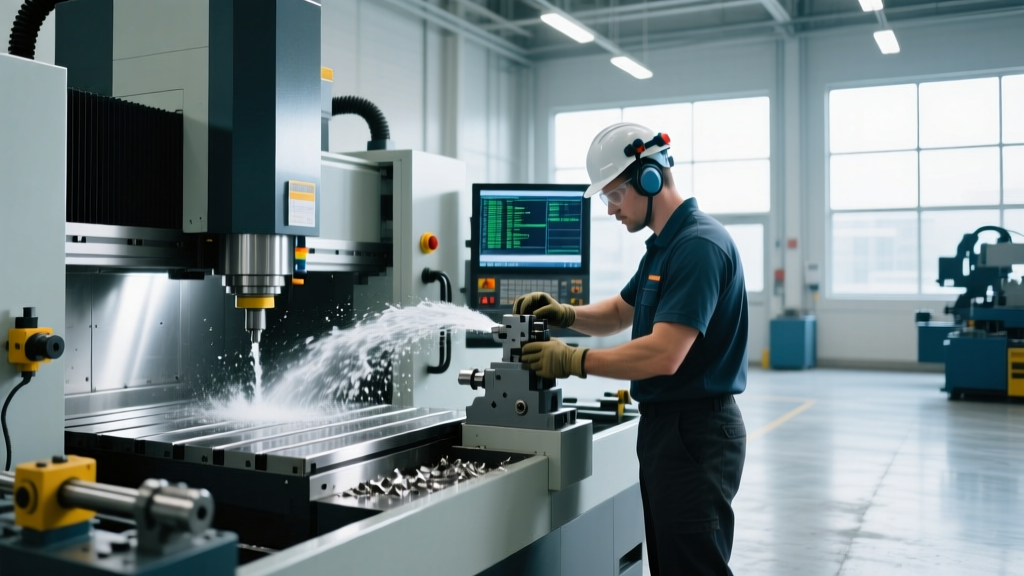
Machining aluminum alloys like 6061-T6 and 7075-T6 generates high volumes of stringy swarf, demands aggressive flood coolant, and operates at spindle speeds exceeding 12,000 RPM. This combination creates a unique maintenance burden that differs drastically from steel or titanium operations. When evaluating different types of CNC machine for high-volume aluminum production, standard OEM maintenance manuals often fall short because they assume general-purpose use. Aluminum fines, tramp oil, and high-velocity coolant washout require highly specific, accelerated service intervals to prevent catastrophic component failure.
The Aluminum Factor: Swarf, Coolant, and Micro-Welding
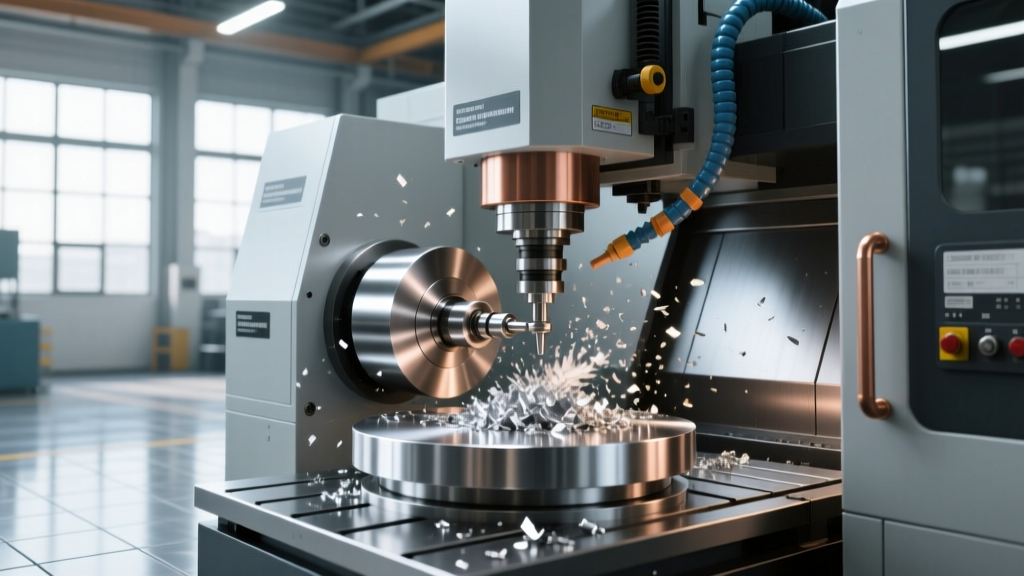
Aluminum is deceptively abrasive. While the material itself is soft, the aluminum oxide layer that forms instantly on exposed chips is extremely hard. When these microscopic oxide particles infiltrate way covers or spindle tapers, they act as a lapping compound. Furthermore, the gummy nature of 6061-T6 promotes Built-Up Edge (BUE) on tooling, which can transfer to the spindle taper, causing micro-welding that destroys tool retention force.
⚠️ Critical Warning: Spindle Taper Micro-WeldingIf a tool is left clamped in the spindle during heavy 6061 roughing without an air-blast or taper-wipe cycle, aluminum dust can embed in the grease film of the CAT40/BT40 taper. Under high centrifugal force and heat, this causes micro-welding. Extraction forces can spike from a standard 1,200 lbs to over 3,500 lbs, permanently damaging the drawbar Belleville washers and the spindle nose.
Preventive Maintenance Matrix by Machine Architecture
Maintenance schedules must be adapted to the specific kinematics and chip-evacuation designs of the equipment. Below is a targeted preventive maintenance (PM) matrix for the three primary types of CNC machine utilized in aluminum aerospace and automotive milling.
| Machine Type | Daily / Shift PM | Weekly PM | Critical Failure Point |
|---|---|---|---|
| 3-Axis VMC (e.g., Haas VF-2SS) |
Manual taper wipe; check coolant Brix (8-10%); clear chip conveyor auger. | Inspect way wipers; clean coolant tank skimmer; verify air blast pressure (>80 PSI). | Spindle bearing contamination from compromised air purge seals. |
| 5-Axis Trunnion (e.g., DMG MORI DMU 50 3rd Gen) |
Clear chips from trunnion bellows; verify A/C axis clamping pressure. | Lubricate trunnion cam followers; inspect rotary union seals for coolant weeping. | Aluminum fines jamming the direct-drive torque motor cooling jackets. |
| HMC (e.g., Makino a61nx) |
Flush tombstone fixture bases; check high-pressure coolant (HPC) nozzle alignment. | Clean pallet changer sensor lenses; backflush HPC centrifuge filters. | Pallet seating errors due to chip accumulation on the curvic coupling. |
Spindle and Taper Care: The 4-Hour Rule
For shops running continuous 6061-T6 roughing cycles, the standard 'end-of-day' taper cleaning is insufficient. According to Haas Automation Service Support guidelines for high-speed spindles, shops should implement a 4-hour taper wipe interval when utilizing aggressive material removal rates (MRR).
- Tooling Requirement: Use toolholders with built-in air-blast channels or rely on machine-integrated spindle air purges. The air purge must be verified to deliver a minimum of 0.5 CFM at the taper face to create a positive pressure barrier against aluminum dust.
- Cleaning Solvent: Never use standard shop rags that leave lint. Use lint-free microfiber wipes dampened with isopropyl alcohol (90%+) to dissolve the oily residue left by mist collectors and coolant vapor.
- Pull-Stud Inspection: Aluminum machining requires high radial engagement. Inspect pull-studs for neck stretching every 6 months using a dedicated go/no-go gauge. Replace retention knobs annually, regardless of visual condition.
Coolant System Overhaul: Managing Tramp Oil and Fines
Aluminum machining demands heavy coolant flow to prevent chip recutting. This washes way lube into the sump, creating tramp oil. When aluminum fines mix with tramp oil, they form a highly abrasive, concrete-like sludge that clogs paper band filters and destroys centrifugal pumps.
"In aluminum milling, your coolant is not just a lubricant; it is a hydraulic chip-evacuation system. If the fluid velocity drops due to clogged filters, you will experience chip recutting, which immediately degrades surface finish and accelerates tool wear." — Sandvik Coromant Aluminum Milling Guidelines
Strict Coolant Chemistry Parameters for Aluminum
Aluminum is highly reactive to coolant pH levels. Maintaining exact chemical balance is a non-negotiable maintenance task.
- pH Control (8.5 to 9.2): If pH exceeds 9.2, the coolant will chemically attack the aluminum, causing black staining on the parts and releasing hydrogen gas in the sump. If pH drops below 8.5, bacterial growth accelerates, leading to rancidity and machine rust.
- Concentration (Refractometer Brix): Maintain an 8% to 10% concentration. Aluminum requires higher lubricity than steel. Below 8%, you will experience severe built-up edge on uncoated carbide endmills.
- Tramp Oil Skimming: Run disc or belt skimmers continuously during the shift. Do not rely on weekend skimming; tramp oil emulsifies into the coolant within 48 hours under the agitation of a 1000-PSI through-spindle coolant (TSC) pump.
Way Lube and Axis Drive Calibration
The aggressive flood coolant required for aluminum inevitably washes away way lube. Standard ISO 68 way lube (such as Mobil Vactra Oil Number 2) is formulated with tackifiers to resist washout, but in high-volume aluminum environments, the tackifiers shear down rapidly.
💡 Pro-Tip: Way Cover Bellows InspectionAluminum chips are sharp and needle-like. They easily pierce standard PVC way covers. Inspect the X and Y axis telescopic steel covers and bellows every Friday. If aluminum fines breach the cover and enter the linear guideway block, the recirculating ball bearings will spall within 200 hours of operation, resulting in a $4,500+ axis rebuild and 3 days of downtime.
Furthermore, the high feed rates (often exceeding 800 IPM in aluminum) used in adaptive clearing toolpaths place immense dynamic loads on the axis servo motors. Monthly servo tuning and ballbar testing (using equipment like a Renishaw QC20-W) should be integrated into the PM schedule to detect backlash caused by way wear before it manifests as chatter marks on aerospace structural components.
High-Pressure Coolant (HPC) Nozzle Maintenance
For horizontal machining centers and advanced 5-axis machines equipped with 1000+ PSI HPC systems, nozzle maintenance is critical. Aluminum chips frequently lodge in the micro-orifices of programmable coolant nozzles.
- Weekly Purge: Execute a high-pressure air purge cycle through the HPC lines to blow out trapped aluminum fines.
- Filter Mesh Verification: Ensure the inline high-pressure filters are rated to 25 microns or finer. A 50-micron filter will allow aluminum particles large enough to score the ceramic plungers inside the intensifier pump, leading to catastrophic pump failure (replacement cost: $8,000 - $12,000).
Adhering to these accelerated, material-specific maintenance schedules ensures that the capital investment in high-speed CNC architecture yields consistent surface finishes, holds tight geometric tolerances, and achieves the 10,000+ hour spindle life expected in modern manufacturing environments.