Troubleshooting CNC Machine Gantry Coolant Leaks and Enclosure Seal Failures
Fix CNC machine gantry coolant leaks and enclosure seal failures. Expert troubleshooting steps, way cover replacements, and gasket repair guides.
Diagnostic Matrix: Pinpointing Gantry Coolant Breaches
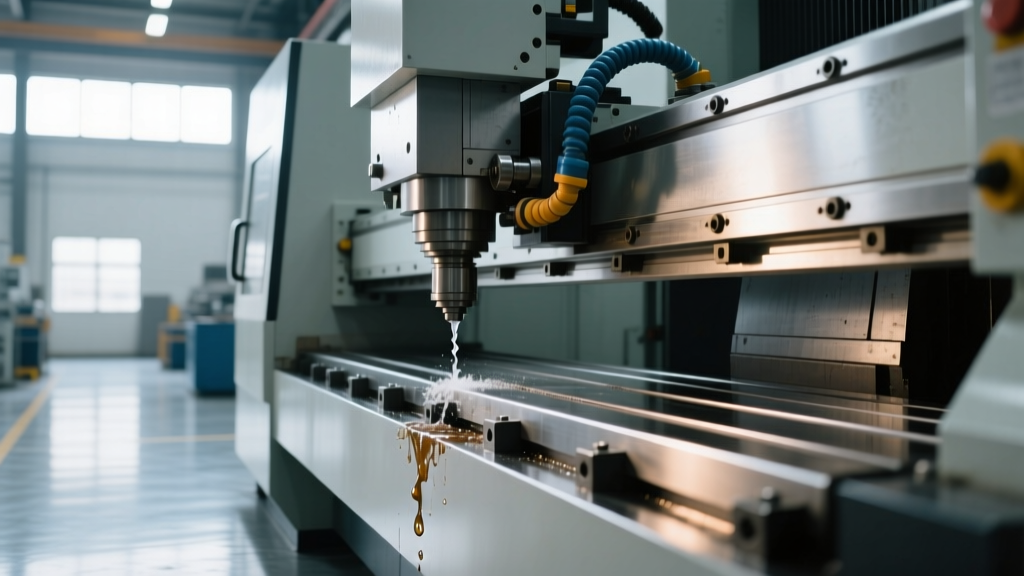
When coolant breaches the primary enclosure and pools around the CNC machine gantry base, it indicates a localized failure in the way covers, splash guards, or door seals. Unchecked leaks degrade linear guideways, wash away way lube, and create severe slip hazards on the shop floor. Modern semi-synthetic fluids, such as TRIM MicroSol 585XT, possess high detergency that can rapidly strip grease from unprotected ball screws if containment fails.
Before ordering replacement parts, map the physical location of the coolant escape to the specific failure point using the diagnostic matrix below.
| Leak Symptom | Primary Suspect Component | Root Cause & Edge Case |
|---|---|---|
| Pooling at X-axis extreme limits | X-axis telescoping way cover | Chip packing in bellows folds causing fabric puncture or track derailment. |
| Misting escaping top enclosure seams | Roof panel gaskets / Exhaust baffles | EPDM rubber compression set (hardening) due to prolonged 140°F+ ambient heat. |
| Dripping from Y-axis saddle underside | Y-axis wiper seals / Linear guide blocks | Worn SKF or THK scraper rings allowing 1000+ PSI TSC to bypass the gantry shield. |
| Spray hitting operator console | Main door polycarbonate & extruded seals | Polycarbonate crazing (micro-cracks) combined with degraded Shore 60A bulb seals. |
Way Cover and Bellows Failures: The First Line of Defense
The telescoping way covers protecting the CNC machine gantry linear guides are subjected to extreme mechanical and chemical stress. While older machines utilized standard neoprene-coated fabrics, modern 5-axis and high-speed machining centers require advanced polyurethane (PU) or Kevlar-reinforced bellows to withstand the aggressive nature of synthetic ester-based coolants.
A frequent failure mode occurs when stringy chips (common in titanium or stainless steel machining) become trapped in the overlapping folds of the way cover. As the gantry accelerates at 1G+ forces, these trapped chips act as a cutting tool, slicing through the polyurethane layers. Once the fabric is compromised, pressurized coolant floods the linear guideways.
WARNING: High-Pressure TSC PenetrationIf your machine utilizes Through-Spindle Coolant (TSC) operating above 1,000 PSI, standard fabric way covers will fail prematurely. The microscopic coolant droplets atomize and penetrate the fabric weave. For high-pressure applications, you must upgrade to Hennig or KabelSchlepp stainless steel telescoping covers with integrated polyurethane lip seals, or install secondary air-purge bellows that maintain positive internal air pressure to repel atomized coolant.
Enclosure Gasket Selection: EPDM vs. Polyurethane
The main enclosure doors and access panels of a CNC machine rely on extruded bulb seals to maintain a watertight barrier. When these seals flatten out—a phenomenon known as compression set—coolant wicks through the gaps via capillary action.
Material Specifications for Replacement
- EPDM Rubber (Ethylene Propylene Diene Monomer): The industry standard for enclosure doors. Look for a Shore A durometer rating of 60A to 70A. EPDM offers excellent resistance to water-based and semi-synthetic coolants but will rapidly degrade if exposed to straight oils or heavy petroleum-based way lubes.
- Polyurethane (PU) Foam Seals: Best for roof panels and non-moving seams. PU provides superior memory retention (bouncing back after compression) but requires a UV-stabilized formulation if the enclosure is exposed to direct shop sunlight or high-intensity LED machine lighting.
- Silicone Sponge Cord: Reserved for high-temperature zones near the spindle nose or exhaust fans where ambient temperatures exceed 200°F. Silicone is chemically inert to almost all metalworking fluids but lacks the tear strength of EPDM for high-friction door sweeps.
Step-by-Step Protocol: Replacing a Compromised X-Axis Way Cover
Replacing a damaged way cover on the CNC machine gantry requires precise alignment to prevent binding. Follow this procedure to ensure a watertight seal and smooth travel.
- Isolate and Clean: Lock out the machine. Use a low-pressure washdown to remove all swarf from the X-axis ball screw and linear rails. Do not use compressed air, as it will force abrasive fines into the ball nut recirculation zones.
- Remove the Old Cover: Unbolt the front and rear mounting brackets. Typically, these are M8 socket head cap screws torqued to 25 Nm. Carefully slide the collapsed cover off the guide rails.
- Inspect the Wipers: Before installing the new cover, inspect the primary wiper seals on the linear guide blocks. If the polyurethane scraping lips are torn or missing, replace the wiper assemblies (e.g., THK QZ self-lubricating wiper kits) immediately. A new way cover will not survive if the linear blocks are already ingesting chips.
- Install and Align: Slide the new way cover onto the rails. Mount the rear bracket first. Extend the cover manually to its full stroke. Mount the front bracket, ensuring the cover is perfectly square. Tip: Use a dial indicator on the front edge of the cover to verify it tracks parallel to the X-axis rail within 0.002 inches.
- Seal the Flanges: Apply a continuous bead of Loctite 518 flange sealant or 3M Scotch-Weld DP420 structural adhesive between the way cover mounting flange and the machine casting. This prevents coolant from bypassing the cover via the mounting bolt holes.
Managing Coolant Mist and Airflow Dynamics
Enclosure leaks are not always liquid; often, they manifest as aerosolized mist escaping through microscopic gaps, which degrades shop air quality and coats nearby equipment. According to OSHA's guidelines on metalworking fluids, prolonged exposure to coolant mist can cause severe respiratory issues and occupational asthma. Furthermore, the NIOSH metalworking fluid criteria recommends strict engineering controls, including fully enclosed machining zones with negative pressure ventilation.
If your CNC machine gantry enclosure is misting heavily, check the exhaust fan baffles. Many machines utilize simple mesh filters that become clogged with coolant residue, creating positive pressure inside the enclosure. This positive pressure forces atomized coolant out through the door seals and cable gland penetrations. Upgrade standard mesh filters to multi-layered demister pads (often made from knitted monofilament polypropylene) which coalesce the mist back into liquid, draining it into the chip conveyor while allowing air to pass through.
Correcting Coolant Nozzle Interference
A hidden cause of enclosure flooding is improper coolant nozzle alignment. Operators frequently bend flexible loc-line hoses to blast directly at the cutting zone, but if a 1000 PSI stream hits the polycarbonate window or a vertical splash guard at a 90-degree angle, the fluid shatters into a high-velocity spray that easily breaches the gantry labyrinth seals. Angle the primary coolant nozzles at a 45-degree incidence to the workpiece, and utilize secondary laminar-flow flood nozzles to wash chips away without generating atomized blowback against the enclosure walls.