How to Repair CNC Machine Vibration: Damping Alternatives Compared
Compare mechanical fixes versus passive and active damping alternatives when you need to repair CNC machine vibration and excessive noise.
The Diagnostic Divide: Mechanical Failure vs. Structural Resonance
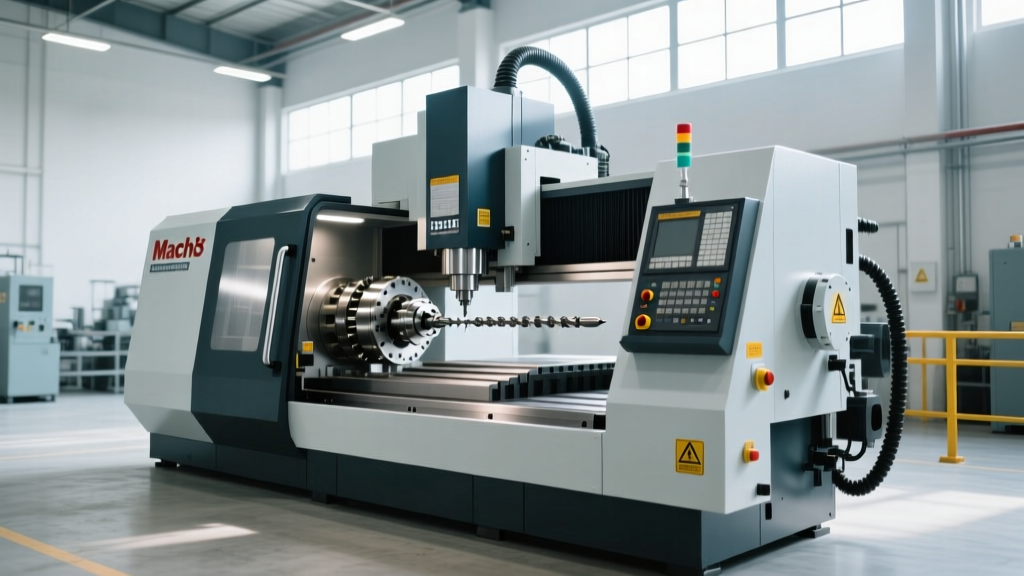
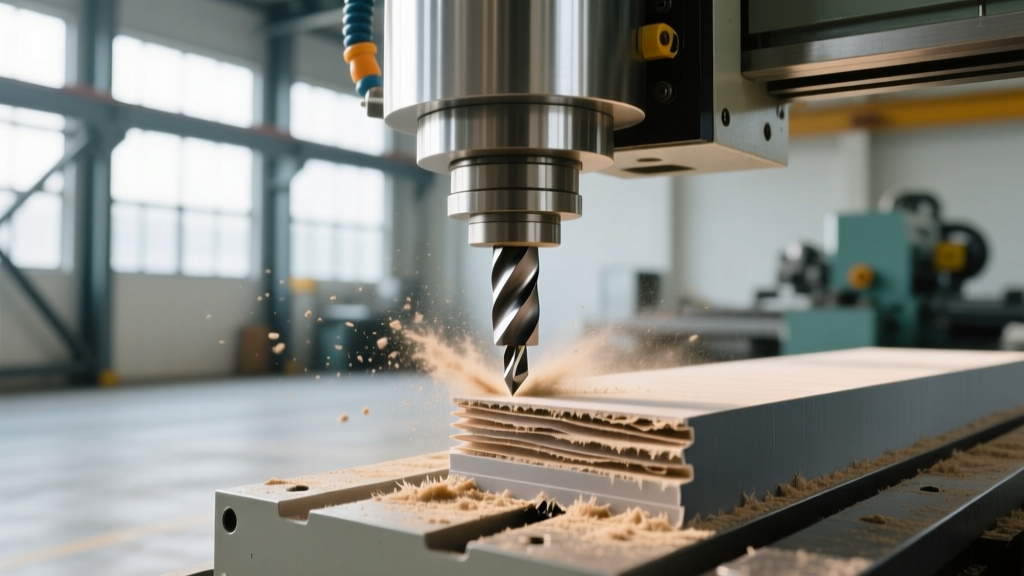
When a Haas VF-2 or Mazak VCN-530C begins exhibiting excessive chatter, poor surface finishes, or abnormal acoustic noise, the immediate instinct is to tear down the spindle and repair the CNC machine. However, misdiagnosing structural resonance as a mechanical failure leads to thousands of dollars in wasted labor and replacement parts. Before ordering new SKF ceramic hybrid bearings or realigning ballscrews, you must isolate whether the vibration is internally generated (forced vibration from unbalanced rotating masses) or externally induced (regenerative chatter and floor-transmitted resonance).
Diagnostic Callout: Identify the Vibration Source
- Internal (Requires Mechanical Repair): Vibration frequency correlates directly with spindle RPM. Runout exceeds 2.5 microns TIR. Noise pitch changes precisely with axis feed rates. Indicates worn spindle bearings, damaged ballscrew thrust bearings, or way lubrication failure.
- External (Requires Damping Alternatives): Vibration occurs at specific harmonic frequencies regardless of RPM (often between 80 Hz and 150 Hz for structural chatter, or 10-25 Hz for floor transmission). Indicates inadequate machine mass, poor foundation isolation, or toolholder overhang resonance.
Comparison Matrix: Repair vs. Damping Alternatives
Choosing the right intervention requires balancing capital expenditure, implementation downtime, and the specific frequency profile of the anomaly. The table below compares the primary strategies for addressing CNC vibration and noise.
| Intervention Strategy | Estimated Cost (2026) | Downtime | Target Frequency | Best Application |
|---|---|---|---|---|
| Mechanical Repair (Bearings/Thrust Blocks) | $4,500 – $12,000 | 3 – 7 Days | RPM-Synchronous | Worn spindle, axis backlash, thrust bearing failure |
| Passive Isolation (Elastomeric/Neoprene Mounts) | $300 – $1,200 | 2 – 4 Hours | 10 Hz – 30 Hz | Floor-transmitted vibration from nearby presses/forklifts |
| Tuned Mass Dampers (TMD) | $2,500 – $6,000 | 1 Hour | 80 Hz – 250 Hz | Toolholder chatter, long-reach boring bar resonance |
| Active Piezoelectric Damping | $18,000 – $45,000 | 1 – 2 Days | Broadband (Adaptive) | Aerospace milling, thin-wall part chatter, high-precision finishing |
When You Must Actually Repair the CNC Machine
Damping alternatives cannot fix physical degradation. If your diagnostic accelerometer data shows vibration amplitudes spiking at the exact rotational frequency of the spindle (1x RPM) or the ball pass frequency of the bearings, you must perform a mechanical repair.
Spindle Bearing Replacement
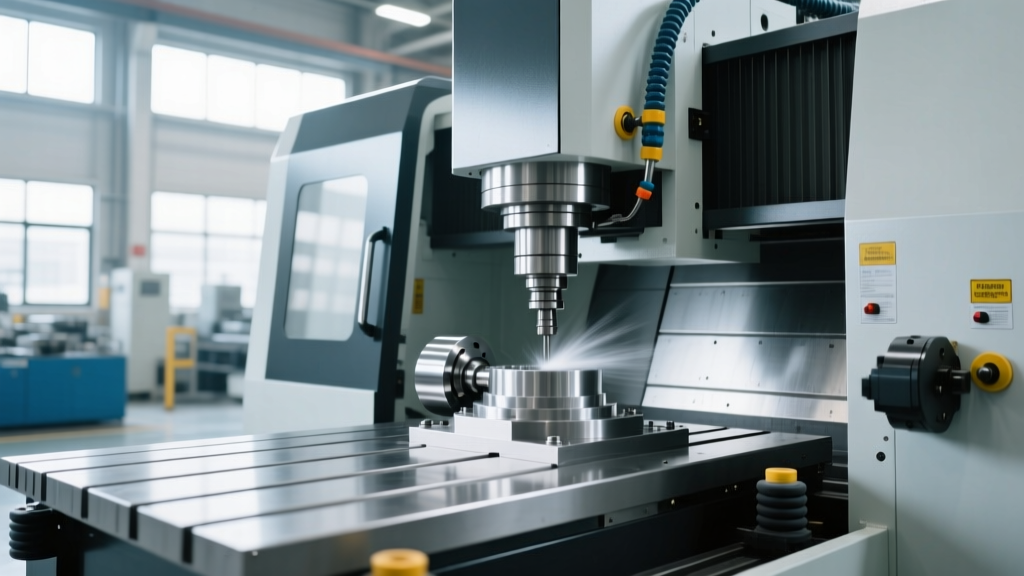
For a standard 10,000 RPM direct-belt spindle, replacing the front and rear bearing sets with ABEC-9 grade ceramic hybrid bearings (such as NSK Robust or SKF Super Precision lines) is mandatory when runout exceeds 2.0 microns. The cost for the bearing set alone ranges from $2,800 to $5,500. According to SKF condition monitoring guidelines, envelope acceleration measurements (gE) should be tracked monthly; a spike above 3.0 gE indicates imminent spalling on the outer race, requiring immediate teardown.
Ballscrew and Thrust Block Rebuilding
If vibration occurs during rapid traverses or heavy cutting loads on the X or Y axis, the ballscrew thrust bearings are likely preloaded incorrectly or pitted. Rebuilding a ballscrew assembly requires a precision ground thrust bearing pack and a dial indicator to verify axial play is under 0.0002 inches (5 microns). Ignoring this and attempting to dampen the axis vibration with software parameters will only result in catastrophic servo motor overheating.
Passive Damping Alternatives: Isolation Pads and Mounts
If the machine is structurally sound but suffers from low-frequency environmental vibration (e.g., a nearby 500-ton stamping press or heavy forklift traffic), you do not need to repair the CNC machine. Instead, decouple it from the floor.
"Occupational noise and vibration in manufacturing environments are heavily regulated. Unmitigated machine vibration not only ruins part tolerances but contributes to structural fatigue and operator hearing loss, making proper damping a compliance necessity as well as a quality measure." — OSHA Occupational Noise Exposure Standards
Selecting the Right Elastomer
Do not use generic rubber mats. You need engineered viscoelastic polymers like Sorbothane or specialized neoprene mounts (e.g., Mason Industries Type ND).
- Load Calculation: A 9,000 lb CNC VMC requires four mounts rated for 2,250 lbs each. Always add a 20% safety margin for dynamic cutting forces, selecting mounts rated for 2,700 lbs static load.
- Durometer Selection: For heavy CNC machinery, a 50 to 60 durometer pad provides the optimal balance between static deflection (preventing the machine from tipping during heavy side-milling) and low-frequency isolation (targeting 12-15 Hz floor vibrations).
Advanced Alternatives: Tuned Mass and Active Damping
When the machine is mechanically perfect and isolated from the floor, but you still experience regenerative chatter during aggressive material removal rates (MRR), the issue lies in the tool-workpiece-machine dynamic stiffness loop.
Tuned Mass Dampers (TMD)
TMDs are passive devices attached to the toolholder or spindle nose that contain an internal mass suspended in a viscous fluid or elastomer. They are tuned to the exact natural frequency of the chatter (e.g., 145 Hz). When the tool begins to vibrate, the internal mass moves out of phase, absorbing the kinetic energy. Brands like EWS Tool Systems offer anti-vibration boring bars with integrated TMDs that allow overhang ratios of 10xD to 14xD without chatter, completely eliminating the need to "repair" or redesign the machine's Z-axis column for more rigidity.
Active Piezoelectric Damping Systems
For high-value aerospace components (e.g., titanium blisks or thin-walled aluminum bulkheads), active damping systems utilize piezoelectric actuators and real-time acoustic sensors. The system detects the onset of chatter within milliseconds and injects a counter-vibration directly into the spindle housing or toolholder. While the initial capital outlay is steep ($25,000+), it allows for 30-40% higher MRR without tool breakage, offering a faster ROI than attempting to buy a entirely new, more rigid 5-axis machine.
Step-by-Step Decision Framework
Follow this sequence to avoid unnecessary teardowns and select the correct intervention:
- Step 1: Run a Tap Test and FFT Analysis. Use an impact hammer and accelerometer to map the machine's frequency response function (FRF). Identify if the dominant vibration is RPM-synchronous or a static harmonic.
- Step 2: Check Mechanical Baselines. Measure spindle runout with a precision test bar. If TIR > 0.0002", stop and schedule a mechanical repair for the spindle bearings.
- Step 3: Evaluate Floor Transmission. Place a seismometer on the machine base and the adjacent floor. If the floor vibrates at 15 Hz and the machine base mirrors this, install passive elastomeric isolation mounts.
- Step 4: Address Tooling Resonance. If the machine and floor are stable, but chatter occurs at 120 Hz during cutting, switch to Tuned Mass Damper toolholders or variable-pitch end mills to break the regenerative chatter loop.
- Step 5: Consider Active Systems. If all passive and mechanical parameters are optimized but thin-wall chatter persists, evaluate active piezoelectric damping for the specific spindle interface.
Final Considerations on Noise Mitigation
Beyond vibration, airborne acoustic noise from CNC machines often exceeds the 85 dBA threshold requiring hearing protection, as noted by the CDC NIOSH noise exposure guidelines. If damping the vibration does not sufficiently reduce airborne noise, supplement your strategy with localized acoustic enclosures featuring mass-loaded vinyl (MLV) barriers and convoluted foam absorbers. Remember: treating the acoustic symptom without resolving the underlying mechanical or structural vibration will result in premature failure of both the machine and the enclosure.