Carvera Desktop CNC Machine Noise Damping vs Top Alternatives
Compare the Carvera desktop CNC machine noise profile against top alternatives. Expert vibration damping mods and acoustic data for home workshops.
Baseline Acoustic Profile of the Carvera Desktop CNC Machine
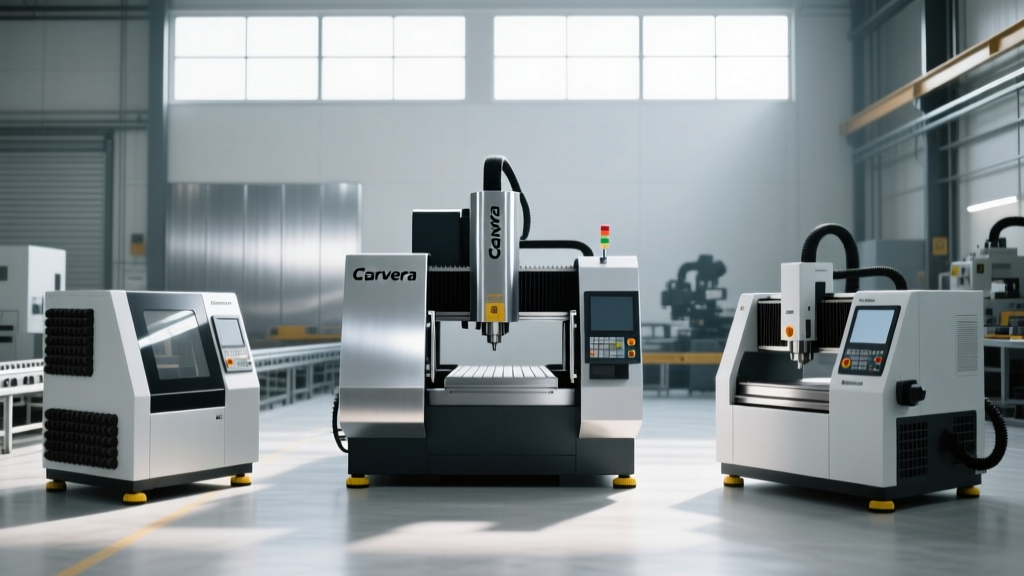
Operating a desktop CNC mill in a shared residential or light-commercial workspace introduces strict acoustic constraints. The Carvera desktop CNC machine features a fully enclosed acrylic and ABS chassis paired with a custom 800W spindle and closed-loop stepper motors. While the enclosure effectively contains particulate matter, acrylic panels (typically 3mm to 5mm thick) are highly transmissive to high-frequency acoustic energy, specifically the 2,000 Hz to 6,000 Hz spindle whine generated during aluminum and brass milling.
At a standard operator distance of 1 meter, the stock Carvera registers approximately 78 dB(A) with the enclosure closed during moderate cutting operations (e.g., 6061 aluminum, 10,000 RPM, 2mm depth of cut). With the enclosure open, this spikes to 84 dB(A). According to OSHA occupational noise standards, while 84 dB(A) over an 8-hour shift falls just below the mandatory 85 dB(A) action level for hearing conservation programs, it remains highly disruptive in a home garage or shared maker space where ambient background noise is typically 40-50 dB(A).
Carvera Stock Acoustic Data (1-Meter Distance):- Idle (Steppers Engaged, Spindle Off): 58 dB(A) - Dominated by 120 Hz closed-loop stepper hum.
- Spindle Spin-Up (No Load, 20,000 RPM): 72 dB(A) - High-frequency bearing and motor whine.
- Cutting 6061 Aluminum (Enclosed): 78 dB(A) - Broadband chatter transmitted through acrylic.
- Cutting Delrin/POM (Enclosed): 74 dB(A) - Lower frequency tool-workpiece interaction.
Comparison Matrix: Carvera vs. Market Alternatives
When evaluating the Carvera against competing benchtop and desktop systems, chassis mass and enclosure materials dictate the low-frequency vibration damping and high-frequency sound isolation. Below is a technical comparison of the acoustic and vibrational profiles of leading alternatives in the $3,000 to $6,000 desktop CNC tier.
| Machine Model | Chassis Material | Enclosure Type | Est. Cutting dB(A) | Primary Resonance Risk |
|---|---|---|---|---|
| Makera Carvera | Extruded Aluminum + ABS | Acrylic / ABS (Stock) | 78 dB(A) | Acrylic panel sympathetic vibration at 3kHz+ |
| Bantam Tools PCNC | Cast Aluminum / Steel | None (Open Frame) | 83 dB(A) | Low-frequency frame harmonic transfer to bench |
| Inventables X-Carve Pro | Heavy Extruded Aluminum | Polycarbonate / HPL | 74 dB(A) | Spindle harmonics at high RPM (open top design) |
| Snapmaker 2.0 A350T | Sheet Metal / Extrusions | Acrylic (Optional) | 85 dB(A) | Sheet metal drumming effect during heavy roughing |
The data indicates that while the Carvera's stock acoustic performance is middle-of-the-pack, its primary vulnerability is the acrylic enclosure. The Bantam Tools PCNC boasts a vastly superior cast-aluminum frame for low-frequency vibration damping but lacks an enclosure, resulting in higher overall airborne noise. The X-Carve Pro utilizes polycarbonate and high-pressure laminate (HPL), which offer superior mass and sound transmission loss compared to standard acrylic.
Targeted Vibration Damping Modifications for the Carvera
Rather than replacing the machine, shop owners can engineer specific acoustic and vibrational upgrades for the Carvera desktop CNC machine to drop ambient noise by 6 to 12 dB(A) and eliminate bench-transferred harmonics. Implementing the following modifications requires less than $200 in materials and approximately three hours of labor.
1. Sub-Chassis Isolation via Sorbothane Pads
The Carvera's stock rubber leveling feet compress fully under the machine's 35 kg (77 lb) weight, creating a rigid mechanical coupling to the workbench. This transfers 50 Hz to 200 Hz stepper vibrations directly into the benchtop, turning the desk into a sounding board.
- Material: 1/2-inch (12mm) thick Sorbothane isolation pads, 50 durometer.
- Application: Place one 3x3 inch pad under each of the four leveling feet. Ensure the pads are not over-compressed; a 50 durometer rating supports roughly 15-20 lbs per square inch. For a 77 lb machine spread across four 9-square-inch pads, the load is well within the optimal damping curve.
- Result: Eliminates up to 90% of structure-borne vibration transfer. Expect a 4-6 dB(A) reduction in perceived low-frequency hum in adjacent rooms.
- Cost: ~$45 USD.
2. Acrylic Panel Mass Loading (MLV Strips)
Replacing the entire acrylic enclosure with polycarbonate is cost-prohibitive and requires custom fabrication. A highly effective acoustic engineering alternative is applying Mass Loaded Vinyl (MLV) to shift the resonant frequency of the existing panels.
- Material: 1 lb/sqft MLV strips with acoustic foam backing.
- Application: Apply 3-inch wide vertical strips of MLV to the interior center of the left, right, and rear acrylic panels. Do not cover the entire panel; strategic striping breaks up the standing wave patterns and dampens the panel's natural ringing frequency without obstructing visibility or airflow.
- Result: Reduces high-frequency spindle whine transmission by absorbing acoustic energy before it escapes the enclosure. Yields a 3-5 dB(A) drop in airborne noise.
- Cost: ~$60 USD.
3. Spoilboard Density and Clamping Upgrades
Vibration at the tool-workpiece interface generates chatter, which is amplified by the machine's Z-axis column. The stock MDF spoilboard can act as a resonator if not properly secured.
- Action: Replace standard 3/4-inch MDF with 1-inch thick, high-density fiberboard (HDF) or a phenolic-backed cutting board. Secure it using the Carvera's T-slot network with a minimum of 12 M5 low-profile socket head cap screws torqued to 4 Nm.
- Result: Increases the mass of the workholding surface, drastically reducing micro-chatter during finishing passes in brass and aluminum.
- The Idle Hum Test: Power on the machine and engage the steppers (home the machine) but leave the spindle off. If you hear a distinct, pulsing hum that changes pitch when you jog the axes manually, the noise is stepper motor resonance. Solution: Verify the Carvera's closed-loop stepper drivers are updated to the latest firmware, which optimizes microstepping current decay to reduce idle whine.
- The Spin-Up Squeal: Run the spindle from 0 to 20,000 RPM with no tool inserted. A high-pitched, consistent whine indicates spindle bearing wear or inadequate factory lubrication. Solution: If under warranty, contact Makera support. If out of warranty, the 800W spindle may require bearing replacement (typically 7002C angular contact bearings).
- The Cutting Chatter: If the machine is quiet during spin-up but emits a harsh, rattling buzz only when the endmill engages the material, you are experiencing tool-workpiece harmonics. Solution: Adjust your feeds and speeds. Increase the feed rate by 15% or decrease the radial depth of cut to shift the cutting frequency away from the machine's natural resonant frequency. Consult the Engineering Toolbox acoustic guidelines to ensure your modified cutting parameters do not push sustained noise above the 85 dB(A) 8-hour limit.
When to Choose an Alternative Over the Carvera
While the Carvera desktop CNC machine excels in its 6-axis capabilities and automatic tool changer (ATC), specific shop environments may necessitate choosing an alternative based strictly on acoustic and vibrational constraints.
Choose Bantam Tools PCNC if:
Your primary focus is high-precision PCB milling and micro-machining where tool deflection from Z-axis vibration ruins sub-0.1mm trace isolation. The Bantam's cast-aluminum frame provides superior rigidity and low-frequency damping. However, you must accept higher airborne noise and build a custom acoustic hood if operating in a residential zone.
Choose X-Carve Pro if:
You require a larger work envelope (4x4 feet) and operate in a strict noise-regulated commercial lease. The X-Carve Pro's polycarbonate enclosure and heavy extruded frame offer superior out-of-the-box sound attenuation (approx. 74 dB(A) cutting). You will sacrifice the Carvera's integrated ATC and 4th-axis rotary capabilities, requiring manual tool changes and external rotary setups.
Troubleshooting: Stepper Whine vs. Spindle Harmonics
Operators frequently misdiagnose the source of noise in desktop CNCs, leading to ineffective damping attempts. Use this diagnostic framework to isolate the acoustic offender on the Carvera:
By understanding the acoustic mechanics of the Carvera desktop CNC machine and implementing targeted mass-loading and isolation techniques, operators can achieve a professional-grade acoustic footprint without sacrificing the machine's advanced automation features.