Safety Compliance: Portable CNC Machine for Gun Manufacturing
Navigate ATF, ITAR, and OSHA compliance when deploying a portable CNC machine for gun manufacturing in remote field operations and mobile armories.
The Tactical Shift to Field Machining
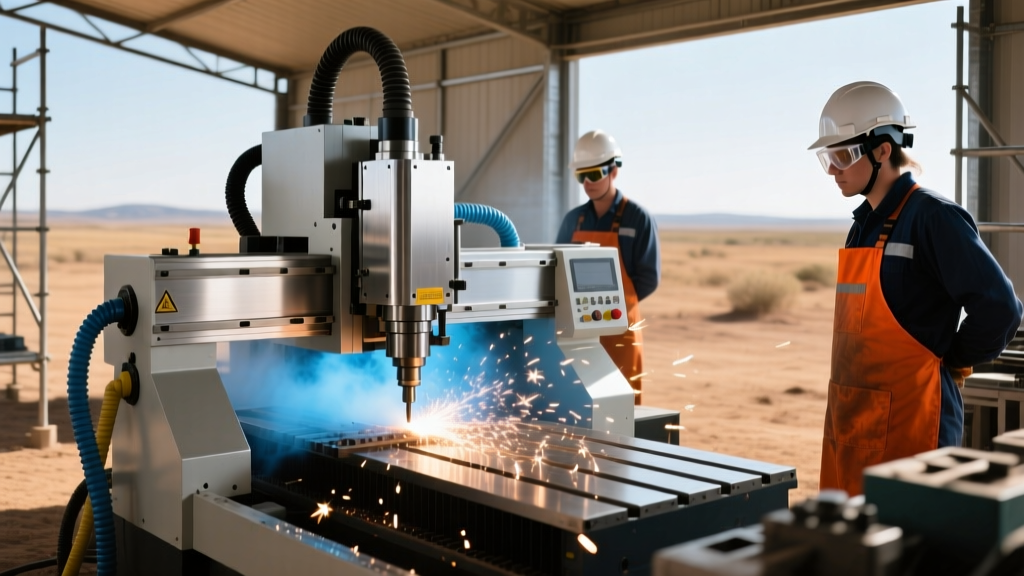
Deploying a portable CNC machine for gun manufacturing outside traditional factory floors introduces a complex matrix of regulatory and physical hazards. Forward operating bases (FOBs), mobile law enforcement armories, and private security outposts increasingly utilize portable 5-axis and 3-axis mills to fabricate, repair, and modify critical firearm components—ranging from 7075-T6 aluminum lower receivers to 4140 steel fire control groups. However, operating these machines in uncontrolled field environments requires strict adherence to ATF serialization mandates, OSHA hazard mitigation protocols, and ITAR export controls. As of 2026, regulatory scrutiny on decentralized firearms manufacturing has intensified, making field compliance a critical operational baseline.
⚠️ ATF Compliance Warning: Under current ATF enforcement of the Final Rule on Frames and Receivers, any CNC milling operation that completes the fire control cavity of an 80% lower receiver in the field constitutes "manufacturing." The resulting component must be immediately serialized to a depth of at least 0.003 inches using a portable dot-peen or fiber laser engraver before it can be assembled or test-fired.Hardware Matrix: Portable CNCs for Firearm Alloys
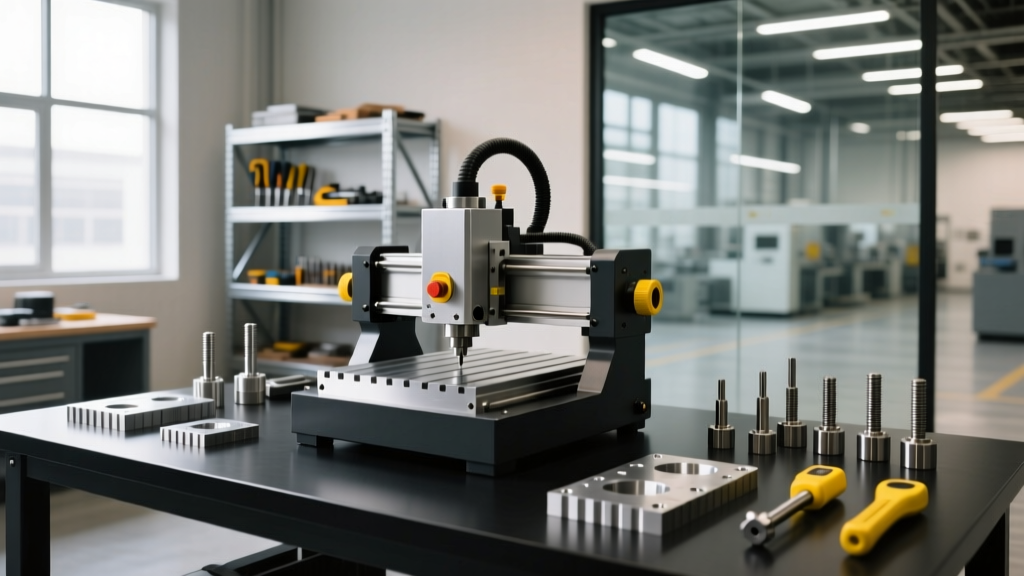
Not all desktop or portable CNC mills possess the rigidity required to machine hardened firearm steels or aerospace-grade aluminum without deflection, which can lead to catastrophic tool failure or out-of-spec tolerances. Below is a compliance and capability matrix for the leading portable units deployed in field armories.
| Machine Model | Axis Configuration | Optimal Firearm Materials | Field Footprint & Weight | Base Price (2026) |
|---|---|---|---|---|
| Bantam Tools Desktop CNC | 3-Axis | 6061/7075-T6 Aluminum, Delrin (Grips) | 19" x 18" x 15" / 65 lbs | $3,999 |
| Pocket NC V2-50 | 5-Axis | Aluminum, Titanium (Suppressor Baffles) | 10" x 12" x 12" / 42 lbs | $4,999 |
| Ghost Gunner 3 (GG3) | 3-Axis (Specialized) | Aluminum (AR-15/AK Lowers Only) | 22" x 10" x 12" / 55 lbs | $2,200 |
While the GG3 is purpose-built for specific lowers, the Pocket NC V2-50 is the preferred choice for advanced field armories requiring 5-axis simultaneous machining for complex geometries like monolithic uppers or integral suppressor baffles. However, the V2-50 requires stringent coolant management in off-grid environments to prevent spindle overheating.
OSHA Hazard Mitigation in Uncontrolled Environments
Field environments lack the centralized HVAC and dust collection infrastructure of commercial machine shops. This elevates two primary OSHA violations: combustible dust accumulation and acoustic overexposure.
Combustible Dust and ATEX Compliance
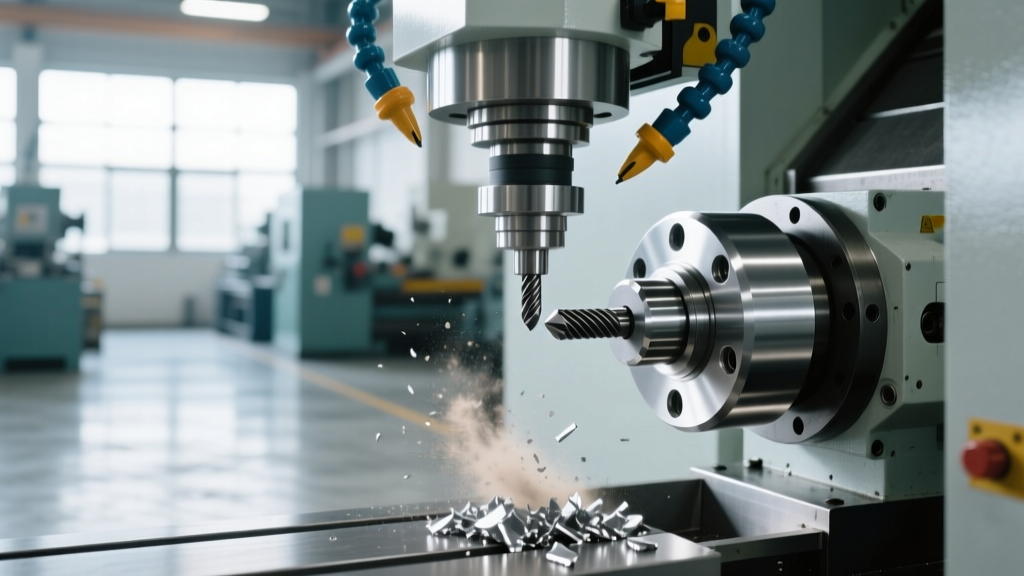
Machining 7075-T6 aluminum or titanium generates fine, highly reactive swarf and dust. In an enclosed mobile armory trailer or tent, suspended aluminum dust can reach its Minimum Explosible Concentration (MEC). According to OSHA Combustible Dust Guidelines, facilities must implement rigorous housekeeping and specialized extraction. Standard shop vacuums are strictly prohibited due to static discharge risks.
- Requirement: Field setups must use ATEX-certified (Zone 22) portable wet-separator vacuums or explosion-proof dry extractors.
- Cost Impact: A portable, compliant wet dust collector (e.g., Ruwac or Nilfisk ATEX models) adds $3,500 to $6,000 to the mobile armory budget.
- Protocol: Coolant mist must be managed with localized HEPA filtration to prevent slip hazards and respiratory exposure to sulfur-based cutting fluids.
Acoustic Signatures and Hearing Conservation
High-speed spindles (20,000+ RPM) cutting aluminum generate noise levels frequently exceeding 95 dBA at the operator's ear. The OSHA Occupational Noise Exposure Standards mandate a Permissible Exposure Limit (PEL) of 90 dBA over an 8-hour TWA, with an Action Level at 85 dBA. In field operations where multiple technicians are working in close quarters, portable CNC enclosures lined with acoustic dampening mass-loaded vinyl (MLV) are mandatory to reduce ambient noise below the Action Level without relying solely on PPE.
Power Quality and Grounding in Off-Grid Setups
A critical, often overlooked compliance and safety issue in field machining is power quality. Portable CNC machines rely on Variable Frequency Drives (VFDs) for spindle control and micro-stepping drivers for axis movement. Standard portable gas generators produce high Total Harmonic Distortion (THD), often exceeding 15%.
💡 Technical Directive: High THD causes VFD fault codes, lost steps, and erratic spindle speeds, which can result in broken end mills and ruined firearm receivers. Mobile armories must deploy Pure Sine Wave inverter generators (THD < 3%) or utilize a double-conversion online UPS (minimum 3kVA) between the generator and the CNC mill to condition the power and ensure safe, predictable toolpaths.ITAR and Export Control Considerations
Transporting a portable CNC machine for gun manufacturing across international borders or into restricted zones triggers International Traffic in Arms Regulations (ITAR) and Export Administration Regulations (EAR) scrutiny. Even if the machine is a standard 3-axis mill, if it is loaded with proprietary toolpaths, G-code libraries, or CAM software specifically configured for manufacturing defense articles (e.g., select-fire sears, suppressor components), the data and the machine setup may be classified as defense services or technical data.
Field commanders and mobile armory directors must ensure that CNC controllers are wiped of sensitive G-code before crossing borders, and that physical machines are accompanied by the appropriate DSP-5 export licenses if deployed to allied foreign military outposts.
Field Compliance Decision Tree
Before initiating any CNC milling operation in a remote or mobile environment, run the setup through this compliance matrix:
- Material Check: Are you machining aluminum or titanium? If Yes → Deploy ATEX wet-separator vacuum.
- Serialization Check: Will the operation complete the fire control cavity? If Yes → Stage portable dot-peen engraver and ATF serialization logbook at the workstation.
- Power Check: Is the power source a standard contractor generator? If Yes → Halt operations. Install online UPS or switch to pure sine wave inverter.
- Acoustic Check: Is the ambient noise >85 dBA without the enclosure closed? If Yes → Engage MLV-lined acoustic hood and enforce dual hearing protection.
Final Operational Directives
Operating a portable CNC machine for gun manufacturing in the field is a high-liability endeavor that bridges the gap between tactical necessity and stringent federal oversight. By investing in ATEX-compliant extraction, conditioning off-grid power, and strictly enforcing ATF serialization protocols at the point of manufacture, mobile armories can maintain operational readiness without compromising safety or legal compliance. Always consult the latest ATF Firearm Manufacturing Guidelines before deploying new CAM profiles or altering receiver geometries in the field.