2026 Cost Guide: CNC Machine Guitar Building for Stainless Steel
Analyze the 2026 costs of upgrading your CNC machine for guitar building to mill stainless steel hardware, covering mills, tooling, and ROI.
The Luthier’s Hardware Ceiling: Beyond Wood and Acrylic
For custom luthiers and boutique guitar shops, a standard 3-axis CNC router is a staple for carving mahogany body blanks, routing pickup cavities, and cutting intricate headstock veneers. However, as a brand scales into premium, fully custom instruments, the reliance on third-party machine shops for stainless steel hardware—such as tremolo blocks, bridge saddles, tailpieces, and custom control plates—becomes a severe bottleneck. Transitioning a cnc machine guitar building setup to handle stainless steel machining requires a fundamental shift in capital expenditure, tooling budgets, and facility infrastructure.
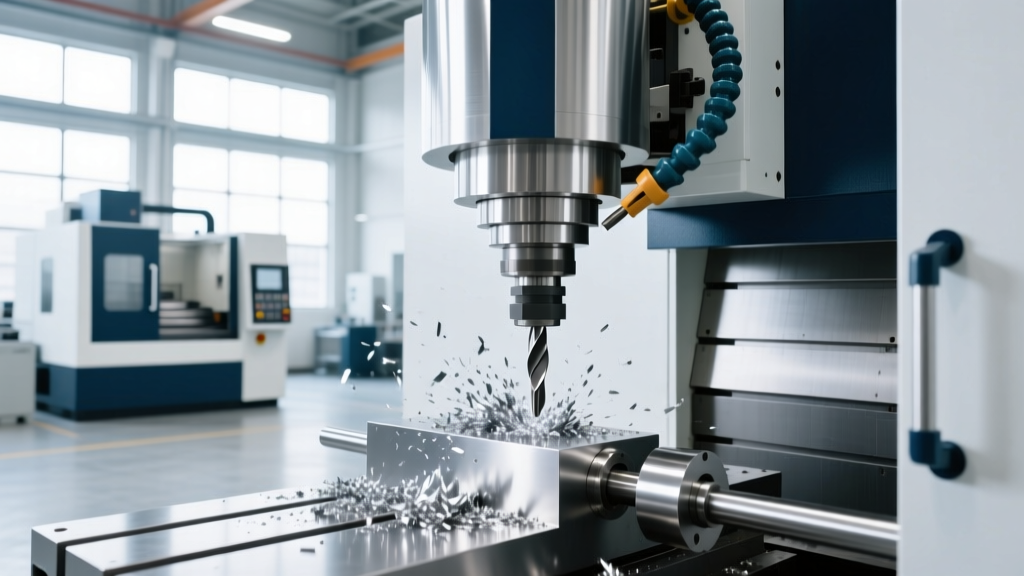
Machining stainless steel is not simply a matter of slowing down the feed rate on a belt-driven MDF router. The extreme cutting forces, work-hardening characteristics, and thermal loads of stainless alloys will destroy a standard woodworking spindle and ruin belt tensioners within hours. This 2026 cost analysis breaks down the exact budget required to bring stainless steel guitar hardware manufacturing in-house.
Metallurgy Matters: Selecting the Right Stainless Alloy
Before purchasing a mill, luthiers must specify the correct stainless alloy for their hardware. The metallurgical choice directly dictates your tooling budget and machine rigidity requirements.
- 416 Stainless Steel: The undisputed champion for guitar bridges, saddles, and tremolo blocks. It contains sulfur, making it a "free-machining" martensitic stainless. It cuts predictably, yields excellent surface finishes, and can be heat-treated for extreme wear resistance on string contact points.
- 303 Stainless Steel: An austenitic alternative that is easier to source in small bar stock. It machines well but cannot be heat-treated. Suitable for control plates, strap buttons, and decorative hardware, but less ideal for high-friction bridge saddles.
- 304/316 Stainless Steel: Avoid these for in-house luthier milling. These austenitic grades work-harden rapidly under the cutting tool. Unless you are running a 10,000 RPM, high-torque machining center with high-pressure flood coolant, 304 will gall, destroy your carbide endmills, and ruin the dimensional tolerance of your guitar parts.
Many luthiers attempt to machine 304 stainless steel tremolo blocks using standard woodworking CNC techniques (climb milling with shallow passes). Because 304 work-hardens when rubbed rather than cut, a light pass will harden the surface layer to 40+ HRC, instantly chipping the flutes on a $60 carbide endmill. Always use aggressive feed rates and full-slotting depths to cut beneath the work-hardened layer, or switch to 416 stainless.
2026 Capital Expenditure: Machine Tiers for Guitar Hardware
Upgrading from a Shapeoko or X-Carve to a machine capable of holding 0.0005" tolerances on a stainless steel bridge requires moving into the benchtop or industrial VMC (Vertical Machining Center) category. Below is the 2026 pricing matrix for the three most viable tiers for a guitar building shop.
| Machine Model | Base Price (2026) | Spindle Power | Rigidity & Stainless Capability |
|---|---|---|---|
| Tormach PCNC 440 | $5,499 | 3/4 HP (Peak) | Excellent for small 416 SS saddles/nuts. Struggles with heavy roughing on large tremolo blocks. |
| Syil X7 Combo | $11,500 | 1.5 HP | Mid-tier. Linear guides offer good finish, but requires careful depth-of-cut management in stainless. |
| Haas Mini Mill | $38,500+ | 7.5 HP Vector Drive | Industrial standard. Effortlessly rips through 416/303 SS with flood coolant and rigid tapping. |
The Hidden Operational Budget: Tooling and Workholding
The machine base price is only the entry fee. Stainless steel demands specialized tooling and rigid workholding. A standard woodworking vacuum table or toggle clamp setup will result in part vibration, leading to poor surface finishes on guitar bridges and premature tool failure.
Itemized Stainless Tooling & Workholding Cart
To outfit a Tormach or Haas for a production run of 50 custom stainless steel guitar bridges, budget for the following specific Harvey Tool and industry-standard accessories:
- Kurt DX4 Vise (or Glacern GSV-400): $1,100 - $1,300. Mandatory for holding stainless bar stock without deflection.
- Custom 6061 Aluminum Soft Jaws: $150 per set. Machined in-house to cradle the specific contour of your guitar bridge blanks, preventing marring of the finished stainless surfaces.
- 3/8" 4-Flute AlTiN Coated Carbide Endmill (Variable Helix): $65 each. The variable helix design dampens harmonics, preventing the "squeal" common when machining stainless steel. You will need at least 4 for a 50-part run.
- 90° Chamfer Mill (Carbide): $85. For deburring the string break angles on the bridge saddles.
- Center Drill & Spot Drill Set: $120. Essential for accurately starting holes for string-through-body ferrules and intonation screws.
- Flood Coolant System & Concentrate: $400 (aftermarket pump/tank if not included). Air blast or mist coolant is entirely insufficient for stainless steel hardware.
Total Initial Tooling/Workholding Budget: ~$2,500 - $3,200 (excluding the machine).
"When milling 416 stainless for guitar saddles, the secret isn't just the machine's rigidity; it's the chip evacuation. If you are re-cutting chips in a deep tremolo pocket, you are generating localized heat that will warp the part and ruin your intonation tolerances. Flood coolant isn't just for lubrication; it's for thermal stability."
— Senior Applications Engineer, Boutique Hardware Manufacturing
ROI Framework: In-House vs. Outsourcing Guitar Hardware
Is the capital outlay justified for your shop? Let's run a 2026 ROI analysis based on a boutique shop producing 100 custom solid-body guitars annually, each requiring a milled 416 stainless steel bridge and tailpiece set.
The Outsourcing Baseline
Cost per set (Bridge + Tailpiece): $165 (Low-volume machine shop rate, including setup and 3-week lead time).
Annual Hardware Spend: 100 guitars × $165 = $16,500
The In-House Tormach PCNC 440 Scenario
Material Cost (416 SS Bar Stock): $18 per set.
Tooling Amortization: $6 per set.
Coolant & Overhead: $4 per set.
Machine Time (1.5 hours @ $25/hr shop rate): $37.50.
Total In-House Cost: $65.50 per set.
Annual Hardware Spend: 100 guitars × $65.50 = $6,550
Net Savings & Payback Period
Annual Savings: $9,950.
Machine + Tooling Investment: ~$8,500.
Payback Period: 10.2 Months. After year one, the shop nets an additional $9,950 in margin, while completely eliminating supply chain delays on custom hardware.
Facility & Infrastructure Requirements
Before signing a purchase order for a VMC, audit your guitar building facility for the following infrastructure requirements, which are vastly different from a wood-routing environment:
- Power Delivery: Benchtop mills like the Tormach PCNC 440 run on standard 110V/15A single-phase power, making them ideal for shared luthier workshops. The Haas Mini Mill requires 230V 3-phase power. If your shop lacks 3-phase, budget an additional $2,500 - $4,000 for a rotary phase converter.
- Weight & Floor Loading: A woodworking gantry router weighs under 300 lbs. A Tormach 440 weighs 440 lbs (and requires a dedicated, reinforced steel stand). A Haas Mini Mill weighs over 2,500 lbs and requires a reinforced concrete slab, not standard wooden floor joists.
- Coolant Management: Machining stainless steel generates fine, abrasive metallic swarf. You must budget for a coolant skimmer and a designated disposal contract for tramping oil and heavy metal particulates, which cannot be dumped into municipal drains.
- Acoustic Isolation: Milling stainless steel generates high-decibel harmonic ringing. If your CNC room shares a wall with your acoustic guitar voicing or setup room, you will need to invest in acoustic dampening panels to preserve your quality control environment.
Final Budgeting Checklist for the Custom Guitar Shop
Transitioning to in-house stainless steel machining elevates a guitar brand from a wood-shop assembler to a true vertically integrated manufacturer. To ensure your 2026 budget is accurate, verify these final line items:
- [ ] Base Machine Cost + Enclosure (Mandatory for coolant containment)
- [ ] 3-Phase Power Conversion (If stepping up to industrial VMCs)
- [ ] Precision Milling Vise + Custom Soft Jaw Material
- [ ] Variable Helix Carbide Endmills (Specifically rated for 416/303 SS)
- [ ] Flood Coolant Pump, Tank, and Water-Soluble Oil Concentrate
- [ ] Post-Processing Equipment (Belt sander or vibratory tumbler for edge breaking)
By targeting free-machining 416 stainless and pairing it with a rigid, appropriately sized milling center, luthiers can reclaim their hardware supply chain, drastically improve profit margins, and offer truly bespoke metalwork that matches the craftsmanship of their wooden instruments.