What Makes a Great CNC Machine? 2026 Work Envelope Trends
Discover how 2026 kinematic trends redefine the work envelope. Compare bed sizes, 5-axis swept volumes, and pricing to find a great CNC machine.
The Shifting Definition of a Great CNC Machine Work Envelope
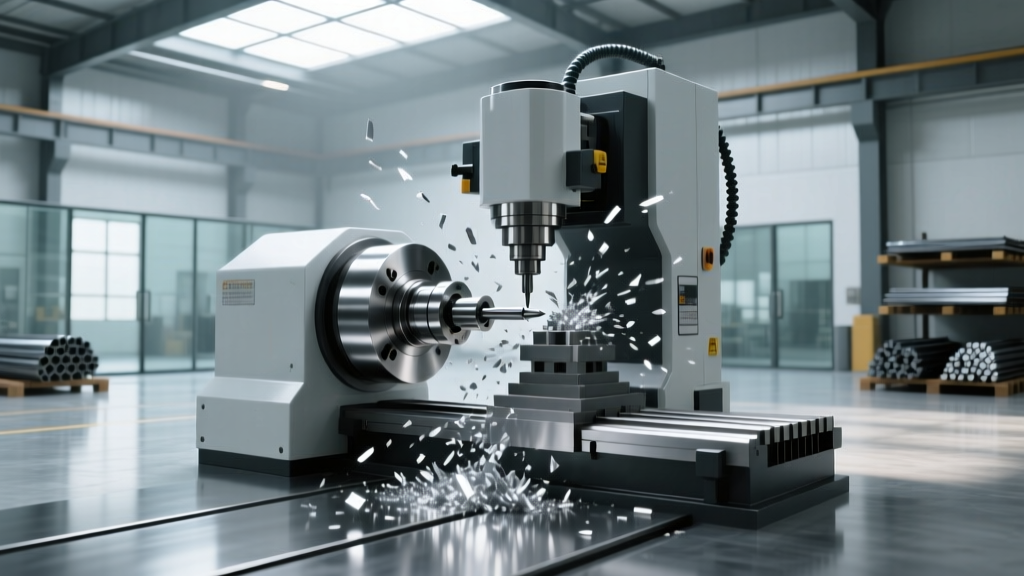
When evaluating what makes a great CNC machine in 2026, buyers often fixate on raw XYZ travel specifications. However, the modern manufacturing landscape has fundamentally shifted the paradigm from static bed dimensions to dynamic kinematic envelopes. A machine with a massive 80-inch bed is practically useless if the spindle cannot reach the center of the table without colliding with the column during a 5-axis simultaneous contouring operation.
Today, the work envelope is defined by the collision-free, usable volumetric space where the tool tip can maintain optimal cutting geometry. According to data from NIST's Advanced Manufacturing program, multi-axis utilization in mid-sized job shops has increased by over 34% in recent years, forcing a critical re-evaluation of how machinists calculate usable bed space versus physical cast-iron footprint.
2026 Industry Shift: The traditional "bigger is better" bed size mentality is being replaced by "volumetric efficiency." Shops are now prioritizing machines that offer high usable-envelope-to-footprint ratios, allowing for denser factory floor layouts and better integration with automated guided vehicles (AGVs) and robotic tenders.Micro vs. Macro: The Bifurcation of CNC Bed Sizes
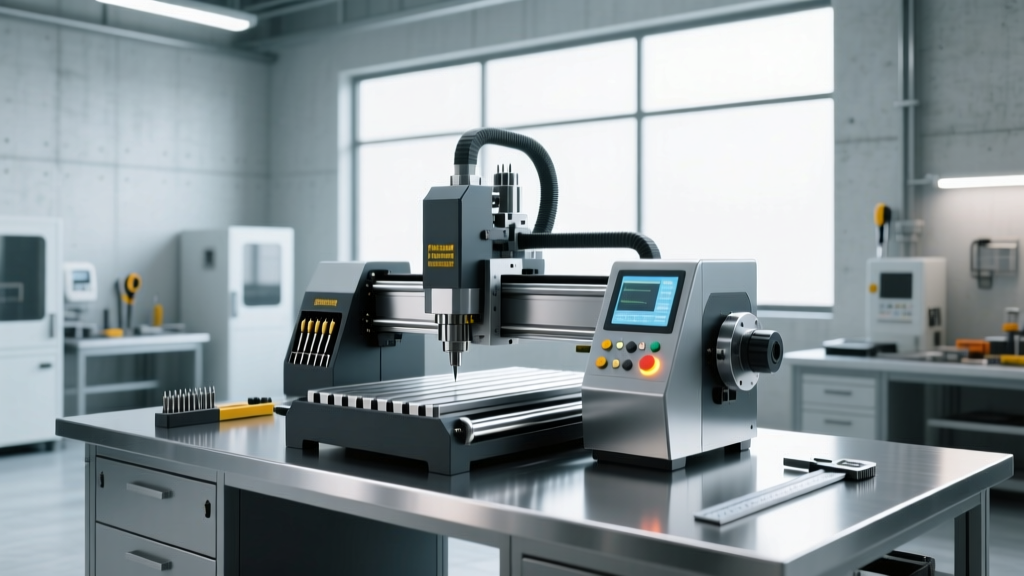
The market has bifurcated into two distinct envelope strategies: micro-machining for medical and electronics, and macro-monolithic machining for aerospace. General job shops are caught in the middle, often making costly mistakes by purchasing standard 3-axis vertical machining centers (VMCs) that lack the Z-axis clearance required for modern multi-axis tombstone fixturing.
| Application Sector | Typical Bed Format (XYZ) | Kinematic Configuration | Usable Envelope Efficiency | Example Model & 2026 Est. Price |
|---|---|---|---|---|
| Aerospace (Monolithic) | 80" x 40" x 40" | 5-Axis Swivel Head / Fixed Table | 85% (High Z-clearance) | Mikron MILL P 800 U (~$650,000) |
| Medical (Micro/Titanium) | 20" x 20" x 20" | 5-Axis Trunnion Table | 70% (Table thickness loss) | DMG MORI DMU 50 3rd Gen (~$280,000) |
| General Job Shop | 40" x 20" x 20" | 3-Axis + Pallet Pool | 95% (Strict XYZ orthogonal) | Haas VF-2SSYT w/ SMW Pallet (~$185,000) |
| Automotive Die/Mold | 60" x 30" x 30" | 5-Axis Bridge/Gantry | 90% (Overhead clearance) | Mazak VARIAXIS i-800 NEO (~$450,000) |
Kinematic Envelopes: Why 5-Axis Changes the Bed Math
The most common financial bleed in modern CNC procurement is the "phantom volume" lost to 5-axis kinematics. If you purchase a machine with a 500mm Z-axis travel and mount a 200mm tall trunnion table, you have instantly surrendered 40% of your Z-axis envelope before a part is even fixtured.
The Swept Cylinder Calculation
When a part is tilted 90 degrees on a trunnion table, it sweeps a cylindrical volume. If your part is a 150mm x 150mm block, the diagonal sweep is approximately 212mm. If the distance from the spindle nose to the table centerline is only 200mm, the tool holder will crash into the part or the table during a full tilt. A great CNC machine accounts for this by offering a deep spindle-nose-to-table distance or utilizing a swivel-head design that keeps the table flat, preserving the entire Z-axis for the part and tooling.
"Improper work envelope calculation—specifically failing to account for the swept diagonal of a tilted part—is the leading cause of 5-axis spindle crashes in newly automated cells. The physical bed size is irrelevant if the kinematic pivot point restricts the tool path."
— Technical guidelines on multi-axis machining, Society of Manufacturing Engineers (SME)
Smart Bed Zoning and Dynamic Fixturing Trends
In 2026, the physical boundaries of the CNC bed are being manipulated by zero-point clamping systems and automated pallet pools. Systems like the Schunk Vero-S or System 3R Macro allow machinists to divide a standard 40" x 20" bed into distinct "machining zones" and "loading zones."
Pro Tip for Job Shops: Instead of buying a larger bed machine to accommodate multiple vises, invest $12,000 to $18,000 in a zero-point clamping system. This reduces setup times from 45 minutes to under 3 minutes, effectively doubling the usable time of your existing work envelope by eliminating machine idle time during setups.Furthermore, the integration of robotic tenders requires the CNC bed to be positioned at a specific ergonomic height and depth. Machines with deep Y-axes (over 30 inches) often require custom, extended-reach robotic arms, which can add $40,000 to the automation cell cost. Selecting a machine with a compact Y-axis but a high-rising column often provides a better ROI for automated lights-out manufacturing.
Decision Framework: Matching Envelope to Your 2026 Order Book
Do not base your next capital equipment purchase on the largest part you have ever machined. Base it on the geometric realities of your top 20% revenue-generating parts. Follow this strict evaluation protocol before signing a purchase order:
- Map the Bounding Box: Identify the absolute maximum XYZ dimensions of your core product line. Add exactly 15% to the Z-axis requirement to account for tool length, holder clearance, and chip evacuation space.
- Calculate the 5-Axis Sweep: If buying a trunnion machine, use the Pythagorean theorem (A² + B² = C²) on your part's X and Y dimensions to find the diagonal. Verify with the OEM that this diagonal is at least 20% smaller than the machine's maximum swing diameter.
- Audit the Column Overhang: On standard C-frame VMCs, the spindle overhangs the bed. When cutting heavy materials at the extreme front edge of the Y-axis, harmonic chatter increases. If your parts require heavy roughing at the bed's edge, mandate a bridge-style or gantry-style machine where the spindle is supported on both sides.
- Verify Automation Compatibility: Check the OEM's side-mount or rear-mount pallet port dimensions. Ensure the work envelope aligns with standard 400mm or 500mm tombstone grids if you plan to integrate horizontal automation within the next 36 months.
Ultimately, a great CNC machine is not defined by the sheer volume of empty space inside its sheet metal enclosure. It is defined by how accurately, rigidly, and efficiently it can position a cutting tool within the specific geometric constraints of your production demands. Prioritize kinematic clearance, zero-point integration, and swept-volume mathematics over catalog bed dimensions to secure a genuine competitive advantage on the shop floor.