CNC Tattoo Machine ATC Systems: Safety & Compliance Guide
Explore safety standards, FDA compliance, and micro-ATC engineering for CNC tattoo machines, contrasting industrial tool changers with medical automation.
The Engineering of Micro-ATC Systems in Automated Tattooing
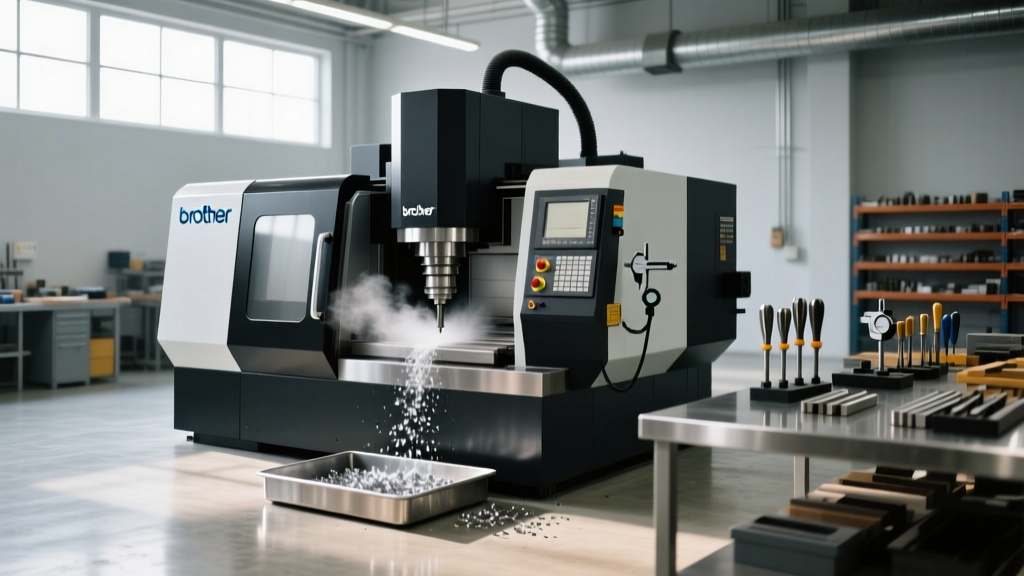
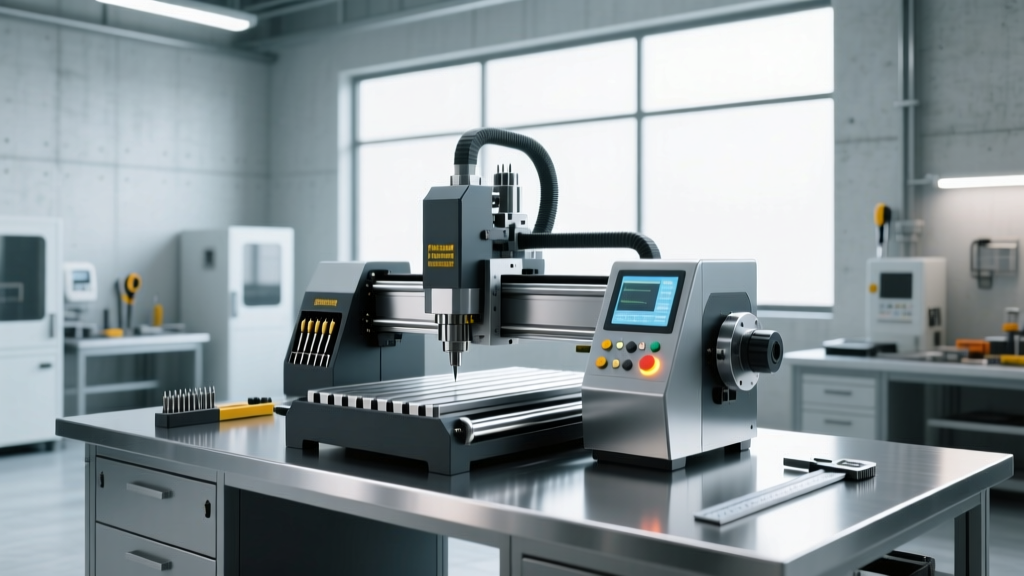
The automation of permanent cosmetics and body art has introduced the CNC tattoo machine to the manufacturing and med-tech sectors. Unlike traditional industrial CNC mills that swap heavy BT40 or CAT50 cutting tools, a CNC tattoo machine relies on a highly specialized Micro-Automatic Tool Changer (Micro-ATC) to exchange needle cartridges, shading rigs, and pigment pots. While the kinematic principles of X-Y-Z Cartesian movement remain similar, the safety standards and compliance frameworks governing these tool change systems are radically different. Designing or operating an automated tattooing system requires strict adherence to medical device regulations and bloodborne pathogen protocols, rendering standard industrial ATC designs non-compliant and hazardous.
CRITICAL SAFETY WARNING: Aerosolization HazardsIndustrial CNC ATCs utilize high-pressure air blasts to clean the spindle taper before tool insertion. In a CNC tattoo machine, applying compressed air to a used needle cartridge will aerosolize blood, plasma, and heavy metal pigments. This directly violates OSHA bloodborne pathogen standards and creates severe cross-contamination risks. Micro-ATCs must rely on sealed mechanical wipers or localized vacuum extraction systems instead.
Industrial ATC vs. CNC Tattoo Machine Micro-ATC: A Technical Matrix
To understand the compliance landscape, engineers must first recognize the mechanical divergence between standard machining tool changers and medical-grade micro-ATCs. The clamping forces, materials, and sterilization tolerances dictate the safety profile of the machine.
| Feature | Industrial CNC ATC (e.g., Haas, Fanuc) | CNC Tattoo Machine Micro-ATC |
|---|---|---|
| Tool Holder Material | Case-hardened steel, ABS plastic pockets | 316L Stainless Steel, PEEK (Polyether ether ketone) |
| Clamping Mechanism | Belleville spring drawbar (10kN+ force) | Pneumatic collet or magnetic detent (15-30N force) |
| Taper Cleaning Method | High-pressure air blast | Sealed silicone wipers, UV-C chamber, or vacuum |
| Sterilization Tolerance | None (wiped with solvent/rags) | Autoclave (121°C at 15 psi) or Gamma irradiation |
| Swap Time | 1.5 to 4.0 seconds | 0.8 to 1.5 seconds (optimized for fluid dynamics) |
Navigating FDA and OSHA Compliance for Tool Changers
When integrating an ATC into a CNC tattoo machine, the system crosses the boundary from standard manufacturing equipment into a regulated cosmetic and medical device. Compliance is not optional; it dictates the physical architecture of the tool magazine.
OSHA Bloodborne Pathogen Standard (29 CFR 1910.1030)
Under the OSHA Bloodborne Pathogens Standard, any equipment that may come into contact with blood or other potentially infectious materials (OPIM) must be designed to prevent cross-contamination. For a CNC tattoo machine, the Micro-ATC carousel is a primary vector for OPIM.
- Fluid Ingress Prevention: The ATC magazine must feature an IP65-rated (or higher) enclosure. During the tattooing process, microscopic droplets of blood and ink bounce off the substrate. If these droplets enter the tool pockets, subsequent tool changes will introduce pathogens directly into the next cartridge.
- Decontamination Protocols: The carousel must be designed for rapid disassembly without the use of specialized tools, allowing operators to submerge the entire magazine housing in an EPA-registered hospital-grade disinfectant between clients.
FDA Device and Cosmetic Intersections
The FDA regulates tattoo inks as cosmetics and the pigments used within them. However, when a CNC machine automates the needle penetration and ink delivery, the machine itself may be scrutinized under medical device frameworks, particularly if used for paramedical tattooing (e.g., areola restoration or scar camouflage). According to CDC standard precautions for infection control, automated systems must guarantee that no residual biological material is transferred between sterile and non-sterile zones. The Micro-ATC must act as a hard physical barrier, often utilizing single-use, snap-in sterile cassettes that hold the needle cartridges, which are then ejected into a biohazard sharps container automatically.
"The greatest failure mode in early automated tattooing prototypes was treating the needle carousel like a standard CNC tool magazine. Biological fluids wick into the microscopic tolerances of standard steel collets via capillary action. You must use hydrophobic coatings and single-use polymer interfaces to break that capillary bridge."
— Lead Systems Engineer, Robotic Dermatology Division (2025)
Material Science: Designing the Compliant Tool Magazine
Achieving compliance requires specific material selections that survive repeated sterilization cycles without degrading, warping, or off-gassing toxic compounds into the pigment.
1. PEEK (Polyether Ether Ketone) for Tool Pockets
Standard industrial ATCs use ABS or Delrin (POM) for tool pockets. These materials degrade under repeated autoclaving and absorb biological fluids. PEEK is a semi-crystalline thermoplastic that withstands continuous temperatures up to 250°C, resists gamma radiation, and is inherently biocompatible. Machining PEEK tool pockets ensures the Micro-ATC maintains its precise 0.01mm tolerances even after 500+ sterilization cycles.
2. 316L Stainless Steel for the Spindle Interface
While 304 stainless steel is common in food-grade CNC machines, the high-chloride environment of certain saline-based tattoo pigments and hospital-grade disinfectants (like sodium hypochlorite) will cause pitting corrosion. 316L stainless steel, with its added molybdenum content, is mandatory for the spindle nose and collet assembly to prevent micro-pitting where bacteria can harbor.
3. UV-C Integration in the Magazine
To maintain a sterile environment inside the tool changer, modern compliant CNC tattoo machines integrate 254nm UV-C LEDs inside the ATC enclosure. When the carousel door is closed, the UV-C array activates, destroying the DNA/RNA of any aerosolized pathogens that bypassed the primary mechanical seals.
Step-by-Step: Compliant Tool Change Sequence
A compliant Micro-ATC sequence prioritizes contamination control over raw speed. Here is the engineered workflow for a medically compliant system:
- Retraction & Wipe: The Z-axis retracts to the safe plane. A pneumatic silicone wiper engages the needle cartridge housing, stripping away surface ink and blood.
- Vacuum Evacuation: A localized HEPA-filtered vacuum activates around the spindle nose for 1.5 seconds to capture any dislodged particulate matter.
- Carousel Engagement: The ATC door opens. The spindle descends into the designated 'Drop' pocket. The pneumatic collet releases the used cartridge, which falls via gravity into a sealed, biohazard-lined disposal chute (no manual handling required).
- Sterile Pickup: The carousel rotates to the next sterile cartridge. The spindle engages the new PEEK-lined collet. A proximity sensor verifies full seating (preventing the needle from dislodging mid-operation).
- Seal & Purge: The spindle retracts, the ATC door seals, and the internal UV-C array pulses for 3 seconds before the machine resumes the tattooing path.
FAQ: CNC Tattoo Machine Automation Compliance
Can I use a standard desktop CNC router (like a Shapeoko or X-Carve) as a CNC tattoo machine?
No. Standard desktop CNC routers lack the IP-rated enclosures, biohazard disposal pathways, and Micro-ATC sterilization protocols required by OSHA and local health departments. Using unmodified industrial or hobbyist CNC equipment for human skin penetration violates health codes and voids all liability insurance.
How often must the Micro-ATC carousel be autoclaved?
The removable inner cassette of the Micro-ATC must be autoclaved at 121°C for 15 minutes between every single client. The outer housing of the machine must be wiped down with a hospital-grade tuberculocidal disinfectant. This is why designing the ATC with quick-release, tool-less cassettes is critical for clinical workflow efficiency.
What is the cost difference between an industrial ATC and a medical Micro-ATC?
A standard 10-tool industrial ATC umbrella magazine costs between $1,500 and $3,500. A compliant, 6-tool medical Micro-ATC system with UV-C integration, HEPA vacuum extraction, and PEEK tooling typically ranges from $8,000 to $14,000 due to the low-volume manufacturing of biocompatible components and the required FDA-compliant validation documentation.