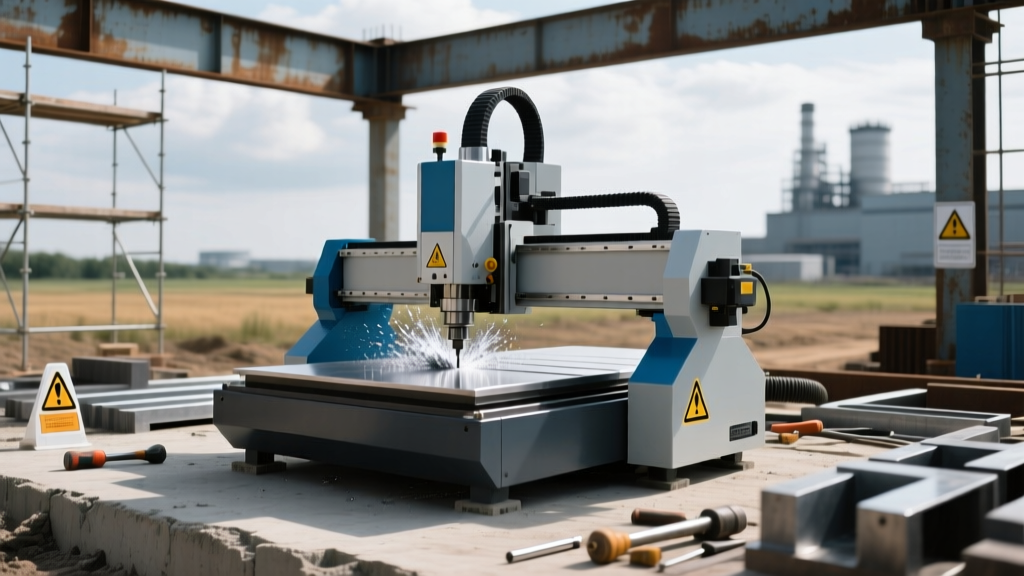
Desktop CNC Rim Machine Guide for Wheel Prototyping
Compare top desktop CNC rim machines for automotive wheel prototyping. Discover work envelope limits, 5-axis capabilities, and pricing for small shops.
The Work Envelope Reality Check for Rim Prototyping
Full-scale industrial CNC rim machines and 5-axis VMCs cost upwards of $150,000, require 480V power drops, and demand massive floor space. For university Formula SAE teams, boutique wheel designers, and automotive aftermarket shops, a desktop CNC rim machine offers a viable path to prototype center sections, test bolt patterns, and mill scale models. However, selecting the right equipment requires a strict understanding of work envelope limitations.
Critical Constraint Warning: A standard 17x9 inch automotive rim requires a minimum 20-inch Y-axis travel to machine the outer barrel. Desktop mills max out around 10 to 18 inches. Therefore, 'rim prototyping' on a desktop format strictly means: (1) Machining the center hub and spider disc, (2) Milling 1/2 or 1/4 scale aesthetic models for wind tunnel or visual testing, or (3) Cutting cross-sections for FEA (Finite Element Analysis) validation.Top Desktop CNC Rim Machines for 2026 Prototyping
When evaluating a desktop CNC rim machine setup, rigidity and spindle RPM dictate your ability to machine 6061-T6 aluminum without excessive chatter. Below is a comparison of the leading benchtop platforms currently utilized in small-scale automotive prototyping.
| Machine Model | Axes | Work Envelope (XYZ) | Spindle RPM | Est. Price (USD) | Best Prototyping Use Case |
|---|---|---|---|---|---|
| Pocket NC V2-50 | 5-Axis | 4.5' x 5' x 3.5' | 30,000 | $4,999 | Complex organic spoke intersections, 1/4 scale models |
| Tormach PCNC 1100 | 3/4-Axis | 18' x 11' x 16' | 5,100 | $10,499 | Large center discs, 4th-axis rotary hub boring |
| Haas Desktop Mill | 3-Axis | 10' x 8' x 6' | 15,000 | $9,995 | High-speed aluminum hub facing, PCD drilling |
Fixturing Round Parts on a Cartesian Bed
Rims are cylindrical; desktop mills are Cartesian. The most common failure point in desktop rim prototyping is improper fixturing, leading to runout that causes severe dynamic imbalance at high speeds. A dedicated CNC rim machine uses a massive hydraulic faceplate chuck. On a desktop mill, you must replicate this holding power manually.
The Soft-Jaw Mandrel Method
Do not rely on standard parallel vises to hold a rim center section. Instead, machine a custom mandrel out of 6061 aluminum that matches the exact pilot bore of your rim prototype (e.g., 56.1mm for many Honda/Acura applications or 73.1mm for BMW). Mount this mandrel to a 4th-axis rotary table or a heavy-duty 3-jaw chuck. Use machined soft jaws to grip the outer diameter of the center disc. This ensures the rotational axis of the rim remains perfectly concentric with the spindle, keeping runout below 0.0005 inches.
Material Selection and Cutting Data
Prototyping wheels requires balancing machinability with structural validity. While full production rims use A356-T6 cast aluminum or 6082-T6 forged billets, desktop machines require specific material choices to maintain tool life and surface finish.
- 6061-T6 Aluminum: The standard for structural prototypes. Excellent strength-to-weight ratio and highly machinable. Requires sharp tooling to prevent built-up edge (BUE).
- 7075-T6 Aluminum: Used for high-stress FSAE center-lock hubs. Much harder on tooling; requires rigid setups and lower feed rates to avoid snapping miniature endmills in deep pockets.
- Delrin (Acetal) / Urethane: Ideal for 1/4 scale aesthetic models or wind-tunnel buck testing. Machines like butter but requires very low RPMs to prevent melting.
Tool: 1/4' 3-Flute Carbide Endmill (ZrN coated)
Spindle Speed: 8,500 RPM
Feed Rate: 45 IPM (Inches Per Minute)
Axial Depth of Cut (ADOC): 0.125'
Radial Width of Cut (WOC): 0.050' (Trochoidal slotting)
Mitigating Chatter on Thin Spoke Webs
When machining the pockets between rim spokes, the remaining thin walls (webs) are highly susceptible to harmonic vibration, or chatter. On a lightweight desktop CNC rim machine, the machine frame itself can amplify these frequencies. According to tooling experts at Harvey Tool, utilizing variable helix endmills is critical for these operations. A variable helix design (e.g., alternating 35° and 40° flutes) breaks up the harmonics that cause chatter.
Furthermore, avoid traditional slotting toolpaths. Use adaptive clearing or trochoidal milling toolpaths available in CAM software like Fusion 360 or Mastercam. These toolpaths maintain a constant radial engagement angle, drastically reducing the lateral cutting forces that push against thin rim spokes and cause deflection.
Coolant Strategies for Desktop Environments
Most desktop CNC machines lack the plumbing for high-pressure flood coolant, which is standard on industrial CNC rim machines. Machining aluminum dry or with inadequate lubrication leads to chip welding in deep spoke pockets, ultimately snapping the tool.
Implement a programmable air-blast mist system. Use a minimum quantity lubrication (MQL) fluid specifically formulated for aluminum, such as a 5% concentration of Trim MicroSol 585XT or a dedicated aluminum mist fluid. Direct the mist nozzle exactly at the cutting edge, and ensure the air pressure is set to at least 30 PSI to effectively evacuate chips from deep, narrow spoke windows.
Decision Framework: When to Abandon Desktop for Industrial
While desktop CNC rim machines are exceptional for R&D, there is a hard ceiling to their utility. Use this framework to determine when your shop must upgrade to a full-size VMC or a dedicated CNC wheel lathe:
- The 14-Inch Barrier: If your prototype exceeds 14 inches in diameter, the Z-axis height and Y-axis travel of 95% of desktop mills will physically prevent the tool from reaching the outer barrel.
- Production Volume: If you are moving from 3 test prototypes to a 50-unit pilot run, the manual fixturing and slower rapid traverse rates of a desktop mill will destroy your margins. A VMC with a tombstone or a dedicated wheel fixture is required.
- Tolerance Stacking: If your FEA simulation requires aerospace-grade fatigue testing, the inherent micro-deflection of a desktop mill's cast-iron or steel frame may introduce geometric inaccuracies in the spoke fillets that compromise the test data.
Final Procurement Advice
When budgeting for a desktop CNC rim machine setup, the machine base price is only 60% of the total capital required. Allocate the remaining 40% toward a high-precision 4th-axis rotary table (minimum $1,500), custom soft-jaw stock, a programmable MQL mist system, and a suite of variable-helix and corner-radius endmills to handle the complex fillets inherent in modern wheel designs.