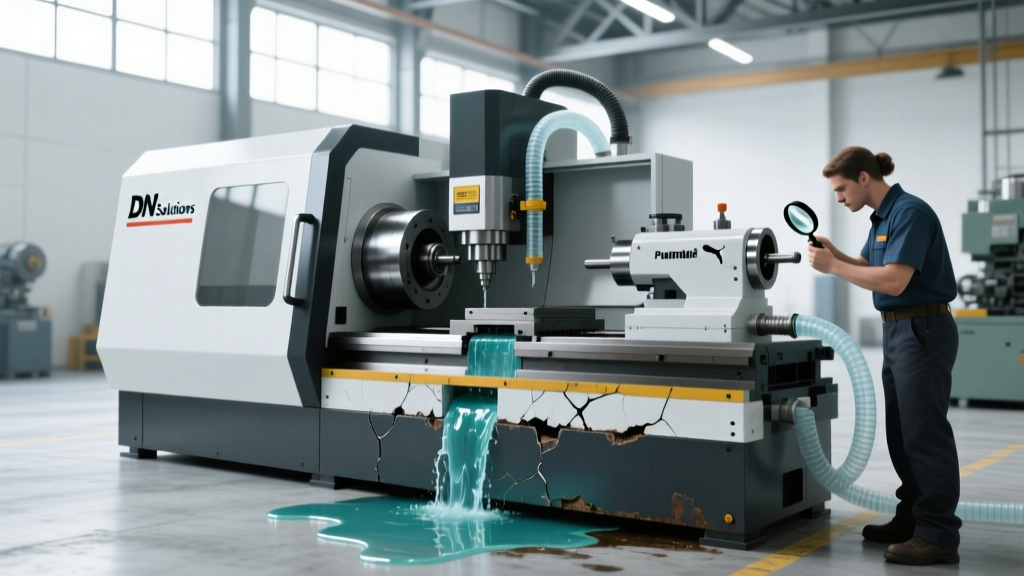
Portable Aluminum Extrusion CNC Machine Field Safety Guide
Master OSHA compliance and hazard mitigation for portable aluminum extrusion CNC machines in field environments, from temporary power to swarf control.
The Unique Hazard Profile of Field Extrusion Machining
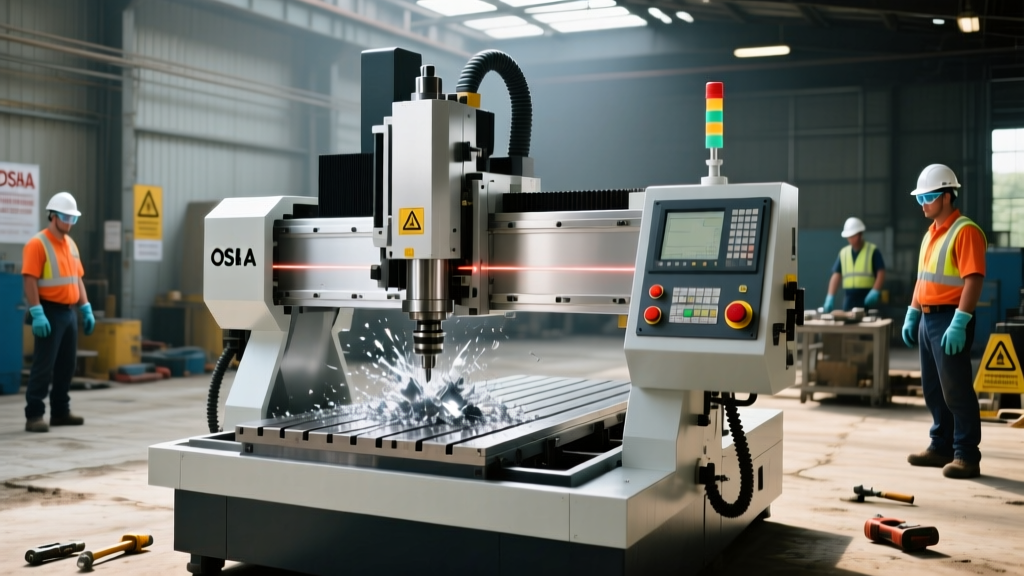
Taking an aluminum extrusion CNC machine out of a climate-controlled shop and onto an active construction site introduces volatile variables: uneven terrain, temporary power grids, and environmental debris. Whether you are machining 6063-T5 curtain wall mullions on a high-rise project or modifying 6061-T6 solar tracking frames in a remote desert array, field compliance requires more than standard shop-floor protocols. Portable 3-axis gantry mills and modular routing setups designed for extrusion profiles are incredibly versatile, but their transient nature creates unique safety blind spots that site safety managers frequently overlook.
⚠️ CRITICAL FIELD WARNING: Never bypass ground fault protection on temporary generators to prevent nuisance tripping. Aluminum swarf is highly conductive; a ground fault combined with conductive chip accumulation can electrify the entire workpiece and machine bed, creating a lethal shock hazard for operators handling long extrusion profiles.Temporary Power and Grounding Compliance (OSHA 1926.404)
Portable CNCs typically draw 220V to 480V three-phase power. On remote sites or active construction zones, this means relying on towable diesel generators or temporary site distribution panels. The primary safety failure here is improper grounding combined with the inductive loads of modern servo motors. According to OSHA Standard 1926.404, all temporary wiring and equipment must be properly grounded. However, standard residential or light-commercial GFCI (Ground Fault Circuit Interrupter) breakers are not calibrated for the inrush current of CNC spindle accelerations.
When a portable aluminum extrusion CNC machine ramps up to 18,000 RPM to cut a thick-walled mullion, the servo draw can trip a standard 5mA GFCI. Frustrated operators often resort to using non-GFCI adapters, directly violating OSHA regulations and exposing themselves to stray voltage. To maintain compliance and operational continuity, you must install a 50-amp GFCI breaker with a 30mA trip threshold specifically rated for motor loads and inductive inrush. Furthermore, ensure the machine chassis is bonded to a dedicated ground rod driven at least 8 feet into the earth, independent of the generator's neutral bond, to prevent ground loops through the aluminum workpiece.
Machine Stability and Workholding on Uneven Terrain
Factory CNC beds are anchored to poured concrete with epoxy grout. Portable aluminum extrusion CNC machines utilize modular, bolt-together aluminum or steel bed sections that are assembled on-site. When deployed on compacted soil, plywood subfloors, or rooftop membranes, dynamic cutting forces can induce harmonic chatter, dimensional inaccuracy, or catastrophic workpiece shift. Extrusions are inherently long and flexible; a 20-foot curtain wall profile acts as a tuning fork under cutting loads if not properly supported.
| Surface Type | Required Footing | Max Tolerance | Clamping Strategy |
|---|---|---|---|
| Poured Concrete | Direct steel foot contact | 0.005" over 10ft | Standard pneumatic toe-clamps |
| Plywood Subfloor | 1/2" steel distribution plates | 0.015" over 10ft | Mechanical toggle clamps + mid-span supports |
| Compacted Soil/Gravel | Screw-jack stabilizers on timber mats | 0.030" over 10ft | Heavy-duty strap clamps + bed anchoring pins |
For every 8 feet of unsupported extrusion length, you must deploy a mid-span zero-clearance support block to prevent the profile from deflecting away from the endmill. Deflection not only ruins the part tolerance but can cause the tool to grab the material, throwing the 15-pound aluminum profile off the bed.
Managing Aluminum Swarf in Open Environments
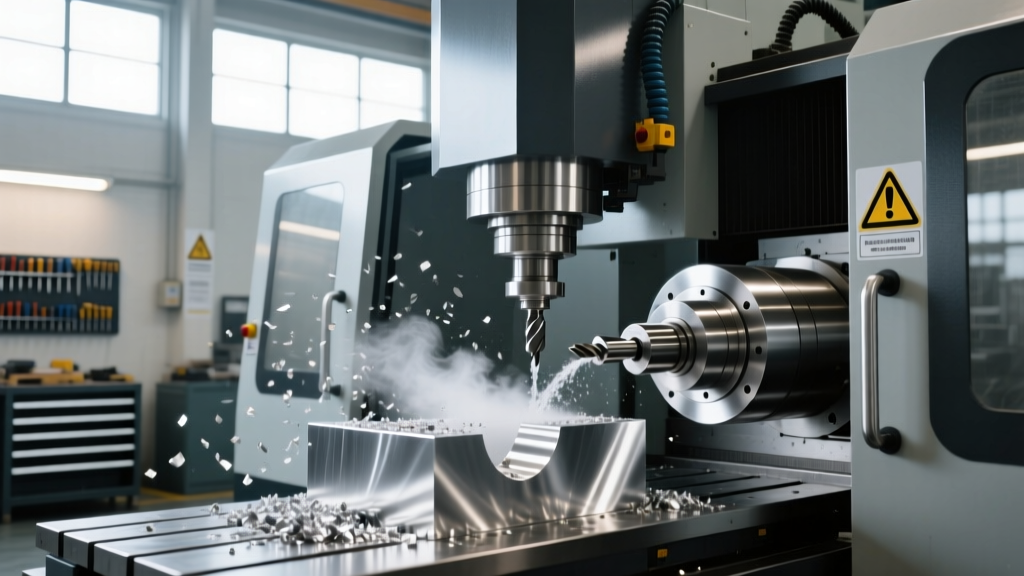
Aluminum extrusion machining generates long, stringy chips or fine, razor-sharp dust, depending on the tooling and coolant strategy. In an open-air environment, wind turns aluminum fines into airborne projectiles and respiratory hazards. The CDC's NIOSH guidelines on metalworking environments emphasize that while aluminum dust isn't as systemically toxic as beryllium or cobalt, fine particulate inhalation causes severe mucosal irritation and poses a severe deflagration risk if accumulated in enclosed site trailers or near temporary heating units.
In field conditions where flood coolant is impractical due to environmental runoff regulations, you must rely on minimum quantity lubrication (MQL) paired with localized HEPA extraction. Mount a flexible, articulating extraction hood directly over the spindle shroud. The hood must maintain a capture velocity of at least 200 feet per minute (FPM) to overcome crosswinds on elevated job sites.
Tooling Specs: Avoiding Built-Up Edge (BUE) in the Field
Temperature fluctuations in the field drastically affect how aluminum adheres to cutting tools. A tool that performs perfectly in a 68°F shop may suffer from severe Built-Up Edge (BUE) on a 95°F job site, leading to tool breakage and hazardous chip ejection. Never use standard multi-flute HSS or uncoated carbide endmills for field extrusion work.
- Tool Geometry: Use single-flute or two-flute solid carbide endmills with a high rake angle (35° to 45°) and a polished flute surface. This geometry forces the material to evacuate as a continuous chip rather than pulverizing it into combustible dust.
- Coating: Zirconium Nitride (ZrN) or uncoated polished carbide are mandatory. Avoid Titanium Nitride (TiN) or Titanium Aluminum Nitride (TiAlN), as their higher friction coefficients promote aluminum welding to the cutting edge in high-ambient temperatures.
- Feeds and Speeds (6063-T5 Extrusion): Run a 1/2-inch (12mm) single-flute tool at 14,000 RPM with a feed rate of 160 IPM (inches per minute). This maintains a high chip load (0.011" per tooth), which carries the heat away in the chip rather than transferring it into the workpiece or tool.
- Feeds and Speeds (6061-T6 Structural): Drop the RPM to 12,000 and increase the feed to 180 IPM to prevent work-hardening the silicon-rich alloy.
Acoustic Ordinances and Urban Job Site Compliance
Portable CNC routers cutting aluminum extrusions routinely generate 85 to 95 decibels of high-frequency spindle whine and chip-impact noise. As of 2026, tier-1 municipalities have aggressively tightened continuous daytime construction noise limits, often capping them at 75 dB at the property line. Violating these ordinances results in immediate stop-work orders and compounding daily fines.
"Deploying a portable acoustic enclosure with a minimum STC (Sound Transmission Class) rating of 25 reduces the high-frequency milling noise of an aluminum extrusion CNC to acceptable urban limits. Crucially, the enclosure must feature interlocked safety switches that trigger an immediate spindle halt if the acoustic panels are opened during operation, satisfying both noise and physical guarding mandates."
For operators working inside the enclosure or in close proximity, dual-protection PPE (foam earplugs paired with over-ear muffs rated at NRR 27 or higher) is non-negotiable. Standard safety glasses are insufficient; operators must wear wrap-around polycarbonate safety goggles (ANSI Z87.1+) to prevent micro-fines from bypassing the side shields during high-speed dry routing.
Field Lockout/Tagout (LOTO) for Modular Machines
Modular portable CNCs must be broken down, moved across the site, and reassembled. Standard OSHA 1910.147 Lockout/Tagout procedures often fail in the field because the machine is unplugged to be moved, but the spindle capacitors, servo drives, and MQL pressurized tanks retain lethal residual energy. A field-specific LOTO sequence must be strictly enforced before any gantry disassembly or bed relocation occurs.
- Controlled Stop: Halt the program, retract the spindle to the Z-home position, and initiate the software shutdown sequence.
- Electrical Isolation: Disconnect the main rotary isolator switch on the portable control cabinet. Apply a physical padlock and field-specific LOTO tag.
- Capacitor Dissipation: Wait a minimum of 5 minutes for the VFD (Variable Frequency Drive) and servo bus capacitors to discharge. Verify zero voltage at the spindle contactor using a calibrated CAT III multimeter.
- Pneumatic/MQL Bleed: Manually trigger the MQL relief valve to drop the system pressure to 0 PSI. Attempt to cycle the tool mister to ensure no residual atomized lubricant is trapped in the lines.
- Stored Mechanical Energy: Lower the Z-axis completely onto a physical mechanical block or the bed surface. Never rely on the servo motor's electromagnetic brake to hold the Z-axis during gantry disassembly; a power loss will drop the spindle assembly.
By treating the field environment with the same rigorous engineering controls as a permanent manufacturing facility, safety managers can leverage the immense productivity of portable aluminum extrusion CNC machines without exposing their crews to the compounding hazards of temporary job sites.