Multi Spindle CNC Machine Chip & Dust Collection Maintenance
Master multi spindle CNC machine chip management and dust collection. Explore maintenance schedules, CFM sizing, and conveyor troubleshooting.
The Multi-Spindle Multiplier Effect
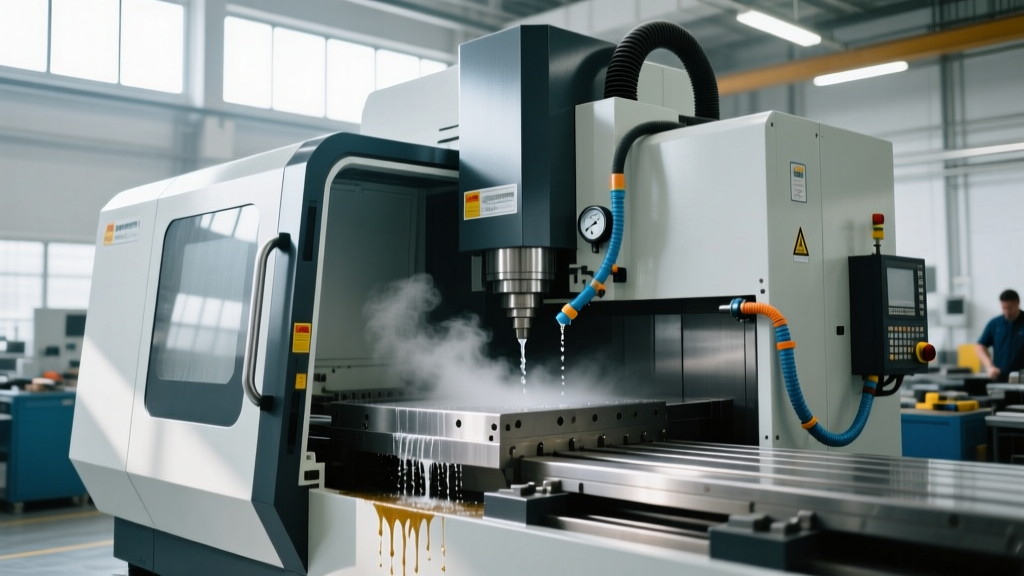
Operating a multi spindle CNC machine fundamentally alters the physics of chip generation and particulate extraction. While a standard single-spindle turning center or machining center produces a predictable volume of swarf, machines like the Index MS32C or Tornos MultiAlpha 8x20 feature up to eight spindles cutting simultaneously. This multiplies chip volume, coolant displacement, and airborne mist by a factor of four to eight. Standard OEM-installed chip conveyors and mist collectors routinely fail under this compounded load, leading to way cover degradation, spindle seal contamination, and catastrophic coolant system clogging.
⚠️ Critical Warning: Multi-spindle lathes frequently utilize high-pressure coolant systems operating between 80 and 150 bar (1,160 to 2,175 psi). This extreme pressure atomizes metalworking fluids into sub-micron aerosols. Without a properly maintained 3-stage mist collection system, these aerosols coat facility ceilings, infiltrate electrical cabinets, and pose severe respiratory hazards. Refer to the NIOSH Metalworking Fluids guidelines for exposure limits and ventilation requirements.Wet Machining: Coolant & Chip Conveyor Maintenance Schedules
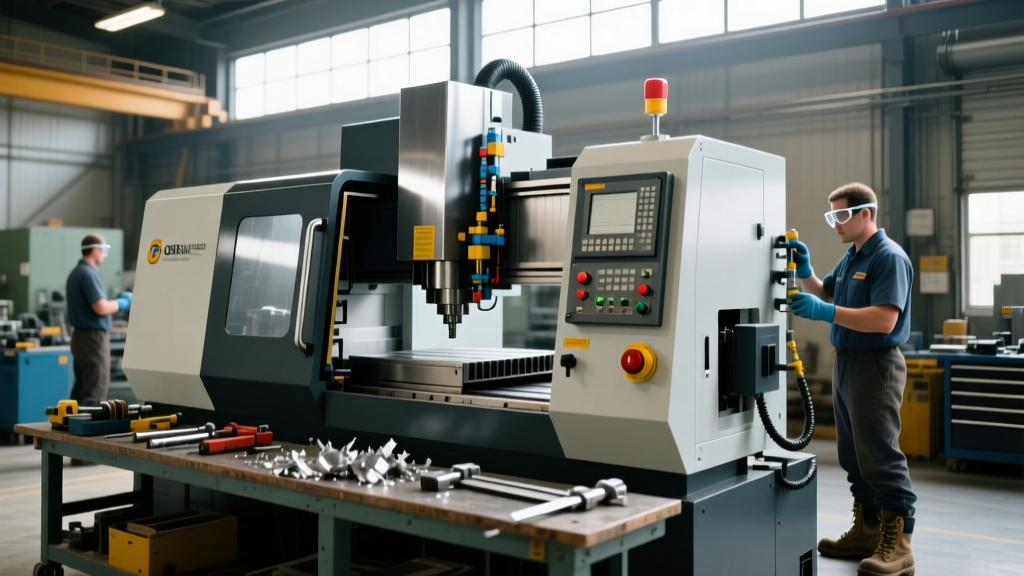
Chip management on a multi spindle CNC machine requires matching the conveyor type to the specific material being machined. Hinge-belt conveyors, the most common OEM default, are highly prone to jamming when processing stringy aluminum chips (e.g., 7075-T6) or fine, abrasive brass swarf. Scraper conveyors or magnetic hinge-belt hybrids are mandatory for high-volume multi-spindle operations.
| Interval | Maintenance Action | Technical Specifications & Targets |
|---|---|---|
| Daily | Coolant Concentration & Skimming | Test with a refractometer. Target 6-8% for synthetic, 8-10% for semi-synthetic. Run tramp oil skimmer for 4 hours minimum. |
| Weekly | Conveyor Belt Tension & Wiper Check | Check hinge-belt tension; adjust take-up bearings to eliminate slip. Inspect discharge wiper for tears. |
| Monthly | Tank Sludge Vacuum & Nozzle Flush | Vacuum fine particulate from the main reservoir settling zone. Flush high-pressure coolant nozzles with a 50 psi air/water mix. |
| Bi-Annual | Full Tank Pump-Out & Chemistry Reset | Drain, power-wash, and refill. Check coolant pH (target 8.5 - 9.2) to prevent bacterial growth and machine corrosion. |
| Annual | Conveyor Motor & Gearbox Service | Check VFD amp draw under load. Replace gearbox oil (typically ISO VG 220) and inspect shear pins for fatigue. |
High-Pressure Mist Extraction Servicing
For multi-spindle machines utilizing >100 bar coolant pressure, centrifugal mist collectors are insufficient. You must deploy 3-stage filtration units (e.g., Filtration Group or Absolent) featuring a pre-filter, a HEPA H13 main filter, and an activated carbon post-filter. Service Metric: Monitor the differential pressure gauge on the HEPA stage. When the pressure drop exceeds 2.5 inches of water gauge ("wg), the filter media is blinded by oxidized oil and must be replaced. Running a blinded filter increases motor amp draw by 30-40% and causes the collector to pull unfiltered air through cabinet door seals.
Dry Machining: Dust Collection CFM & Filter Servicing
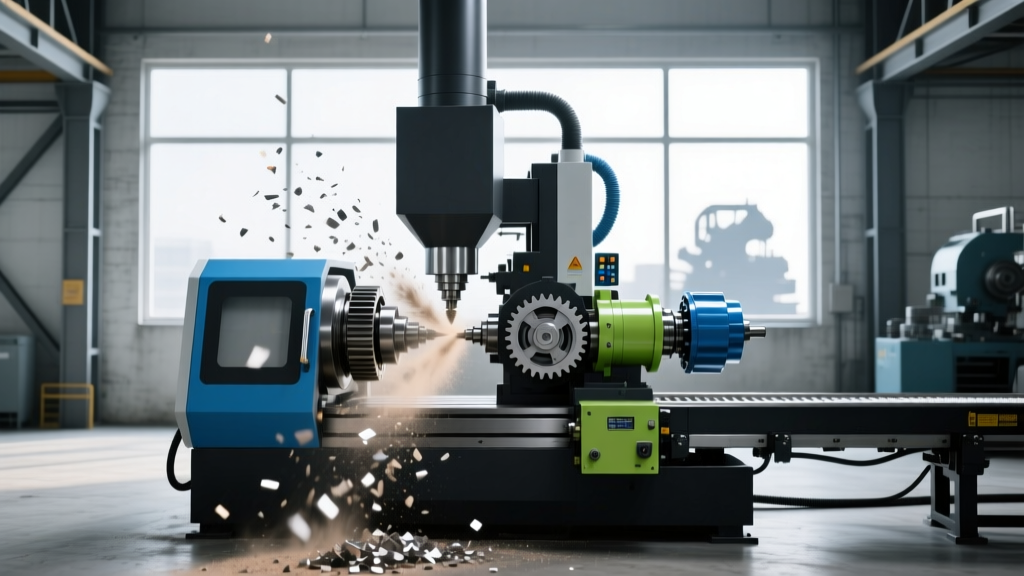
When a multi spindle CNC machine is configured for dry machining—common in graphite electrode milling, composite trimming, or MDF nesting—dust collection transitions from a housekeeping task to a critical safety and precision requirement. Graphite dust is highly conductive; if it infiltrates the spindle encoder or servo drives, it causes immediate short circuits. Composite dust (carbon fiber) is highly abrasive and destroys linear guide bearings.
According to OSHA combustible dust standards, fine organic and metallic particulates require strict capture velocities to prevent deflagration hazards and ensure operator safety.
CFM Calculation Framework for Multi-Spindle Routers
Undersizing the dust collector is the most common error in multi-spindle dry machining. Use this framework to calculate your required Cubic Feet per Minute (CFM):
- Base Requirement: Calculate 400 to 600 CFM per active spindle for standard MDF or wood composites. For dense carbon fiber or graphite, increase to 800 CFM per spindle.
- Static Pressure (SP): Multi-spindle machines require extensive ducting with multiple blast gates. You must maintain a minimum transport velocity of 4,000 to 4,500 FPM (Feet Per Minute) in the ductwork to prevent dust settling. This typically requires a fan capable of generating 12" to 16" of static pressure.
- Filter Media Selection: Standard cellulose filters blind instantly with graphite or resin dust. You must specify PTFE (Polytetrafluoroethylene) membrane filters. The PTFE coating creates a non-stick surface that allows the pulse-jet cleaning system to shed sub-micron dust cakes efficiently.
Troubleshooting Conveyor Jams & Faults
When the chip conveyor on a multi spindle CNC machine faults out, production stops across all spindles simultaneously. Below is a decision matrix for diagnosing the most common conveyor failures.
| Symptom | Root Cause Analysis | Corrective Action |
|---|---|---|
| Conveyor motor trips VFD overload alarm | Stringy aluminum chips wrapped around the head shaft; or severe sludge buildup in the lower trough. | Lockout/tagout. Clear shaft wrap. Vacuum lower trough. Install a chip breaker on the turning tool to shorten chip length. |
| Belt slips, but motor runs normally | Loss of hinge-belt tension; worn drive sprocket teeth; or coolant degradation causing belt lubrication. | Adjust take-up bearings. Inspect sprocket for hooking. Check coolant concentration (low concentration reduces lubricity, causing slip). |
| Coolant overflowing machine pan | Chip dam inside the conveyor is clogged; fine cast iron dust has packed the return channel. | Replace hinge-belt conveyor with a scraper-type conveyor designed specifically for fine particulate evacuation. |
Way Cover & Spindle Seal Protection
The sheer velocity of chips ejected from a multi spindle CNC machine accelerates the wear of telescopic way covers and spindle labyrinth seals. Fine abrasive chips (like titanium or hardened steel) bypass standard polyurethane wipers, embedding themselves in the way lube and scoring the linear rails.
Upgrading to multi-lamella steel wipers with an integrated secondary felt seal increases way cover lifespan by up to 300% in high-volume multi-spindle turning environments. Inspect the felt seals monthly and saturate them with way oil to trap micro-fines before they reach the rail.
Cost Analysis: Upgrading Extraction Systems
Retrofitting a multi spindle CNC machine with heavy-duty extraction is a capital expense that yields rapid ROI through reduced downtime and extended machine life. Below are current market estimates for industrial-grade upgrades:
- Scraper Conveyor Retrofit: $6,500 – $11,000 (Includes custom trough fabrication and heavy-duty geared motor). Eliminates weekly hinge-belt jamming on fine-chip materials.
- 3-Stage HEPA Mist Collector (e.g., 2,000 CFM): $9,000 – $14,000. Replaces standard centrifugal units, eliminating electrical cabinet contamination and reducing facility HVAC load.
- Pulse-Jet Dust Collector (3,000 CFM with PTFE filters): $14,000 – $22,000. Essential for multi-spindle graphite or composite routing, ensuring servo drive longevity and OSHA compliance.
- Automated Coolant Filtration (Vacuum Filter or Centrifuge): $18,000 – $35,000. Extends coolant sump life from 6 months to 3+ years by removing particles down to 10 microns, drastically reducing tool wear on secondary spindles.
Proactive maintenance of these systems is non-negotiable. A multi spindle CNC machine operates on the edge of mechanical capacity; allowing chip and dust management to degrade guarantees cascading failures across the machine's most expensive precision components.