Mill-Turn CNC Machine Buyer's Guide & Daily Checklist
Essential mill-turn CNC machine buyer's guide with pricing, model comparisons, and critical daily checklist—optimize performance and ROI. Download free.
The Economics of Multi-Tasking Mill-Turn Centers
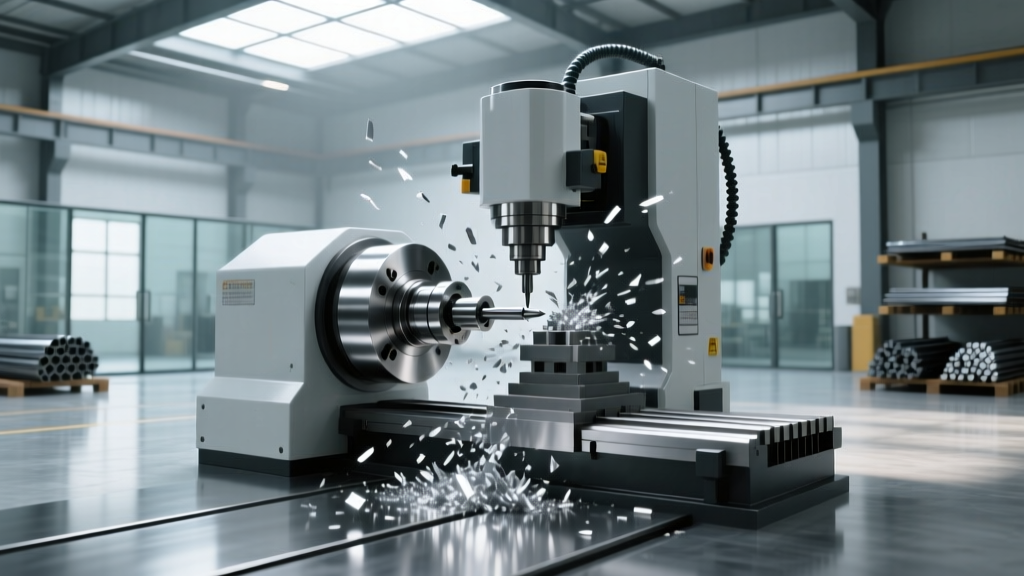
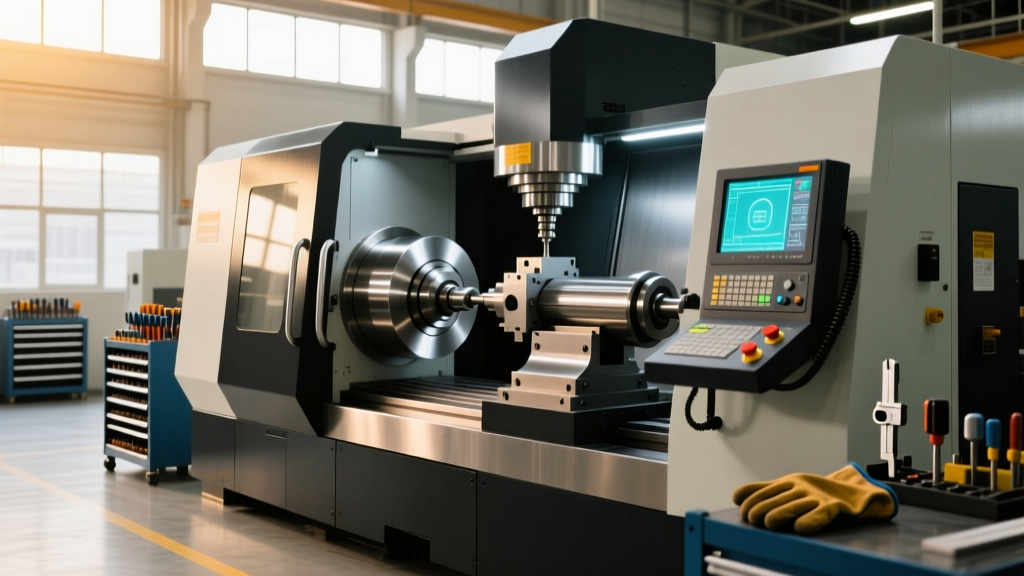
Multi-function CNC machines that combine milling and turning—commonly known as mill-turn centers or multi-tasking machines—have transitioned from niche aerospace solutions to mainstream production workhorses. By consolidating 5-axis simultaneous milling, deep-hole drilling, and full-contour turning into a single chucking, shops eliminate cumulative tolerance stack-ups and reduce work-in-process (WIP) floor space by up to 40%. However, the mechanical complexity of integrating a high-torque turning spindle with a high-speed B-axis milling spindle introduces rigorous maintenance demands. Evaluating these machines requires more than just reviewing cutting feed rates; it demands a rigorous CNC machine daily checklist to ensure long-term geometric accuracy and spindle health.
2026 Mill-Turn Market Contenders: Specification Matrix
When selecting a multi-function platform, buyers must align the machine's physical envelope and spindle capabilities with their target part families. Below is a comparison of three dominant platforms in the mid-to-large aerospace and medical implant sectors.
| Model | Base Price Range (USD) | Max Turning Diameter | Main Spindle Speed | Milling Spindle (B-Axis) | Tool Interface |
|---|---|---|---|---|---|
| Mazak Integrex i-200S | $450,000 - $650,000 | 26.0 in (660 mm) | 5,000 RPM (45 kW) | 12,000 RPM (22 kW) | Capto C6 |
| DMG Mori NTX 1000 | $380,000 - $550,000 | 17.3 in (440 mm) | 10,000 RPM (33 kW) | 12,000 RPM (22 kW) | Capto C6 |
| Okuma Multus U3000 | $420,000 - $600,000 | 25.6 in (650 mm) | 5,000 RPM (30 kW) | 12,000 RPM (22 kW) | Capto C6 |
Note: Pricing reflects base configurations. Equipping these machines with high-pressure coolant systems, bar feeders, and automation-ready packages typically adds $80,000 to $150,000 to the final capital expenditure.
Evaluating Reliability: The Pre-Purchase CNC Machine Daily Checklist
During a Factory Acceptance Test (FAT) or a used-machine runoff, buyers must look beyond the surface finish of the sample part. The mechanical stresses of mill-turn operations can mask underlying hydraulic or thermal issues. Applying a rigorous CNC machine daily checklist during the multi-day runoff process reveals how the machine handles continuous thermal cycling and heavy interrupted cuts.
Warning: B-Axis Clamp Pressure Bleed-Off
When performing heavy off-center milling on a mill-turn center, the B-axis relies on hydraulic clamping to resist cutting forces. Request a 4-hour continuous milling cycle on a titanium or Inconel test block. Pause the machine every 45 minutes to check the B-axis hydraulic clamp pressure gauge. A drop of more than 5% indicates internal valve seal degradation, which will cause chatter and scrap parts in real-world production.
Spindle Thermal Growth Verification
Multi-function machines often run unattended for 72+ hours. Thermal growth in the milling spindle directly impacts 5-axis contouring accuracy. Run the milling spindle at 8,000 RPM for two hours, then stop and immediately measure the Z-axis displacement using a dial indicator against a test bar. Acceptable thermal growth for high-precision mill-turn centers is under 15 microns. If the spindle nose displaces beyond 25 microns, the internal oil-air lubrication system or spindle chiller is undersized.
Live Tooling Runout and Bearing Health
Inspect the live tooling stations. Mount a precision ground test arbor in the main turret's live tooling station and measure radial runout at 1 inch from the gauge line. Runout must not exceed 3 microns (0.0001 in). Excessive runout at the FAT stage indicates poor turret alignment or compromised live tooling spindle bearings, a repair that often exceeds $12,000 per station.
Operational Readiness: The Shop Floor CNC Machine Daily Checklist
Once the machine is installed, the complexity of mill-turn centers demands strict operator discipline. Unlike standard 3-axis VMCs, a mill-turn center has dual spindles, a B-axis head, and complex chip management requirements. Below is the mandatory CNC machine daily checklist that should be executed at the start of every shift.
- Coolant Concentration & Pressure: Verify refractometer reading is between 8% and 10%. Mill-turn machines generating high volumes of stringy chips (from turning) and fine dust (from milling) require higher concentration to prevent bacterial growth and sump clogging. Check the high-pressure coolant pump gauge; it must hold a minimum of 100 bar (1,450 psi) at the nozzle for effective chip breaking in Inconel and stainless alloys.
- Way Lube Flow Meters: Visually confirm the drop-counters on the centralized way lubrication system. Mill-turn machines utilize extensive Y-axis and B-axis sliding surfaces. A blocked metering valve will cause localized axis stick-slip, destroying contouring accuracy within 48 hours.
- B-Axis and Turret Gear Coupling Cleanliness: Inspect the Hirth coupling (or equivalent curvic coupling) on the B-axis and main turret. Use an air gun to blow out any embedded chips. Even a single 0.5mm chip trapped in the coupling teeth will cause a 10-micron indexing error and permanently damage the gear teeth under clamping pressure.
- Chip Conveyor Torque Limits: Mill-turn operations produce a chaotic mix of long, stringy turning chips and fine, abrasive milling dust. Check the chip conveyor's torque limiter and flush the primary trough with a coolant hose to prevent the auger from binding and burning out the conveyor motor.
- Hydraulic Power Unit (HPU) Temperature: Verify the HPU heat exchanger is maintaining fluid at 38°C - 42°C (100°F - 108°F). Overheated hydraulic fluid loses viscosity, leading to sluggish tailstock quill movement and weak chuck clamping forces.
"The most common cause of catastrophic B-axis failure in multi-tasking machines is not the cutting forces, but the intrusion of fine milling dust into the rotary union seals during simultaneous 5-axis machining. Daily visual inspection of the labyrinth seals is non-negotiable." — Senior Applications Engineer, Tier 1 Aerospace Manufacturer
Hidden Capital and Operational Expenditures
Buying the machine is only the first financial hurdle. Multi-function CNC machines require specialized peripheral investments that are frequently omitted from initial ROI calculations.
Advanced CAM Software Licensing
Standard 3-axis CAM packages cannot generate collision-free toolpaths for a machine with a main spindle, sub-spindle, B-axis, and lower turret. You must invest in dedicated mill-turn CAM solutions like Mastercam Mill-Turn, ESPRIT, or GibbsCAM. Expect to pay between $15,000 and $25,000 per seat, plus $3,000 annually for maintenance and post-processor updates specific to your machine's exact kinematic configuration.
High-Pressure Coolant Infrastructure
To effectively break chips during deep-hole drilling and turning tough superalloys, a 150-bar (2,175 psi) high-pressure coolant system is mandatory. If not purchased as an OEM package (which adds ~$35,000), retrofitting a third-party system like Mpemba or Interface requires significant plumbing integration and electrical panel upgrades.
Premium Tooling Interfaces
Mill-turn centers rely heavily on the Coromant Capto interface (typically C6 or C8) for its high rigidity and quick-change capabilities in both turning and milling modes. A basic starter package of 40 Capto C6 toolholders, including driven tools and reduction sleeves, will cost between $25,000 and $40,000.
Decision Framework: When to Buy Mill-Turn vs. Separate Ops
Despite their versatility, mill-turn centers are not a universal panacea. Use this framework to determine if a multi-function machine fits your production profile:
| Invest in Mill-Turn If... | Stick to Separate VMC & Lathe If... |
|---|---|
| Parts require complex 5-axis contouring on turned blanks (e.g., impellers, orthopedic knees). | Parts are simple rotational geometries with basic cross-drilling or flat milling. |
| Batch sizes are low-to-medium (1 to 500 pcs) with high part mix and frequent changeovers. | Production volumes exceed 10,000 parts/year, where dedicated, single-purpose machines offer faster cycle times. |
| Floor space is at a premium, and reducing WIP staging areas is a strategic priority. | Your shop lacks the advanced CAM programming talent required to manage multi-channel synchronization and collision avoidance. |
| Material costs are extremely high (e.g., Titanium, Waspaloy), making single-chucking scrap reduction critical. | Parts are longer than 24 inches and lack the rigidity to be supported solely by a main/sub-spindle setup without steady rests. |
Ultimately, the decision to acquire a multi-tasking mill-turn center hinges on your willingness to embrace the operational rigor it demands. By adhering strictly to a comprehensive CNC machine daily checklist and budgeting accurately for the hidden software and tooling costs, manufacturers can unlock the full, highly profitable potential of single-setup machining.