Chip Management & Dust Collection: Maintenance CNC Machine Guide
Optimize your maintenance CNC machine schedule with specific intervals for chip conveyors, mist collectors, and coolant skimmers to prevent costly downtime.
The Hidden Cost of Neglected Chip Evacuation
Chip management and dust collection are often treated as secondary utilities in machine shops, yet they represent some of the most frequent causes of unplanned CNC downtime. When fine particulate matter infiltrates way covers or stringy aluminum chips jam a conveyor drive, the resulting cascade of failures can halt production for days. A standard 40-taper vertical machining center (VMC) generates between 15 and 40 pounds of chips per hour during heavy roughing. If your evacuation system is not integrated into your core maintenance CNC machine protocols, that mass rapidly accumulates, leading to way-cover abrasion, coolant degradation, and spindle crashes.
⚠️ Downtime Cost Warning: Replacing a crushed telescopic way cover due to chip packing costs between $2,500 and $6,000 per axis, not including the 12 to 24 hours of machine downtime required for installation. Proactive conveyor and extraction maintenance costs less than $500 annually per machine.Chip Conveyor Maintenance Matrix by Material
The physical properties of the chips you machine dictate the conveyor type required and the specific failure modes you must monitor. Using a hinge belt conveyor for stringy aluminum, for example, guarantees premature motor burnout. Below is a material-specific maintenance framework.
| Material | Chip Morphology | Optimal Conveyor | Primary Failure Mode | Maintenance Focus |
|---|---|---|---|---|
| 6061 Aluminum | Stringy, birds-nests | Auger / Scraper | Motor burnout from wrapping | Weekly auger torque & limit switch checks |
| 1018 / 4140 Steel | Long, sharp, stringy | Hinge Belt | Belt jamming, hinge pin shear | Daily belt tension & shear pin inspection |
| Titanium / Inconel | Fine, abrasive, hot | Magnetic / Scraper | Way-cover abrasion, coolant boiling | Weekly magnet strength & scraper blade wear |
| Cast Iron | Fine dust, sludge | Filtermatic / Drum | Filter blinding, pump cavitation | Bi-weekly filter media replacement |
Auger vs. Hinge Belt: Preventing Motor Burnout
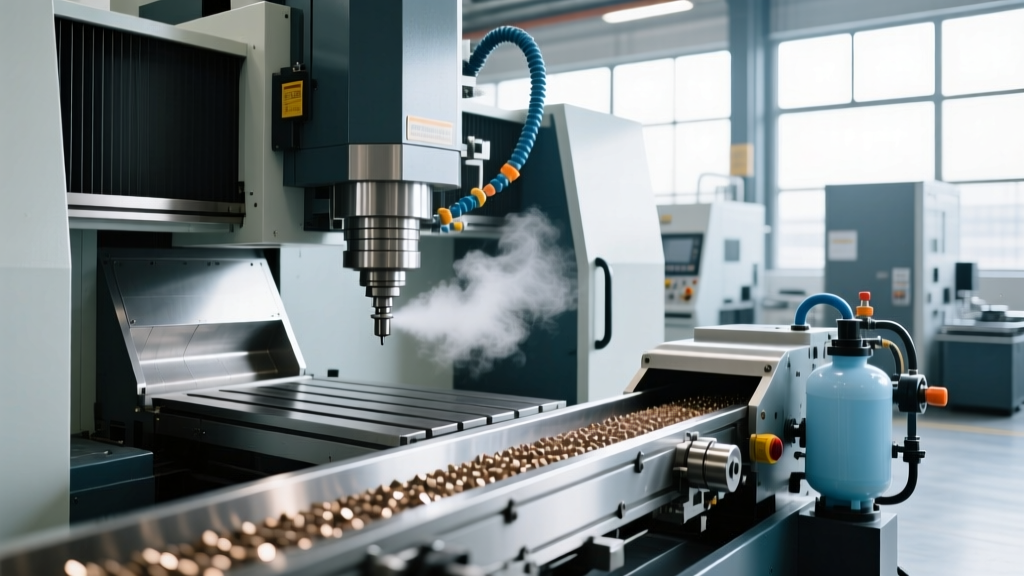
When machining ductile materials like aluminum or copper, chips refuse to break cleanly. They wrap around tooling and fall into the sump as long, continuous strands. If a standard hinge belt conveyor is used, these strands wedge between the belt hinges and the conveyor housing. The drive motor continues to pull against this mechanical lock until the thermal overload trips or the motor windings melt. Replacing a 3-phase conveyor drive motor costs between $1,200 and $2,800, plus labor.
For aluminum-heavy shops, auger conveyors are mandatory. However, augers require specific maintenance: the limit switches that detect torque overloads must be tested monthly. A common failure occurs when coolant sludge coats the limit switch plunger, preventing it from tripping during a jam, which defeats the entire safety mechanism. Clean limit switch housings with a solvent-soaked rag every 30 days to ensure mechanical actuation.
Mist Collection and Air Quality Service Schedules
High-pressure coolant systems (700 to 1,000+ PSI) atomize metalworking fluids into sub-micron aerosols. Without proper extraction, this mist settles on machine electronics, causing premature PCB failure, and creates severe respiratory hazards for operators. According to OSHA's Metalworking Fluids guidelines, prolonged exposure to untreated mist can lead to occupational asthma and hypersensitivity pneumonitis, making extraction maintenance a critical safety compliance issue.
A standard 40-taper VMC requires a mist collector rated for 800 to 1,000 CFM. High-speed 5-axis machines with full enclosures demand 1,200 to 1,500 CFM to maintain negative pressure and prevent mist from escaping when doors open.
Filtration Media Replacement Intervals
- Pre-Filters (Mesh/Poly): Capture large droplets. Wash with degreaser monthly; replace every 6 months. Cost: $40–$80.
- HEPA Cartridges (99.97% at 0.3 microns): The primary workhorse. Monitor via magnehelic gauge. Replace when pressure drop exceeds 1.5 inches of water column (typically every 9 to 14 months in a two-shift operation). Cost: $250–$450 per cartridge.
- Electrostatic Precipitators: Require no filter replacements but demand rigorous cleaning. The ionizer wires and collector plates must be removed and soaked in an ultrasonic cleaner with an alkaline solution every 3 months. Failure to clean plates results in ozone generation and arcing.
Coolant Separation and Tramp Oil Management
Dust collection isn't just about airborne particulates; it encompasses the management of solid and liquid waste in the sump. Tramp oil (hydraulic and way lube leaks) floats to the top of the coolant sump, creating an anaerobic environment where bacteria thrive. This bacteria consumes the coolant's biocides, drops the pH, and produces hydrogen sulfide gas (the "rotten egg" smell). The NIOSH criteria for metalworking fluid exposure heavily emphasizes controlling biological growth in sumps to prevent severe dermatitis and respiratory illness.
Skimmer Maintenance Specifics
Most CNC machines are equipped with belt skimmers or disk skimmers to remove tramp oil. These are high-wear components that frequently fail due to neglect.
- Belt Skimmers: The polyurethane or stainless steel belt attracts oil. Over time, synthetic coolants degrade polyurethane belts, causing them to snap. Inspect belt edges for fraying weekly. Replace polyurethane belts every 18 months ($80–$120). Ensure the wiper blades are adjusted to maintain light, even pressure on the belt; excessive pressure accelerates wear and stalls the drive motor.
- Disk Skimmers: Better for heavy tramp oil loads. The ceramic or stainless disks must be wiped down with a Scotch-Brite pad monthly to remove hardened coolant scale that prevents oil adhesion. Check the gearbox oil level in the skimmer drive head annually.
- Coolant Aeration: To prevent anaerobic bacteria, sump aerators must run 24/7. Check the air pump diaphragm annually. If the bubbling in the sump slows or stops, the diaphragm is likely torn. Replacement kits cost under $50 and take 15 minutes to install.
Recommended Service Calendar for Evacuation Systems
Integrate the following checklist into your shop's CMMS (Computerized Maintenance Management System) to ensure zero unplanned downtime related to chip and dust management.
Daily (Operator Level)
- Verify chip conveyor is running and discharging chips freely into the dumpster.
- Check mist collector magnehelic gauge; ensure needle is in the green zone.
- Inspect way covers for chip accumulation; use an air gun to clear bellows if necessary.
Weekly (Maintenance Technician)
- Clean mist collector pre-filters with an alkaline degreaser.
- Inspect conveyor belt tension (hinge belts) or auger flighting for wrapped chips.
- Empty the tramp oil collection bucket from the skimmer system.
- Check coolant concentration and pH; adjust if bacteria presence is detected.
Monthly (Lead Technician)
- Test conveyor torque-limit switches manually to ensure motor cut-off functionality.
- Wipe down electrostatic precipitator plates or inspect HEPA filters for structural integrity.
- Inspect skimmer wiper blades and replace if hardened or torn.
- Flush the mist collector drain line to prevent sludge blockages.
Bi-Annual (Deep Service)
- Drop the main coolant sump, shovel out settled fines (sludge), and power-wash the tank interior. Fine cast iron and aluminum dust bypass conveyor filters and settle in dead zones, eventually clogging the main coolant pump impeller.
- Replace HEPA filter cartridges regardless of gauge reading if they have been in service for 12+ months, as moisture can compromise the glass fiber matrix.
- Inspect and lubricate conveyor drive chains and sprockets; measure for chain stretch and replace if elongation exceeds 2%.
By treating your extraction and evacuation systems as critical machine components rather than passive accessories, you protect your capital equipment, ensure regulatory compliance, and maintain a safe, high-output manufacturing environment.