CNC Spring Coiling Machine Dust Collection Maintenance Guide
Optimize CNC spring coiling machine uptime with precise dust collection, oil mist, and swarf management maintenance schedules and filtration specs.
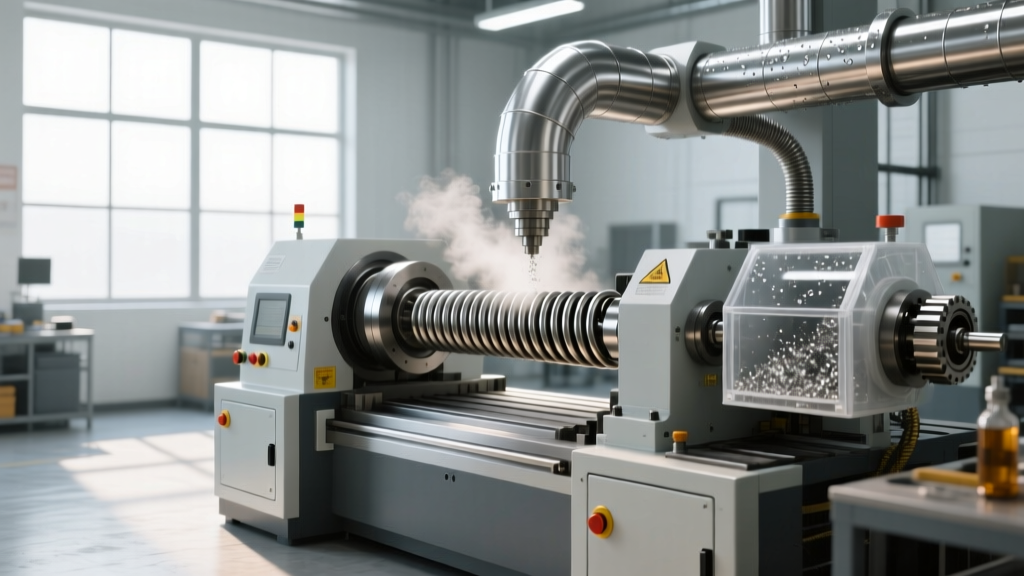
Unlike CNC milling centers that produce heavy, wet metal chips, CNC spring coiling machines generate a fundamentally different contaminant profile. High-speed wire forming sheds microscopic iron oxide scale, zinc or phosphate coating dust, heavy cut-off slugs, and aerosolized forming oil. If left unmanaged, this specific combination of abrasive micro-dust and sticky oil mist rapidly degrades servo motors, fouls linear encoders, and creates severe slip hazards on the shop floor.
CRITICAL DISTINCTION: Standard wet-coolant chip conveyors are entirely ineffective for spring coilers. Coiling extraction requires a hybrid approach: high-velocity pneumatic capture for dry scale and slugs, paired with coalescing filtration for oil mist. Applying standard milling chip management protocols to a Wafios or Omco coiler will result in immediate ductwork plugging and auger motor burnout.The Three Contaminant Profiles in Spring Coiling
Designing and maintaining an extraction system requires understanding the exact physical properties of the waste generated by the wire straightening, forming, and cutting processes.
- Wire Scale and Coating Dust: As high-carbon steel or music wire passes through the straightening rollers at speeds exceeding 100 meters per minute, friction strips away iron oxide and phosphate coatings. This creates an abrasive, talc-like metallic dust that easily bypasses standard MERV 8 HVAC filters and settles inside electrical cabinets, causing VFD (Variable Frequency Drive) short circuits.
- Cut-Off Slugs (Swarf): When the coiler's shear or pinch-cut tool severs the wire, it drops heavy metal slugs. For a machine running 8mm wire, these slugs can weigh up to 15 grams each. If extraction duct velocity drops below 4,000 FPM (feet per minute), these slugs will settle in horizontal duct runs, eventually blocking airflow entirely.
- Aerosolized Forming Lubricants: High-tension coiling requires heavy boundary lubrication. The friction at the forming tools atomizes this oil into a sub-micron mist. According to the NIOSH Metalworking Fluids Guidelines, prolonged exposure to aerosolized metalworking oils poses severe respiratory risks, necessitating source-capture coalescing filters rather than ambient room filtration.
Extraction System Sizing and CFM Requirements
Undersized extraction is the leading cause of linear scale fouling on CNC coilers. The system must generate enough negative pressure at the tooling point to capture the slug instantly upon shearing, while simultaneously pulling the oil mist away from the operator's breathing zone. Use the following matrix to verify your current setup against industry baselines.
| Wire Capacity | Machine Class Example | Required CFM | Duct Velocity Target | Primary Filter Media |
|---|---|---|---|---|
| 0.5mm - 2.0mm | Wafios FUL 2 / Omco CNC | 600 - 800 CFM | 3,500 FPM | Cellulose/Poly (MERV 15) |
| 2.0mm - 6.0mm | Wafios FUL 6 / Itaya | 1,200 - 1,500 CFM | 4,000 FPM | Coalescing + HEPA |
| 6.0mm - 12.0mm+ | Heavy-Duty Suspension Spring Coilers | 2,000+ CFM | 4,500 FPM | Cyclone Pre-filter + Coalescing |
Preventative Maintenance Schedule for Coiler Extraction
Maintenance intervals for spring coiler dust collection must account for the dual threat of dry abrasive dust and liquid oil. Neglecting the pulse-jet cleaning system or the coalescing drain valves will lead to catastrophic filter blinding within weeks.
Daily Operations (Operator Level)
- Slug Bin Evacuation: Empty the primary cyclone or drop-out bin. Cut-off slugs from 6mm+ wire will fill a 5-gallon bin in a single shift. If the bin overflows, slugs will be pulled into the main filter media, tearing the cellulose pleats.
- Coalescer Drain Valve Check: Manually purge the oil collection trough beneath the mist collector. Verify that the extracted forming oil is flowing into the waste drum and not backing up into the filter housing.
- Tooling Point Inspection: Ensure the flexible extraction arm or fixed hood is positioned within 4 inches of the cut-off tool. Moving the hood just 6 inches further away reduces capture efficiency by over 50%.
Weekly Maintenance (Technician Level)
- Ductwork Velocity Audit: Use a pitot tube or anemometer at the furthest capture point to verify airflow. If velocity drops below 3,500 FPM, heavy slugs will begin settling in the horizontal duct runs.
- Pulse-Jet Solenoid Test: Listen to the pulse-jet cleaning cycle. A missing 'thump' indicates a failed solenoid valve or a ruptured diaphragm, which will allow dust to cake onto the filter cartridges, permanently reducing CFM.
- Wiper Seal Inspection: Check the wiper seals on the X, Y, and Z axis linear guides. Wire scale is highly abrasive and will infiltrate degraded seals, scoring the hardened steel rails within days.
Bi-Annual and Annual Service
- Filter Media Replacement: Replace coalescing filter elements every 2,000 operating hours, or when the differential pressure gauge reads 12+ inches of water column (w.c.). Cellulose dry-dust filters should be swapped annually, regardless of pressure readings, as oil mist crossover will eventually blind the microscopic pores.
- Blower Motor Amp Draw: Measure the amp draw on the main extraction blower motor. A dropping amp draw indicates the filters are blinded and the motor is starving for air; a spiking amp draw indicates a mechanical bind in the bearings or auger system.
Protecting Linear Scales and Servo Electronics
The most expensive casualties of poor dust management on a CNC spring coiling machine are the glass linear scales (such as the Heidenhain LC 413 series) and the absolute servo encoders. Metallic dust is conductive; when it mixes with oil mist, it forms a conductive sludge that bridges the microscopic contacts inside the encoder read-heads, causing immediate drive faults and axis runaway events.
"Upgrading to sealed, inductive linear encoders (like the Heidenhain LI series) can mitigate dust ingress, but the fundamental solution is maintaining positive air pressure inside the electrical cabinets. Ensure the cabinet cooling fans are equipped with MERV 12 intake filters and that the door gaskets are fully intact to prevent conductive wire dust from being pulled into the VFDs."
Furthermore, operators must be strictly prohibited from using high-pressure compressed air to blow down the machine bed. This practice forces abrasive phosphate dust directly past the way-cover seals and into the ball screw nut. Instead, use industrial vacuum systems with static-dissipative hoses to remove dry scale from the tooling area.
Troubleshooting Extraction and Contaminant Failures
When the extraction system fails to manage the coiling environment, use this diagnostic matrix to identify the root cause before replacing expensive components.
| Symptom | Root Cause Analysis | Corrective Action |
|---|---|---|
| Slugs accumulating on the machine bed | Duct velocity below 4,000 FPM; horizontal duct sag creating a low-point trap. | Re-pitch horizontal ducts to a minimum 1/4 inch per foot slope toward the drop-out bin; increase blower RPM. |
| Oil mist escaping into the shop air | Coalescing filter media blinded by dry wire scale; pre-filter bypass. | Install a cyclone pre-separator to strip heavy dry scale before the air reaches the coalescing mist filters. |
| Frequent VFD Overheat / Fault Codes | Conductive metal dust infiltrating the electrical cabinet due to negative pressure. | Seal cabinet penetrations; install a closed-loop cabinet AC unit instead of forced-air fan ventilation. |
| Auger motor tripping breaker | Long, stringy wire tails (from dull cut-off tools) wrapping around the extraction auger flighting. | Sharpen or replace pinch-cut dies; install a shear-pin on the auger drive to prevent motor burnout during jams. |
Cost-Benefit Analysis: Proactive Management vs. Reactive Repair
Facility managers often defer extraction maintenance to minimize short-term consumable costs. However, the financial impact of abrasive wire scale and oil mist on CNC spring coiler components heavily favors proactive filtration maintenance. According to OSHA guidelines on metal dust hazards, allowing fine metallic dust to accumulate also introduces severe combustible dust explosion risks, carrying massive regulatory fines.
Consider the economics of a standard 5-axis CNC camless spring coiler running music wire:
- Reactive Cost: Replacing a single fouled absolute servo motor encoder costs between $1,800 and $3,200 in parts, plus 4 hours of machine downtime ($600+ in lost production). Replacing a scored linear scale costs upwards of $4,500.
- Proactive Cost: A complete set of high-grade way-cover wiper seals costs approximately $120. A replacement set of coalescing filter cartridges costs $450. Scheduled cabinet filter changes cost less than $50 annually.
By strictly adhering to the daily slug evacuation, weekly velocity audits, and bi-annual filter swaps outlined above, a spring manufacturing facility will easily achieve a 10:1 ROI on extraction maintenance consumables, while maintaining the sub-micron positioning accuracy required for high-precision automotive and aerospace spring production.