CNC Screw Machine Maintenance for Aluminum Operations
Optimize your CNC screw machine maintenance schedule for aluminum. Learn daily, weekly, and monthly protocols to prevent downtime and ensure precision.
The Unique Maintenance Demands of Aluminum on CNC Screw Machines
Swiss-type lathes, universally recognized in high-volume production as CNC screw machines, are the backbone of manufacturing tight-tolerance aluminum components for aerospace, medical, and automotive sectors. Machines like the Tsugami B0125-III or Citizen L12-XII excel at holding tolerances within ±0.005mm. However, machining aluminum alloys introduces severe maintenance variables that do not exist when cutting steel or brass. Aluminum generates high thermal loads, produces aggressive chip morphologies, and rapidly degrades standard metalworking fluids (MWFs) if not managed correctly.
A standard maintenance schedule designed for free-machining brass or 12L14 steel will fail catastrophically when applied to a shop running 6061-T6 or 7075-T6 aluminum. The following protocols outline a specialized, data-driven maintenance framework designed specifically for CNC screw machines dedicated to aluminum operations.
Alloy-Specific Warning: 6061-T6 vs. 7075-T66061-T6 generates long, stringy, ductile chips that wrap around guide bushings and spindle noses, causing mechanical seizure. Conversely, 7075-T6 produces shorter, brittle chips but contains zinc and copper. These alloying elements act as mild abrasives, accelerating wear on way covers and guide bushing IDs. Your maintenance schedule must adapt to the specific alloy profile running on the shop floor.
Daily Protocols: Chip Evacuation and Guide Bushing Integrity
The guide bushing is the defining component of a CNC screw machine. In aluminum operations, the clearance between the bar stock outer diameter (OD) and the bushing inner diameter (ID) is typically set between 0.005mm and 0.010mm. Aluminum dust and micro-chips easily infiltrate this gap, mixing with way oil to create a lapping compound that scores the carbide bushing.
Daily Action Items (End of Shift)
- Guide Bushing Purge: Remove the guide bushing and clean the ID with a non-chlorinated solvent. Inspect for axial scoring. A scored bushing will cause bar stock vibration (chatter), ruining surface finishes on medical bone screws or aerospace fittings.
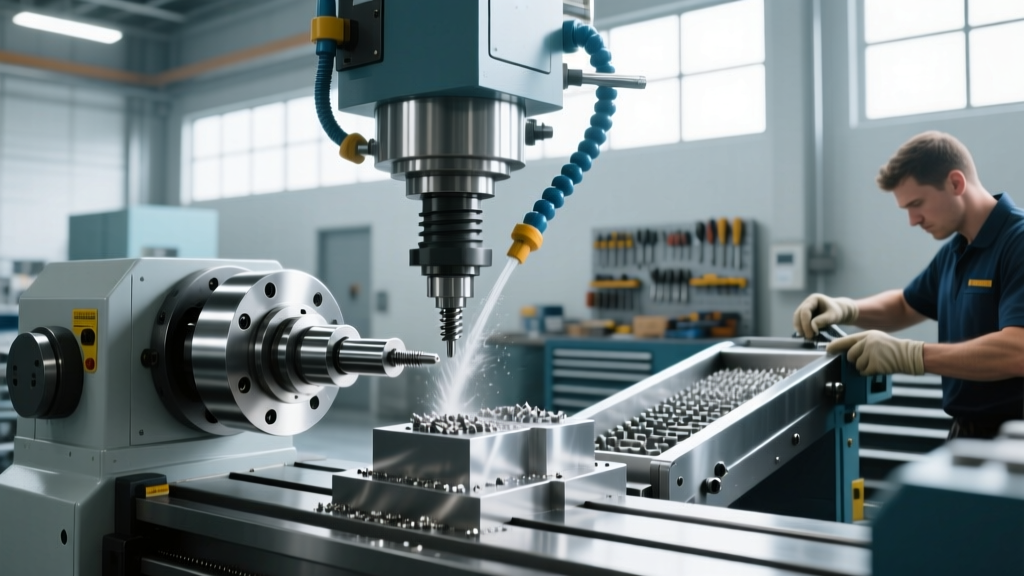
- Chip Conveyor Flushing: Aluminum chips are lightweight and tend to float or clump in coolant tanks rather than sinking. Manually clear the conveyor hinges of chip dams to prevent motor burnout.
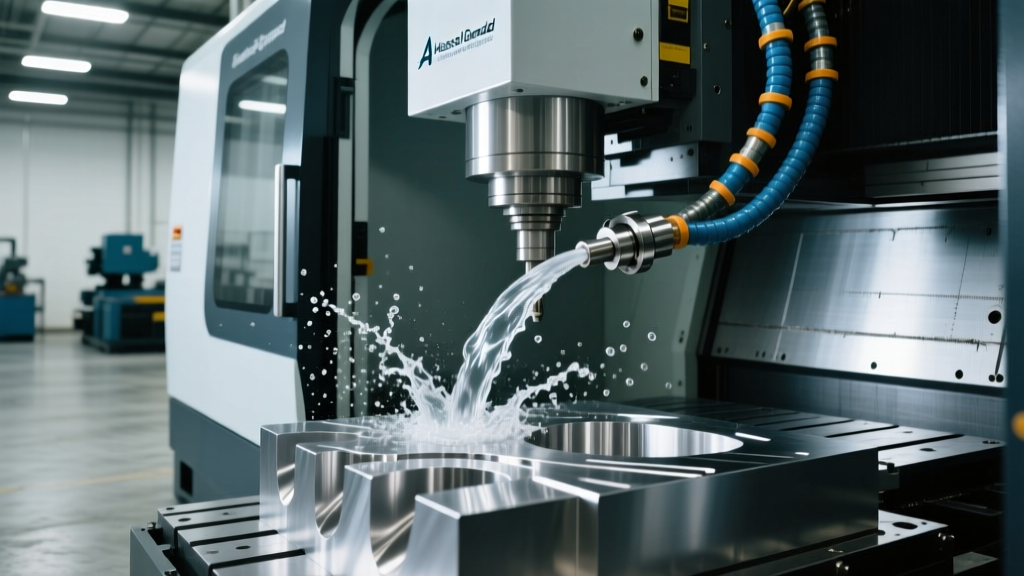
- High-Pressure Coolant (HPC) Nozzle Inspection: Aluminum requires HPC systems (operating at 1,500 to 2,000 PSI) to break chips at the cutting edge. Verify that all articulating coolant nozzles are clear of aluminum fines using a 0.5mm pin gauge.
- Spindle Liner Wipe-Down: Clean the main spindle liner to prevent aluminum dust from migrating into the spindle bearings, which can cause thermal expansion and premature bearing failure.
Weekly Overhauls: Coolant Chemistry and Filtration
Aluminum is highly reactive. If your metalworking fluid chemistry drifts, the aluminum parts will oxidize (staining white) or the machine's yellow metals (brass fittings, bronze bushings) will corrode. According to guidelines on metalworking fluid management from the Occupational Safety and Health Administration (OSHA), maintaining strict MWF parameters is critical for both machine longevity and operator safety.
Weekly Fluid Management Matrix
| Parameter | Target Range | Failure Consequence |
|---|---|---|
| Concentration | 8.0% - 10.0% | Built-up edge (BUE) on tools; poor surface finish. |
| pH Level | 8.5 - 9.2 | Below 8.0: Part staining. Above 9.5: Yellow metal corrosion. |
| Tramp Oil | < 2.0% by volume | Fluid spoilage, anaerobic bacteria growth, foul odors. |
Filtration Upgrades: Standard 50-micron paper band filters are insufficient for aluminum. Aluminum fines (often <20 microns) bypass these filters and recirculate, embedding into the guide bushing. Shops running dedicated aluminum CNC screw machines must install centrifugal separators or vacuum filtration systems capable of capturing particles down to 10 microns. Budget approximately $12,000 to $18,000 for a retrofitted vacuum filtration unit on a standard Swiss-type lathe.
Monthly Checks: Way Lubrication and Spindle Tapers
The intersection of aluminum dust and way lubrication is a primary failure point in Swiss-type machining. Unlike steel, which produces heavy chips that fall away, aluminum produces fine dust that becomes airborne and settles on exposed machine surfaces.
Way Lube System Verification
Most CNC screw machines utilize an ISO VG 68 way lubricant. Monthly maintenance requires checking the lube pump pressure (typically 1.5 to 2.5 MPa) and verifying the flow at the distribution metering units. If aluminum dust has infiltrated the lube lines, it will block the metering units, leading to dry way covers and rapid degradation of the linear guide rails. Flush the lube reservoir annually with a dedicated system cleaner to remove accumulated aluminum sludge.
Spindle and Tool Holder Taper Maintenance
Aluminum dust frequently infiltrates the tool spindle tapers (e.g., ER16 or ER20 collet chucks). Once a week, operators should clean the tapers with isopropyl alcohol, but monthly, maintenance technicians must check the drawbar retention force. For a standard ER20 spindle, retention force should be verified at 12 kN to 15 kN using a calibrated drawbar force gauge. A drop in retention force combined with aluminum dust in the taper will cause tool pull-out during heavy roughing operations.
Pro Tip: Collet Life ExpectancyWhen machining abrasive 7075-T6 aluminum, standard ER collets wear out 30% faster than when cutting steel. Replace main spindle collets every 1,500 operating hours (roughly $85 to $140 per collet) to maintain TIR (Total Indicator Runout) below 0.003mm.
Comprehensive Maintenance Schedule & Cost Estimates
The following matrix provides a baseline for budgeting and scheduling maintenance on a single CNC screw machine operating two shifts (approx. 4,000 hours/year) exclusively on aluminum alloys.
| Interval | Task | Est. Downtime | Est. Cost (Parts/Labor) |
|---|---|---|---|
| Daily | Guide bushing purge & HPC nozzle check | 15 mins | $0 (Operator labor) |
| Weekly | Coolant pH/Concentration check & tramp skimming | 30 mins | $25 (Chemistry additives) |
| Monthly | Way lube flow verification & taper cleaning | 1 hour | $45 (Lube top-off) |
| Bi-Annual | Full coolant system flush & filter media replacement | 4 hours | $850 - $1,200 |
| Annual | Spindle runout check & way cover replacement | 8 hours | $1,500 - $2,800 |
Troubleshooting Aluminum-Specific Failures
Even with rigorous maintenance, aluminum machining presents unique failure modes. Use this diagnostic framework to identify and resolve common CNC screw machine issues.
Symptom: Bar Stock Seizure in the Guide Bushing
- Root Cause: Thermal expansion of the aluminum bar combined with chip packing. Aluminum expands significantly under cutting heat. If the bushing clearance is too tight, or if stringy 6061 chips wrap around the bar, the stock seizes.
- Corrective Action: Increase guide bushing clearance to 0.012mm. Ensure the peeling tool (if equipped) is perfectly on-center to prevent creating a tapered bar OD. Verify that the high-pressure coolant is actively directed at the peeling tool cutting edge to blow chips away from the bushing entrance.
Symptom: White Powdery Staining on Finished Parts
- Root Cause: Coolant pH has dropped below 8.0, or the parts are not being rinsed properly post-machining, allowing residual coolant to oxidize the aluminum surface.
- Corrective Action: Immediately test the MWF with a digital pH meter. Add a pH-raising agent (typically an amine-based additive) to bring the fluid back to 8.8. Implement a post-op DI (deionized) water rinse cycle for all finished aluminum components.
Symptom: Accelerated Tool Wear on Drilling Operations
- Root Cause: Aluminum chips are welding to the cutting edge of the drill (Built-Up Edge), which eventually breaks off and takes the tool coating with it. This is common when using standard TiN coated tools on sticky alloys like 6061.
- Corrective Action: Switch to uncoated, highly polished carbide drills, or tools with a specialized ZrN (Zirconium Nitride) or DLC (Diamond-Like Carbon) coating. DLC coatings reduce the coefficient of friction, preventing aluminum adhesion and extending tool life by up to 300%.
For a deeper understanding of Swiss-type kinematics and how tool geometry interacts with the guide bushing, refer to the foundational guides on Modern Machine Shop's Swiss-Type Machining Basics. Mastering the intersection of machine maintenance and material science is the only way to achieve true lights-out manufacturing in aluminum CNC screw machine operations.