Fixturing Automated CNC Machines: Aerospace & EV Case Studies
Explore real-world case studies on fixturing automated CNC machines, covering zero-point systems, vacuum chucks, and EV battery tray manufacturing.
The Economics of Automated Workholding in 2026
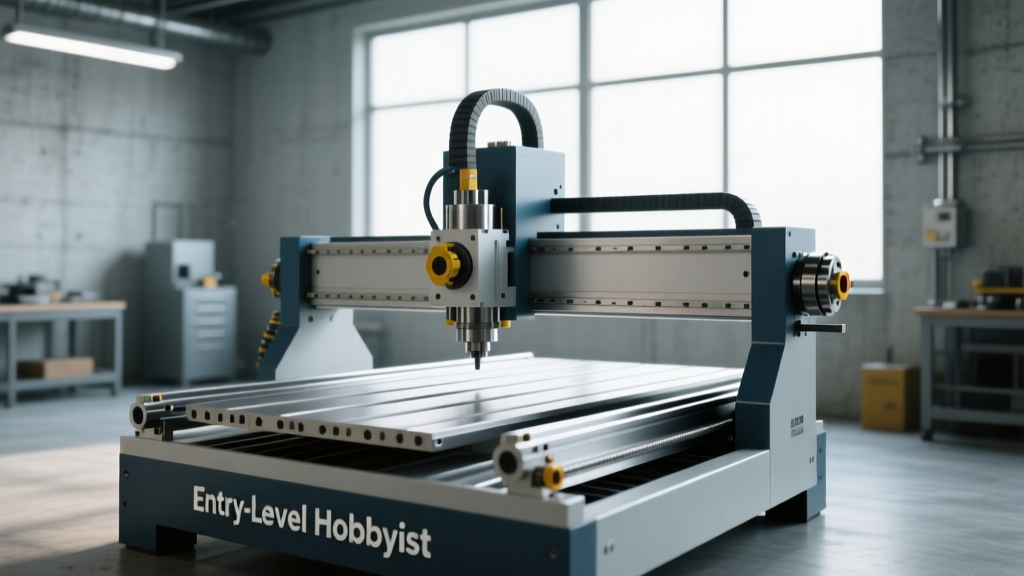
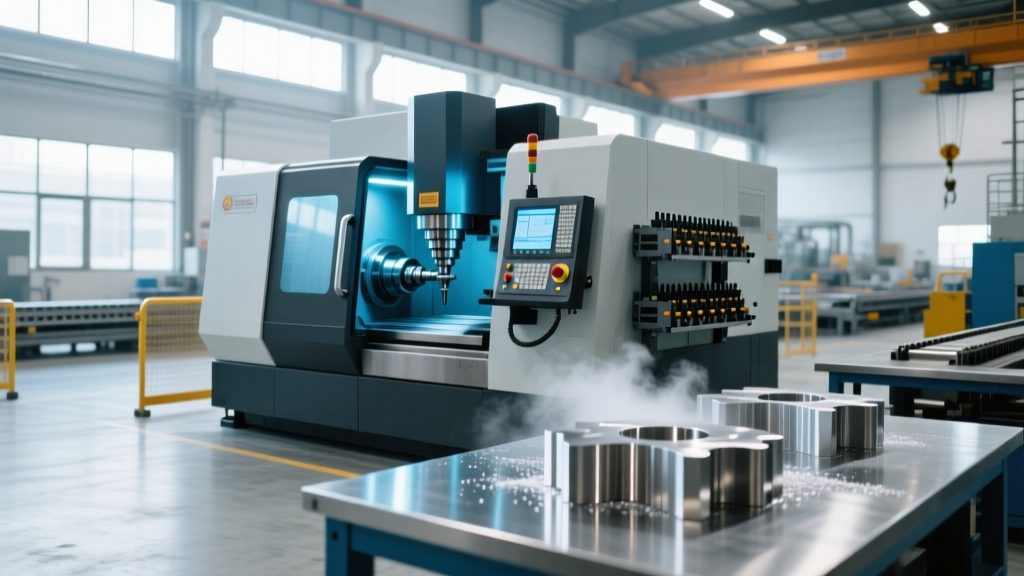
Transitioning to lights-out manufacturing requires more than just robotic part loaders and high-capacity tool magazines. The true bottleneck in unattended production is workholding. When shops integrate advanced fixturing solutions into their automated cnc machines, they eliminate the 30-to-45-minute manual setup times that destroy spindle utilization rates. In 2026, the industry standard for high-mix, low-volume automation relies heavily on zero-point clamping and modular grid plates, while high-volume environments demand specialized hydraulic and vacuum systems.
This analysis breaks down two distinct industrial applications—aerospace titanium blisk milling and electric vehicle (EV) battery enclosure machining—to demonstrate how specific workholding methodologies dictate the success or failure of automated production cells.
Key Metric: Upgrading from manual Kurt-style vises to pneumatic zero-point pallet systems typically reduces non-cut time by 88%, pushing Overall Equipment Effectiveness (OEE) from 45% to over 75% in automated cnc machines.Case Study 1: Aerospace Blisk Milling via Cryogenic Vacuum Fixturing
Machining integrally bladed rotors (blisks) from Ti-6Al-4V titanium alloy presents severe workholding challenges. Blisks feature thin, airfoil-shaped blades that are highly susceptible to chatter and deflection under the cutting forces of 5-axis simultaneous milling. Traditional mechanical clamping introduces stress concentrations that distort the part once the fixture is released.
The Fixturing Solution
For a Tier 1 aerospace supplier running automated cnc machines (specifically, Hermle C 52 U MT 5-axis machining centers), the engineering team implemented a hybrid fixturing approach: a custom porous aluminum vacuum chuck paired with localized cryogenic cooling.
- Base Fixturing: A machined 6061-T6 aluminum plate with a porous sintered metal surface connected to a multi-stage Venturi vacuum generator.
- Clamping Force: The system generates a uniform holding pressure of -0.85 bar across the entire bottom contour of the blisk hub, providing approximately 12,000 N of distributed hold-down force without localized stress points.
- Automation Integration: The vacuum generator is integrated directly into the machine's M-code controller. When the robot loads the raw forging onto the puck, an M-code triggers the vacuum, and a proximity sensor verifies the -0.8 bar threshold before permitting the spindle to start.
Thermal Management and Edge Cases
Titanium's poor thermal conductivity causes heat to concentrate at the cutting edge, which can transfer into the fixture and cause thermal expansion of the aluminum base plate. To maintain the required 0.015mm profile tolerance, the shop integrated localized liquid nitrogen (LN2) delivery through the spindle. This keeps the workpiece and the vacuum fixture at a stable 18°C, preventing the 22-micron Z-axis lift that typically occurs when aluminum fixtures absorb cutting heat.
Case Study 2: EV Battery Tray Machining via Modular Grid Plates
Electric vehicle battery enclosures are massive, thin-walled aluminum extrusions (often 2 meters long) that require hundreds of precisely located mounting holes and sealing surfaces. Machining these on automated cnc machines requires fixturing that supports the part without interfering with the toolpath, while accommodating slight variations in the extrusion's straightness.
Zero-Point Clamping and Tombstone Arrays
Instead of custom hard fixtures, modern EV powertrain facilities utilize modular zero-point clamping systems mounted on horizontal machining center (HMC) tombstones. A leading European EV manufacturer deployed the Schunk Vero-S NSA plus system across their Makino a142nx HMCs.
- Grid Configuration: The tombstones are fitted with a 50mm pitch grid of zero-point receivers. This allows fixture towers to be repositioned in minutes to accommodate different battery module lengths (e.g., switching from a 75 kWh to a 100 kWh tray).
- Clamping Mechanics: Each clamping puck delivers 15,000 N of clamping force and up to 40,000 N of hold-down force. For a 120kg battery tray, the system utilizes 16 pucks, generating a combined hold-down force of 640 kN—more than enough to counteract the 4,500 N lateral cutting forces generated during high-feed face milling.
- Repeatability: The pneumatic actuation ensures a repeatability of < 0.005 mm. This is critical for maintaining the flatness of the thermal interface material (TIM) sealing surfaces, which must be held within 0.05mm to prevent coolant leaks in the final vehicle assembly.
Workholding Methodology Comparison Matrix
Selecting the correct fixturing for automated cnc machines requires balancing initial capital expenditure against cycle time reduction and flexibility. The table below contrasts the primary workholding methods used in modern automated cells.
| Fixturing Method | Approx. Cost (2026) | Setup Time | Repeatability | Best Application |
|---|---|---|---|---|
| Manual Precision Vise | $800 - $1,500 | 15 - 30 mins | 0.020 mm | Prototyping, manual load cells |
| Hydraulic Tombstone | $12,000 - $25,000 | 45+ mins (initial) | 0.010 mm | High-volume, dedicated parts |
| Zero-Point Pallet System | $4,500 - $8,500 | 1 - 2 mins | 0.005 mm | High-mix, automated cnc machines |
| Porous Vacuum Chuck | $3,000 - $7,000 | 5 - 10 mins | 0.015 mm | Thin-walled aerospace skins |
| Electro-Permanent Magnetic | $6,000 - $12,000 | 2 - 5 mins | 0.010 mm | Heavy steel die/mold bases |
Failure Mode Analysis: Where Automated Fixturing Fails
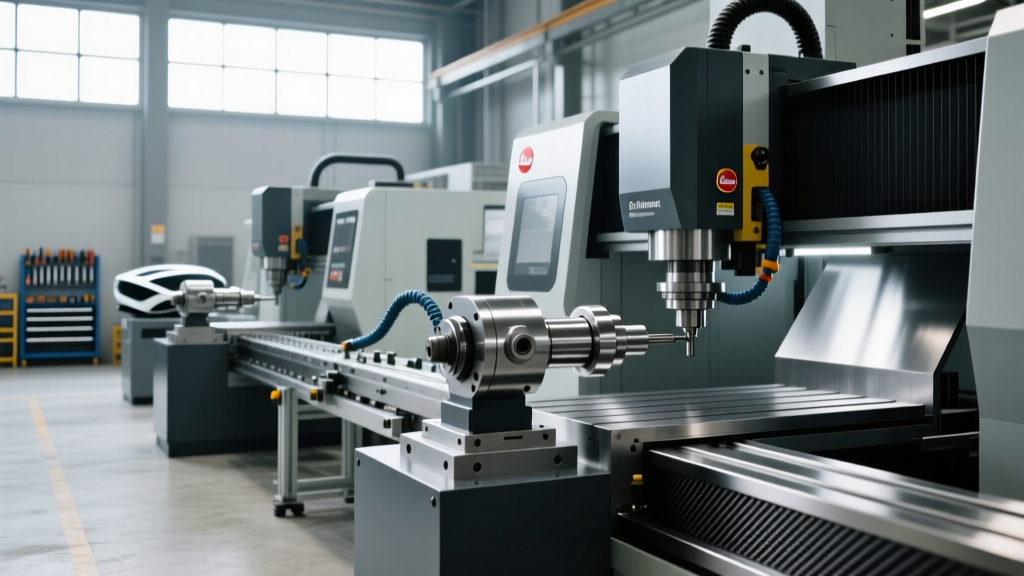
Implementing automation without accounting for the physical limitations of workholding leads to catastrophic crashes and scrapped parts. Based on field data from automated cnc machines, here are the most common, non-obvious failure modes.
The Swarf Interference Problem in Zero-Point Systems
Zero-point clamping relies on the precise mating of a clamping puck into a receiver cone. In dry machining or high-pressure coolant environments, fine swarf (particularly stringy aluminum or gummy titanium chips) can accumulate inside the receiver cone. A layer of chips just 0.05mm thick on the seating surface will cause a Z-axis lift, resulting in a scrapped part.
Solution: Automated systems must integrate an air-blast cleaning cycle (M-code triggered) that fires 90 PSI compressed air through the receiver cone for exactly 1.5 seconds before the pallet is seated. Additionally, specifying receivers with integrated scraper rings prevents chip ingress during the clamping stroke.
Centrifugal Force Loss in High-Speed Turning
When automated CNC lathes operate at high RPMs, the jaws of standard hydraulic 3-jaw chucks experience outward centrifugal force. At 6,000 RPM, a standard chuck can lose up to 40% of its static clamping force, risking part ejection.
Solution: For automated turning cells running above 4,500 RPM, shops must specify counter-centrifugal chucks (such as those from SMW-Autoblok). These chucks utilize internal counterweights that move inward as the chuck spins, mechanically compensating for the centrifugal force and maintaining a constant clamping pressure on the workpiece.
During rapid traverse moves (e.g., G00 at 60 m/min), the sudden deceleration of a heavy pallet on an HMC can cause a momentary spike or drop in the hydraulic lines powering the fixture clamps. If the accumulator is undersized, this transient pressure drop can cause the clamps to momentarily release. Always size hydraulic accumulators to maintain a minimum of 70 bar during maximum machine deceleration rates.
Decision Framework: Matching Workholding to Production Volume
To determine the optimal fixturing strategy for your automated cnc machines, apply the following volume-to-variability matrix:
- High Volume / Low Variability (e.g., Automotive Suspension Knuckles): Invest in dedicated, custom-machined hydraulic tombstones. The high initial cost ($20,000+) is amortized over hundreds of thousands of cycles, and the hydraulic actuation provides the raw clamping force needed for aggressive roughing.
- High Mix / Low Volume (e.g., Job Shop Aerospace Brackets): Deploy modular zero-point systems and standard pneumatic vises. The ability to swap a fully fixtured pallet in 45 seconds allows the spindle to remain cutting while the operator or robot prepares the next setup offline.
- Thin-Walled / High Precision (e.g., Medical Implants, Blisks): Utilize vacuum fixturing or low-melt alloy casting (Cerrobend). Mechanical clamping will induce residual stresses that cause the part to warp out of tolerance once unclamped.
Ultimately, the ROI of automated workholding is calculated not by the cost of the fixture, but by the value of the spindle hours recovered. A $6,000 zero-point system that saves 20 minutes per setup on a machine billed at $150/hour pays for itself in just 120 load cycles. In a 24/7 automated environment, that ROI is realized in less than a week.