Budgeting for Programming CNC Machine: Stainless Steel Costs
Analyze the true costs of programming a CNC machine for stainless steel. Discover budget frameworks, tooling expenses, and ROI metrics for 304/316 grades.
The Hidden Economics of Stainless Steel CNC Programming
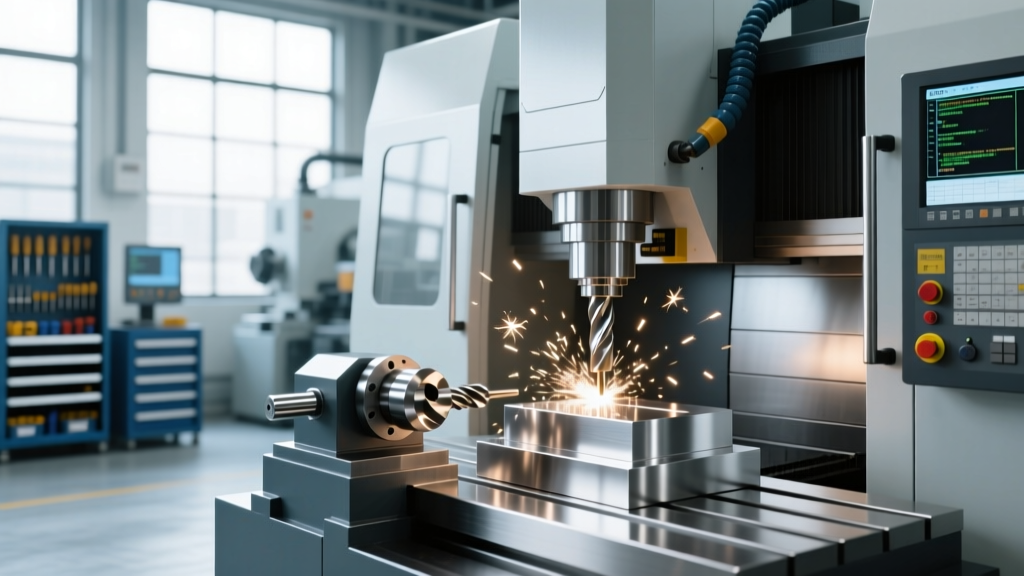
Machining ISO M materials—specifically austenitic and precipitation-hardened stainless steels—demands rigorous thermal management and precise chip evacuation. When budgeting for programming CNC machine operations on grades like 304, 316L, or 17-4 PH, machine shops must look beyond standard hourly labor rates. The true cost encompasses extended CAM verification times, advanced simulation software licenses, and the severe financial penalty of scrapped material due to toolpath inefficiencies.
Unlike 6061-T6 aluminum, where aggressive material removal rates (MRR) and forgiving toolpaths dominate, stainless steel requires a programming approach centered on constant tool engagement and heat dissipation. According to Sandvik Coromant's ISO M machining guidelines, poor chip control and thermal buildup are the primary causes of premature insert failure and workpiece rejection in stainless applications. Translating these physical requirements into G-code fundamentally alters your programming budget.
⚠️ The Work-Hardening Trap in CAM
If a CAM toolpath allows the cutter to dwell, rub, or engage with a radial depth of cut (RDOC) below the recommended threshold, austenitic grades like 304 will rapidly work-harden. Surface hardness can spike from ~200 HB to over 400 HB in a single pass. This not only destroys $150 solid carbide endmills but forces the programmer to completely rebuild the toolpath, adding 2-4 hours of unbudgeted labor to the job.
Labor Rates and the CAM Complexity Multiplier
In 2026, a senior CNC programmer with proven ISO M experience commands between $65 and $95 per hour. However, the raw hourly rate is only half the equation; the complexity multiplier is where budgets bleed.
Programming a standard 3-axis aluminum enclosure might require 1.5 hours of CAM time. A geometrically identical 316L marine valve body requires 3.5 to 4.5 hours. This 150% increase in programming time is driven by the necessity to implement dynamic milling or trochoidal toolpaths. As detailed in Mastercam's Dynamic Motion technology documentation, maintaining a constant radial engagement angle prevents the heat spikes that cause thermal cracking in carbide tools. Generating, calculating, and verifying these complex, non-linear toolpaths taxes both the CAM software's CPU engine and the programmer's screen time.
| Cost Variable | 6061-T6 Aluminum | 316L Stainless Steel | Budget Impact |
|---|---|---|---|
| Base CAM Setup & Toolpath Generation | 1.5 Hours ($120) | 3.5 Hours ($280) | +133% Labor Cost |
| Toolpath Verification & Backplotting | 0.5 Hours ($40) | 1.5 Hours ($120) | +200% Verification Time |
| Dedicated G-Code Simulation (VERICUT) | Rarely Required | Mandatory for 4/5-Axis | +$150 Amortized Cost |
| Shop Floor Proven-Out (First Article) | 0.5 Hours ($60) | 2.0 Hours ($240) | +300% Machine Tie-Up |
Budgeting for Tooling Libraries and Digital Twins
Accurate programming requires an accurate digital tool library. Stainless steel machining relies on highly specific cutter geometries to manage stringy chips and high cutting forces. Programmers must maintain libraries featuring variable helix angles (typically 35° to 45°), unequal index spacing to suppress chatter, and specialized coatings like AlTiN or TiSiN.
According to Harvey Tool's stainless steel machining guidelines, using a standard 3-flute endmill designed for aluminum on 304 stainless will result in immediate chip packing and tool failure. Therefore, shops must budget 2 to 3 hours per month ($150-$250) exclusively for CAM tool library maintenance, updating speed/feed databases, and importing 3D STEP models of specialized toolholders like hydraulic chucks or shrink-fit systems to ensure accurate collision detection.
The Scrap Multiplier: Why Simulation Software is Non-Negotiable
When programming CNC machine setups for 5-axis simultaneous milling on 17-4 PH stainless, a crash is a catastrophic financial event. 17-4 PH forgings used in aerospace or oil & gas applications frequently cost between $800 and $3,000 in raw material alone. Furthermore, a high-speed collision can damage a $45,000 spindle and misalign the machine's rotary trunnion table.
To mitigate this, advanced simulation software like CGTech VERICUT or NCSimul is mandatory. Budgeting for these platforms requires:
- Software Licensing: $12,000 to $18,000 for a perpetual license, or approximately $3,500 to $5,000 annually for subscription models.
- Integration & Training: $2,500 for initial post-processor integration and specialized training for the programming team.
- Amortized Job Cost: Add $45 to $90 per complex stainless job to cover the software's overhead and the programmer's time running the digital twin simulation.
💡 The 316L Raw Material Reality Check
In 2026, 316L bar stock hovers around $4.50 to $6.50 per pound. A standard 6-inch diameter, 10-inch long billet weighs roughly 100 lbs, representing $500+ in raw material before it hits the chuck. Unlike aluminum, you cannot simply 'take another pass' to fix a gouge caused by a CAM error. The part is scrap. This reality makes the $90 simulation surcharge a highly cost-effective insurance policy.
3-Axis vs. 5-Axis Programming Budget Matrix
The axis count drastically alters the programming budget for stainless components. Below is a comparative matrix for a mid-sized pump housing machined from 304 stainless (3-axis) versus a marine impeller machined from 17-4 PH (5-axis).
| Budget Category | 3-Axis 304 Pump Housing | 5-Axis 17-4 PH Impeller |
|---|---|---|
| Fixture Design & CAM Setup | $240 (3 hrs) | $640 (8 hrs) |
| Dynamic/Trochoidal Toolpath Generation | $320 (4 hrs) | $960 (12 hrs) |
| Post-Processor Tuning & Optimization | $0 (Standard Post) | $400 (5 hrs custom RTCP tuning) |
| Advanced Collision Simulation | $0 (Built-in CAM verify) | $180 (2 hrs VERICUT) |
| Total Programming Budget | $560 | $2,180 |
Actionable Quoting Framework for Stainless CNC Jobs
To prevent margin erosion on stainless steel contracts, estimators and shop owners must abandon flat-rate programming quotes. Implement this specific formula when quoting ISO M materials:
- Calculate Base CAM Hours: Estimate the time required if the part were made from 1018 carbon steel.
- Apply the ISO M Multiplier: Multiply the base hours by 1.6 to account for dynamic toolpath generation, reduced step-overs, and meticulous feed rate adjustments for cornering.
- Add Simulation Surcharge: If the raw material cost exceeds $250 or the job requires 4th/5-axis indexing, add a flat $125 simulation and verification fee.
- Factor in Proven-Out Time: Budget 1.5 hours of machine time at your shop's fully burdened rate for the first article run. Stainless requires the programmer to stand at the control, monitoring spindle load meters and chip color (straw-colored chips indicate correct heat dissipation; blue chips indicate excessive heat and impending tool failure).
Final Considerations on ROI
Investing heavily in the programming phase for stainless steel yields compounding returns on the shop floor. A meticulously programmed 17-4 PH toolpath utilizing constant engagement strategies will extend a $180 roughing endmill's life from 45 minutes to over 4 hours. By shifting the budget from reactive tool replacement and scrap disposal toward proactive CAM engineering and simulation, machine shops can secure predictable, high-margin outcomes in the demanding stainless steel market.