Aerospace CNC Machining: Coolant & Enclosure Troubleshooting
Troubleshoot high-pressure coolant and enclosure failures in aerospace CNC machining. Fix cavitation, way cover tears, and thermal drift.
Diagnosing Containment and Delivery Failures in Aerospace CNC Machining
Aerospace CNC machining demands extreme thermal and mechanical stability. When milling Ti-6Al-4V titanium or Inconel 718, standard 300 PSI coolant systems and basic sheet metal enclosures fail catastrophically. Modern 5-axis machining centers require 1,000 to 1,500 PSI through-tool coolant delivery and hermetically sealed enclosures to manage stringy chips, abrasive dust, and immense cutting heat. When these systems degrade, you experience Z-axis thermal growth, premature spindle bearing failure, and way cover destruction. This guide provides actionable troubleshooting protocols for high-pressure coolant pumps, enclosure seals, and thermal chillers specific to aerospace manufacturing environments.
CRITICAL SAFETY WARNING: Before troubleshooting high-pressure coolant lines (1,000+ PSI), always lock out the pump motor and bleed the accumulator pressure. A pinhole leak at 1,500 PSI can cause severe hydraulic injection injuries. Never use your hands to check for leaks; use a piece of cardboard.High-Pressure Coolant Pump Cavitation and Pressure Drops
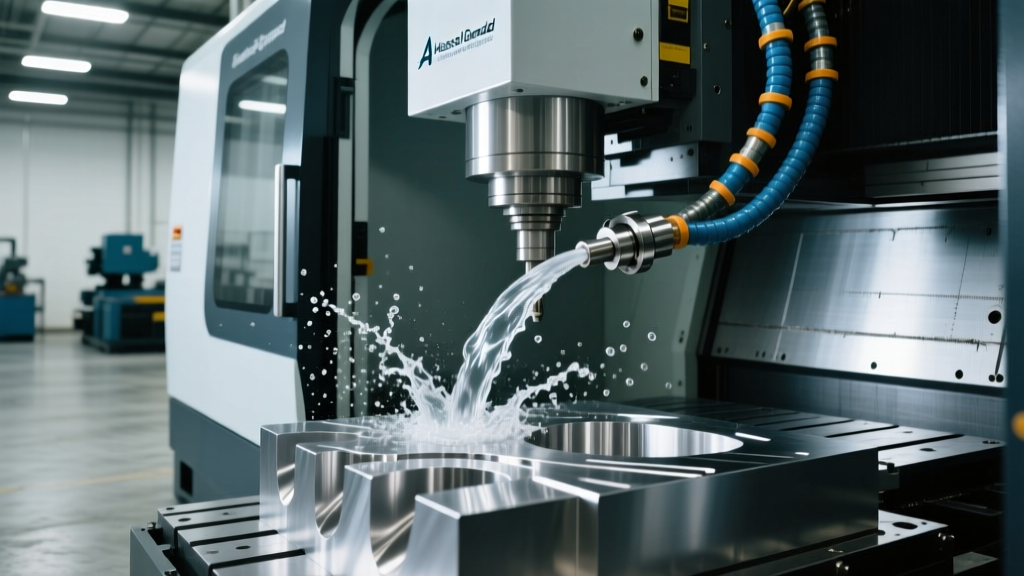
A common failure in aerospace CNC machining is a sudden drop in through-tool coolant pressure during heavy roughing passes. If your MP Systems or ChillJet unit drops from 1,000 PSI to 600 PSI under load, the root cause is almost always pump cavitation or filter bypass.
Symptom: Pressure Fluctuation and Pump Whine
Cavitation occurs when the pump suction side cannot draw enough fluid, creating vapor bubbles that collapse violently inside the pump chamber. This sounds like gravel passing through the pump housing.
- Cause 1: Clogged Suction Strainer. Aerospace synthetic coolants (like Trim MicroSol 585XT) can accumulate tramp oil and fine titanium particulates. Check the 50-micron suction strainer inside the tank. If the pressure differential across the strainer exceeds 5 PSI, clean or replace it immediately.
- Cause 2: Fluid Viscosity and Temperature. High-pressure piston pumps require specific fluid viscosity. If the coolant temperature drops below 60°F (15°C) in a cold shop, the fluid thickens, starving the pump. Install a tank immersion heater to maintain a baseline 68°F (20°C).
- Cause 3: Sticking Bypass Valve. The high-pressure relief valve may be stuck partially open due to abrasive Inconel dust bypassing the main filters. Disassemble the relief valve, inspect the poppet for scoring, and replace the O-rings (typically Buna-N or Viton for synthetic coolants).
Coolant Pressure and Filtration Matrix by Material
| Aerospace Material | Required Pressure (PSI) | Filtration Level | Common Failure Mode |
|---|---|---|---|
| Ti-6Al-4V (Titanium) | 1,000 - 1,500 PSI | 20 - 50 Microns | Nozzle clogging from stringy chips |
| Inconel 718 | 1,000 PSI | 10 - 20 Microns | Abrasive wear on pump seals |
| 7075-T6 Aluminum | 300 - 500 PSI | 50 - 100 Microns | Chip packing in return troughs |
| CFRP (Carbon Fiber) | Dry / Mist Only | HEPA Vacuum | Fluid contamination of composite matrix |
Enclosure Way Cover and Labyrinth Seal Failures
Titanium and Inconel chips are notoriously stringy and work-hardened. In aerospace CNC machining, these chips wrap around Z-axis and Y-axis way covers, tearing the bellows and breaching the labyrinth seals. Once coolant and abrasive fines penetrate the way covers, they mix with the axis lubrication oil, creating a grinding paste that destroys linear guideways and ball screws.
Step-by-Step Z-Axis Way Cover Replacement
Replacing a telescoping steel or armored polyurethane way cover on a 5-axis machine (such as a DMG MORI DMU 50 or Makino MAG3) requires precision to avoid axis misalignment. Replacement parts typically cost between $1,800 and $3,200 depending on the axis travel.
- Secure the Axis: Move the Z-axis to the absolute top of its travel and engage the mechanical axis lock or use a heavy-duty crane strap to support the spindle head. Never rely solely on the servo brake.
- Remove the Wipers: Unbolt the front and rear wiper seals. Document the shim thickness used under the wipers—this is critical for maintaining the correct preload on the way cover.
- Extract the Cover: Unbolt the cover from the saddle and the spindle head. Slide it out carefully to avoid dropping accumulated chips into the exposed ball screw.
- Clean and Inspect: Flush the exposed linear guides and ball screw with fresh way lube (e.g., Mobil Vactra Oil No. 2). Inspect the ball screw for pitting. If pitting is present, the screw must be replaced ($8,000+).
- Install and Preload: Mount the new way cover. Reinstall the wipers using the exact shim thickness recorded in Step 2. A cover that is too tight will cause servo following errors; too loose will allow coolant ingress.
Thermal Chiller and Heat Exchanger Troubleshooting
Aerospace tolerances often demand ±0.0002-inch accuracy. This requires the coolant temperature to remain stable within ±0.5°C (±1°F). If your coolant chiller fails to maintain this band, the machine casting and spindle will experience thermal growth, ruining part geometries.
Diagnosing Temperature Drift
If the coolant temperature fluctuates by more than 2°C during a machining cycle, investigate the following:
- Glycol Concentration: Most aerospace CNC chillers use a 30% to 40% propylene glycol mix to prevent biological growth and lower the freezing point. If the concentration exceeds 50%, the fluid's heat transfer efficiency drops by up to 15%, causing the chiller to short-cycle. Use a refractometer to verify the mix ratio.
- Condenser Coil Fouling: Air-cooled chiller condensers located in the shop environment accumulate aerosolized coolant and shop dust. This acts as an insulator. Clean the condenser fins monthly with a low-pressure alkaline coil cleaner. Never use a high-pressure washer, as it will bend the delicate aluminum fins.
- Flow Rate Restrictions: A clogged Y-strainer on the chiller's output line will reduce flow to the machine's heat exchanger. Check the pressure drop across the Y-strainer; if it exceeds 3 PSI, clean the mesh screen.
'Thermal stability is the invisible axis in aerospace CNC machining. A 1°C shift in coolant temperature can induce 0.0005 inches of Z-axis growth on a standard vertical machining center over a 4-hour cycle. Maintaining the chiller's heat exchanger is just as critical as calibrating the spindle.'
— Advanced Manufacturing Guidelines, National Institute of Standards and Technology (NIST).
Mist Collection and Enclosure Airflow Balancing
High-pressure coolant hitting titanium at 1,500 PSI atomizes the fluid, creating a dense mist cloud inside the enclosure. If the enclosure is not properly sealed and balanced with a mist collector, this aerosol escapes into the shop, violating occupational health standards. The Occupational Safety and Health Administration (OSHA) strictly regulates metalworking fluid mist exposure, making enclosure integrity a compliance issue, not just a maintenance one.
Balancing Enclosure Negative Pressure
A standard VMC enclosure requires a mist collector rated for 1,500 to 2,000 CFM. However, simply attaching a high-CFM collector will pull coolant vapor directly into the filter media, prematurely blinding the HEPA filters.
- The Baffle Strategy: Install internal polycarbonate baffles inside the enclosure roof to force the mist cloud to slow down and coalesce before reaching the extraction port. This allows heavier droplets to fall back into the trough.
- Makeup Air Verification: If the enclosure doors are difficult to open while the mist collector is running, the enclosure is under too much negative pressure. This starves the collector and reduces its effective CFM. Install adjustable louvered makeup air vents on the lower rear of the enclosure to balance the static pressure to roughly -0.1 to -0.2 inches of water column.
Preventative Maintenance Schedule for Aerospace Systems
To prevent catastrophic downtime, implement this strict maintenance cadence for your coolant and enclosure systems. For deeper insights into machining exotic alloys, refer to the Society of Manufacturing Engineers (SME) machining technology resources.
| Frequency | Component | Action Required | Target Metric |
|---|---|---|---|
| Daily | Coolant Concentration | Test with refractometer | 6.0% - 8.0% (Material dependent) |
| Daily | Enclosure Door Seals | Wipe down and inspect for cuts | No visible light leaks when closed |
| Weekly | High-Pressure Suction Strainer | Remove, blow out with compressed air | Zero visible particulate buildup |
| Weekly | Mist Collector Pre-filter | Drain collected fluid, check differential | < 1.0 inch water column drop |
| Monthly | Way Cover Wipers | Inspect for tearing, check shim preload | Wiper lip fully seated on cover |
| Quarterly | Chiller Condenser Coils | Apply alkaline coil cleaner, rinse | Fins clear of shop dust and oil |
By rigorously monitoring high-pressure delivery, sealing the enclosure against abrasive ingress, and stabilizing thermal conditions, you protect both the multi-million-dollar aerospace components and the CNC machine's long-term geometric accuracy.