Ball Screw for CNC Machine: Aluminum Milling Maintenance
Optimize your ball screw for CNC machine aluminum milling. Learn specific wiper seal upgrades, grease purging protocols, and backlash diagnostics.
Aluminum 6061-T6 and 7075-T6 machining generates high-velocity, razor-sharp chips and abrasive fines. When combined with 70-bar (1000 PSI) flood coolant, these particulates easily penetrate standard single-lip wiper seals, acting as a lapping compound that destroys the internal ball return tubes and raceways within 500 running hours.
Maintaining the ball screw for CNC machine setups dedicated to aluminum milling requires a fundamentally different approach than maintaining machines used for steel or titanium. Aluminum machining is characterized by high spindle speeds, aggressive feed rates, and massive volumes of stringy or abrasive swarf. Furthermore, the widespread use of high-pressure through-spindle coolant (TSC) and Minimum Quantity Lubrication (MQL) creates unique chemical and mechanical threats to linear motion components.
This guide details the exact maintenance protocols, seal upgrades, and diagnostic procedures required to maximize the service life of ball screws in high-production aluminum environments.
The Aluminum Swarf Threat Profile
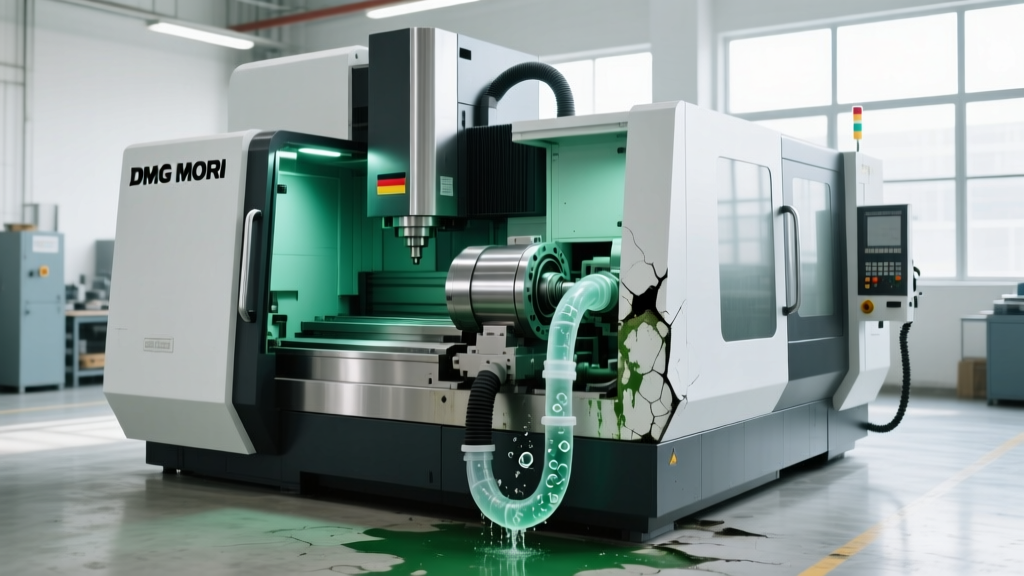
Unlike steel chips, which tend to break into manageable 'C' or '6' shapes, aluminum alloys produce long, stringy, and highly ductile chips. These chips have a severe tendency to wrap around the exposed ball screw shaft. As the nut traverses the shaft, the wiper seal attempts to strip the chip away. However, the sharp edges of 6061-T6 aluminum can slice through standard nitrile rubber (NBR) wipers, creating a direct pathway for coolant and microscopic aluminum dust to enter the nut housing.
Once inside, the aluminum dust mixes with the lithium-based grease to form an abrasive paste. This paste accelerates wear on the ball bearings and the internal deflector tubes. According to technical documentation from NSK Linear Motion Systems, particulate contamination is responsible for over 70% of premature ball screw failures in high-speed milling applications.
Upgrading Wiper Seals for High-Pressure Coolant
If your CNC vertical machining center (VMC) utilizes flood coolant pressures exceeding 20 bar (300 PSI), the OEM standard wiper seals are likely insufficient. You must upgrade to multi-lip contact seals designed specifically for chip exclusion.
- Standard NBR Wipers: Suitable for dry machining or low-pressure mist. Fails rapidly under high-pressure flood coolant.
- THK SCR / NSK X1 Multi-Lip Seals: Feature a secondary internal lip and a labyrinth design that creates a physical barrier against 70-bar coolant spray and stringy aluminum chips.
- Telescopic Steel Covers + Waybellows: The ultimate defense. Physical steel covers prevent chips from ever reaching the screw shaft, extending lubrication intervals by up to 400%.
When ordering replacement nuts for an aluminum-dedicated machine, always specify the manufacturer's highest-grade contact seal option. The $150 to $300 premium per axis is easily justified by the prevention of a $4,000 axis-rebuild downtime event.
Lubricant Selection Matrix for Aluminum Environments
Standard NLGI Grade 2 lithium soap greases emulsify and wash out rapidly when subjected to aggressive water-soluble flood coolants. For aluminum milling, you must utilize synthetic or urea-based greases with high water-resistance ratings and specific base oil viscosities.
| Grease Type | Base / Thickener | Best Application | Water Resistance |
|---|---|---|---|
| Kluber Isoflex NBU 15 | Ester / Barium Complex | High-speed spindles & ball screws (up to 20,000 RPM equivalent) | Excellent |
| THK AFA Grease | Synthetic Oil / Urea | Standard VMC ball screws under flood coolant | Very Good |
| Mobilith SHC 220 | Synthetic / Lithium Complex | Heavy-duty gantry mills, high-load roughing | Good |
| SKF LGMT 3 | Mineral / Lithium Soap | AVOID - Washes out easily in aluminum flood coolant | Poor |
The Purge-and-Flush Regreasing Protocol
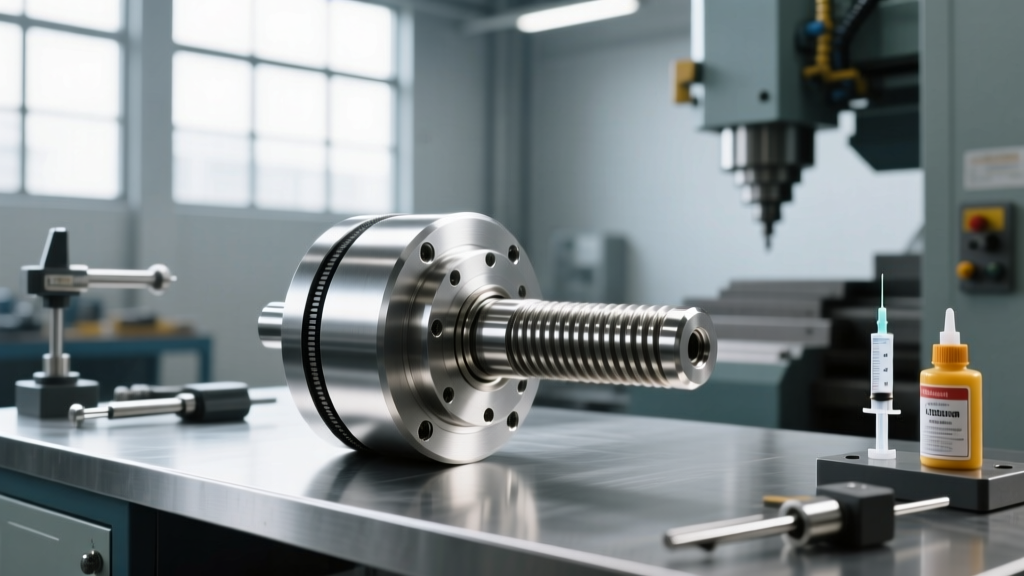
Simply pumping grease into the zerk fitting is a critical error. In aluminum machining, the existing grease inside the nut is heavily contaminated with aluminum fines. You must perform a complete purge to expel the contaminated grease.
Pro-Tip: Grease Gun Pressure LimitsNever use a high-pressure pneumatic grease gun on ball screw zerk fittings. Pressures exceeding 3 bar (45 PSI) can blow out the internal plastic or brass ball-return tubes, instantly destroying the nut. Always use a manual, hand-pump grease gun to maintain tactile feedback.
- Manual Traverse: Jog the axis to expose the maximum length of the ball screw shaft.
- Solvent Wipe: Use a lint-free cloth dampened with isopropyl alcohol or a mild alkaline cleaner to wipe down the exposed shaft. This removes the sticky aluminum-coolant emulsion that standard rags leave behind.
- Apply Fresh Grease: Attach the manual grease gun to the nut's zerk fitting. Pump slowly.
- Visual Purge Check: Continue pumping until you see clean, fresh grease extruding evenly from the wiper seals at both ends of the nut. Do not stop when you feel resistance; stop only when the expelled grease is free of gray/black aluminum particulate.
- Wipe and Cycle: Wipe away the excess purged grease, then run the axis through three full-length traverse cycles at rapid traverse (G00) to distribute the new grease across the internal raceways.
MQL vs. Flood Coolant: Divergent Maintenance Paths
High-speed aluminum routers and 5-axis trunnion machines increasingly rely on Minimum Quantity Lubrication (MQL) or air-blast systems rather than flood coolant. This fundamentally alters the maintenance schedule for the ball screw for CNC machine axes.
'MQL ester-based oils react with aluminum dust to create a hard, varnish-like residue on the screw shaft. If this varnish is not chemically dissolved before regreasing, it will flake off and jam the ball return deflectors.'
— Precision Machine Tool Maintenance Guidelines, THK Technical Resources
The MQL Cleaning Protocol: Before regreasing an MQL-equipped machine, technicians must scrub the exposed shaft with a brass-bristle brush and a dedicated ester-solvent. Standard shop rags will merely smear the varnish. After mechanical scrubbing, a solvent flush is required to ensure the wiper lips are pliable and free of hardened aluminum-ester buildup.
Diagnosing Preload Loss: The Tenths Indicator Test
Aluminum roughing operations impose high dynamic reversal loads on the Z and X axes. Over time, this can cause the internal ball bearings to wear, resulting in a loss of preload and the introduction of backlash. Relying on the CNC controller's software backlash compensation is a temporary band-aid that ruins surface finishes on 3D contoured aluminum aerospace parts.
Perform this diagnostic test every 500 operating hours:
- Mount a tenths-reading dial indicator (0.0001' resolution) on the machine table, with the plunger pressing against the spindle housing or axis carriage.
- Command the axis to move in the positive direction by 0.010', then stop.
- Zero the dial indicator.
- Command the axis to move in the negative direction by 0.005'.
- Observe the dial indicator. If the physical axis moves exactly 0.005', the preload is intact.
- If the dial indicator shows less than 0.005' of movement (e.g., 0.003'), the difference (0.002') represents mechanical deadband caused by preload loss.
For high-precision aluminum aerospace milling, allowable mechanical deadband should not exceed 0.0004'. If your measurement exceeds this threshold, the ball screw nut must be removed and sent to a certified linear motion rebuilder to have the ball diameter increased and the preload restored.
Rebuild vs. Replace Economics
When catastrophic chip ingress destroys the raceways, shop managers must decide between purchasing a new OEM assembly or utilizing a precision rebuild service. According to current Haas CNC Service and third-party rebuild data, the economics heavily favor rebuilding for large-format machines.
Cost Matrix: 40mm Diameter Ball Screw (1500mm Travel)
- New OEM Assembly (THK/NSK/Rexroth): $3,200 - $5,500 (Lead times often 8-14 weeks)
- Precision Rebuild (New balls, reground raceways, new seals): $900 - $1,400 (Lead times 2-4 weeks)
- Standard In-Shop Repair (Flushing and resealing only): $300 - $500 (Only viable if raceway pitting is under 0.0002' depth)
Note: Always mandate that the rebuild facility uses C3 or C5 precision grade balls and performs a laser lead-accuracy calibration before returning the assembly. Never accept a 'clean and repack' service for a machine cutting tight-tolerance aluminum aerospace components.
By implementing aggressive wiper seal upgrades, adhering to strict purge-and-flush lubrication schedules, and routinely verifying preload with tenths-indicator testing, manufacturers can easily extend the operational lifespan of their linear motion systems well beyond 15,000 hours, even in the harshest aluminum swarf environments.