How to Make Money With a CNC Machine in a Small Workshop
Discover how to make money with a CNC machine in a small workshop. Real case studies, CapEx breakdowns, and 2026 shop rate formulas for micro-factories.
The Micro-Factory Economic Model
The barrier to entry for precision manufacturing has collapsed, but the barrier to profitability remains rooted in operational discipline. Learning how to make money with a CNC machine in a small workshop requires abandoning the 'race to the bottom' pricing models of overseas mass production. Instead, successful micro-factories in 2026 focus on high-mix, low-volume (HMLV) production, rapid prototyping, and hyper-local B2B overflow contracts.
2026 Micro-Factory ROI Baseline:Small-batch VMC (Vertical Machining Center) shops targeting aerospace and tactical niches report an average gross margin of 45-60%, with equipment ROI timelines shrinking to 14-18 months when utilizing lights-out (unattended) machining for secondary operations.
Case Study 1: High-Margin Tactical & Aerospace Sub-Components
Consider a 1,500-square-foot garage workshop producing custom scope mounts and charging handles for the tactical firearms market. This niche demands tight tolerances (±0.0005 inches) and excellent surface finishes on 6061-T6 aluminum and 7075-T6 billets.
Machine Selection and CapEx Reality
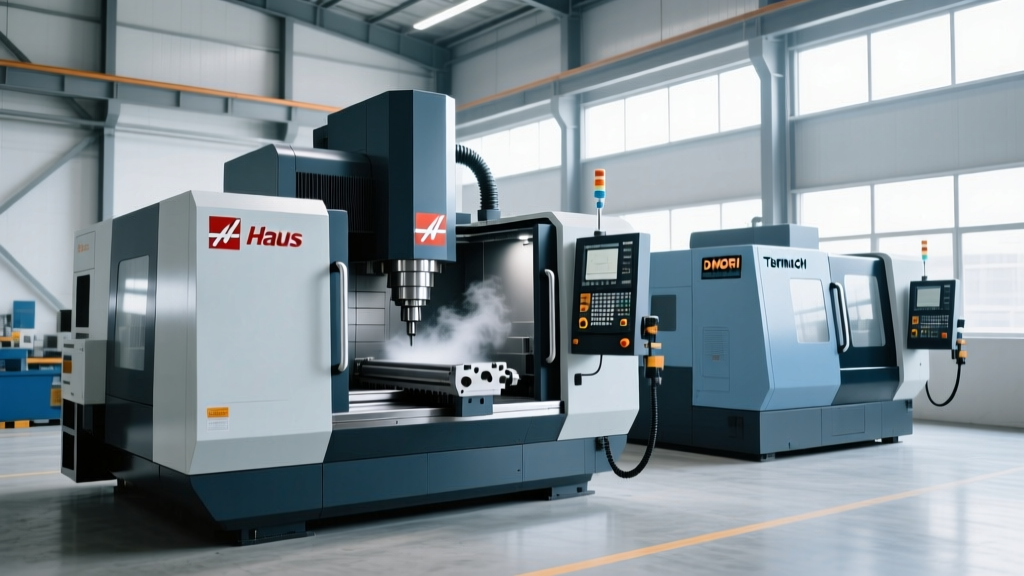
For this application, a standard CNC router will fail due to spindle runout and lack of rigidity. The shop requires a true VMC. Entry-level industrial options like the Haas Mini Mill (starting around $55,000) offer CAT40 taper spindles and 12,000 RPM capabilities. For tighter budgets, the Tormach PCNC 1100 Series 4 (approx. $11,500 base) provides a BT30 spindle and sufficient rigidity for aluminum, though cycle times will be 30% longer due to lower rapid traverse rates and torque limitations.
The Tooling CapEx Trap
Novice operators often budget solely for the machine, ignoring the workholding and cutting tools required to actually make money. A realistic startup tooling budget for a small VMC includes:
- Workholding: Kurt DX6 6-inch milling vise ($1,150) plus a set of Maritron aluminum soft jaws ($180) for holding pre-machined profiles without marring.
- Toolholders: BT30 or CAT40 ER32 collet chucks and face mill holders ($1,200 for a basic 5-piece set).
- Cutting Tools: Specialty 3-flute carbide endmills designed for aluminum (e.g., ZrN coated) to prevent chip welding. Reference speeds and feeds data from experts like Harvey Tool to maximize tool life and prevent scrap.
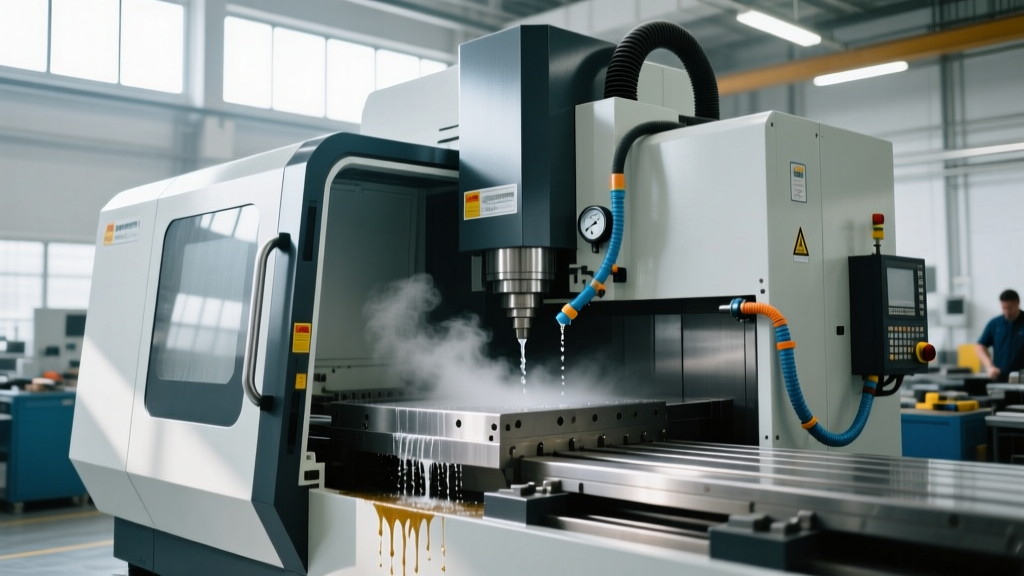
- Coolant & Filtration: A 55-gallon flood coolant system with a tramp oil skimmer ($850) is non-negotiable for maintaining surface finishes and preventing aluminum oxidation.
Case Study 2: Bespoke Architectural Millwork & Composites
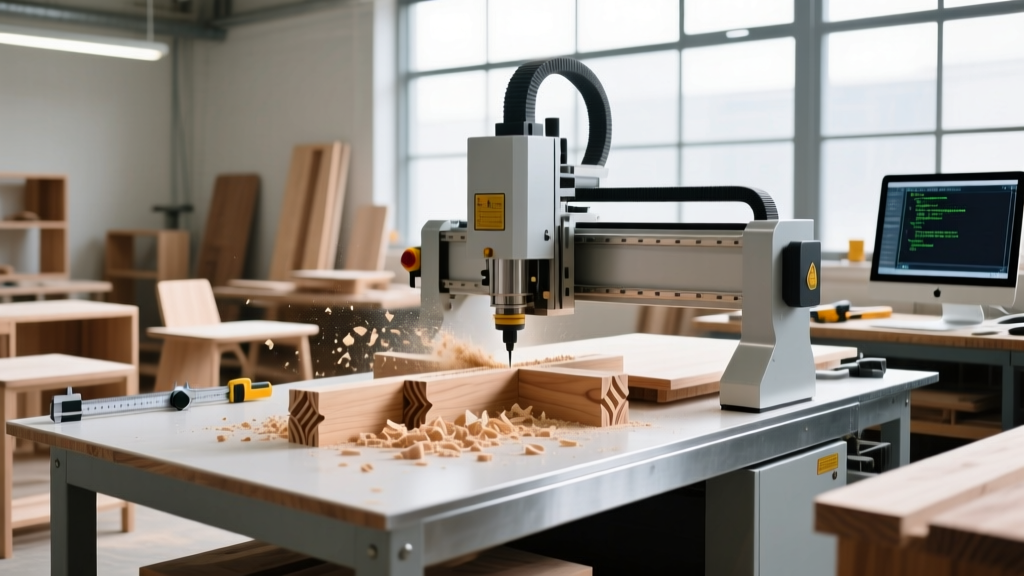
Not all profitable small workshops cut metal. A highly lucrative alternative is bespoke architectural signage and composite panel routing (e.g., Corian, Richlite, and MDF). A 4x8-foot CNC router, such as a ShopBot PRSalpha or a heavily modified Shapeoko 5 XXL, can command premium rates from local interior designers and commercial contractors.
'The mistake most small router shops make is competing on price for standard 2D profile cuts. The real money in 2026 is in 3D V-carve texturing and inlay work on solid surface materials, where the perceived artistic value allows you to charge $150+ per square foot rather than a flat hourly machine rate.'
— Senior Applications Engineer, Carbide 3D User Symposium
Edge Case Gotcha: When machining MDF or acrylic in a small, unventilated garage, static buildup will cause fine dust to cling to the gantry and ball screws, rapidly degrading linear motion accuracy. Investing $600 in a localized, grounded dust collection system with anti-static hoses is mandatory to protect the machine's mechanical lifespan.
2026 Small Shop CNC Comparison Matrix
| Machine Class | Representative Model | Approx. CapEx (Ready-to-Cut) | Ideal Niche | Target Hourly Rate |
|---|---|---|---|---|
| Desktop CNC Router | Shapeoko 5 XXL | $3,500 - $5,000 | Wood signage, plastics, PCB prototyping | $65 - $85 / hr |
| Entry VMC (Benchtop) | Tormach PCNC 1100 S4 | $18,000 - $24,000 | Tactical parts, drone components, prototyping | $85 - $110 / hr |
| Industrial Micro VMC | Haas Mini Mill | $75,000 - $95,000 | Medical implants, aerospace fittings, B2B overflow | $120 - $160 / hr |
| 4x8 Industrial Router | ShopBot PRSalpha | $35,000 - $45,000 | Cabinet making, composite architectural panels | $95 - $125 / hr |
Quoting Framework: Calculating the True Shop Rate
To make money, you must know your exact break-even point. Many small shop owners guess their hourly rate, leading to hidden losses. Use this framework to calculate your 2026 baseline shop rate:
- Fixed Overhead Allocation: Sum your monthly rent, insurance, software subscriptions (CAD/CAM like Fusion 360 or Mastercam), and internet. Divide by available billable hours (e.g., 160 hours/month). Example: $2,500 / 160 = $15.62/hr.
- Machine Depreciation & Maintenance: Divide total machine CapEx by 5,000 expected spindle hours. Add 10% for consumable maintenance (way lube, filters, belts). Example: $24,000 / 5,000 = $4.80/hr + $0.48 = $5.28/hr.
- Labor & Burden: Pay yourself a market wage plus 20% for taxes/benefits. Example: $35/hr + $7 = $42.00/hr.
- Profit Margin: Add a minimum 20% net profit margin for business reinvestment.
Total Minimum Shop Rate: ($15.62 + $5.28 + $42.00) * 1.20 = $75.48 per hour. Never quote a job below this machine-hour threshold.
B2B Overflow: Securing Local Machine Shop Contracts
Relying solely on direct-to-consumer (D2C) e-commerce sales is a volatile way to run a manufacturing business. The most stable revenue stream for a small workshop is capturing 'overflow' work from larger, local machine shops.
Large job shops frequently turn away small-batch orders (10 to 50 pieces) because the setup time destroys their profitability on massive 5-axis machines. According to initiatives tracked by the NIST Manufacturing Extension Partnership (MEP), localized supply chain resilience is a major priority for mid-sized manufacturers. By positioning your small workshop as a nimble, quick-turnaround partner for secondary operations or small-batch bracketry, you can secure recurring monthly POs.
Actionable Steps to Land B2B Overflow:
- Certifications: Obtain ISO 9001:2015 certification. Even a streamlined 'micro-ISO' implementation signals to larger shops that your quality management system (QMS) is documented and reliable.
- Material Traceability: Always buy metals from certified domestic mills (e.g., Kaiser Aluminum, Alcoa) and keep the Mill Test Reports (MTRs) organized. Larger shops will audit your material pedigree.
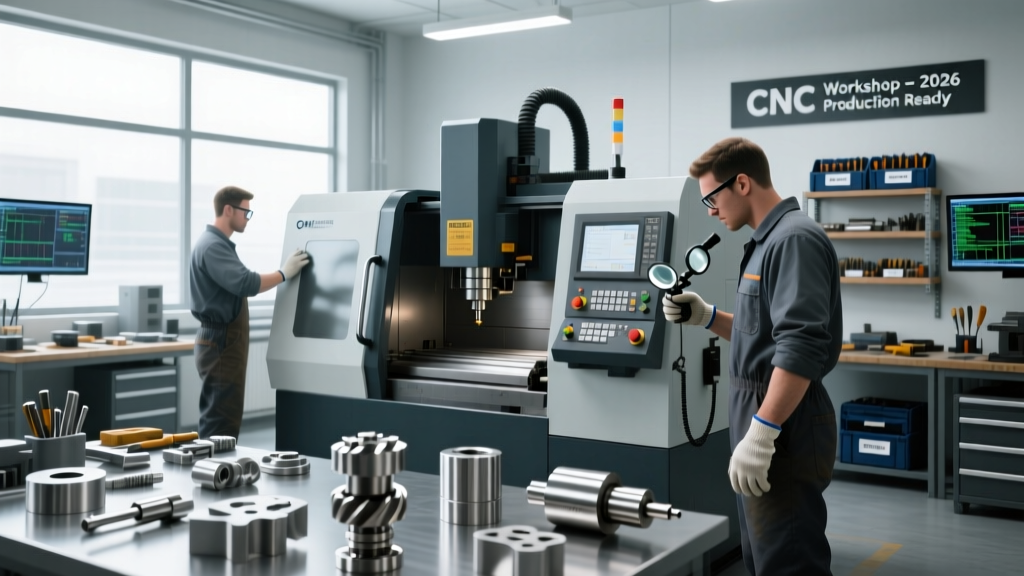
- First Article Inspections (FAI): Invest in a basic CMM (Coordinate Measuring Machine) or a high-quality optical comparator. Delivering an AS9102-compliant FAI report with your first batch of parts will instantly separate you from amateur hobbyists and secure long-term vendor status.
The Scrap Rate Tax and Lights-Out Machining
In a small workshop, your most valuable resource is not the material; it is your time. If a 30-minute cycle requires you to stand at the machine to clear chips or monitor tool wear, your effective hourly rate plummets. Implementing basic automation—such as macro-driven air blasts, through-spindle coolant (TSC), and tool-breakage detection probes—allows you to run parts 'lights-out' while you handle quoting, CAD design, or shipping. Reducing your scrap rate from 8% to 2% through rigorous tool-life management and probing routines is often the exact difference between a break-even hobby and a highly profitable micro-factory.