Can Hobbyist CNCs Produce CNC Complex Machining Parts?
Analyze if entry-level hobby CNC routers can handle complex machining parts. Compare 3-axis limits, multi-side workarounds, and prosumer alternatives.
The Tolerance Trap: Desktop Routers vs. Complex Geometries
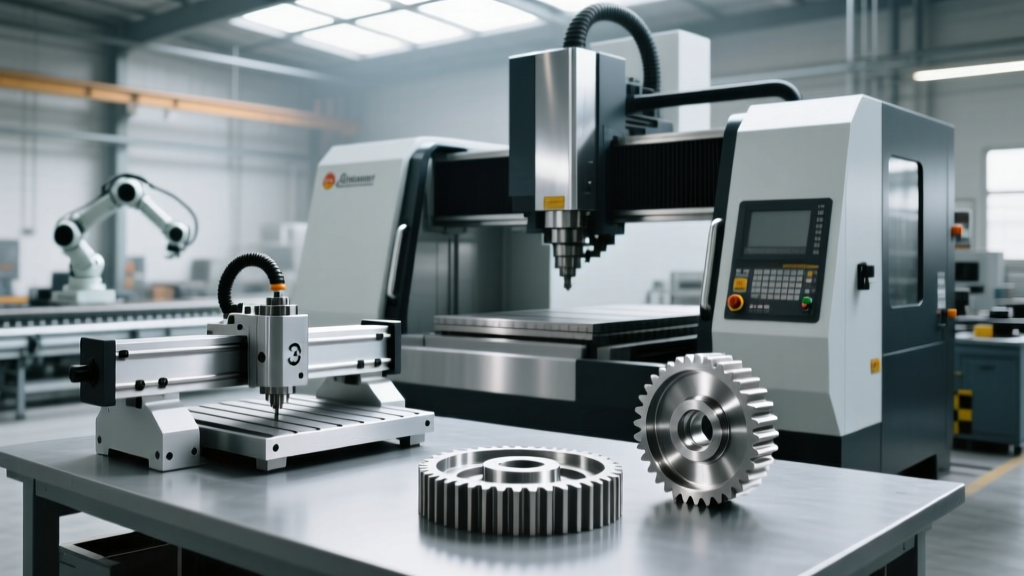
The barrier to entry for computer numerical control has plummeted, but the physics of subtractive manufacturing remain unchanged. When makers attempt to manufacture CNC complex machining parts on desktop routers, they immediately collide with the physical limitations of belt-driven gantries and lightweight spindles. True complex parts—featuring 5-axis contours, deep thin-walled pockets, and tight geometric dimensioning and tolerancing (GD&T) requirements—demand rigidity that sub-$3,000 hobby machines simply lack.
Entry-level machines like the Shapeoko 5 or Onefinity Foreman excel at 2.5D routing, sign-making, and light aluminum engraving. However, attempting to machine aerospace-grade titanium or hold ±0.0005-inch true position tolerances on these platforms results in catastrophic tool deflection, chatter, and scrapped material. Understanding exactly where hobbyist hardware fails is the first step in engineering workarounds or pivoting to appropriate alternatives.
⚠️ Critical Deflection Warning: Under heavy radial side-loading (e.g., slotting 6061-T6 aluminum), NEMA 23 stepper motors on belt-driven hobby routers can skip steps or exhibit up to 0.015 inches of belt stretch. Complex parts requiring continuous 3D contouring will show visible scalloping and dimensional inaccuracies at these deflection thresholds.Machine Capability Matrix: Hobby vs. Prosumer vs. Industrial
To determine if your current setup can handle your part geometry, compare your machine's drivetrain and spindle architecture against industry baselines. The transition from hobbyist to prosumer hardware is defined by the shift from belts to ball screws, and from trim routers to rigid tapping spindles.
| Machine Class | Representative Model (2026 Pricing) | Drivetrain & Backlash | Tolerance Capability | Complex Part Viability |
|---|---|---|---|---|
| Entry-Level Hobby | Carbide 3D Shapeoko 5 (~$2,100) | Belt/Pinion; ~0.003" backlash | ±0.005" to ±0.010" | Poor (2.5D only) |
| Heavy-Duty Hobby | Onefinity Foreman (~$2,500) | Belt-driven; ~0.002" backlash | ±0.004" | Low (Light 3D) |
| Prosumer Benchtop | Tormach PCNC 440 (~$6,500+) | Ground Ball Screw; ~0.0002" | ±0.0005" | High (with 4th axis) |
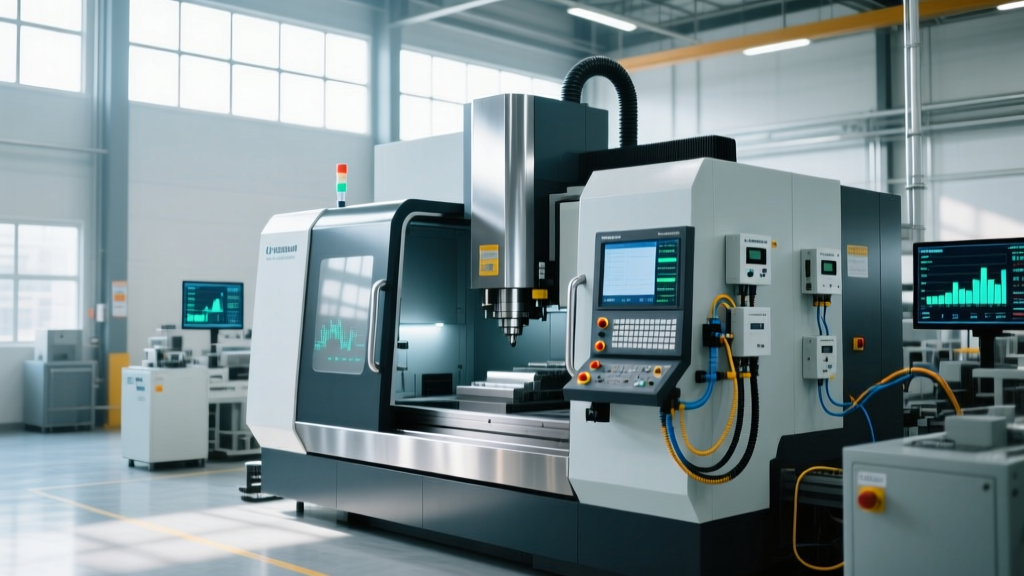
| Industrial VMC | Haas Mini Mill 2 (~$65,000+) | Precision Ball Screw; <0.0001" | ±0.0002" | Excellent (5-Axis ready) |
Workarounds: Faking 5-Axis Complexity on a 3-Axis Bed
If you are constrained to a 3-axis hobby router but must produce parts with undercuts, compound angles, or cylindrical features, you must rely on mechanical workarounds and advanced fixturing. You cannot change the machine's kinematics, but you can manipulate the workpiece.
1. Precision Flip Jigs and Soft Jaws
Complex parts often require access to 5 or 6 sides. On a 3-axis machine, this necessitates flipping the part. The secret to maintaining tolerances across multiple setups is machining a custom flip jig from a stable material like cast acrylic or machinable wax.
- Step 1: Machine the negative profile of Side A into a sacrificial jig plate, leaving 0.005" clearance for part insertion.
- Step 2: Install mechanical toggle clamps or use low-melt fixture wax to secure the raw stock.
- Step 3: Machine Side A. Flip the part into the exact negative cavity to expose Side B, ensuring the Z-zero datum remains mathematically locked.
2. Harmonic Drive 4th-Axis Rotaries
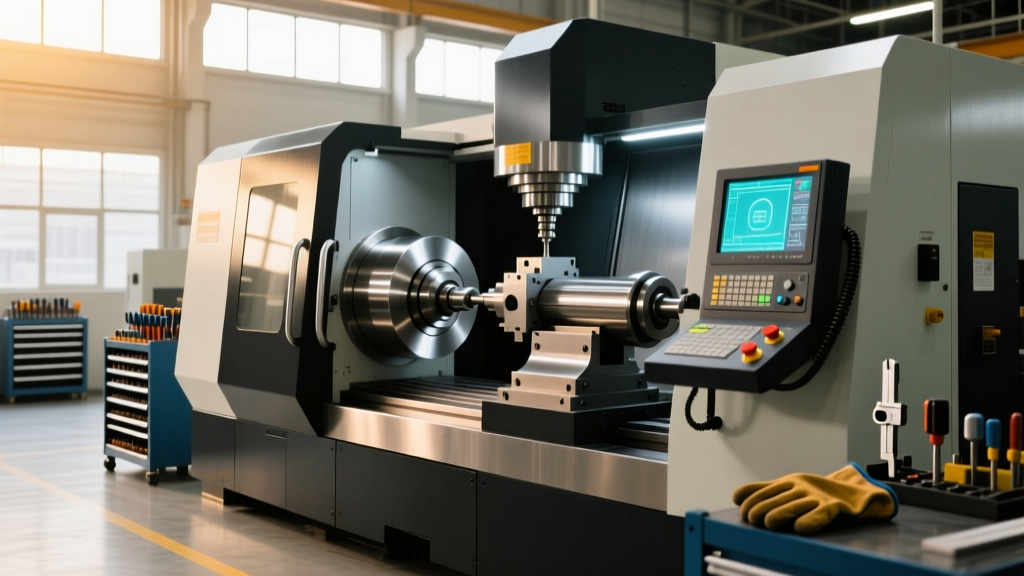
Standard hobby 4th-axis attachments use worm gears with high backlash (often >0.010 degrees), making them useless for precision complex parts. Upgrading to a harmonic drive rotary table (such as those from CNC4XR or similar aftermarket suppliers) reduces backlash to near-zero. This allows a 3-axis router to index a part for drilling radial holes or machining cam profiles, effectively bridging the gap toward advanced CNC routing capabilities without buying a trunnion table.
CAM Programming for Multi-Sided Setups
Hardware workarounds fail without precise CAM programming. When generating G-code for complex parts on limited machinery, your toolpath strategy must account for the machine's specific weaknesses. Using platforms like Autodesk Fusion 360 Manufacturing, implement the following protocols:
- Define Multiple Setups: Never rely on a single WCS (Work Coordinate System). Create a distinct Setup for each side of the part, explicitly selecting the new top face and origin point.
- Rest Machining: Use 3D adaptive clearing with 'Rest Machining' enabled. Hobby spindles lack the torque for aggressive full-slotting; adaptive toolpaths maintain constant radial engagement, preventing belt slip and stepper stall.
- Leave Stock for Finishing: Always leave 0.010" to 0.020" of stock during roughing operations. Perform a final contour pass with a sharp, uncoated carbide endmill at high RPM and low feed rate to achieve the final surface finish.
The Alternatives: Outsourcing vs. Upgrading
There is a hard limit to what fixturing and CAM tricks can achieve. When your design requires internal coolant channels, deep multi-axis cavities, or materials like Inconel 718, the hobbyist CNC must be abandoned. At this juncture, makers face a binary choice: outsource to a digital machine shop or upgrade to industrial hardware.
"Tolerance stacking is the silent killer of multi-setup hobby machining. Every time you re-fixture a part on a belt-driven router, you introduce a new vector of error. By the third setup, your true position tolerance is entirely consumed by fixture misalignment alone." — Manufacturing Engineering Principles, Xometry CNC Tolerance Guidelines.
Cost-Benefit Analysis: In-House Hobby vs. On-Demand Job Shop
| Metric | In-House Hobby CNC (Multi-Setup) | Outsourced to 5-Axis Job Shop |
|---|---|---|
| Setup & CAM Time | 15-20 hours (designing jigs, probing) | 1-2 hours (shop handles fixturing) |
| Material Waste | High (multiple scrapped test parts) | Low (proven VMC processes) |
| Per-Part Cost (Qty 10) | ~$45 (factoring in tooling & time) | ~$120 - $180 (setup amortized) |
| Achievable Tolerance | ±0.005" (best case) | ±0.0005" (guaranteed) |
Decision Framework for Makers
Do not force a hobby machine to perform industrial tasks. Use this framework to route your project to the correct manufacturing method:
Project Routing Matrix
- If the part requires tolerances tighter than ±0.002" → Outsource to a professional machine shop. Hobby hardware cannot guarantee this repeatability.
- If the part features deep, thin walls (<0.040" thick) in aluminum → Upgrade to a prosumer VMC (e.g., Tormach) with flood coolant. Router spindles lack the RPM and rigidity to prevent wall chatter.
- If the part requires 5-axis simultaneous contouring → Outsource. Add-on hobby trunnions are not rigid enough for simultaneous 5-axis cutting forces.
- If the part is 2.5D with pockets, holes, and profiles → Proceed with the hobby CNC. Utilize adaptive clearing, carbide tooling, and rigid fixturing to maximize your machine's potential.
Producing CNC complex machining parts is less about the size of the machine and more about the rigidity of the kinematic loop. By respecting the mechanical boundaries of entry-level routers and leveraging intelligent CAM strategies, makers can push hobbyist hardware to its absolute limit—while knowing exactly when to hand the G-code over to a 5-axis VMC.