Composite CNC Repair: Tips From Top CNC Machine Manufacturers
Troubleshoot composite cutting CNCs. Expert repair guides on spindle seals, carbon dust contamination, and delamination fixes from top OEMs.
The Abrasive Reality of Composite Machining
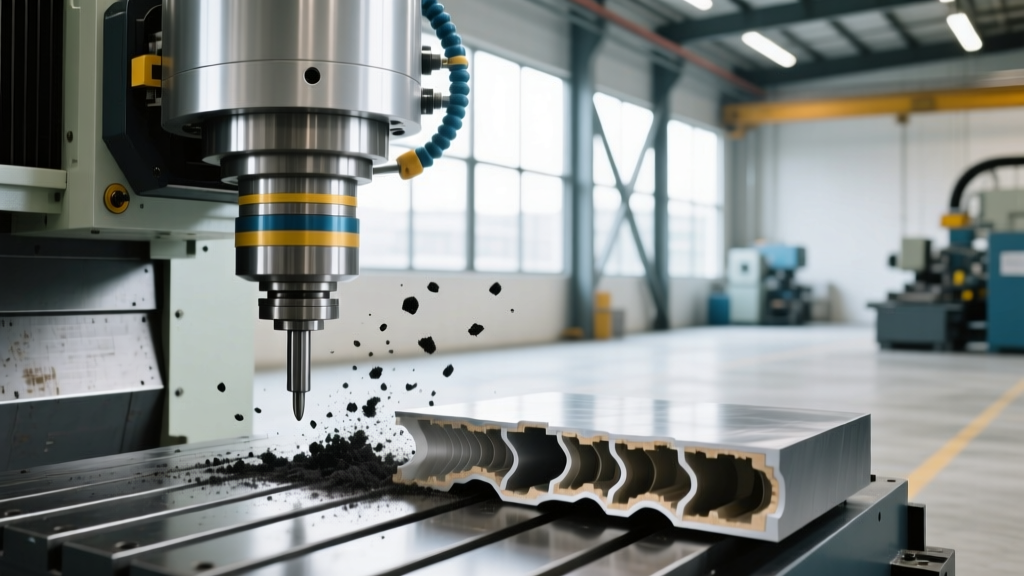
Machining Carbon Fiber Reinforced Polymers (CFRP), G10 Garolite, and Kevlar is fundamentally a grinding process, not a shearing one. Unlike aluminum or steel, composite materials do not yield; they fracture. This abrasive fracture generates microscopic, highly abrasive dust that infiltrates every unsealed crevice of a CNC router or mill. For maintenance teams and operators, troubleshooting a composite cutting CNC requires shifting focus from standard mechanical wear to aggressive particulate contamination and specialized tooling dynamics.
CRITICAL WARNING: Conductive Dust Hazards
Carbon fiber dust is electrically conductive. If standard cabinet seals fail and conductive dust enters the electrical enclosure, it will bridge contacts on Variable Frequency Drives (VFDs) and spindle amplifiers, causing catastrophic short circuits. Always verify NEMA 12 or IP54 enclosure integrity and maintain positive air pressure inside electrical cabinets.
Diagnostic Matrix: Delamination, Fraying, and Tool Wear
| Symptom | Root Cause | OEM-Recommended Fix |
|---|---|---|
| Exit-side delamination | Upcut spiral pushing fibers apart; dull tooling | Switch to PCD (Polycrystalline Diamond) compression routers with a minimum 1/4-inch neutral zone. |
| Spindle overheating at 20,000+ RPM | Carbon dust ingress past standard rubber lip seals | Retrofit air-purged labyrinth seals; verify shop air is dry and filtered to 5 microns. |
| Frayed edges on Kevlar/Aramid | Material smearing rather than cutting; high feed rates | Reduce feed rate by 15%; use specialized shear-angle diamond-coated end mills. |
| Loss of vacuum hold-down | Porous composite leaking air through the cut path | Seal part perimeters with cyanoacrylate (CA) glue; use LLDPE vacuum pods instead of universal spoilboards. |
Spindle and Bearing Contamination: The Silent Killer
Standard CNC spindles rely on rubber lip seals to keep contaminants out. In a metal-cutting environment, these seals last for years. In a composite-cutting environment, carbon and glass fibers act as a lapping compound, destroying rubber lip seals in as little as three to six months. Once the seal fails, abrasive dust enters the bearing races, leading to catastrophic spindle failure.
Leading CNC machine manufacturers like CMS North America and Breton now spec air-purged labyrinth seals (such as those from GMN or IBAG) for their composite-specific models. These seals use a constant bleed of clean, dry shop air (typically 4-6 CFM at 80 PSI) to create positive pressure, physically blowing dust away from the bearing races.
Rebuild vs. Replace Economics
A standard HSK63F spindle rebuild costs between $4,500 and $8,000 and takes 4-6 weeks. Retrofitting an air-purge labyrinth seal system costs roughly $2,500 to $3,500 upfront but extends spindle life from 4,000 hours to over 15,000 hours in heavy CFRP environments. If your spindle is already exhibiting high-frequency vibration (above 4 mm/s RMS on a velocity sensor), the bearings are already pitted; sealing it will not save it. It must be rebuilt.
Ball Screw and Linear Guide Degradation
Linear motion components are equally vulnerable. Standard PVC or polyurethane way bellows are quickly shredded by the sharp, needle-like swarf produced when trimming fiberglass and carbon fiber.
- Upgrade Way Covers: Replace standard bellows with Kevlar-reinforced fabric or stainless steel telescopic covers.
- Ball Screw Flushing: If carbon dust enters the ball nut, it creates a grinding paste. Flush ball screws with low-viscosity oil (ISO VG 32) every 40 hours of cutting time to suspend and evacuate particulates.
- Wiper Seal Upgrades: Install heavy-duty scrapers and secondary felt wipers on all linear guide blocks. Standard single-lip wipers are insufficient for composite dust.
Vacuum Table Troubleshooting for Composite Fixturing
Composites are frequently machined on 5-axis routers utilizing vacuum fixturing. A common troubleshooting headache is the sudden loss of holding force, leading to part vibration and scrapped aerospace components.
Unlike solid metals, many composite layups and honeycomb cores are highly porous. Vacuum air bleeds through the material itself. To troubleshoot this, operators must isolate the leak. Apply a localized EVA foam gasket boundary directly around the part footprint rather than relying on a full-sheet MDF spoilboard. If machining pre-preg materials, ensure the vacuum table temperature does not exceed 120°F (49°C), as excessive heat can prematurely activate the resin matrix, fusing the part to the platen.
Electrical Enclosure and Sensor Troubleshooting
Proximity sensors and limit switches on composite CNCs fail at an alarming rate due to dust accumulation. Standard inductive proximity sensors can be blinded by a layer of carbon dust, causing the machine to overtravel and crash into the hard stops.
Troubleshooting sensor faults requires more than just wiping the lens. Carbon dust is statically charged and bonds to plastic sensor housings. Replace standard inductive sensors with sealed, IP69K-rated stainless steel capacitive sensors or mechanical limit switches enclosed in air-purged housings. Additionally, inspect the cable glands on all electrical enclosures. Over time, the constant vibration of high-speed routing degrades the rubber seals on cable glands. Re-seal all conduit entries with dielectric silicone to prevent conductive dust from migrating into the VFD and PLC racks.
When to Call the OEM: CNC Machine Manufacturers' Service Thresholds
While in-house maintenance teams can handle tooling, vacuum leaks, and way cover replacements, geometric alignment requires specialized intervention. When a composite CNC experiences a hard crash or requires ball screw replacement, the gantry squareness and volumetric accuracy must be recalibrated.
Top CNC machine manufacturers utilize laser interferometry and ballbar testing to map and compensate for geometric errors across the machine's entire work envelope. Third-party repair services rarely possess the proprietary software compensation tables required to update the CNC controller (such as Siemens Sinumerik or Fanuc 31i) after physical realignment. If your machine is failing to hold the ±0.002-inch tolerances required for aerospace composite assemblies, it is time to engage the OEM's field service engineering team.
Tooling and Dust Extraction: The First Line of Defense
According to Sandvik Coromant's composite machining guidelines, tool wear in CFRP is exponential rather than linear. Standard carbide end mills may only survive 50 to 100 linear feet of cutting before severe flank wear causes delamination. Upgrading to CVD diamond-coated or solid PCD tooling increases tool life to 1,500–3,000 linear feet, drastically reducing the frequency of tool changes and the associated downtime.
Furthermore, dust extraction is not optional; it is a critical machine preservation system. A composite cutting CNC requires a minimum of 1,500 CFM of suction with HEPA filtration to capture sub-5µm conductive particles. If your extraction system relies on standard cartridge filters without pulse-jet cleaning, the filters will blind over within days, dropping suction velocity below the 4,500 FPM required to keep heavy composite swarf suspended in the ductwork.
For advanced CAM programming strategies to minimize tool engagement and reduce dust generation, refer to the Autodesk CNC machining resource hub, which details adaptive clearing toolpaths specifically optimized for abrasive composite materials.