What's a CNC Machine Work Envelope? 2026 Bed Sizes
Compare CNC machine bed sizes and work envelopes. Discover 2026 trends in 5-axis kinematics, thermal compensation, and footprint optimization.
Defining the Boundaries: What's a CNC Machine Work Envelope?
When shop managers evaluate new equipment, a critical point of confusion frequently arises: what's a CNC machine work envelope compared to its physical table dimensions? The distinction dictates production viability. The physical bed size refers to the cast iron or welded steel surface where fixtures are bolted. The work envelope, however, is the true three-dimensional volumetric space (X, Y, and Z travel) where the cutting tool can actually engage the material.
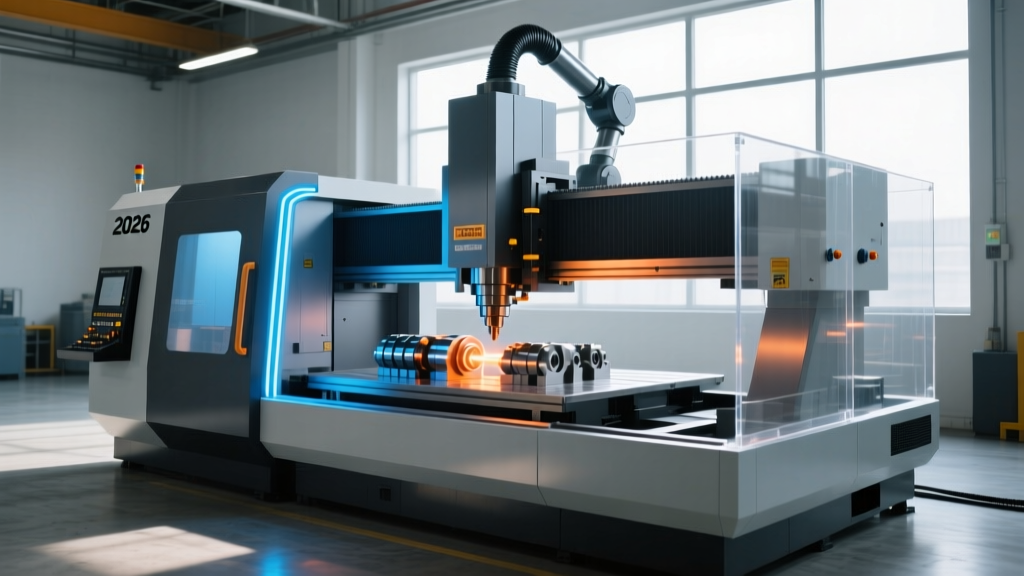
Core Definition: The work envelope is the maximum geometric volume the tool tip can reach, minus the deductions required for tool length, holder clearance, and spindle nose geometry. A machine with a 40x20 inch table may only yield a 36x18 inch usable machining envelope due to way cover intrusions and spindle head geometry.In 2026, the manufacturing industry is shifting away from the 'bigger is better' bed size mentality. Driven by high real estate costs and the demand for tighter tolerances, modern CNC engineering focuses on maximizing the usable envelope through advanced kinematics rather than simply casting larger iron beds.
The Z-Axis Trap: Where Specifications Mislead Buyers
The most common specification error occurs in the Z-axis. A machine might advertise 24 inches of Z-axis travel. However, if you are running a 10-inch face mill on a 6-inch CAT50 holder, and the spindle nose requires 4 inches of clearance to avoid crashing into a tall vise, your actual usable Z-envelope is reduced to just 4 inches.
Calculating True Z-Clearance
To determine your true vertical capacity, apply this formula used by aerospace fixture designers:
- Advertised Z-Travel: Machine specification (e.g., 600 mm)
- Minus Tooling Stack: Holder length + tool stick-out (e.g., 150 mm)
- Minus Fixture Height: Vise, tombstone, or custom jig (e.g., 200 mm)
- Minus Safety Retract: Minimum rapid clearance plane (e.g., 50 mm)
- True Usable Z-Envelope: 200 mm (7.87 inches)
This mathematical reality is why 5-axis trunnion machines have become the standard for complex parts; they manipulate the workpiece angle to effectively multiply the usable Z-envelope without requiring a taller, less rigid machine column.
2026 Technology Trends: Kinematics Over Raw Footprint
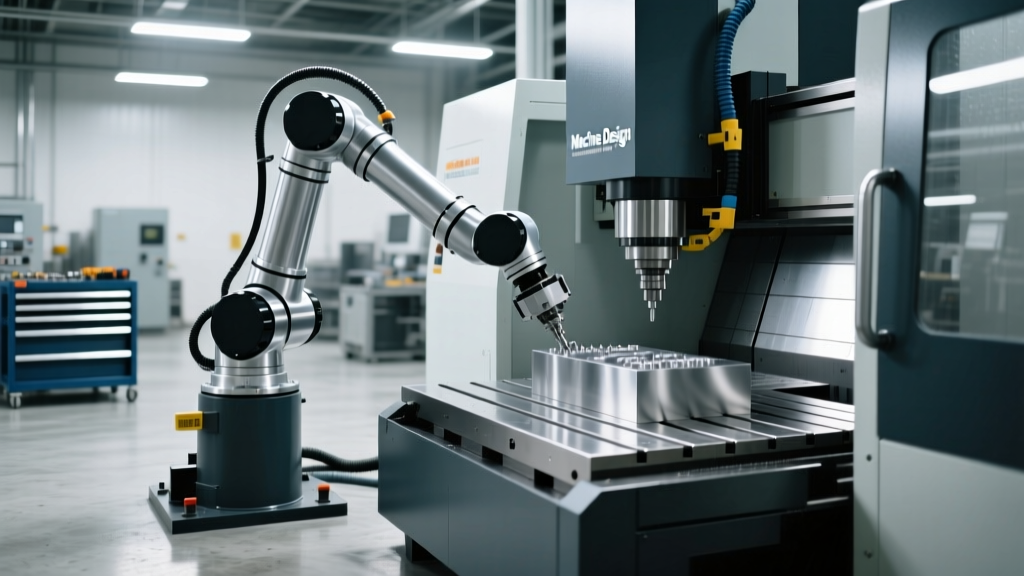
The latest innovation in CNC envelope optimization is the integration of RTCP (Rotary Tool Center Point) kinematics paired with direct-drive torque motors. Instead of building a massive 5-meter bed to machine a large turbine blade, manufacturers are using smaller beds with automated part-positioning robots.
'We no longer buy machines based on table size. We buy based on the kinematic chain's ability to maintain volumetric accuracy within a compact envelope. A smaller thermal mass means faster warm-up and tighter tolerances.'
— Lead Manufacturing Engineer, Tier 1 Aerospace Supplier
According to research on advanced manufacturing systems by the National Institute of Standards and Technology (NIST), thermal growth in large-format CNC beds remains a primary source of volumetric error. By shrinking the physical bed size and utilizing AI-driven thermal compensation algorithms, modern machines maintain ISO-standard accuracies without the massive footprint.
Work Envelope vs. Physical Footprint: 2026 Machine Comparison
The table below compares three dominant machine architectures in 2026, highlighting how different designs achieve varying envelope-to-footprint ratios.
| Machine Model | Table / Bed Size | Max Work Envelope (XYZ) | Footprint Ratio | Est. 2026 Price |
|---|---|---|---|---|
| Haas UMC-750SS | 30' x 20' (Integrated Platter) | 30' x 20' x 20' | High (Compact 5-Axis) | $235,000 - $260,000 |
| Mazak INTEGREX i-200 | 26' Chuck / 60' Bed | X: 25.6' Y: 10.2' Z: 61.4' | Medium (Mill-Turn) | $480,000 - $550,000 |
| DMG MORI DMU 50 3rd Gen | 25' x 20' (Swivel/Rotary) | 25.6' x 20.5' x 18.7' | Very High (Dense Envelope) | $310,000 - $350,000 |
Note: Pricing reflects base configurations including standard 5-axis software packages and high-pressure coolant systems typical for 2026 orders.
Decision Matrix: Selecting the Right Envelope Strategy
Choosing between a massive static bed and a compact automated envelope requires a structured decision framework. Use this matrix to determine the optimal machine architecture for your specific production environment.
Choose Large Static Bed (Gantry/Bridge Mill)
- Parts exceed 40 inches in any single axis.
- Material is heavily cast or forged (requires massive dampening).
- Low mix, high volume of identical large components.
- Setup time is negligible compared to cycle time.
Choose Compact Envelope + Automation (Pallet Pool)
- Parts fit within a 20-inch cube.
- High mix, low volume (HMLV) job shop environment.
- Labor costs are high; lights-out machining is required.
- Multiple setups per part are necessary (op 10 / op 20).
The Hidden Costs of Oversizing Your CNC Bed
Specifying a machine with a larger bed than necessary introduces severe mechanical and financial penalties. Understanding these hidden costs is vital for accurate ROI calculations.
1. Thermal Expansion and Volumetric Error
As defined by the ISO 230-1:2020 standard for machine tool testing, thermal distortion is the largest contributor to geometric inaccuracy. A 60-inch cast iron bed will expand significantly more than a 30-inch bed under identical shop floor temperature fluctuations. If your shop lacks strict climate control (±1°C), a larger bed guarantees larger positional errors at the extreme edges of the work envelope.
2. Servo Lag and Way Cover Wear
Larger X and Y axes require heavier ballscrews or longer linear motors. The increased mass results in servo lag during high-speed contouring, forcing the control (such as a Heidenhain TNC7 or Siemens Sinumerik ONE) to reduce feed rates to maintain surface finish. Furthermore, the telescopic steel way covers required to protect a 60-inch travel are prone to sagging and binding, increasing maintenance downtime by up to 15% annually compared to compact 30-inch travel machines.
3. Floor Space and Utility Overhead
Industrial real estate costs in 2026 average $12 to $18 per square foot annually in major manufacturing hubs. A large-format gantry mill requires not just the machine footprint, but an additional 4 feet of clearance on all sides for maintenance access and crane loading. This effectively triples the cost-per-square-foot impact of the machine on your facility's overhead.
Specification Checklist for 2026 Procurement
Before signing a purchase order, verify these envelope-specific parameters with the machine tool builder:
- Maximum Workpiece Weight vs. Envelope Position: Does the machine's load capacity drop when the table is fully extended in the Y-axis? (Common in C-frame VMCs).
- Tool Changer Interference Zone: Map the exact XYZ coordinates where the spindle cannot enter due to the physical presence of the ATC (Automatic Tool Changer) arm.
- RTCP Volumetric Accuracy: Request a Renishaw ballbar test report specifically measuring the 5-axis kinematic center at the extreme corners of the advertised envelope, not just the center of the table.
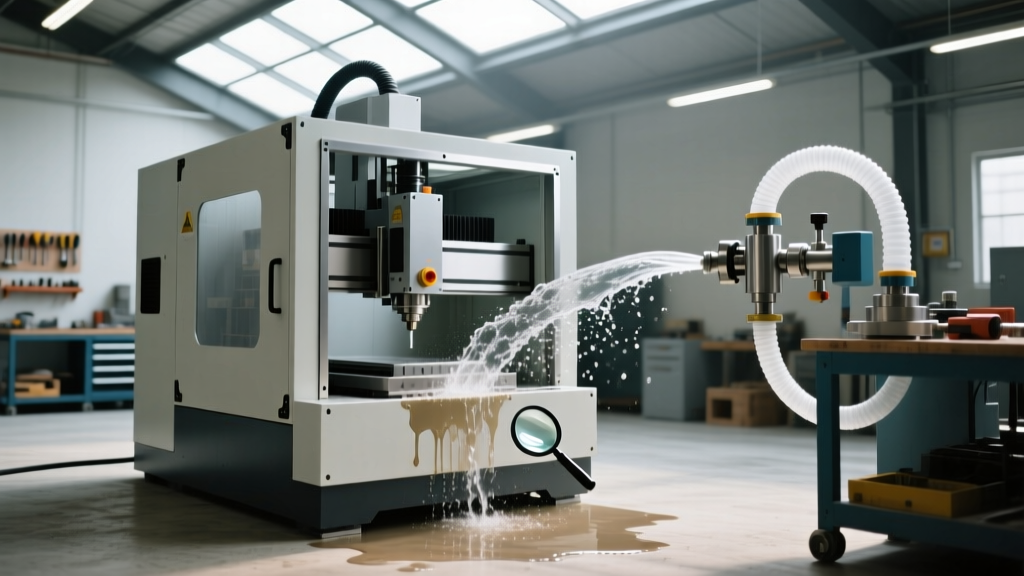
- Coolant Washdown Reach: Ensure the internal coolant nozzles can physically reach the extreme Z-bottom of the envelope; many machines suffer from chip accumulation in the deep corners of large beds.
By shifting the focus from raw table dimensions to the true, usable, and thermally stable work envelope, manufacturing facilities can drastically reduce capital expenditure while simultaneously improving part accuracy and throughput.