CNC Machine Education: Bed Size and Work Envelope Innovations
Explore how modern CNC machine education tackles dynamic work envelopes, 5-axis kinematics, and bed size innovations for next-gen manufacturing labs.
The Geometry of Modern Machining: Beyond the Cartesian Box
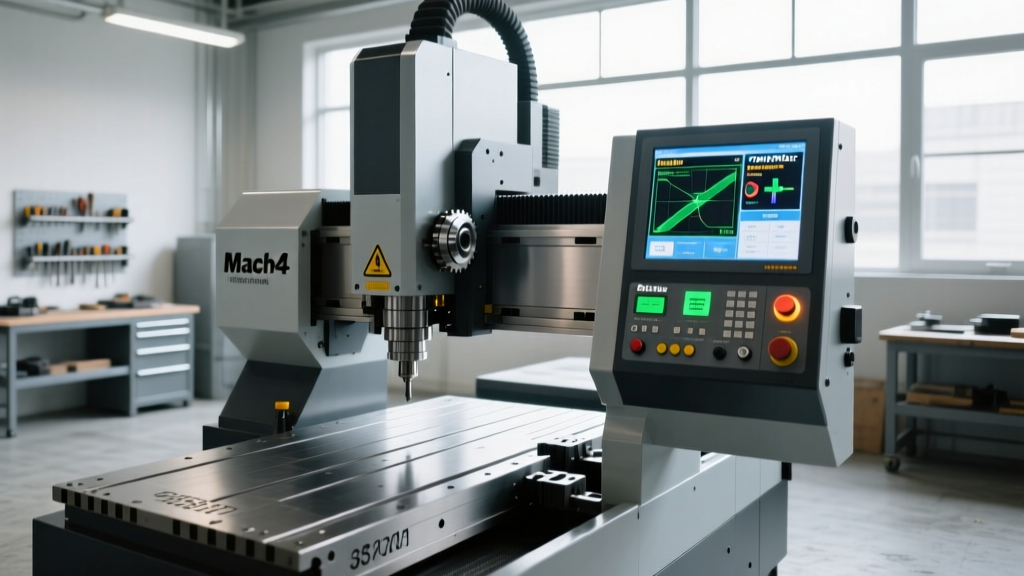
The paradigm of CNC machine education has fundamentally shifted from Cartesian G-code memorization to spatial kinematic reasoning. Historically, training programs focused on 3-axis vertical machining centers (VMCs) where the work envelope was a simple, predictable rectangular prism. If a machine boasted a 30-inch X-axis, 16-inch Y-axis, and 20-inch Z-axis travel, the usable bed size was effectively treated as identical to those linear limits. As of 2026, this static understanding is obsolete in advanced manufacturing labs.
Modern CNC machine education now requires students to differentiate between machine travel (the physical limits of the linear ballscrews) and the dynamic work envelope (the actual usable 3D volume where the tool tip can reach without colliding with the bed, column, or rotary tables). With the proliferation of 5-axis trunnion tables, swivel-head spindles, and hybrid robotic milling cells, the work envelope is no longer a box; it is a complex, intersecting spherical and cylindrical geometry. Understanding these boundaries is critical for programming efficient toolpaths and preventing catastrophic $50,000 spindle crashes.
Kinematic Envelope Comparison: Educational Lab Standards
When outfitting a modern training facility, educators must evaluate machines based on their true volumetric capacity, not just the cast-iron footprint. The table below contrasts standard educational platforms, highlighting the discrepancy between linear travel and actual part envelope capabilities.
| Machine Model | Axis Configuration | Linear Travel (X, Y, Z) | True Max Part Envelope | Approx. 2026 Lab Price |
|---|---|---|---|---|
| Pocket NC V2-50 | 5-Axis Desktop (B/A) | 4.5" x 5.0" x 4.0" | Ø 5.0" x 4.0" (Spherical limit) | $5,200 |
| Haas UMC-500 | 5-Axis Trunnion (B/C) | 20" x 16" x 16" | Ø 15.7" x 7.5" (Platter limit) | $98,500 |
| DMG MORI DMU 50 3rd Gen | 5-Axis Swivel Head (B/C) | 25.6" x 20.5" x 18.5" | Ø 19.7" x 15.7" (Table limit) | $215,000+ |
| KUKA KR 210 R2700-2 | 6-Axis Robotic Milling | N/A (Articulated Arm) | Ø 106" Reach (Spherical) | $145,000 (Cell) |
Trunnion vs. Swivel Head: Collision Dynamics in 5-Axis Training
A core component of advanced CNC machine education is teaching the geometric limitations of different 5-axis architectures. The two dominant configurations—trunnion table (A/B or B/C axis on the bed) and swivel head (B/C axis on the spindle)—dictate entirely different work envelope rules.
The Trunnion Table Limitation
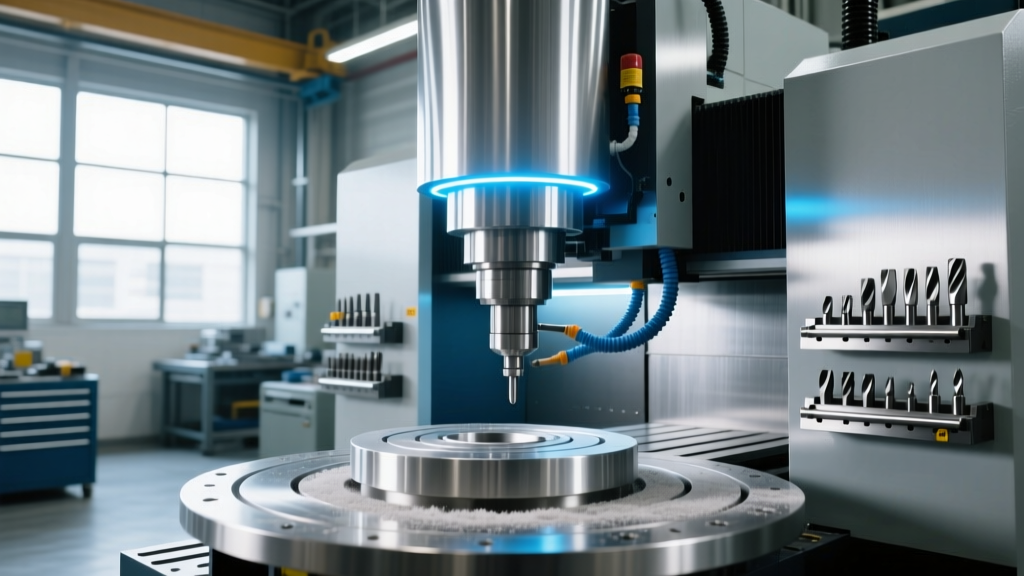
In a trunnion setup like the Haas UMC-500, the part tilts and rotates. The primary educational hurdle here is the Z-axis collision zone. When the B-axis tilts to -90 degrees (or -110 degrees for undercutting), the height of the part plus the vise plus the tool holder must not exceed the distance from the spindle nose to the center of rotation. If a student programs a 6-inch tool extension while machining the side of a 4-inch tall part in a 5-inch vise, the spindle head will ram directly into the machine bed during the A-axis rotation. Students must learn to calculate the Tool Center Point Control (RTCP) pivot distances dynamically.
The Swivel Head Advantage and Singularity
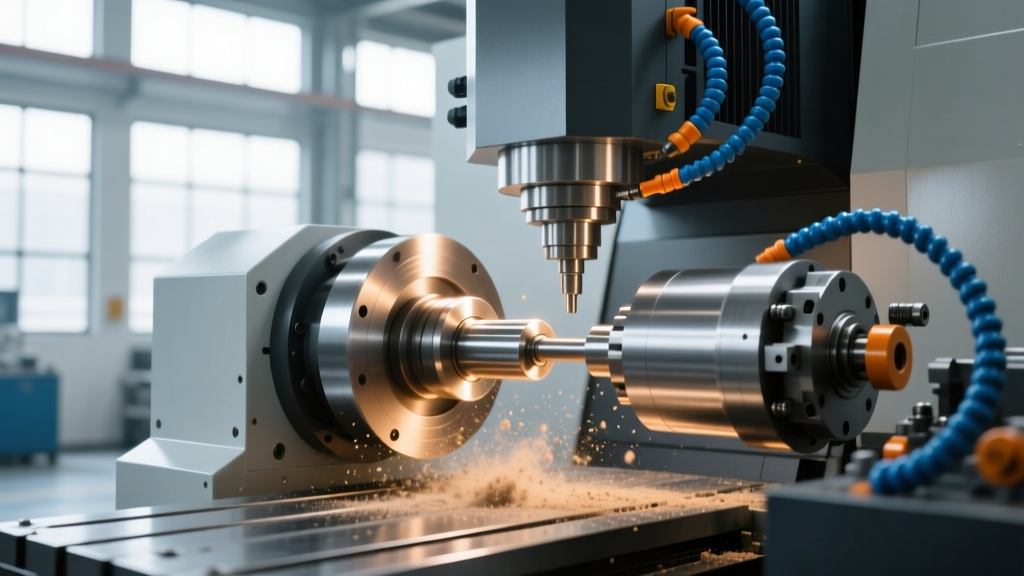
Conversely, swivel head machines (like the DMG MORI DMU series) keep the part stationary on a fixed bed while the spindle articulates. This allows for much heavier parts and a wider, flatter work envelope. However, CNC machine education must address kinematic singularities. When the B-axis approaches 0 degrees (vertical) while simultaneously executing rapid C-axis rotations, the linear axes must move at infinite speeds to maintain toolpath continuity, resulting in gouging or machine faults. Teaching students to map toolpath vectors away from singularity zones is a mandatory skill for 2026 aerospace manufacturing curriculums.
⚠️ Warning: RTCP Calibration ErrorsIn educational environments, machines are frequently crashed due to uncalibrated RTCP (Rotary Tool Center Point) parameters. If the machine's internal pivot distance data does not perfectly match the physical distance from the spindle face to the tool tip, the CAM system's simulated envelope will not match the physical reality. Always mandate that students run a probe-based kinematic calibration cycle (e.g., using a Renishaw OMP60) before executing 5-axis code.
Digital Twins: Simulating the Envelope Before the Cut
Because physical crashes destroy educational budgets and halt lab progress, modern CNC machine education relies heavily on digital twin simulation. According to initiatives tracked by the SME Education Foundation, top-tier PRIME (Partnership Response In Manufacturing Education) schools now mandate virtual verification before any student touches the machine control.
Software platforms like VERICUT and advanced Mastercam modules do not just simulate the toolpath; they simulate the exact kinematic envelope of the specific machine model. Students import the machine's 3D CAD assembly, including the specific vise, soft jaws, and tool holder. The software calculates the true volumetric intersection in real-time. If a student attempts to index a part 180 degrees on a trunnion table, and the 12-inch part diameter exceeds the machine's Y-axis clearance to the column, the simulation flags a non-linear collision—an error that standard CAM toolpath verification would completely miss.
Robotic Milling and the Spherical Work Envelope
The bleeding edge of CNC machine education involves hybrid manufacturing cells utilizing 6-axis industrial robots (such as KUKA or ABB arms) equipped with high-speed spindles. Unlike traditional CNC beds, a robotic work envelope is a hollow sphere defined by the arm's maximum reach and minimum folding radius.
Teaching robotic CNC requires an entirely different spatial framework. Students must learn about pose stiffness. A robot's rigidity varies drastically depending on where the tool is within its spherical envelope. Machining near the fully extended reach limit results in severe chatter and poor surface finishes due to joint compliance. Educational labs are now utilizing force-torque sensors and AI-driven adaptive control to teach students how to map toolpaths exclusively within the robot's "stiffness sweet spots," a concept heavily researched by the NIST Advanced Manufacturing Portal.
Procurement Framework: Matching Bed Size to Curriculum Tiers
For technical directors and department heads purchasing equipment in 2026, selecting the right bed size and envelope architecture must align directly with the target industry outcomes of the curriculum. Use this framework to guide capital expenditures:
- Tier 1: High School & Introductory Programs (Budget: Under $15,000)
Recommendation: Desktop 5-Axis (e.g., Pocket NC V2-50).
Envelope Focus: Teach the fundamentals of multi-axis kinematics, tool length offsets, and basic RTCP without the risk of massive financial loss. The tiny 5-inch spherical envelope forces students to focus on micro-machining precision and tight-clearance toolpath generation. - Tier 2: Community College & Journeyman Apprenticeships (Budget: $80,000 - $120,000)
Recommendation: Compact Trunnion 5-Axis (e.g., Haas UMC-500 or Doosan DVF 5000).
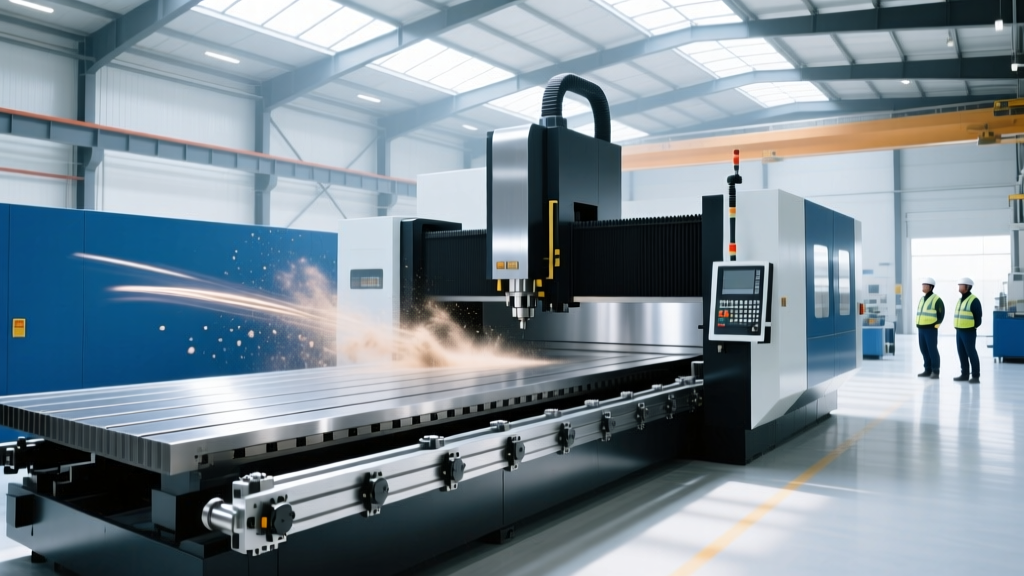
Envelope Focus: The 16-to-20-inch work envelope is the industry standard for mold making and aerospace structural components. Students learn to manage workholding interference, tailstock deployments, and chip evacuation within a confined, tilting volume. - Tier 3: University Research & Advanced R&D (Budget: $200,000+)
Recommendation: Large Format Swivel Head or Robotic Hybrid Cell.
Envelope Focus: Focus on unlimited-Z concepts, robotic singularity avoidance, and machining large-scale composites. The massive envelope requires advanced metrology, laser tracker calibration, and thermal expansion compensation training.
"The work envelope is no longer just a physical boundary; it is a programmable variable. In 2026, a machinist's true expertise isn't measured by how fast they can clear a block of aluminum, but by how intelligently they can manipulate the machine's kinematic limits to access undercut geometries without triggering a collision."
— Advanced Manufacturing Curriculum Directive, 2026
Mastering the intersection of bed size, tool geometry, and rotary kinematics is the defining characteristic of the next generation of manufacturing professionals. By prioritizing dynamic envelope education over static G-code drills, institutions ensure their graduates are ready to operate the highly complex, multi-axis cells driving modern industry.