Power Setup for Every CNC Machine Degree of Automation (2026)
Master 2026 CNC machine electrical requirements. Match your power setup, kVA, and grounding to the specific CNC machine degree of automation.
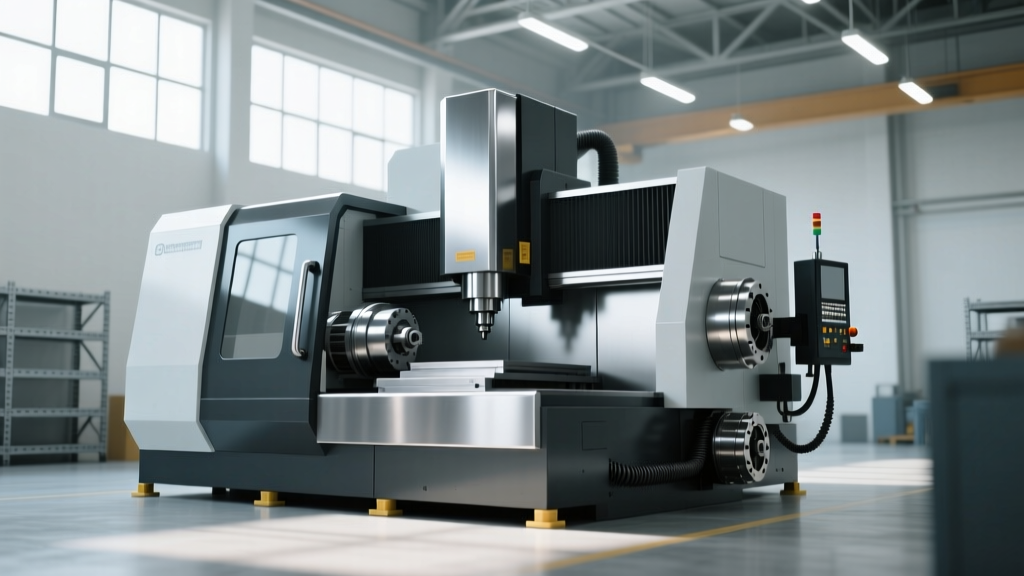
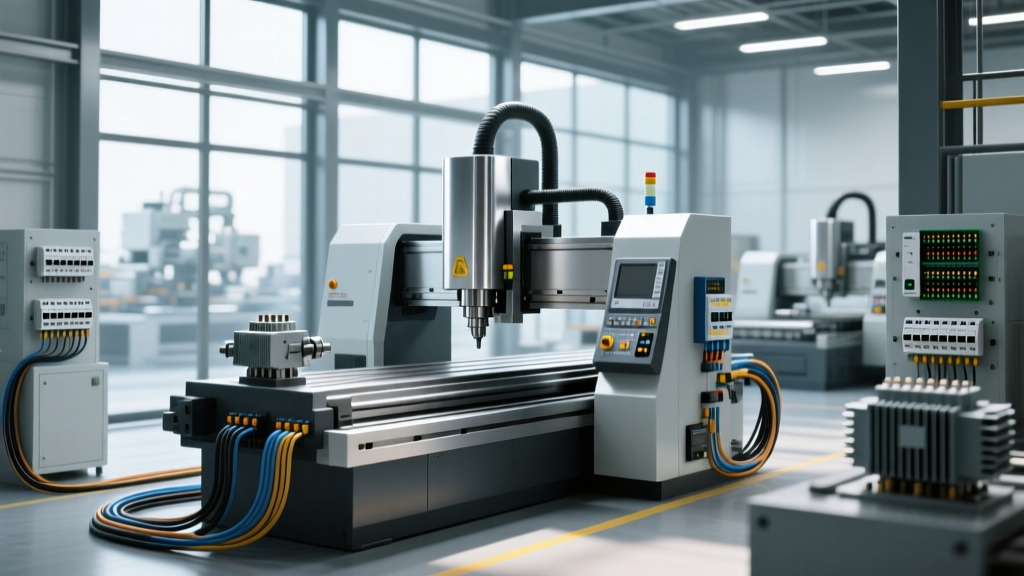
The shift toward smart manufacturing in 2026 has fundamentally altered industrial electrical infrastructure. Modern CNC equipment is no longer just a mechanical load; it is a complex network of regenerative drives, IoT sensors, and high-frequency spindle motors. When evaluating electrical requirements, the CNC machine degree of automation—ranging from basic 3-axis vertical mills to fully autonomous 5-axis mill-turn centers—dictates the complexity of your power setup, transformer sizing, and harmonic mitigation strategies.
2026 Power Grid Reality: According to the U.S. Department of Energy, manufacturing facilities integrating high-degree automated CNC cells have seen a 14% increase in peak demand charges due to unmitigated harmonic distortion from variable frequency drives (VFDs). Proper electrical setup is now a margin-protecting necessity, not just a code requirement.Decoding the CNC Machine Degree of Power Demand
The electrical footprint scales non-linearly with the CNC machine degree of sophistication. A standard 3-axis mill primarily requires power for spindle rotation and axis servos. In contrast, a high-degree 5-axis mill-turn center with integrated robotic part loaders and high-pressure coolant pumps demands specialized power distribution, active front-end (AFE) drives, and dedicated cooling circuits.
2026 Power Requirements Matrix by Machine Class
| Machine Class & Model | CNC Machine Degree | Voltage / Phase | Min. kVA Required | Main Breaker Size | Wire Gauge (Copper, 75°C) |
|---|---|---|---|---|---|
| Entry Mill (Haas VF-2SS) | 3-Axis Basic | 230V / 3-Phase | 35 kVA | 100A | 3 AWG |
| Mid-Tier (Doosan DNM 5700) | 3-Axis Advanced | 400V / 3-Phase | 45 kVA | 80A | 4 AWG |
| 5-Axis Mill (Mazak VARIAXIS i-700) | 5-Axis High | 400V / 3-Phase | 65 kVA | 125A | 1 AWG |
| Mill-Turn (DMG MORI NTX 1000) | Multi-Axis Hybrid | 400V / 3-Phase | 85 kVA | 150A | 1/0 AWG |
2026 Innovations: AFE Drives and Regenerative Power
As the CNC machine degree of automation increases, so does the sensitivity to power quality anomalies. Traditional passive filters are being replaced by Active Front-End (AFE) drive technology. In 2026, manufacturers like Siemens and FANUC utilize AFE rectifiers that reduce Total Harmonic Distortion (THD) to less than 5%, eliminating the need for bulky, heat-generating passive line reactors.
- Regenerative Braking Networks: High-degree 5-axis machines frequently decelerate heavy spindles and rotary tables. Modern setups use common DC bus architectures, allowing the kinetic energy from a decelerating axis to power an accelerating axis, reducing main grid draw by up to 22%.
- IoT Power Monitoring: Integrating Schneider Electric EcoStruxure or similar smart meters at the machine disconnect allows real-time tracking of power factor and voltage sags, feeding data directly into the facility's MES (Manufacturing Execution System).
Never place a standard CNC machine with a VFD spindle on the same isolated ground bus as your metrology lab equipment (e.g., Zeiss CMMs). The high-frequency switching of the VFD creates common-mode noise that will cause micro-stutters in CMM probe readings. Always use separate isolated ground rods or a dedicated isolation transformer for metrology.
Step-by-Step: Sizing Transformers and Calculating Voltage Drop
Utility voltage in industrial parks frequently fluctuates between 460V and 495V. Most high-degree European and Japanese CNC machines (like those from DMG MORI or Makino) are rated strictly for 400V ±10%. Feeding 480V directly into a 400V machine will instantly fault the drives or degrade the spindle motor insulation.
1. Select the Correct Transformer Topology
Use a Delta-Wye (Δ-Y) isolation transformer with a K-factor rating of 13 or higher. The K-factor indicates the transformer's ability to handle the non-linear harmonic loads generated by the CNC's switching power supplies without overheating. Do not use standard auto-transformers for high-degree CNC cells, as they do not provide galvanic isolation and will pass common-mode noise directly to the machine controller.
2. Calculate Voltage Drop for Drop Cables
Long cable runs from the transformer to the machine disconnect cause voltage drop, leading to servo alarms during heavy cutting operations. Use the standard NEC voltage drop formula:
VD = (2 × K × I × L) / CM
- VD: Voltage Drop (Target: Less than 3% of nominal voltage)
- K: Direct Current Constant (12.9 for Copper at 75°C)
- I: Full Load Amperage (FLA) of the machine
- L: One-way length of the cable run in feet
- CM: Circular Mils of the wire gauge (e.g., 1 AWG = 83,690 CM)
Example: A 60A load running 150 feet using 3 AWG copper (52,620 CM).
VD = (2 × 12.9 × 60 × 150) / 52,620 = 4.4V. On a 230V system, this is a 1.9% drop, which is well within the safe 3% threshold.
Grounding and Isolation: The Hidden Failure Point
According to NIST's Smart Manufacturing guidelines, improper grounding is the leading cause of unexplained CNC controller crashes and data corruption in networked environments. The CNC machine degree of network integration means that a ground loop can introduce voltage differentials across Ethernet cables, frying communication ports.
Critical Grounding Specifications
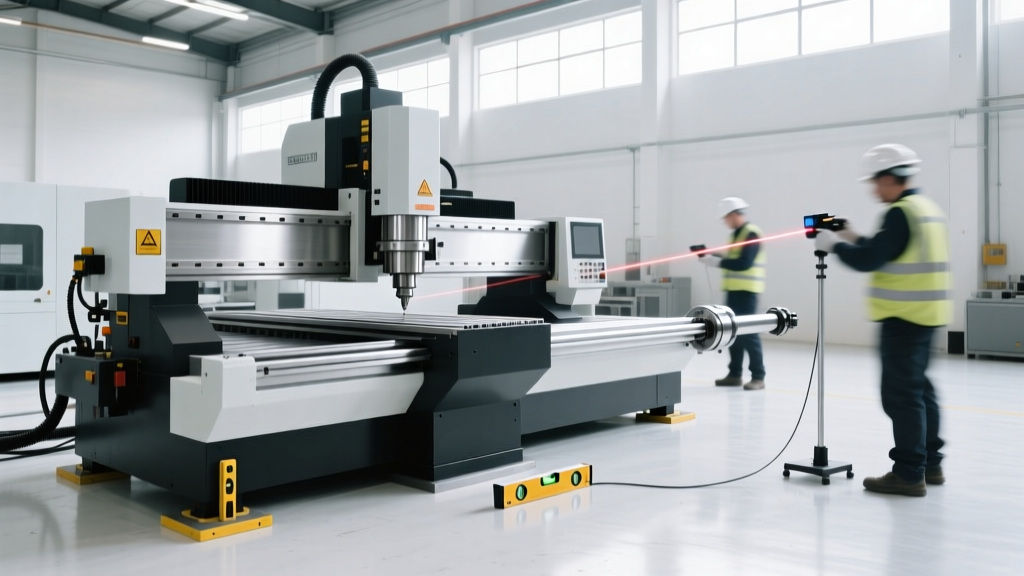
- Impedance Target: The ground resistance at the machine's grounding bus bar must measure less than 1.0 ohm to earth. Use a fall-of-potential ground tester to verify this; standard multimeters are insufficient.
- Star Topology: Wire all ground conductors from the machine, chip conveyor, and high-pressure coolant pump back to a single central grounding bus bar in a star pattern. Never daisy-chain grounds through the machine's conduit.
- Conduit is Not a Ground: While NEC code allows EMT conduit as an equipment grounding conductor in some building applications, CNC manufacturers strictly require a dedicated, insulated copper ground wire (green or green/yellow) pulled inside the conduit alongside the phase conductors.
FAQ: Troubleshooting 2026 CNC Electrical Anomalies
Why does my 5-axis machine throw a 'DC Bus Undervoltage' alarm during rapid traverses?
This is almost always a utility-side voltage sag or an undersized transformer. When multiple axes accelerate simultaneously, the inrush current pulls the voltage down. If the transformer kVA is too close to the machine's continuous rating (rather than its peak kVA), the DC bus capacitors cannot maintain charge. Upsize the transformer by 20% and verify utility phase balance.
Can I use a portable generator to run a CNC machine during a grid outage?
Only if the generator features a True RMS voltage regulator and an active voltage response time of under 50 milliseconds. Standard construction generators produce a modified sine wave with high THD (>20%), which will immediately trigger overvoltage faults in the CNC's regenerative drives and potentially damage the spindle inverter.
How do I integrate a legacy 230V machine into a modern 480V smart grid?
Install a dedicated 480V Delta to 240V Delta step-down transformer. Ensure the secondary Delta is center-tapped and grounded to provide a 120V wild-leg if the machine requires 120V for control cabinets and coolant pumps. Do not use a Wye secondary, as the neutral shift under unbalanced CNC loads can cause control PC brownouts.
For further technical specifications on facility layout and machine integration, always consult the specific installation manuals provided by OEMs like Haas Automation or Mazak, as electrical requirements are frequently updated with new controller revisions.