2026 CNC Machine CNC Bed Size & Work Envelope Trends
Explore 2026 CNC machine CNC bed size trends, work envelope comparisons, and AI-driven spatial optimization for modern manufacturing shops.
The Evolution of the CNC Machine CNC Work Envelope
In precision manufacturing, the physical dimensions of a machine's table no longer dictate its true production capacity. When evaluating a modern CNC machine, CNC bed size is often the first specification buyers look at, but the actual usable work envelope—the three-dimensional space where the cutting tool can safely interact with the workpiece—is the critical metric for 2026 shop floor planning. The industry has shifted from simply buying larger beds to maximizing volumetric efficiency through multi-axis kinematics, modular pallet systems, and AI-driven toolpath optimization.
According to data from AMT - The Association For Manufacturing Technology, the average footprint of high-production machining centers has decreased by 14% over the last five years, while their effective machining volume has increased. This paradox is driven by the elimination of dead space within the machine casting and the integration of automated material handling that decouples setup time from the physical bed constraints.
💡 The Cube-to-Footprint Ratio
Forward-thinking machine shops in 2026 are using the 'Cube-to-Footprint Ratio' (CTR) to evaluate capital equipment. CTR is calculated by dividing the maximum usable machining volume (X × Y × Z travel minus toolholder and spindle nose clearance) by the total floor space the machine occupies, including chip conveyors and coolant tanks. A higher CTR indicates superior spatial efficiency, directly impacting cost-per-square-foot ROI in high-rent industrial zones.
Work Envelope Comparison Matrix: Standard vs. Multi-Tasking
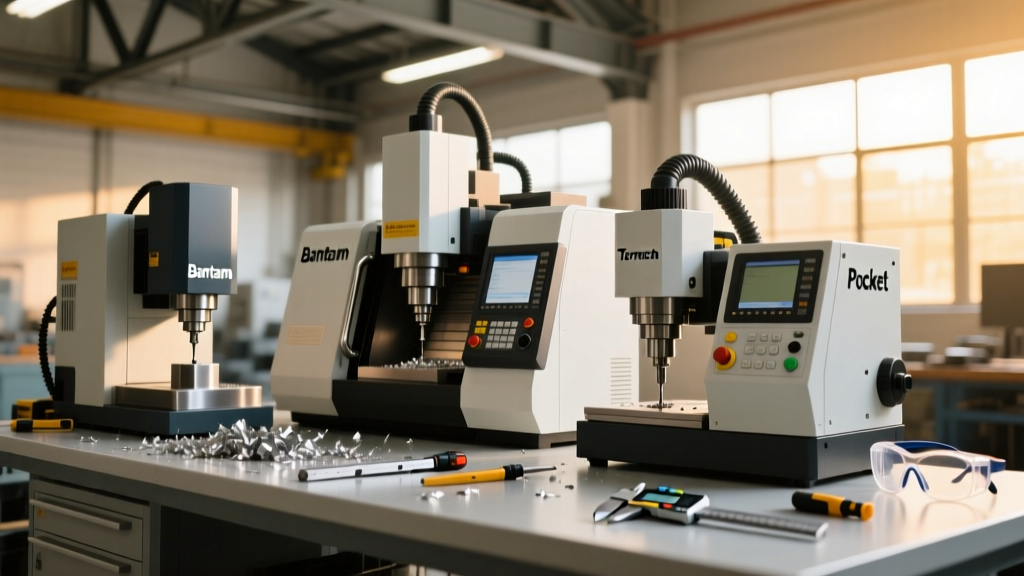
To understand how different machine architectures utilize their physical beds, we must compare standard vertical machining centers (VMCs) against 5-axis trunnion machines and mill-turn centers. The table below highlights real-world specifications and 2026 pricing for four benchmark models.
| Machine Model | Bed Size (Table Dimensions) | XYZ Travel (Usable Envelope) | Max Workpiece Diameter (5-Axis) | 2026 Base Price Range |
|---|---|---|---|---|
| Haas VF-2SS | 36' x 14' (914 x 356 mm) | 30' x 20' x 20' (762 x 508 x 508 mm) | N/A (3-Axis VMC) | $68,000 - $75,000 |
| DMG MORI DMU 50 3rd Gen | Ø 500 mm (Integrated Trunnion) | 650 x 520 x 475 mm | Ø 450 mm / 300 kg | $165,000 - $190,000 |
| Okuma MU-4000V | 400 x 400 mm (Pallet) | 600 x 540 x 300 mm | Ø 400 mm / 200 kg | $210,000 - $245,000 |
| Mazak INTEGREX i-200S | Ø 26' x 30' (Mill-Turn Chuck) | X: 41.3' / Y: 10.2' / Z: 41.9' | Ø 26' (Turning Capacity) | $380,000 - $450,000+ |
Notice the disparity between the physical bed size and the usable travel. On the Haas VF-2SS, the 36-inch table does not yield 36 inches of X-axis cutting travel due to way cover compression and spindle housing geometry. Conversely, the DMG MORI DMU 50 sacrifices raw X-Y table real estate to accommodate the trunnion table's rotational kinematics, allowing a 5-sided machining envelope within a remarkably compact casting.
The Rise of Modular Beds and Pallet-Changer Ecosystems
The most significant innovation in CNC machine CNC bed size utilization is the widespread adoption of modular pallet pools. Instead of purchasing a machine with a massive 80-inch bed to accommodate multiple vises and fixtures, shops are investing in standard 400mm or 500mm pallet machines integrated with linear pallet pools (such as those offered by Fastems or Makino).
'The physical bed of the machine is no longer the bottleneck; the spindle's uptime is. By utilizing a 12-pallet linear pool, a machine with a relatively small 500x500mm work envelope can process 12 distinct setups unattended over a weekend, effectively multiplying the bed's capacity by a factor of twelve without increasing the machine's physical footprint.' — Advanced Manufacturing Systems Engineering Report, National Institute of Standards and Technology (NIST).
Economic Impact of Pallet Automation
Adding a 6-pallet system to a standard horizontal machining center (HMC) like the Makino a61nx adds approximately $110,000 to the capital expenditure. However, this investment eliminates 90% of non-cutting setup time. For a shop running $150/hour, the ROI on pallet automation is typically realized within 14 months, making it a far more capital-efficient strategy than buying a larger-bed machine that sits idle during manual setups.
AI-Driven Toolpathing and Envelope Maximization
Hardware innovations are only half the equation. In 2026, software plays a critical role in pushing the boundaries of the CNC machine CNC work envelope. AI-enhanced CAM modules, such as hyperMILL's automated collision avoidance and Mastercam's dynamic motion technology, allow programmers to utilize the absolute extreme limits of the Z-axis and rotary axes without fear of spindle crashes.
⚠️ Z-Axis Collision Blind Spots
When utilizing the maximum Z-height of a VMC (e.g., the 20-inch Z-travel on a standard VF-2), operators often forget to subtract the gauge length of the toolholder and the physical length of the cutting tool. A 6-inch face mill on a 4-inch extension can instantly reduce your usable Z-axis envelope by 10 inches. Always configure your CAM software's machine kinematics model to include the exact spindle nose-to-table minimum clearance specified by the OEM.
According to Sandvik Coromant Machining Knowledge, AI toolpath algorithms can now automatically tilt the B and C axes of a 5-axis machine to keep the tool shank within the safe kinematic envelope, allowing for deeper cavity milling on smaller trunnion tables than was mathematically possible with traditional 3+2 indexing.
Decision Framework: Matching Bed Size to Production Volume
Selecting the right work envelope requires a rigorous analysis of your specific production mix. Use this four-step framework to avoid over-purchasing bed space or underestimating clearance requirements.
- Map the Maximum Part Bounding Box: Do not just measure the finished part. Measure the raw stock size plus an additional 1.5 inches on all sides for vise jaws, soft jaw fixtures, or toe clamps. This defines your absolute minimum X-Y requirement.
- Calculate Toolholder Z-Clearance: Identify your longest required tool assembly (e.g., a 12-inch deep-hole drill in an HSK-A63 holder). Subtract this total gauge length from the machine's advertised Z-axis travel to find your true usable Z-height.
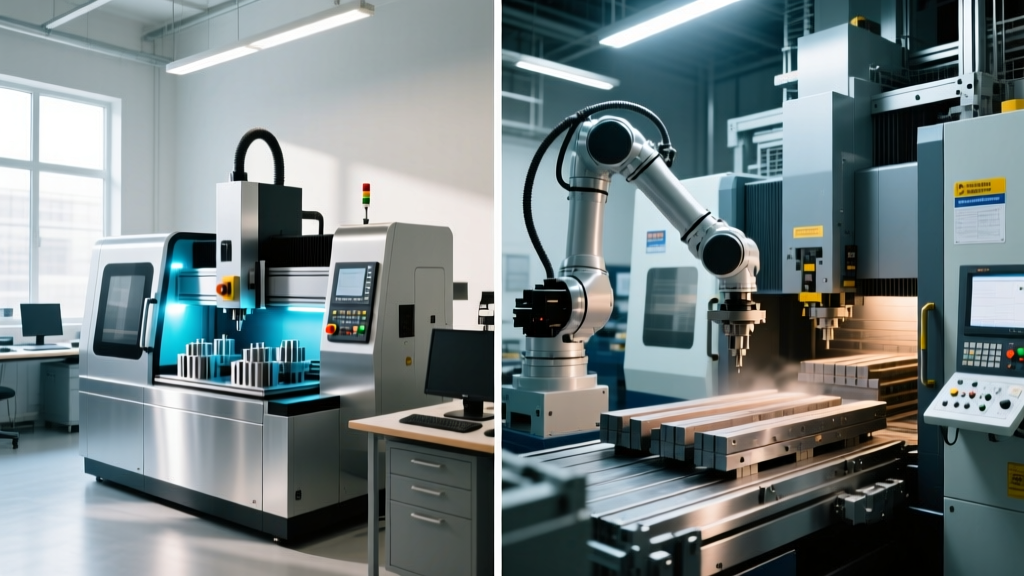
- Evaluate Automation Footprint: If you plan to integrate a robotic arm (like a FANUC CRX-25iA) for part loading, ensure the machine's door opening and bed height align with the robot's reach envelope. A bed that is too low will force the robot into awkward, slow kinematic postures, increasing cycle times.
- Analyze the Volumetric Utilization Rate: If more than 70% of your parts utilize less than 40% of a large-bed machine's travel, you are wasting capital on cast iron and floor space. Pivot to a smaller-bed, high-speed machine paired with a pallet changer to maximize spindle uptime.
Future-Proofing Your Shop Floor
The trend for 2026 and beyond is clear: the industry is moving away from monolithic, oversized machine beds toward highly optimized, compact work envelopes supported by external automation and intelligent software. By focusing on the Cube-to-Footprint Ratio and leveraging multi-axis kinematics, manufacturing facilities can drastically reduce their real estate costs while simultaneously increasing throughput and precision.