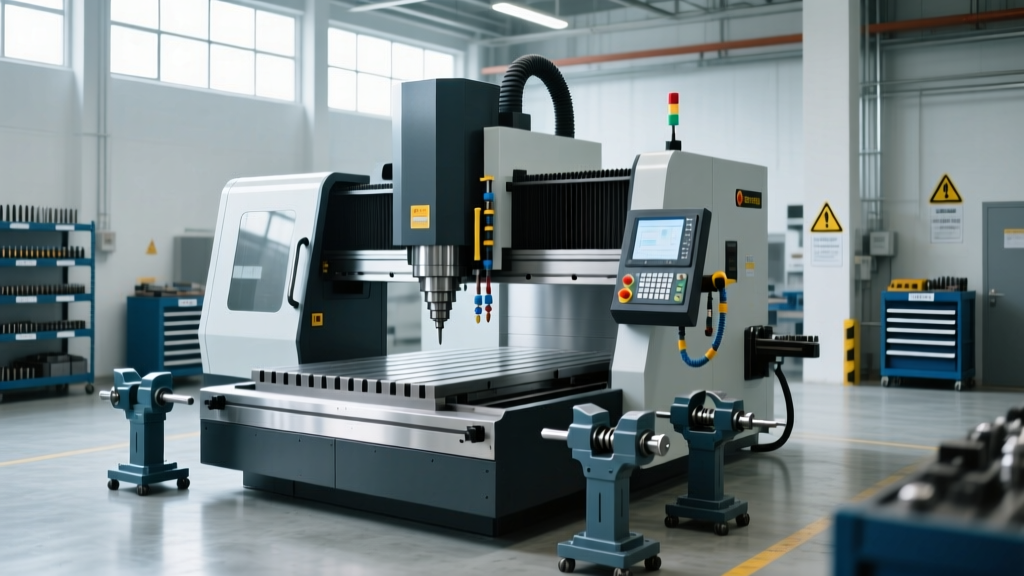
CNC Shearing Machine Chip Management and Dust Collection Maintenance
Optimize your CNC shearing machine uptime with precise maintenance schedules for dust collection filters, scrap conveyors, and chip management systems.
The Dual Challenge of Shearing Debris
Unlike CNC milling centers that produce continuous spiraled chips, a CNC shearing machine generates a bipartite waste stream: heavy, sharp slugs and offcuts (chip management) alongside fine, aerosolized metallic and oxide dust (dust collection). When cutting galvanized, painted, or coated sheet metal, the immense friction of the guillotine blade vaporizes zinc and polymer coatings. This creates sub-micron particulates that bypass standard shop vacuums, infiltrating hydraulic valves, linear guideways, and servo-motor encoders.
Managing this dual waste stream requires a bifurcated maintenance approach. The chip management system (typically hinged steel belt or magnetic conveyors) handles the macro-scrap, while the dust collection system (source-capture hoods tied to a central cartridge collector) manages the micro-particulates. Neglecting either system leads to catastrophic secondary damage. A jammed scrap conveyor can lift the sheet metal, causing a misfeed and crashing the backgauge, while blinded dust filters reduce capture velocity, allowing abrasive zinc dust to score the machine's precision ball screws.
Industry Benchmark: Unplanned downtime on a high-tonnage CNC shear (e.g., 1/2" x 10' capacity) costs between $800 and $1,400 per hour in lost throughput. Preventive maintenance on extraction and conveyor systems yields a 9:1 ROI by preventing hydraulic pump cavitation, servo-valve stiction, and backgauge crashes.Daily and Weekly Operator-Level Maintenance
The foundation of reliable chip and dust management lies in strict, operator-executed daily routines. These tasks require minimal tools but demand high consistency.
Scrap Conveyor Tension and Tracking
Most CNC shearing lines utilize hinged steel belt conveyors to evacuate slugs. Over time, the abrasive nature of steel slugs wears the hinge pins, causing the belt to stretch and track improperly.
- Daily: Visually inspect the conveyor discharge chute for slug stacking. A buildup of slugs indicates a slipping belt or a jammed hinge pin.
- Weekly: Check belt tension using the take-up bearings at the tail pulley. The belt should have exactly 1/4" of vertical deflection at the midpoint of the return run when pressed with 10 lbs of force. Overtightening accelerates wear on the drive motor gearbox, while undertightening causes the belt to slip under heavy slug loads.
- Material Specifics: If your facility shears austenitic stainless steel (304/316 grades), magnetic conveyors will fail, as these alloys are non-magnetic. You must rely entirely on hinged belt conveyors and inspect the wiper blades daily to prevent fine stainless slivers from wrapping around the tail pulley.
Differential Pressure (ΔP) Monitoring
The dust collection system's health is measured by its differential pressure (ΔP) across the filter bank. Modern cartridge collectors (such as the Donaldson Torit Downflo or Camfil Gold Series) are equipped with magnehelic gauges or digital transducers.
- Daily: Record the ΔP reading at the end of the shift. A clean filter bank typically reads between 1.5" and 2.5" w.g. (inches of water gauge).
- Weekly: Verify the pulse-jet cleaning cycle is firing. You should hear a distinct, rhythmic "thump" from the solenoid valves every 10 to 15 seconds. If the system runs continuously without pulsing, the filters will blind within 48 hours.
Filter Media Selection and Replacement Matrix
Selecting the correct filter media for a CNC shearing machine is critical. The airborne dust from shearing is heavily weighted with sharp, metallic micro-slivers and, in the case of galvanized steel, sticky zinc oxide. Using the wrong media will result in premature blinding and excessive energy consumption.
| Filter Media Type | Best Application | Max Temp | Target ΔP for Changeout | Avg. Cost per Cartridge (2026) |
|---|---|---|---|---|
| Standard Cellulose | Mild steel, uncoated aluminum | 150°F (65°C) | 4.0" - 6.0" w.g. | $110 - $160 |
| Spunbond Polyester | Oily sheets, light coolant mist | 180°F (82°C) | 5.0" - 7.0" w.g. | $180 - $240 |
| PTFE Membrane | Galvanized, zinc-coated, fine oxides | 225°F (107°C) | 6.0" - 8.0" w.g. | $280 - $390 |
Expert Note: For facilities shearing galvanized steel, PTFE (Polytetrafluoroethylene) membrane filters are non-negotiable. The microscopic zinc oxide particles are highly adhesive and will embed themselves into the depth of standard cellulose media, rendering pulse-jet cleaning useless. PTFE provides a surface-loading characteristic, allowing the pulse-jet to easily snap the zinc dust cake off the filter.
Quarterly and Bi-Annual Service Schedules
While operators handle the daily checks, certified maintenance technicians must execute deeper system audits on a quarterly and bi-annual basis to ensure compliance with NFPA 652 combustible dust standards and maintain optimal airflow dynamics.
Pulse-Jet Cleaning System Verification (Quarterly)
The pulse-jet system relies on high-pressure compressed air to expand the filter cartridge and fracture the dust cake. If the air pressure drops or moisture enters the system, the filters will fail.
- Pressure Audit: Verify the compressed air reservoir is maintaining 85-90 PSI. Pressures below 80 PSI lack the kinetic energy to dislodge heavy metallic dust cakes.
- Moisture Check: Bleed the air receiver tank. Any liquid water indicates a failed dryer. Moisture mixing with metallic dust creates a cement-like paste on the filter media. The compressed air dew point must be maintained below -20°F.
- Diaphragm Valve Inspection: Rebuild or replace the pulse valve diaphragms. Micro-tears in the rubber diaphragms cause continuous air bleeding, which starves the system of the high-pressure burst required for cleaning.
Ductwork Velocity and Rotary Airlock Audits (Bi-Annual)
Metallic dust is heavy. If the air velocity in the ductwork drops, the dust will settle in horizontal runs, creating a severe combustible dust hazard and restricting airflow to the shear enclosure.
- Velocity Testing: Use a pitot tube and manometer to measure duct velocity. For heavy metal dust, horizontal duct runs must maintain a minimum transport velocity of 4,000 to 4,500 FPM (feet per minute). If velocity drops below 3,800 FPM, inspect the blower wheel for material buildup or check for duct leaks.
- Rotary Airlock Clearance: The rotary airlock at the base of the collector hopper prevents air from bypassing the collection bin. Measure the clearance between the rotor tips and the housing. If clearance exceeds 0.010", air will leak past the rotor, reducing suction at the CNC shear hood. Replace the rotor or install adjustable tip seals.
Troubleshooting Common Extraction Failures
When the chip or dust management system fails, rapid diagnosis is required to minimize shear downtime. Use this decision matrix to isolate the root cause.
Symptom: Dust is escaping the shear blade enclosure and settling on the backgauge.
- Cause 1: Filter blinding. The ΔP gauge reads above 8.0" w.g. Fix: Initiate a manual continuous pulse cycle. If ΔP does not drop below 4.0" w.g. within 10 minutes, the filters are permanently blinded and must be replaced.
- Cause 2: Ductwork settling. Fix: Inspect horizontal duct runs for heavy dust accumulation. Clean the ductwork and verify the blower motor is drawing the correct amperage (indicating it is moving the design CFM).
- Cause 3: Capture velocity failure. Fix: Measure airflow at the shear hood slot. Capture velocity must be at least 200-250 FPM. If lower, adjust the manual blast gates on other machines tied to the same central collector to balance the system.
Symptom: Scrap conveyor is jamming or slipping under normal slug loads.
- Cause 1: Hinge pin wear and belt stretch. Fix: Adjust the tail pulley take-up bearings. If the bearings are maxed out, remove one or two belt sections and re-pin the belt.
- Cause 2: Slug wedging in the throat. Fix: Shearing narrow strips (under 1") often causes slugs to turn sideways and wedge between the belt and the conveyor pan. Install a flexible rubber skirt or a secondary wiper plate at the loading zone to force slugs flat against the belt.
Strategic Upgrades for Modern Production Floors
As manufacturing environments evolve, relying on manual maintenance logs is no longer sufficient for high-volume CNC shearing cells. Upgrading to IoT-enabled monitoring systems provides predictive maintenance capabilities that eliminate surprise failures.
Installing wireless differential pressure transducers on the dust collector allows the system to send automated alerts to the maintenance manager's smartphone when the ΔP rises 15% above the baseline. Similarly, equipping the scrap conveyor drive motor with a vibration and temperature sensor can detect bearing wear or slug jams before the motor overheats and trips the thermal overload relay. By integrating these smart sensors into your facility's CMMS (Computerized Maintenance Management System), you transition from reactive repairs to predictive servicing, ensuring your CNC shearing machine maintains maximum availability and precision year-round.