2026 Budget: CNC Machine for Auto Parts in Stainless Steel
Analyze 2026 CapEx and OpEx costs for a CNC machine for auto parts in stainless steel. Includes machine tiers, tooling budgets, and ROI frameworks.
The True Cost of Machining Stainless Auto Components
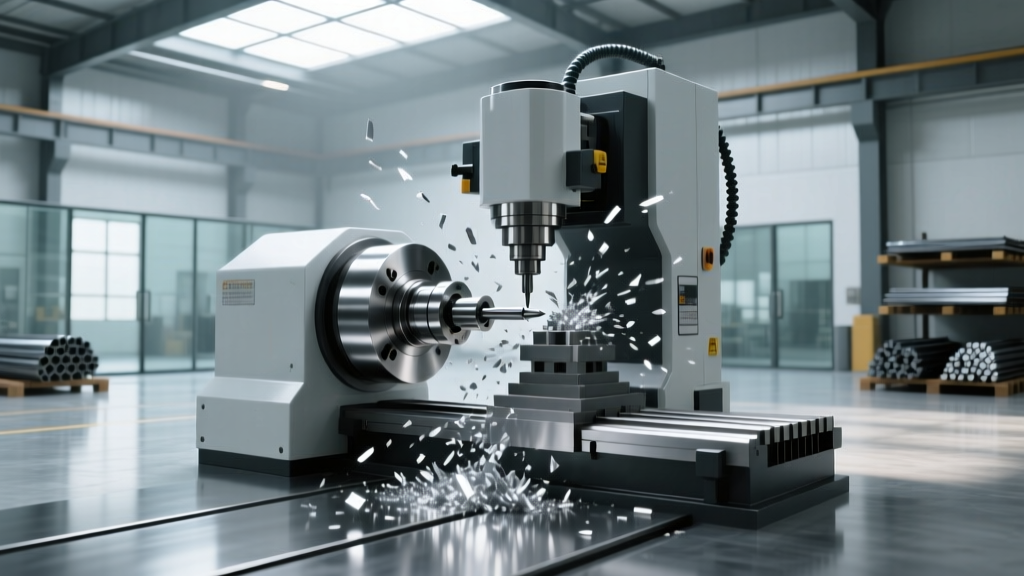
Budgeting for a CNC machine for auto parts machined from stainless steel requires navigating severe tool wear, high machine rigidity demands, and complex chip evacuation. Unlike aluminum or mild steel, austenitic and martensitic stainless grades (such as 304, 316L, and 17-4 PH) exhibit high work-hardening rates and low thermal conductivity. This means heat concentrates at the cutting edge rather than dissipating into the chip, accelerating tool degradation and demanding specialized capital equipment.
When evaluating a CNC machine for auto parts in 2026, shop owners must look beyond the base price of the casting and spindle. A comprehensive financial model must account for high-pressure coolant (HPC) integration, premium carbide tooling amortization, and the energy costs of high-torque spindles. According to Sandvik Coromant, machining stainless steel requires rigid setups and specific cutting geometries to prevent built-up edge (BUE) and thermal cracking, directly influencing your operational expenditure (OpEx).
Work Hardening Multiplier: If your CNC lacks the rigidity to maintain consistent chip loads, stainless steel will work-harden ahead of the cut. This can reduce insert life by up to 70% and increase scrap rates in tight-tolerance automotive fittings like fuel injection rails and ABS sensor housings.Capital Expenditure (CapEx): Selecting the Right Machine Tier
Standard 10,000 RPM spindles optimized for aluminum are fundamentally mismatched for stainless steel. Stainless requires high torque at lower RPMs (typically 2,000 to 4,000 RPM for roughing 304/316L). Furthermore, automotive production demands secondary operations, making dual-spindle or mill-turn configurations highly cost-effective to reduce part handling.
| Machine Tier | Example Model (2026) | Estimated Base Price | Stainless Suitability & Auto Part Application |
|---|---|---|---|
| Mid-Range Dual Spindle | Haas DS-20Y | $195,000 - $215,000 | Excellent for mid-volume fittings. Y-axis allows off-center milling. Requires HPC upgrade (+$32,000). |
| High-End Mill-Turn | Mazak INTEGREX i-200S | $480,000 - $550,000 | Ideal for complex 17-4 PH shafts and turbo components. Built-in high torque and thermal stability. |
| Swiss-Type CNC | Tsugami B0205 | $260,000 - $290,000 | Best for high-volume, small-diameter 303/304 auto sensor housings and fuel system pins. |
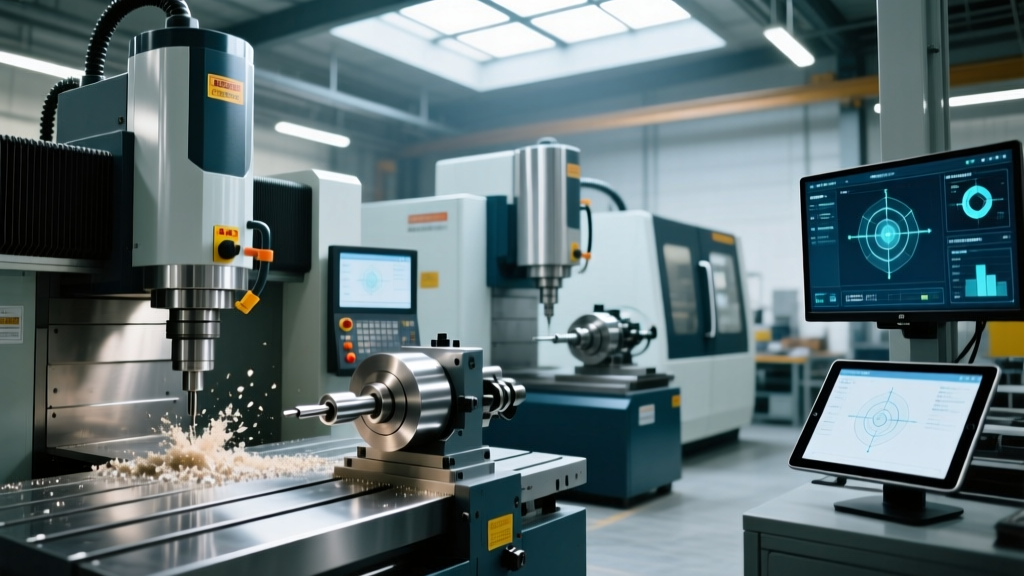
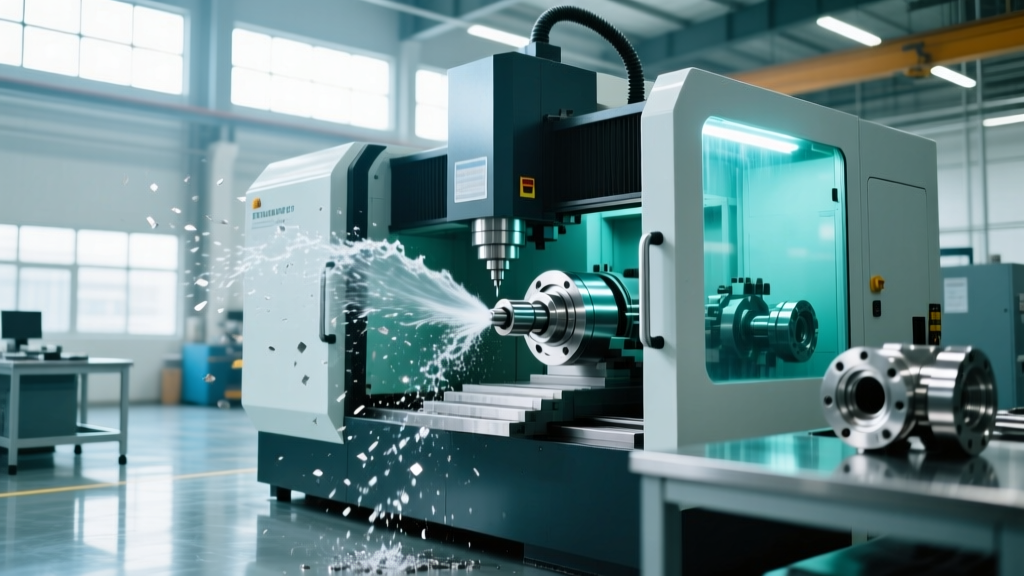
When configuring your machine, do not skip the high-pressure coolant (HPC) option. As noted by Modern Machine Shop, HPC at 1,000 to 2,000 PSI is critical for breaking the stringy, ductile chips characteristic of 304 and 316L stainless. A standard 300 PSI flood coolant system will result in bird-nesting, leading to machine downtime and potential tool breakage inside the part.
Operational Expenditure (OpEx): Tooling and Coolant Budgets
The consumables budget for a stainless-focused CNC machine for auto parts is significantly higher than standard machine shops. Uncoated carbide tools will fail within minutes due to chemical affinity and heat. You must budget for AlCrN (Aluminum Chromium Nitride) or TiAlN coated carbide endmills and inserts.
Tooling Cost Matrix per 1,000 Parts (316L ABS Sensor Housing)
- Roughing Endmill (1/2" 4-Flute AlCrN): $45 per tool. Life: 120 parts. Cost per 1k parts: $375.
- Finishing Endmill (1/4" TiSiN Coated): $38 per tool. Life: 250 parts. Cost per 1k parts: $152.
- Drill (Coolant-Through Carbide): $65 per tool. Life: 400 holes. Cost per 1k parts: $162.50.
- Total Cutting Tool Amortization: ~$689.50 per 1,000 parts (excluding holders and maintenance).
Coolant chemistry also demands a premium. Standard synthetic coolants lack the Extreme Pressure (EP) additives required to prevent micro-welding at the shear zone. Budget $50 to $75 per gallon for high-lubricity semi-synthetic or micro-emulsion coolants formulated specifically for austenitic stainless, maintaining a strict 7-9% concentration to prevent corrosion and bacterial growth.
Hidden Costs: Scrap Rates, Energy, and Post-Processing
Financial models often overlook the hidden costs inherent to stainless automotive machining.
Energy Consumption: High-torque spindles and 2,000 PSI coolant pumps draw massive amperage. Expect a 25-30% increase in monthly electrical costs compared to an equivalent aluminum-machining cell. Factor in $800-$1,200 monthly per machine for utility overhead in your 2026 business plan.Scrap and Rework: 17-4 PH stainless, commonly used for automotive drivetrain and suspension components, is prone to distortion during heavy roughing. If internal stresses are not managed via proper toolpath strategies (like adaptive clearing) and subsequent heat treatment, scrap rates can easily hit 8-12% during initial production runs. Furthermore, 303 stainless is highly machinable due to sulfur additions, but it compromises weldability and corrosion resistance, limiting its use to non-critical interior or low-stress fittings.
ROI Framework: Calculating Cost-Per-Part (CPP)
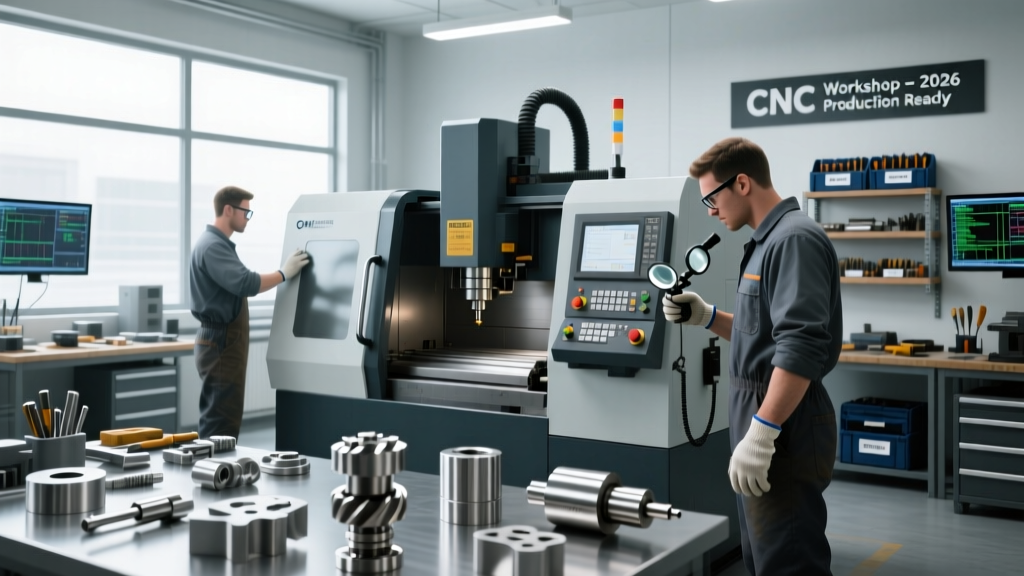
To determine if investing in a dedicated CNC machine for auto parts in stainless steel is financially viable, use this baseline CPP formula for a standard 304L exhaust flange:
- Material Cost: $6.20 (Billet cutoff, including 10% remnant waste).
- Machine Time: 4.5 minutes at $95/hr shop rate = $7.12.
- Tooling Amortization: $1.85 per part.
- Coolant & OpEx: $0.65 per part.
- Inspection (CMM/Go-NoGo): $0.90 per part.
- Total Base CPP: $16.72.
Compare this against your outsourced supplier quotes. If Tier 1 suppliers are charging $21.00+ per flange with 8-week lead times, bringing the process in-house yields a 20% margin improvement and total CapEx recovery within 14 to 18 months at a volume of 50,000 units annually.
Decision Matrix: Make vs. Buy
- Volume < 5,000/year: Outsource. The CapEx of a $200k+ machine and HPC system cannot be justified against low-volume tooling amortization.
- Volume 5,000 - 20,000/year: Consider a used or mid-range dual-spindle lathe with a retrofitted HPC unit. Focus on 303 or 416 grades if engineering allows.
- Volume > 20,000/year: Invest in new Swiss-type or 5-axis mill-turn equipment. The reduction in cycle time and secondary handling will drive CPP below market rates, securing long-term OEM contracts.
For deeper insights into optimizing cutting parameters to reduce these costs, refer to the Harvey Performance guide on machining stainless steel, which details specific SFM and feed-per-tooth adjustments that prevent premature tool failure and protect your operational budget.