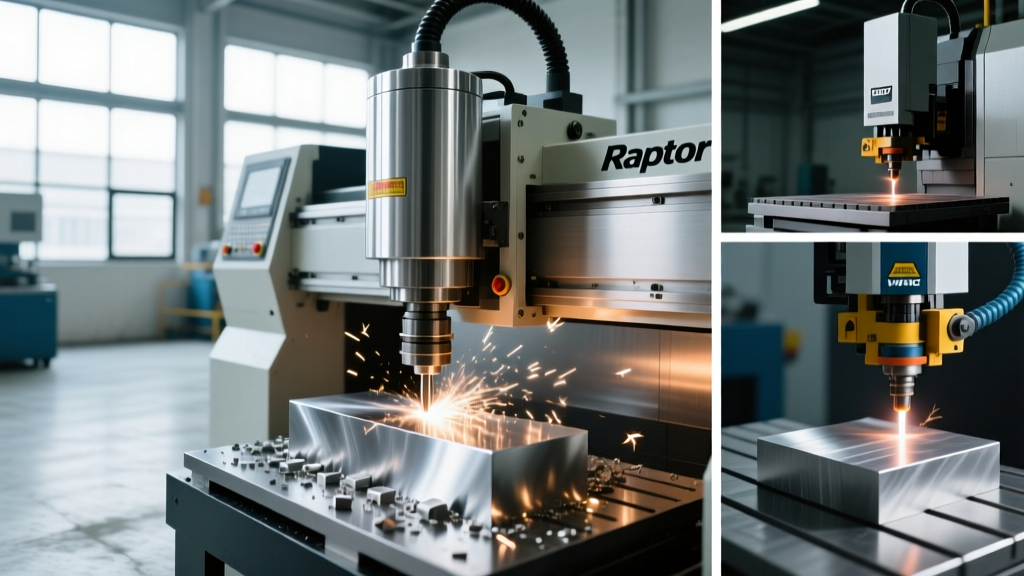
CNC Equipment Manufacturers: Coolant & Enclosure Repair Guide
Diagnose CNC enclosure leaks and coolant failures. Expert repair guide covering seal matrices, way covers, and OEM parts from CNC equipment manufacturers.
The Enclosure Seal Failure Matrix
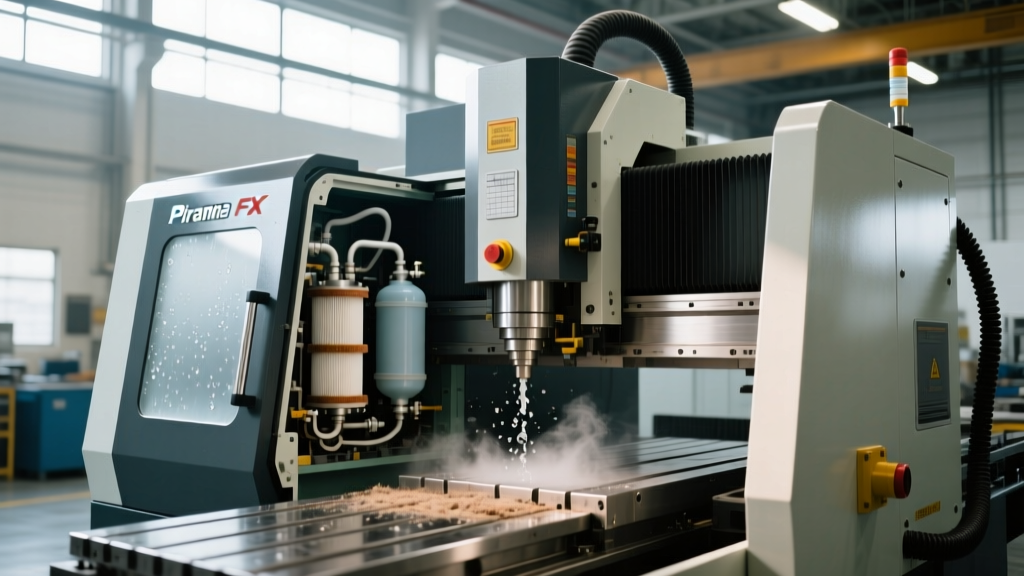
CNC machine enclosures are subjected to extreme thermal cycling, high-velocity chip impact, and aggressive chemical exposure from metalworking fluids (MWFs). While top CNC equipment manufacturers engineer robust splash guards and door seals, field conditions inevitably degrade these components. The most common cause of catastrophic enclosure leakage is not physical tearing, but chemical incompatibility between the coolant type and the seal elastomer.
When a shop switches from a semi-synthetic coolant to a fully synthetic polyglycol-based fluid without upgrading the door and panel seals, the elastomers can swell by 15% to 20% within 30 days. This swelling extrudes the seal from its retention groove, leading to immediate coolant migration onto the shop floor and potential slip hazards or electrical shorts in nearby control cabinets.
| Seal Material | Optimal Coolant Compatibility | Primary Failure Symptom | Expected Lifespan (Hours) |
|---|---|---|---|
| Nitrile (Buna-N) | Petroleum-based, Semi-synthetic, Straight oils | Brittleness and cracking when exposed to synthetic esters | 4,000 - 6,000 |
| EPDM (Ethylene Propylene) | Fully synthetic, Water-soluble, Alkaline cleaners | Rapid swelling and disintegration if exposed to mineral oils | 5,000 - 8,000 |
| Fluorocarbon (Viton) | High-temp aerospace coolants, Aggressive EP additives | Compression set (loss of memory) under constant high heat | 8,000 - 12,000 |
| Polyurethane | Standard flood coolants, High-pressure mist | Hydrolysis (breakdown from hot water/steam exposure) | 3,000 - 5,000 |
Coolant Pressure & Flow Diagnostic Tree
Coolant system failures rarely occur without warning. A drop in volumetric flow or pressure usually indicates a restriction, cavitation, or bypass valve failure. Use this decision tree to isolate the fault before replacing expensive pump assemblies.
- Symptom: Low Pressure at Nozzle, Pump Sounds Normal
- Check 1: Inspect the main canister filter. If the pressure gauge pre-filter reads >15 PSI higher than post-filter, the 50-micron or 100-micron filter element is blinded by tramp oil and fine swarf. Replace immediately.
- Check 2: Inspect the nozzle check-valve. In high-pressure systems (1,000+ PSI), tungsten carbide nozzle orifices can fracture internally, creating turbulent flow that mimics low pressure.
- Symptom: Low Pressure, Pump Exhibits High-Frequency Cavitation Noise
- Check 1: Suction line strainer. A clogged foot-valve strainer starves the impeller, causing vapor bubbles to form and collapse (cavitation). This will destroy the pump seals within 48 hours.
- Check 2: Coolant viscosity and temperature. If the fluid temperature drops below 55°F (12°C), the viscosity increases, causing suction starvation. Install a sump heater to maintain 65°F-75°F.
- Symptom: Pump Runs, Zero Flow at Nozzle
- Check 1: Relief/Bypass valve. If the relief valve is stuck open due to a lodged aluminum chip, all fluid is redirected back to the sump. Disassemble and clean the valve seat.
- Check 2: Impeller shear pin. On heavy-duty centrifugal pumps, the impeller is often keyed with a brass shear pin to protect the motor from dead-head conditions. If sheared, the motor spins but the impeller does not.
⚠️ High-Pressure Coolant Safety Protocol
As of 2026, many CNC equipment manufacturers are standardizing 2,000 PSI (138 bar) coolant systems for aerospace titanium and Inconel machining. At this pressure, a pinhole leak in a hydraulic-grade coolant hose can inject fluid directly through skin tissue, causing severe necrosis. Never use your hands to check for high-pressure leaks; always use a piece of cardboard or a specialized ultrasonic leak detector. Ensure all high-pressure lines are shielded with Kevlar-reinforced sleeves.
Way Cover and Bellows Ingress Points
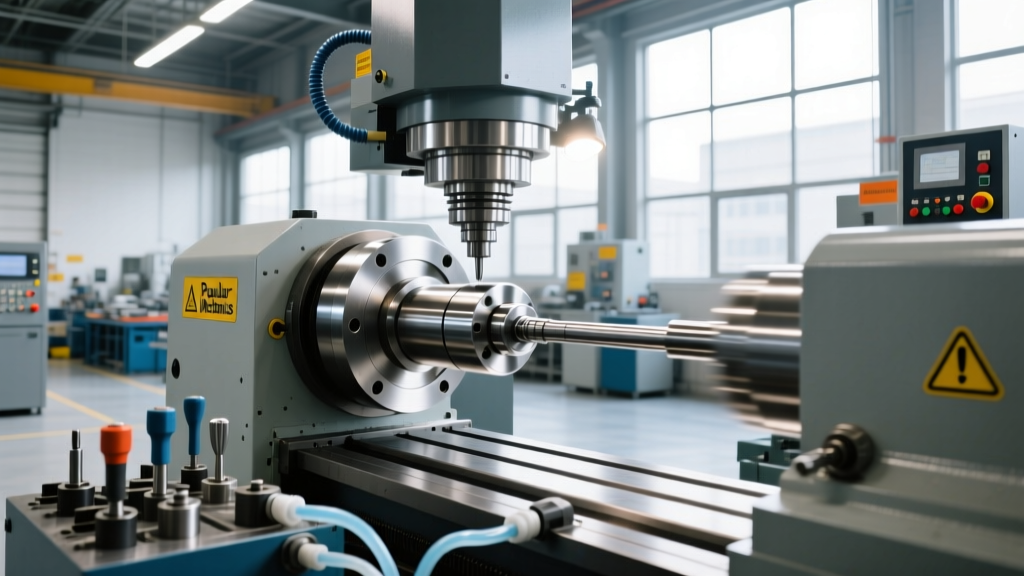
The telescopic way covers and fabric bellows that protect the linear guideways and ball screws are critical sub-enclosures. When these fail, abrasive cast iron dust and aluminum fines infiltrate the bearing blocks, leading to premature axis motor overload and ball screw nut degradation.
Telescopic Steel Covers vs. Fabric Bellows
Steel telescopic covers rely on polyurethane wiper seals (typically Shore A hardness 85-90) at the edge of each pan to scrape chips away during retraction. The most frequent failure mode is the embedding of hard, work-hardened stainless steel chips into the wiper lip. Once embedded, the wiper acts like a grinding stone, scoring the linear rail and destroying the rail's preload.
Repair Action: Inspect wiper lips every 500 hours. If scoring is visible on the rail, replace the wipers immediately. Do not attempt to pick embedded chips out with a steel pick, as this will gouge the polyurethane. Replace the entire wiper strip. For shops machining abrasive materials like gray iron, upgrade to brass or bronze wiper blades, which wear sacrificially rather than embedding chips.
Mist Collection and Enclosure Airflow Imbalances
An enclosure is not just a liquid barrier; it is an aerodynamic chamber. According to OSHA guidelines on metalworking fluids, controlling airborne mist is critical for operator respiratory health and shop visibility. However, improper mist collector sizing creates severe mechanical side effects.
'A common mistake is oversizing the mist collector. Pulling 1,000 CFM from a standard vertical machining center enclosure creates a deep negative pressure vacuum. This vacuum will literally pull atomized coolant mist backward through the spindle labyrinth seals, contaminating the spindle bearings and causing catastrophic failure within months.' — Field Service Engineering Report, 2025
Target CFM Guidelines:
- Standard VMC (40-50 taper): 250 - 400 CFM. Enough to capture aerosol without creating a vacuum.
- Large Boring Mills / 5-Axis Gantry: 600 - 900 CFM, distributed across multiple ducting ports to prevent localized high-velocity draft.
- Swiss-Type Lathes: 150 - 250 CFM. The enclosure volume is small; high CFM will pull excessive straight oil mist into the filters, saturating HEPA media in days.
Coolant Concentration and Tramp Oil Skimming
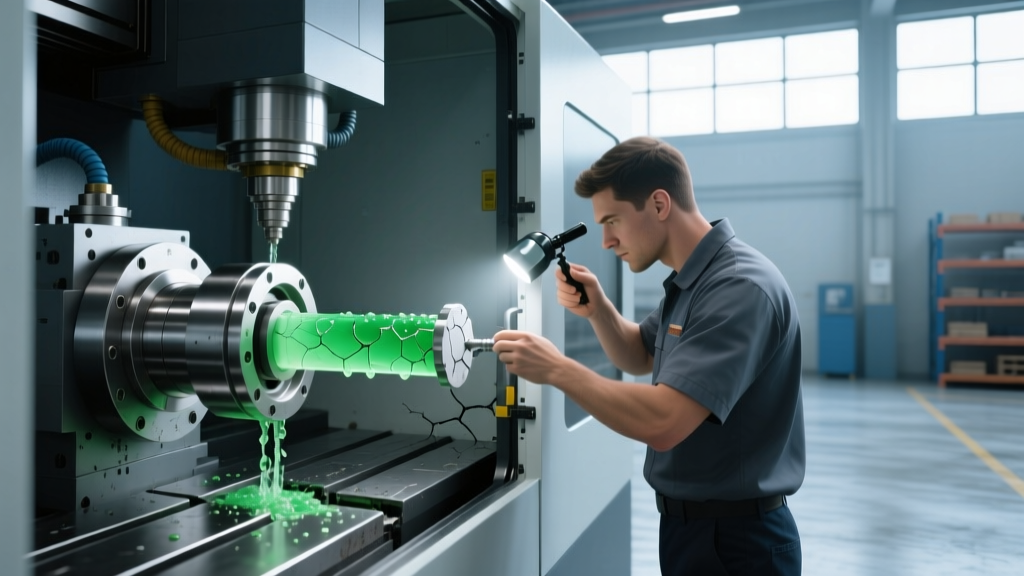
The chemical stability of the coolant directly impacts the physical integrity of the enclosure. The NIOSH Criteria Document on Metalworking Fluids emphasizes that maintaining proper concentration prevents bacterial growth and fluid degradation. When semi-synthetic coolants drop below a 4% concentration (measured via refractometer), the fluid loses its rust inhibitors and biocides. The resulting bacterial bloom produces acidic byproducts that corrode the inside of the sheet metal enclosure and attack the zinc plating on internal hardware.
Conversely, running concentration above 10% leaves sticky residues on the enclosure windows and door slides, causing the pneumatic door cylinders to stall. Furthermore, tramp oil (hydraulic fluid and way oil leaking into the sump) coats the enclosure walls and creates a breeding ground for anaerobic bacteria. Install a continuous belt skimmer or a coalescing oil separator to remove tramp oil, ensuring the enclosure interior remains free of sticky, corrosive biofilms.
Sourcing Parts: OEM vs. Aftermarket Implications
When replacing enclosure components, maintenance managers must weigh the cost of OEM parts against aftermarket alternatives. Leading CNC equipment manufacturers design their door hinges, gas struts, and way covers to exact kinematic specifications.
While aftermarket way covers may cost 40% less, they often use thinner gauge stainless steel (e.g., 20-gauge instead of the OEM 18-gauge). Under the impact of heavy cast-iron chips ejected at 300 surface feet per minute, thinner covers will dent and bind, eventually stalling the axis servo motor and triggering a following-error alarm. For critical sealing components, spindle labyrinth replacements, and high-pressure coolant unions, always source directly from the OEM to maintain the machine's original IP (Ingress Protection) rating and avoid voiding the manufacturer's warranty. For non-critical splash guards and external chip trays, fabricated aftermarket replacements are generally acceptable and cost-effective.