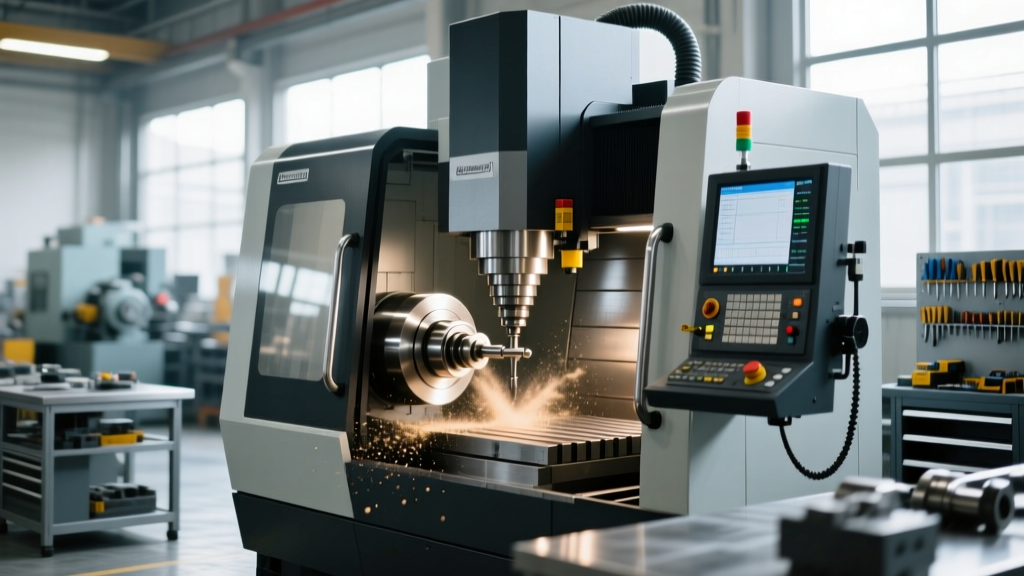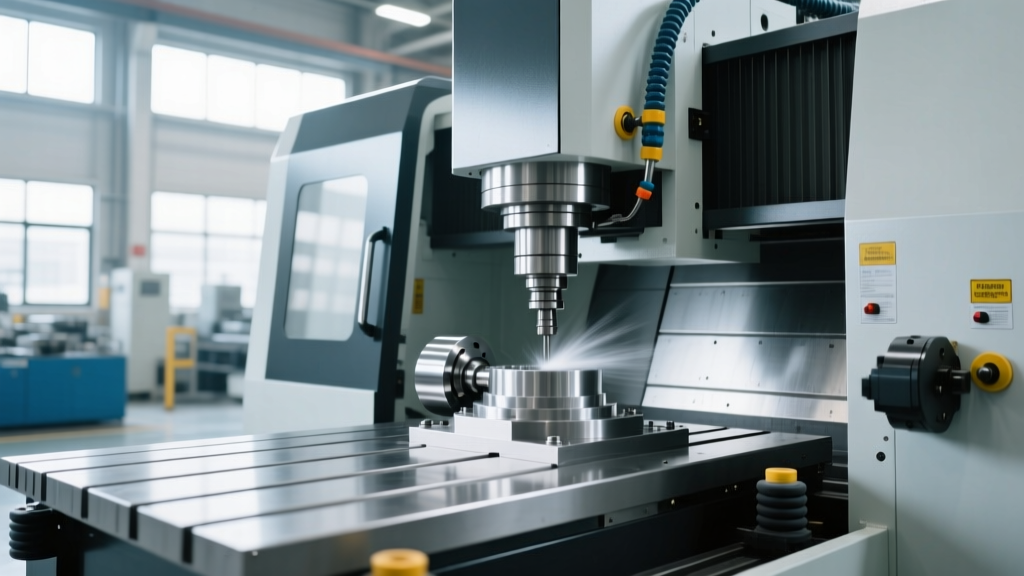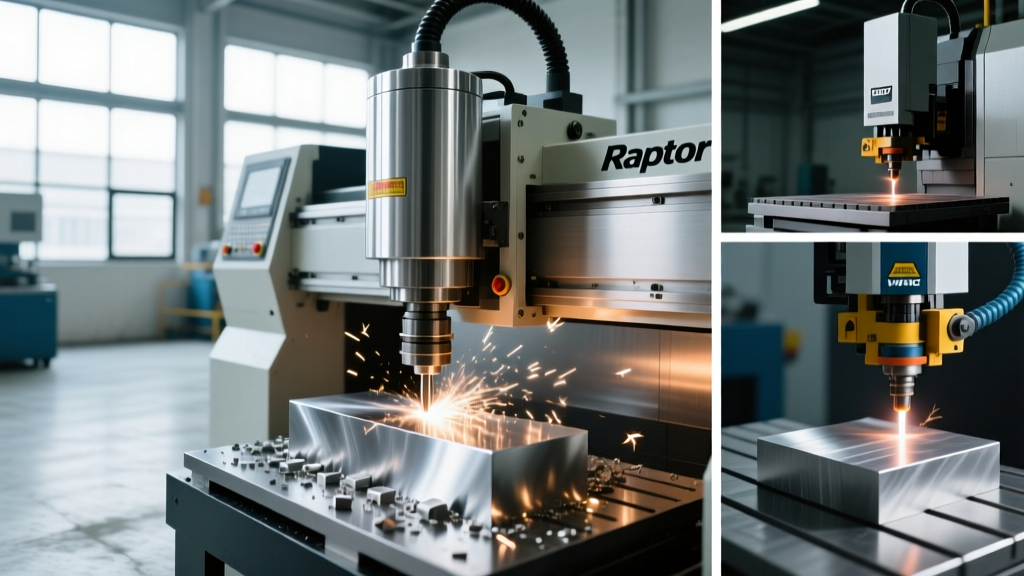
Raptor CNC Machines for Stainless Steel: 2026 Cost & Budget Analysis
Evaluate the true cost of Raptor CNC machines for stainless steel fabrication in 2026. Compare plasma, routing, and VMC budgets for metal shops.
The Financial Reality of Stainless Steel Fabrication in 2026
Allocating capital for stainless steel (SS) fabrication requires a starkly different budget model than mild steel or aluminum. When shop owners evaluate Raptor CNC machines for stainless steel workflows—spanning large-format plasma cutting and heavy-duty gantry routing—the initial purchase price is only a fraction of the true cost of ownership. In 2026, the metallurgical realities of 300-series and 400-series stainless alloys dictate severe operational expenditures (OpEx) that can erode margins if not modeled correctly before purchase.
This cost analysis breaks down the capital expenditure (CapEx), consumable burn rates, and hidden maintenance costs of deploying Raptor CNC systems for stainless steel, providing a concrete decision framework for fabrication shops and job shops.
⚠️ Budget Warning: The Consumable TrapMany fabricators budget for a Raptor CNC plasma/router combo based on mild steel operational costs. Stainless steel requires specialized shielding gases and premium carbide tooling that can increase hourly consumable costs by 300% to 500%. Failing to adjust your quoting software for these specific OpEx variables will result in negative margins on SS contracts.
CapEx Breakdown: Raptor CNC vs. Traditional VMCs
Raptor CNC machines primarily excel in large-format, 2.5D to 3D profiling, plate cutting, and heavy routing. They are not enclosed 5-axis Vertical Machining Centers (VMCs). Understanding this distinction is critical for facility planning and initial capital outlay. Below is a 2026 baseline CapEx comparison for a mid-sized shop entering the stainless steel market.
| Cost Category | Raptor CNC 5x10 Plasma/Router Combo | Traditional VMC (e.g., Haas VF-2SS) |
|---|---|---|
| Base Machine Cost | $75,000 - $95,000 | $115,000 - $135,000 |
| Power Source / Spindle Upgrade | $45,000 (Hypertherm XPR300) | $12,000 (12k RPM Inline Spindle) |
| Facility Prep (Power/Gas/Ventilation) | $18,000 - $25,000 | $4,000 - $6,000 |
| Coolant / Dust Collection System | $8,500 (Downdraft & Mist Collector) | $6,500 (Enclosed Flood Coolant) |
| Total Estimated CapEx | $146,500 - $173,500 | $137,500 - $159,500 |
While the base footprint of a Raptor CNC gantry system appears cheaper, equipping it with a high-definition plasma source capable of piercing 1.25-inch 316L stainless steel pushes the CapEx into VMC territory. Furthermore, facility prep for large-format plasma requires extensive ventilation and heavy-duty gas manifold installations that enclosed VMCs do not demand.
The Work-Hardening Tax: Tooling and Consumables
Stainless steel’s low thermal conductivity and high tendency to work-harden mean that cutting tools absorb massive amounts of heat. According to Sandvik Coromant's metallurgical guidelines, improper feed rates in SS cause the material to harden ahead of the cutting edge, leading to catastrophic tool failure. For Raptor CNC router setups, this translates to a significantly higher carbide end-mill replacement rate.
Plasma Shielding Gases: The Hidden OpEx
Cutting stainless steel with a Raptor CNC plasma table requires abandoning cheap compressed air. Air cutting leaves a heavily oxidized, blackened edge that requires secondary grinding—adding $45 to $65 per hour in manual labor. To achieve a weld-ready, shiny edge, fabricators must budget for specialized gas mixes.
💡 Pro Tip: H35 vs. F5 Gas SelectionFor stainless steel under 1/2 inch, F5 (95% Nitrogen / 5% Hydrogen) offers a lower cost per hour. However, for 316L stainless plate over 1/2 inch, you must switch to H35 (35% Hydrogen / 65% Argon) to prevent excessive top-edge melting and dross formation. H35 is significantly more expensive and requires specialized high-pressure manifolds.
| Consumable Category | Mild Steel Baseline | Stainless Steel (304/316) | Cost Variance |
|---|---|---|---|
| Plasma Shield Gas (per hour) | $1.50 (Compressed Air) | $14.00 - $22.00 (H35 Mix) | +1,200% |
| Plasma Consumable Life (Pierces) | 400 - 600 pierces | 150 - 250 pierces | -60% |
| Router End Mill Cost (1/2" Carbide) | $35 (Lasts 8+ hours) | $75 (Lasts 45-60 mins) | +850% / hr |
Decision Framework: When to Deploy Raptor CNC for SS
Based on current data tracked by The Association For Manufacturing Technology (AMT), shops must align their machine topology with their specific contract types. Use this logic tree to determine if a Raptor CNC gantry system is the correct financial move for your stainless steel workload.
- Are you processing full 4x8 or 5x10 sheets of 14-gauge to 1/2-inch 304 SS for architectural panels or food-grade enclosures?
- Yes: Raptor CNC Plasma/Router is the optimal choice. The large bed eliminates shearing bottlenecks, and plasma cutting with F5 gas yields weld-ready edges instantly.
- No: Proceed to step 2.
- Is your primary workload deep-pocket milling, 3D contouring, or tight-tolerance (+/- 0.001") bore machining in 316L?
- Yes: Abort Raptor CNC evaluation. Purchase a rigid, enclosed VMC with high-pressure through-spindle coolant (TSC) to manage SS chip evacuation and thermal growth.
- No: Proceed to step 3.
- Do you require secondary tapping and routing on thick SS base plates (1"+) for heavy machinery?
- Yes: A Raptor CNC equipped with both a high-definition plasma torch (for gross profiling) and a 12kW routing spindle (for edge profiling and face milling) provides a highly lucrative dual-process workflow.
Maintenance and Downtime Budgeting
Stainless steel swarf and plasma dust are notoriously abrasive and prone to causing galvanic corrosion when mixed with carbon steel residue. Budgeting for machine preservation is non-negotiable.
The Slat Bed and Linear Rail Factor
On a Raptor CNC plasma table, the sacrificial slat bed will degrade 3x faster when cutting stainless steel compared to mild steel due to the higher thermal energy required to pierce SS plate. Budget $3,500 to $5,000 annually for slat bed replacement and water-table chemical treatments to prevent the stainless dust from oxidizing the mild steel slats.
Furthermore, if utilizing the routing spindle, stainless steel chips are stringy and sharp. They easily bypass standard way-covers and embed in linear guide blocks. Shops must allocate 15 minutes per shift for manual rail cleaning and budget for high-viscosity, SS-compatible way oil to prevent micro-pitting on the linear bearings.
"The biggest mistake fabricators make when quoting stainless steel on large-format CNCs is applying a flat 20% material surcharge. The real cost isn't just the raw alloy; it's the accelerated depreciation of the machine's linear motion components and the exponential increase in shielding gas logistics."
— 2026 Job Shop Profitability Report, NIST Manufacturing Extension Partnership (MEP)
2026 ROI Projection for Mid-Sized Fabricators
To justify the $150,000+ CapEx of a fully equipped Raptor CNC system for stainless steel, shops must leverage the speed advantage of large-format plasma over traditional band-sawing and VMC profiling.
Consider a standard contract: cutting 500 nested 316L SS brackets (1/2" thick, 12"x8" perimeter). A traditional VMC or manual sawing operation might take 4.5 minutes per part, totaling 37.5 hours. At a standard 2026 shop rate of $140/hour, the machining cost is $5,250. A Raptor CNC utilizing a 300-amp XPR plasma source with H35 gas will pierce and cut the same nest in roughly 45 seconds per part, totaling 6.25 hours of machine time. Even factoring in the $22/hour premium gas cost and accelerated consumable wear, the Raptor CNC completes the job for under $1,100 in direct OpEx.
By capturing the architectural, food-processing, and marine fabrication markets—where large-format stainless profiling is mandatory—a well-utilized Raptor CNC machine will typically achieve a break-even point within 14 to 18 months, provided the shop strictly enforces stainless-only consumable tracking and prevents cross-contamination with carbon steel workflows.